Iranian state media confirms Supreme Leader Khamenei is dead


Add Axios as your preferred source to
see more of our stories on Google.
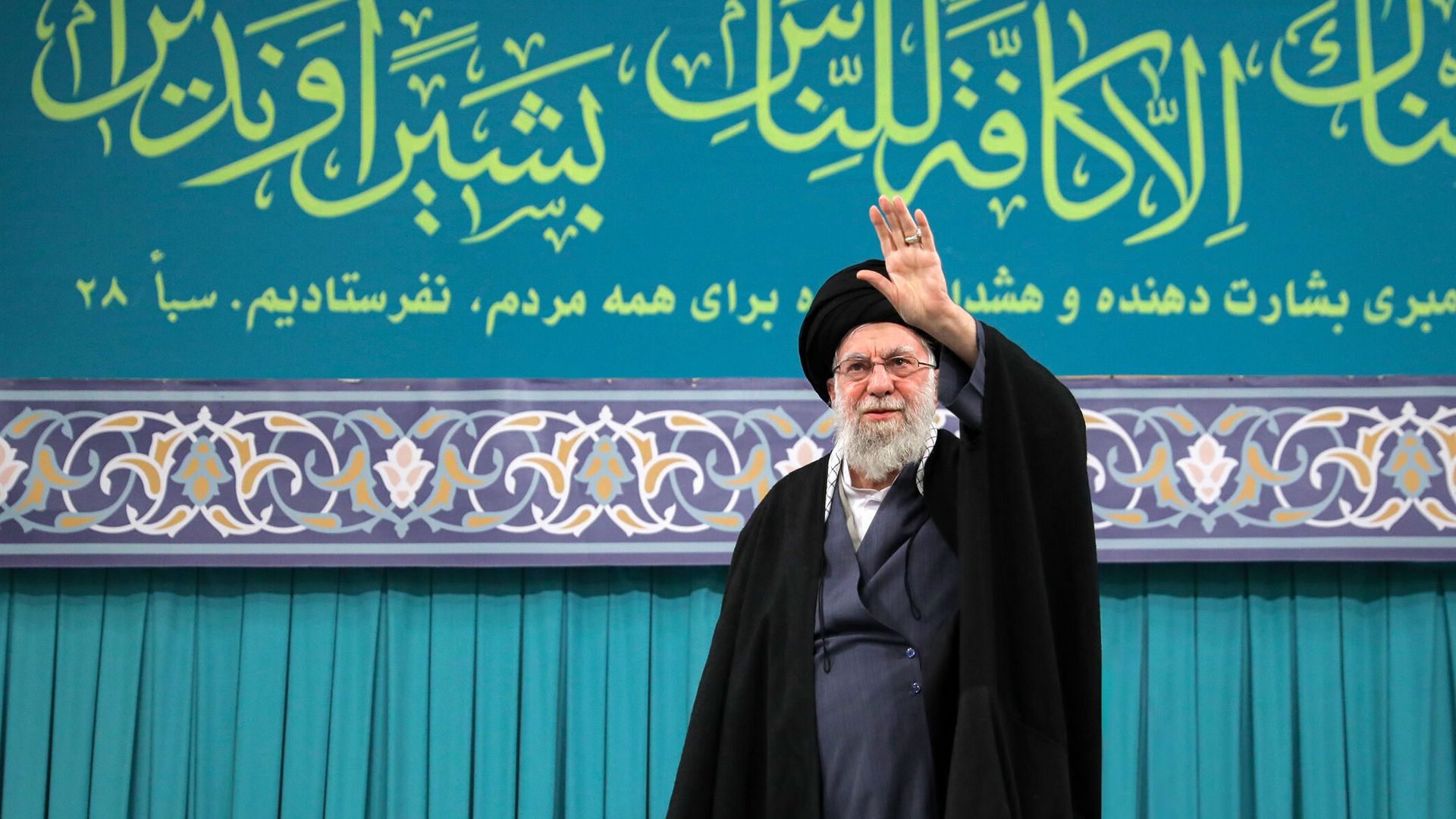
Iran's Supreme Leader Ali Khamenei greets the crowd as he attends a program held in the capital Tehran, Iran on Jan. 17. Photo: Iranian Leader Press Office/Anadolu via Getty Images
Iranian Supreme Leader Ali Khamenei was killed in an Israeli strike Saturday as part of a massive joint military operation between the U.S. and Israel, Iranian state media confirmed.
The latest: The Iranian government announced 40 days of public mourning following the "martyrdom" of the 86-year-old ayatollah, who had ruled Iran for over 36 years.
What they're saying: President Trump celebrated Khamenei's death in a post on Truth Social, calling him "one of the most evil people in History" and saying his killing was "justice" for Americans and others killed by Iran over the decades.
- Trump appeared to confirm that U.S. intelligence played a direct role in tracking and targeting Khamenei, saying the ayatollah "was unable to avoid our Intelligence and Highly Sophisticated Tracking Systems"
- He warned that bombing would "continue, uninterrupted throughout the week or as long as necessary" to achieve what he called the goal of "peace throughout the Middle East and, indeed, the world."
Driving the news: Trump claimed Iranian security forces and Islamic Revolutionary Guard Corps members were already seeking immunity, and urged them to "peacefully merge with the Iranian Patriots."
Why it matters: Khamenei was one of the world's longest-serving authoritarian rulers. His death is a massive blow to the regime and could accelerate its collapse, which U.S. and Israeli officials have stated as a goal of their operation.
The big picture: Khamenei's killing sets off an immediate succession crisis with no clear answer.
- Under Iran's constitution, an interim council assumes power while the Assembly of Experts — a body of 88 Islamic clerics — selects a new supreme leader.
- But Israel says its opening strikes decimated the chain of command — killing seven senior defense and intelligence officials and targeting 30 top military and civilian leaders overall.
Those confirmed killed include:
- Khamenei's top security adviser Ali Shamkhani
- Islamic Revolutionary Guard Corps commander Mohammad Pakpour
- Defense Minister Aziz Nasirzadeh
- Khamenei's chief military secretary Mohammad Shirazi
- Head of Iranian military intelligence Saleh Asadi
- Chairman of the SPND (Iran's nuclear weapons research organization) Hossein Jabal Amelian
- Former SPND chairman Reza Mozaffari-Nia
What to watch: One senior official who survived is Ali Larijani — secretary of Iran's supreme national security council, former parliament speaker and one of Khamenei's closest confidants.
- With much of the leadership killed, Larijani has emerged as the most senior civilian official still standing. In a post on X Saturday, he vowed Iran would deliver Israel and the U.S. an "unforgettable lesson."
Between the lines: Whether the IRGC moves to seize control — or whether the strikes create the popular opening Israeli Prime Minister Benjamin Netanyahu and Trump have both called for — remains unclear.
- Israeli officials said Israel targeted Khamenei's sons, but intelligence assessments suggest they survived the strikes.
- Mojtaba Khamenei, one of the supreme leader's sons, had been widely discussed as a possible successor to his father.
Context: Khamenei took power in 1989 following the death of revolutionary founder Ayatollah Ruhollah Khomeini, and spent 35 years consolidating near-total control over the Iranian state.
- As supreme leader, he held authority over the judiciary, state media and all security forces — including the IRGC.
- He wielded that power ruthlessly against dissent. Thousands of protesters were killed under his watch during the most recent nationwide uprising, and his forces have repeatedly crushed reform movements over the decades.
What to watch: In an overnight video address, Trump called for the Iranian people to remain in their homes during the bombing campaign — but rise up and "take over your government" when it concludes.
- Iran's exiled former crown prince Reza Pahlavi, a leading opposition leader who has organized mass protests against the regime, also called for the Iranian people to take to the streets.
- Pahlavi urged Iranian security forces: "Join the nation and help ensure a stable and secure transition. Otherwise, you will sink with Khamenei's ship and his crumbling regime."
Editor's note: This story is breaking news. Please check back for updates.
