How Iran mining the Strait of Hormuz could threaten the world

Add Axios as your preferred source to
see more of our stories on Google.
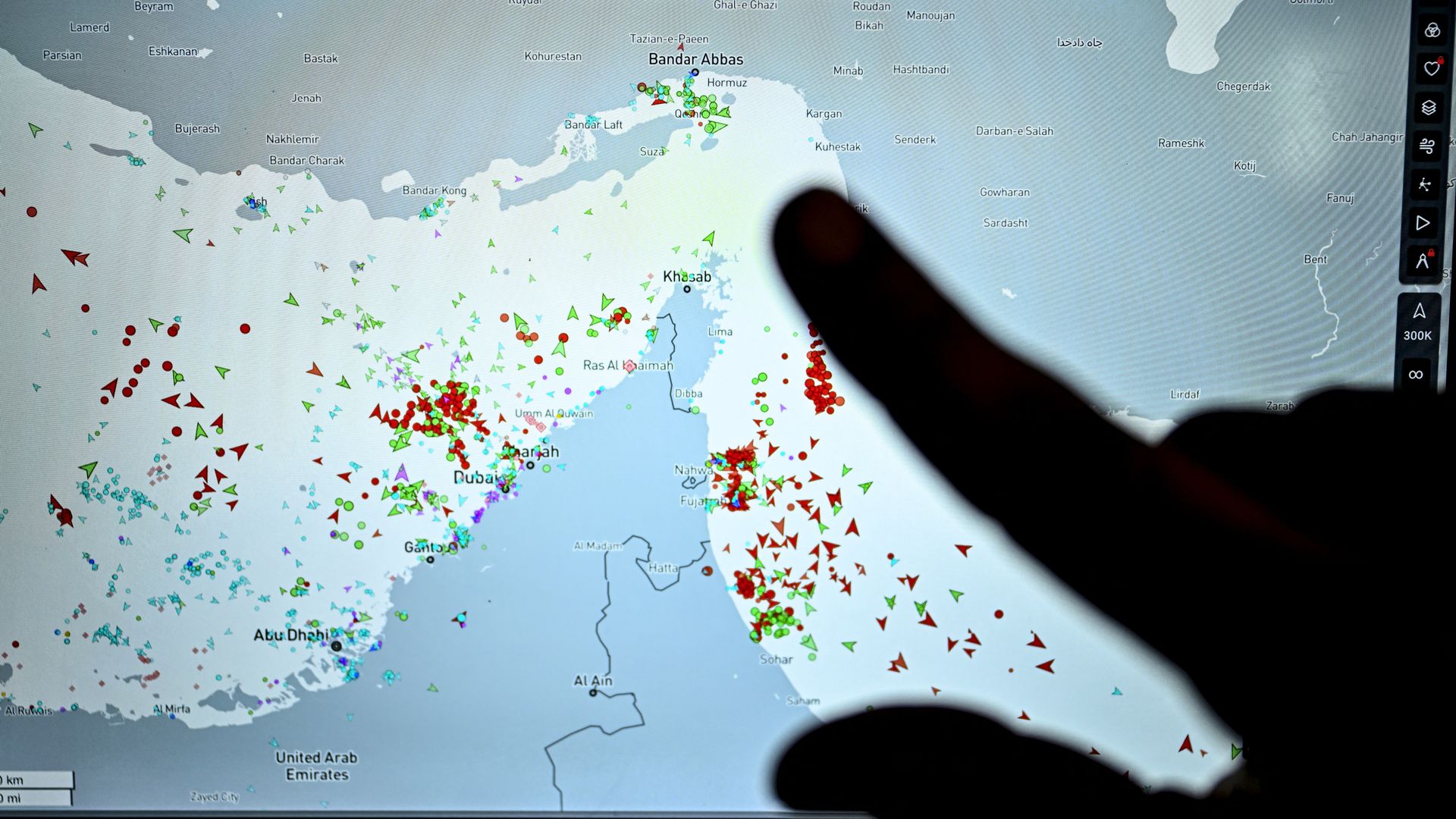
A person points to the MarineTraffic website showing commercial ship traffic near Iran along the Strait of Hormuz, in Paris on March 4, 2026. Photo: Julien De Rosa/AFP via Getty Images
Worries are growing that Iran is deploying mines — one of its most potent and disruptive weapons — in the Strait of Hormuz.
Why it matters: The use of naval mines would likely result in fatal attacks on commercial shipping vessels and closure of the Strait, which would place further strain on the global economy if oil shipments were halted.
Iran mines and the Strait of Hormuz
How it works: Mines are normally concealed explosive devices that detonate through pressure, contact or remote activation.
- They are often used to stop passage through an area in times of war.
Catch up quick: The U.S. military has begun a campaign to disable Iran's mine-laying vessels amid reports that mines have been placed in the Strait.
- The White House told Axios on Friday that 30 of the vessels have been destroyed. U.S. Central Command confirmed 16 were "eliminated" on Tuesday.
- Trump said on Truth Social that "military consequences to Iran will be at a level never seen before" if the nation mines the Strait.
- "President Trump is fully prepared to provide U.S. Navy escorts through the Strait of Hormuz if he deems it necessary," White House spokesperson Anna Kelly said in a statement Friday.
Driving the news: Joint Chiefs Chairman Gen. Dan Caine and Defense Secretary Pete Hegseth said Friday that the U.S. is working to stop any mine-laying opportunities for Iran — though Hegseth said no clear evidence yet exists of mines in the Strait.
- "We've made it a priority to target Iran's mine-laying enterprise," Caine said at a Pentagon press conference Friday.
- Caine said the U.S. is currently "going after Iran's mine-laying capability and destroying their ability to attack commercial vessels."
- When asked more about how the U.S. would stop the mines, Caine said: "We retain a range of options to solve a whole variety of problems."
Why Iran's use of mines matters
Deadly mines would disrupt oil exports in the Strait, potentially rattling the economy.
- But they would also cause economic disruption for Iran itself since it would hinder the country's ability to export oil to other countries, like China, which gets 80% of its Iranian oil imports through the Strait.
- A recent U.S. Institute for the Study of War report says: "Mining is, therefore, an extreme option to which Iran has resorted and does not represent a desirable option for the country's military officials."
The bottom line: Iran has a destructive weapon that threatens everyone — including itself.
What mines Iran is putting in the Strait
The big picture: It's unclear what mines Iran could be using. The Study of War estimates Iran laid 10 mines in the Strait, though Trump has cast doubt on those claims.
- These are likely naval mines, which are placed underwater to explode when a ship crosses over them or travels nearby.
- The Maham 1, one type of Iranian mine, floats and is moored to a chain.
Zoom in: Several types of naval mines exist, including:
- Contact mines explode when a vessel touches the mine or comes into close contact.
- Influence mines use sensors that listen for signatures or characteristics of specific vessels.
- Moored mines float in the water and are most commonly deployed by surface ships. They can contain smaller charges.
- Other types of mines use antennas or strings for detonation.
Go deeper: This military rebel group could join the Iran war next against the U.S.
