What to know about Iran's uranium stockpiles

Add Axios as your preferred source to
see more of our stories on Google.
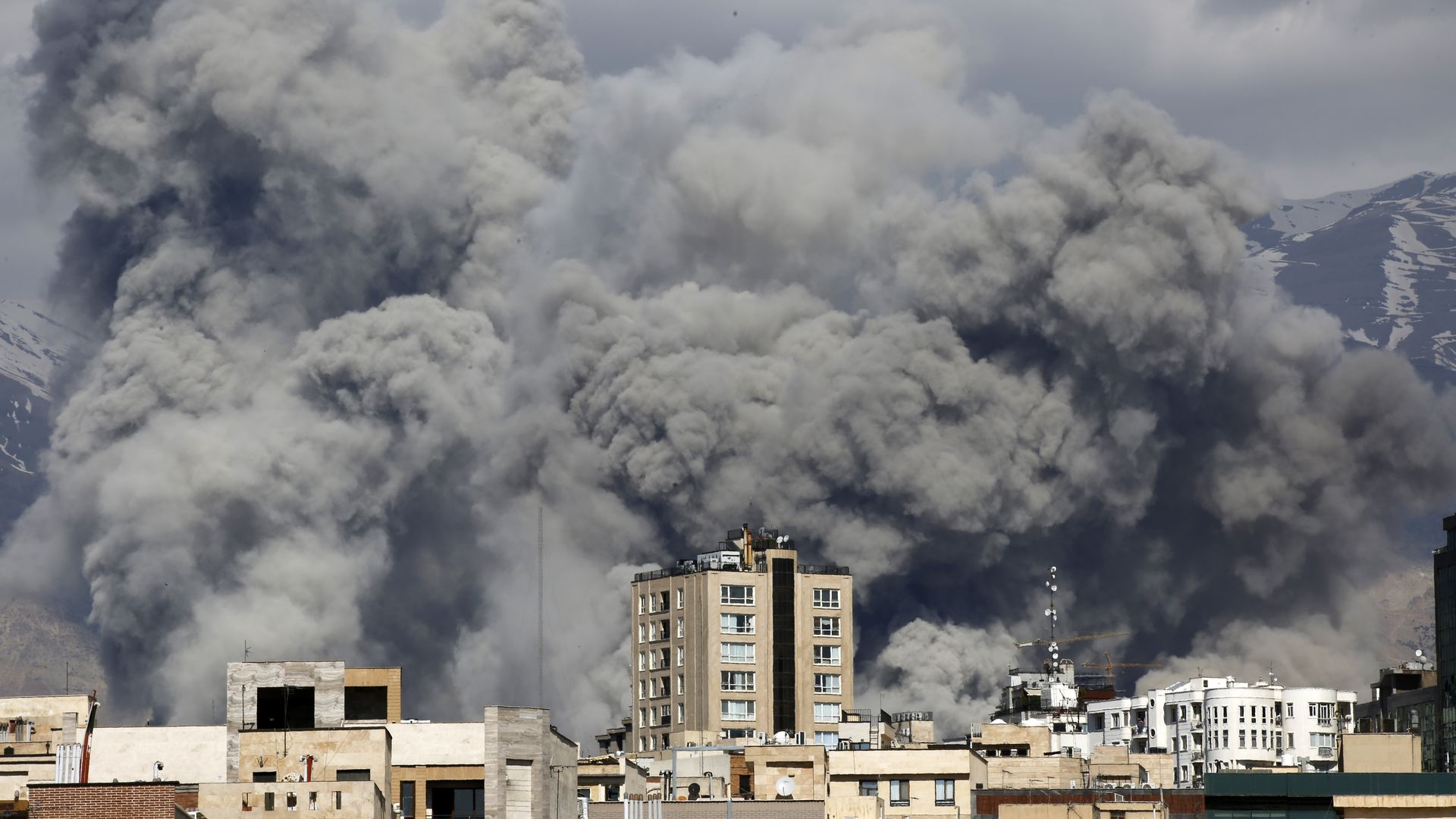
Smoke rises from an area targeted in attacks as a series of explosions are heard in Tehran, Iran, on March 1. Photo: Fatemeh Bahrami/Anadolu via Getty Images
Fear of Iran getting nuclear weapons drove the U.S. and Israeli strikes over the weekend, but the location and security of Tehran's uranium stockpile remains unclear.
The big picture: The UN's nuclear watchdog hasn't been able to inspect key Iranian nuclear sites, and a prolonged conflict could mean even less transparency.
- Edwin Lyman, director of nuclear power safety at the Union of Concerned Scientists, says that if inspectors can't account for the stockpile then it's possible Iran "is developing a clandestine nuclear weapons capability."
Driving the news: International Atomic Energy Agency (IAEA) director general Rafael Grossi told NBC News Monday that the agency lost its "continuity of knowledge" about Iran's enriched uranium after last June's strikes.
- The IAEA withdrew inspectors from Iran for safety after those attacks.
- Iran then suspended cooperation with the agency, which said in November it was unable able to inspect any of the targeted facilities.
- The attacks on Iran's nuclear sites "could have actually increased the security threat compared to if the IAEA still had full access," Lyman says.
Read on for more about Iran's uranium supply:
What is enriched uranium?
According to the Energy Department, uranium must undergo "enrichment" to sustain a nuclear chain reaction and be used as fuel.
- Natural uranium contains tiny amounts of the isotope uranium-235 (U-235). Enriching uranium raises the isotope's concentration to facilitate sustained reactions.
By the numbers: Uranium can be enriched to a range of levels.
- Commercial nuclear reactors mostly use uranium enriched between 3% and 5% U-235, per the DOE.
- Above 90% is considered weapons-grade — but Lyman says 60% enriched uranium could still make weapons with "a huge bang."
What is the status of Iran's enriched uranium?
The IAEA estimates Iran had upward of 970 pounds of uranium enriched up to 60% before last year's attacks.
- That's enough for Iran to build as many as 10 nuclear bombs, Grossi told the AP.
Grossi told NBC the bulk of the material is believed to be at the Isfahan Nuclear Technology Center.
- Satellite images from late January showed roofs built over damaged structures at Iran's Natanz and Isfahan sites, which the AP reported may indicate efforts to salvage materials.
- On Tuesday, the IAEA confirmed that the entrance buildings of Iran's underground Natanz Fuel Enrichment Plant had been damaged, but there was no impact detected at the plant itself.
Worth noting: Iran said its facilities are for civilian purposes and not for weapons.
- But Miles Pomper, a senior fellow at the James Martin Center for Nonproliferation Studies, says there's "not really a civilian use for 60%."
What did the Iran nuclear deal do?
President Trump in his first term withdrew from an Iran nuclear deal that he called "defective."
- That 2015 deal with the U.S. and five other world powers limited Iran's uranium enrichment for 15 years.
- Iran was an original signatory of the 1970 Nuclear Nonproliferation Treaty. But the country has a long history of covert research in violation of international commitments, the Council on Foreign Relations notes.
What the administration says about Iran's nuclear capabilities
Before the latest strikes, special envoy Steve Witkoff said Iran was a "week away" from "industrial grade bomb making material."
- He added Iran said it had enough enriched uranium to "make 11 nuclear bombs."
Yes, but: Secretary of State Marco Rubio told reporters in February that Iran is not enriching uranium but is "trying to get to the point where they ultimately can."
- "There's two separate issues, one is the material and one is the capability," Pomper says. Even with a big blow to Iran's program, he says, "they have the knowledge, and they have some of the parts."
