Dozens of wildfires scorch U.S. West as another heat wave builds


Add Axios as your preferred source to
see more of our stories on Google.
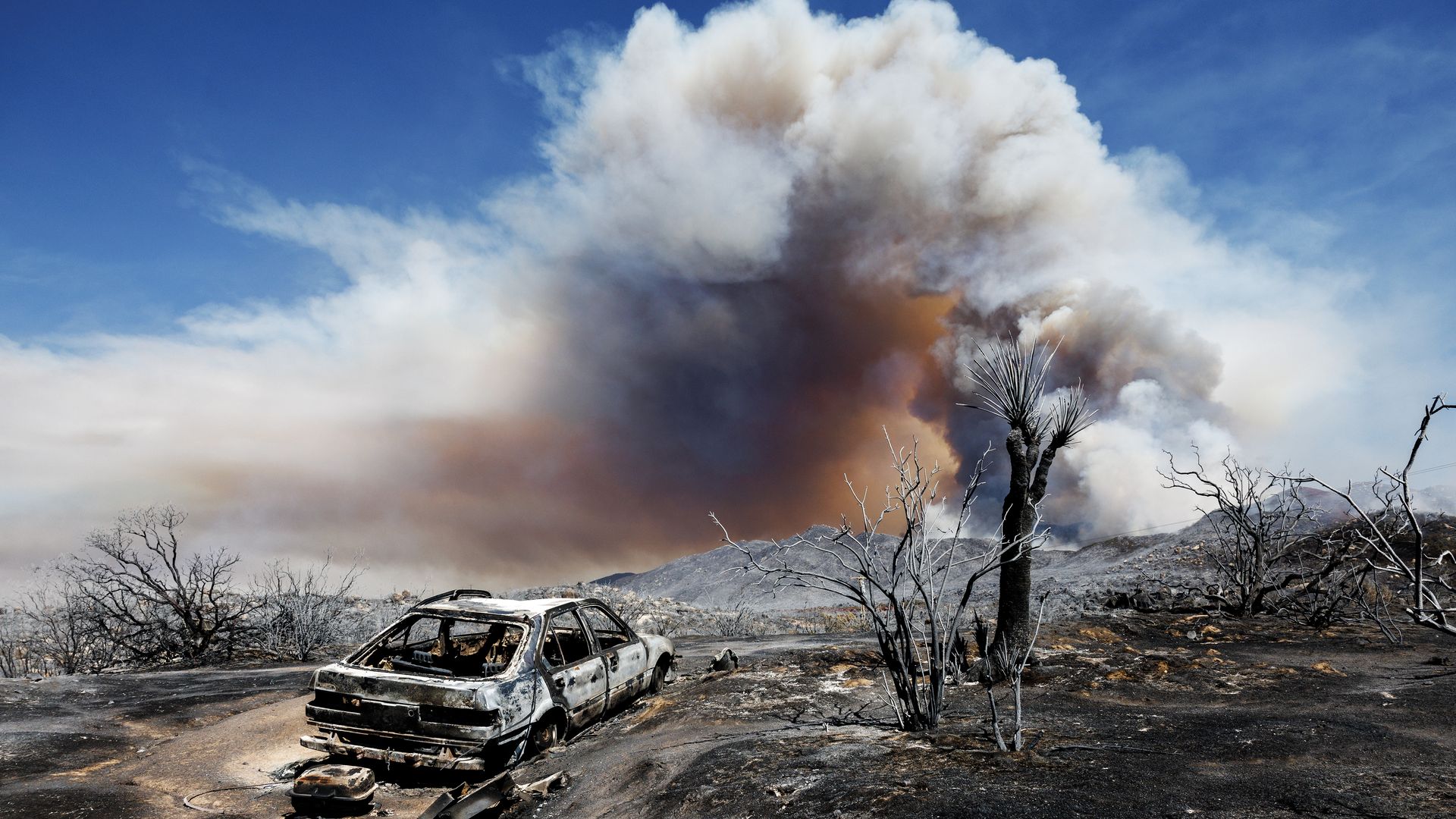
A plume of smoke from the Nixon Fire over Beauty Mountain in Aguanga, San Diego County, California, which has triggered evacuation orders and which was burning uncontained across nearly 5,000 acres as of Tuesday night. Photo: Gina Ferazzi/Los Angeles Times via Getty Images
Dozens of massive wildfires burning across the western U.S. have forced thousands to evacuate, and forecasters warn another potentially record-breaking heat wave will trigger further fire risks.
The big picture: Some 88 large fires burning across the West are impacting air quality. Among them is a wildfire in Colorado that authorities said Wednesday killed one person and California's fifth-biggest blaze on record, the Park Fire.
State of play: Evacuation orders are in effect on 28 wildfires in the U.S., per the National Interagency Fire Center. Dozens of wildfires burning across Canada have forced thousands of people to evacuate.
- "Higher humidity recovery has moderated fire activity in the Northwest in recent days" and precipitation had allowed firefighters to make progress at multiple sites, but the NIFC noted that dryer conditions and more record heat was expected across the U.S.
- "Extreme fire behavior continues in other geographic areas," the NIFC added.
By the numbers: Oregon has the highest number of large fires burning (35), followed by California (12), then Idaho (10) and Washington (8), per the National Interagency Fire Center.
- Montana, Utah and Arizona each have six large blazes. New Mexico has two and Nevada, Wyoming and Colorado each have one large fire.
Zoom in: Firefighters were tackling several fires in Colorado, including wildfires that erupted on the outskirts of a Denver suburb which prompted evacuations, with flames visible from downtown early Wednesday.
- The Boulder County, Colorado, sheriff told reporters Wednesday that the remains of a person were found in a home near the town of Lyons, north of Denver — one of several houses burned by the slow-moving Stone Canyon Fire, which was 20% contained at just over 1,500 acres Wednesday evening.
- Evacuation orders were also in effect for the growing Alexander Mountain Fire, to the southwest of Fort Collins, as hot and dry conditions yielded extreme fire behavior, and increased the risk of other wildfires throughout the state.
- That blaze was burning at 1% containment across over more than 7,600 acres Wednesday evening.
In California, the Park Fire, has caused thousands of people to evacuate and razed dozens of structures as it burns across Butte, Plumas, Shasta and Tehama counties in northern California. It had burned across over 391,200 acres at 18% containment as of Wednesday night.
- Another wildfire of concern is the Borel Fire, where California Gov. Gavin Newsom declared an emergency for Kern County after visiting the area Tuesday.
- That fire was burning across nearly 59,000 acres and was 39% contained as of Wednesday night.
Stunning stat: The Park Fire is part of a trend toward larger fires in California, which is a result of a combination of climate change and land management practices that suppressed fires for decades.
- This has led to a buildup of fuels for fires to burn.
- California's Department of Forestry and Fire Protection data shows just one of the 20 biggest wildfires recorded in California occurred before the year 2000 — the Matilija Fire in 1932.
- Seven of the eight largest fires on record in the state have occurred since 2020.
What's next: The wildfire situation in the West is poised to become even more dangerous, as extreme heat builds across the region beginning Thursday and lasting into next week, according to the NWS Weather Prediction Center.
- Temperatures are forecast to be 10 to 15 degrees above average, with numerous temperature records expected to be broken.
- An outbreak of dry thunderstorms, which bring lightning but little rainfall, is possible in California during the heat wave, furthering fire risks.
Context: Human-caused climate change has greatly increased the odds of heat waves and made them more intense and longer lasting, Axios' Andrew Freedman reports.
More from Axios:
