Massive California wildfire moves up the list of state's largest blazes

Add Axios as your preferred source to
see more of our stories on Google.
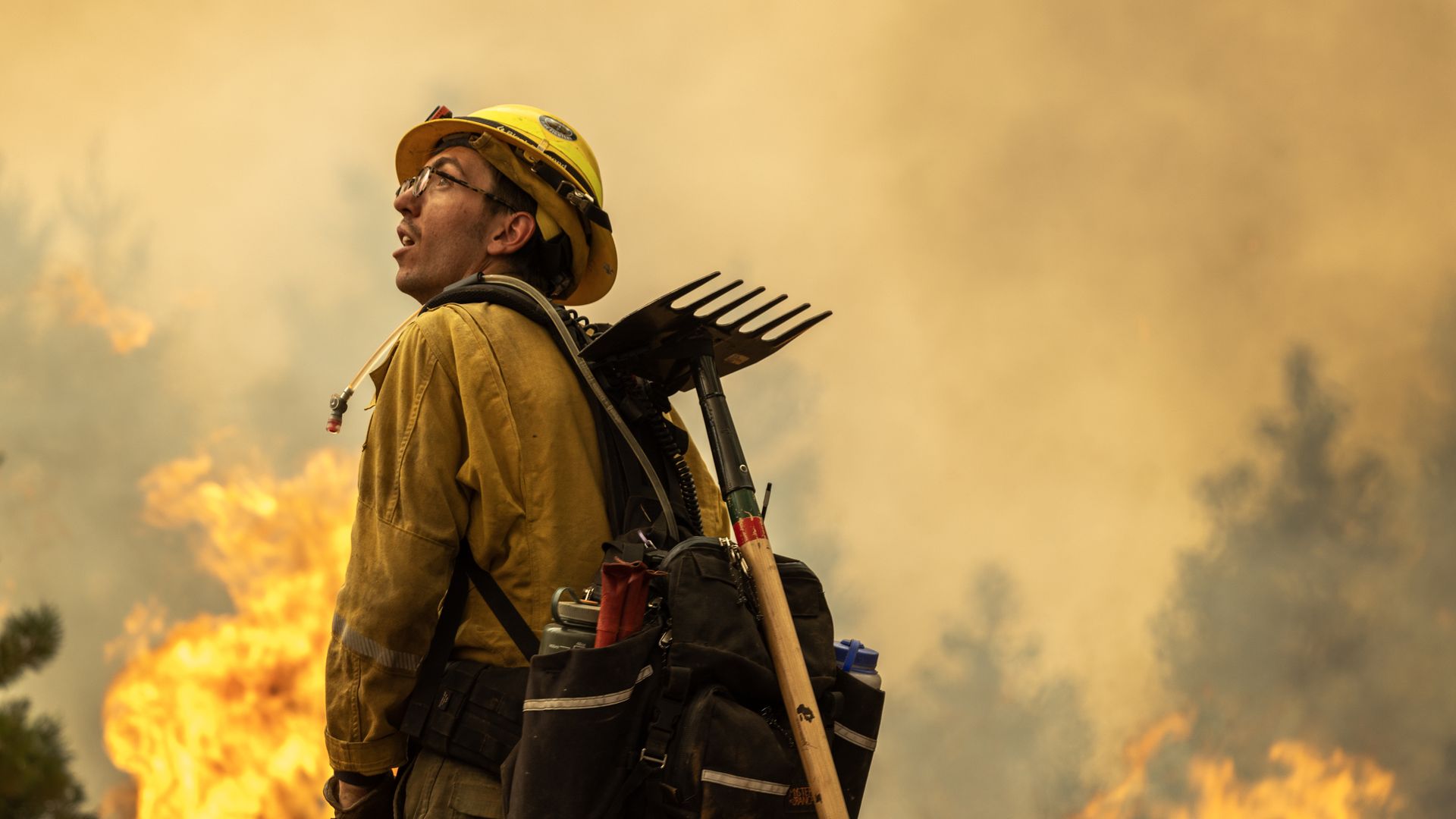
Flames quickly grow as firefighters set a backfire on the eastern front of the massive Park Fire near Chico, California, on Sunday. Photo: David McNew/Getty Images
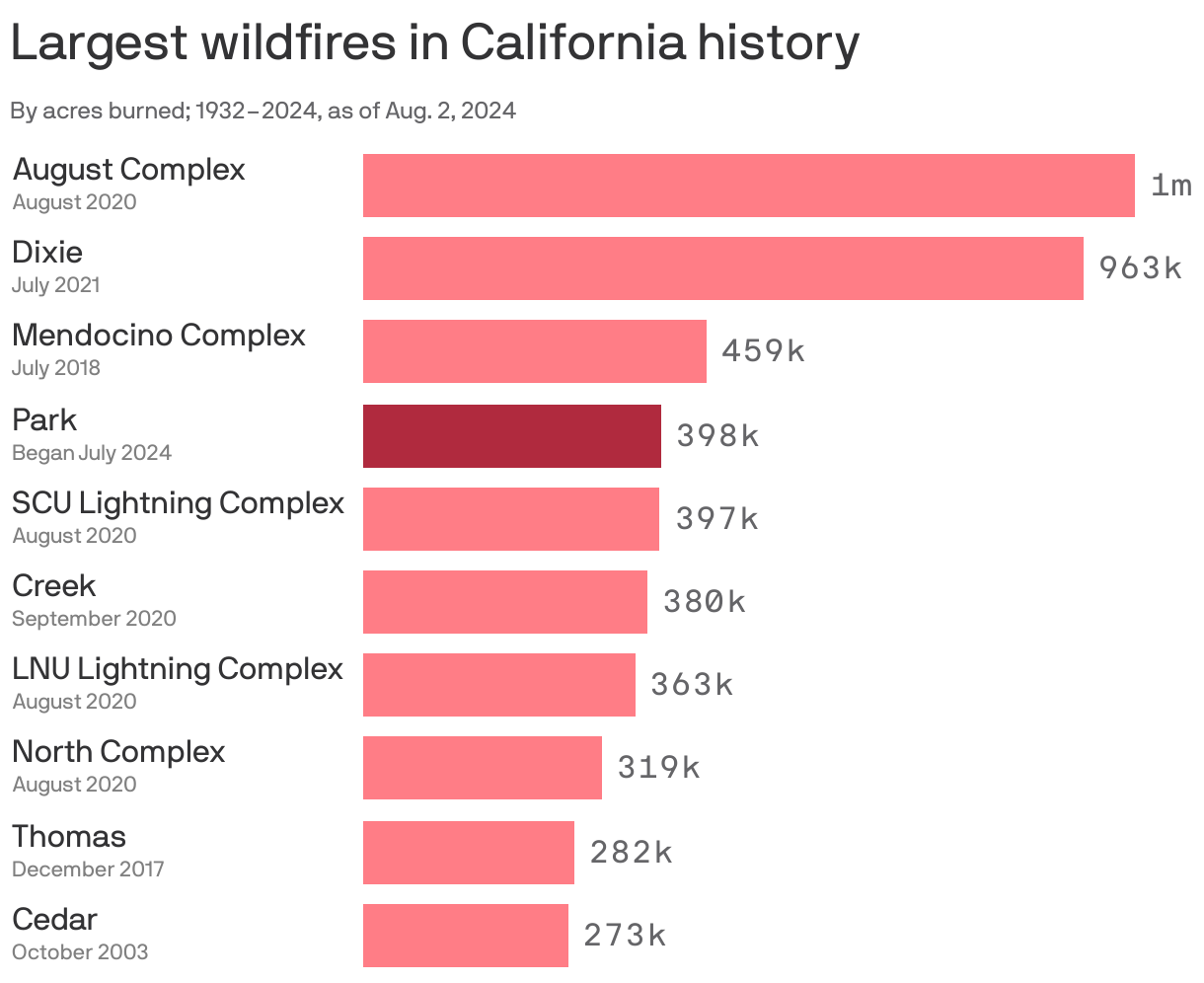
The Park Fire in northern California, propelled by extreme fire weather conditions, now stands as the state's fifth-largest on record after burning for less than a week.
The big picture: Allegedly started by an arsonist in Butte County on July 24, the blaze has consumed up to 150,000 acres per day and forced the closure of Lassen Volcanic National Park.
- It has also caused thousands to evacuate and burned an unknown number of structures across Butte, Plumas, Shasta and Tehama counties.
- The wildfire stood at 386,764 acres at 18% containment as of Tuesday evening, but officials warned at a Monday briefing that the swelling blaze remained "unstable and unpredictable" amid concerns it would continue to encounter forests that have not burned for decades.
- It eclipsed the size of the 2020 Creek Fire, which burned 379,895 acres.
Between the lines: These forests have been dried out by extreme heat so far this summer, with more heat on the way.
- While arson may have provided the spark that lit the blaze, climate change-related factors, including the heat and extreme dryness, plus land management policies have enabled its spread.
Zoom in: Based on radar data and observations from a network of fire-observing remote cameras, it appears this blaze has spawned multiple fire whirls and fire tornadoes.
- Its smoke plume has also formed towering clouds resembling thunderstorms, known as pyrocumulus clouds. They indicate extreme wildfire behavior, which complicates firefighting efforts.
- Essentially, the Park Fire has been manufacturing its own weather, as have other large wildfires burning in Oregon, Washington and Alberta, the Northwest Territories and British Columbia.
Zoom out: Much of the Canadian town of Jasper, Alberta, was damaged in a fast-moving blaze last week that officials said remained "out of control" as of Tuesday, though "occasional rain has provided some opportunity for direct suppression ahead of drier and challenging conditions which are expected into the weekend."
- The smoke from dozens of fires burning in North America has caused unhealthy air quality from northern California to Nevada, Idaho, the Pacific Northwest and north into Canada.
State of play: The Park Fire grew significantly on Saturday, and now threatens Lassen Volcanic National Park. The National Park Service has evacuated the area, and warns that structures there are at risk.
- "The fire has potential to reach both Manzanita Lake & Mineral HQ," the park stated via X. "Highway 89 through the park is closed to the public due to the Park Fire and is only open as an evacuation route," per a park statement.
- Butte County authorities announced Thursday the arrest of a 42-year-old Chico man on suspicion of starting the Park Fire, California's biggest blaze this year, which saw residents in some areas rescued by helicopter near the rural town of Cohasset early Thursday due to cut-off escape routes.
Context: Human-caused climate change has greatly increased the odds of heat waves and made them more intense and longer lasting.
- These trends are especially evident in the western U.S.
- Climate change has also increased the occurrence of days with extreme wildfire weather conditions, when blazes can spread quickly and behave erratically. That has been the case since the Park Fire started.
What they're saying: Neil Lareau, who researches wildfires at the University of Nevada at Reno, told Axios that how this fire has spread sets it apart from other large events.
- "The extreme growth, and the really broad fire front both stand out," he said via email. At times, the fire's front edge stretched for 35 miles from one side to the next.
- He cited heat waves that "rapidly" dried out vegetation along with a mix of grasses and timber as factors that have allowed the fire to expand so quickly.
- Rotating columns of fire and smoke were observed late last week in this fire, Lareau said, as south-to-north winds near the surface encountered southwest winds aloft.
- This may have led to the formation of fire tornadoes, and made it more difficult for firefighters to attack the blaze, he said.
What's next: Forecasts show another heat wave is likely to affect the West, including the region where the Park Fire is burning, by late this week, lasting into early August.
- This is likely to yield dangerous fire weather conditions, and could cause the blaze to spread further.
Go deeper: How wildfire smoke impacts your health
Editor's note: This a breaking news story. Please check back for updates.
