West Coast faces record temps as 150M under heat alerts across U.S.


Add Axios as your preferred source to
see more of our stories on Google.
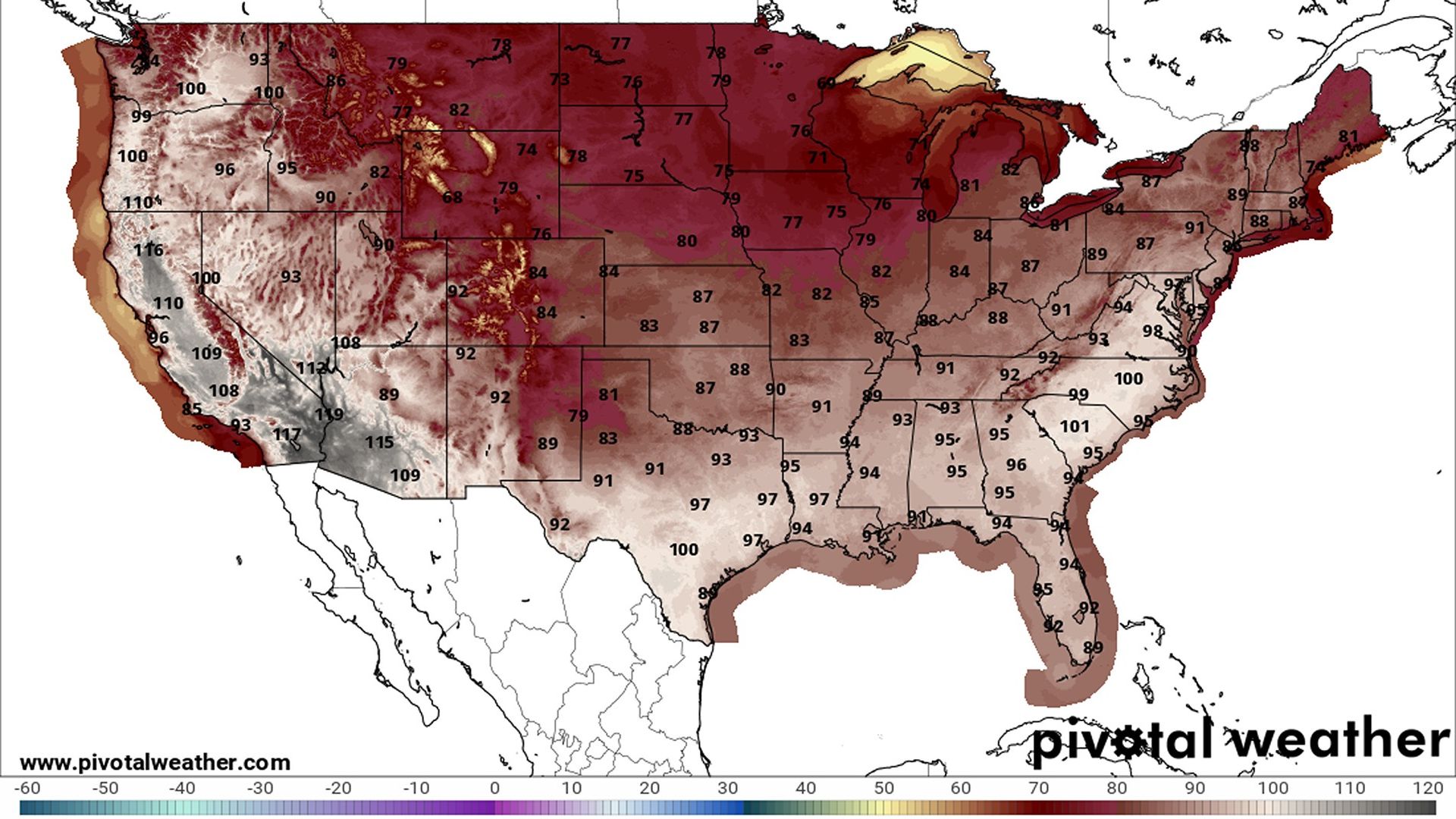
A map of maximum daily temperatures forecast by the NWS that are effective through 8pm Friday ET. Image: Pivotal Weather
Heat alerts are impacting nearly 150 million people in at least 21 states — and forecasters warn potentially deadly high temperatures may linger in many places well beyond the Independence Day holiday weekend.
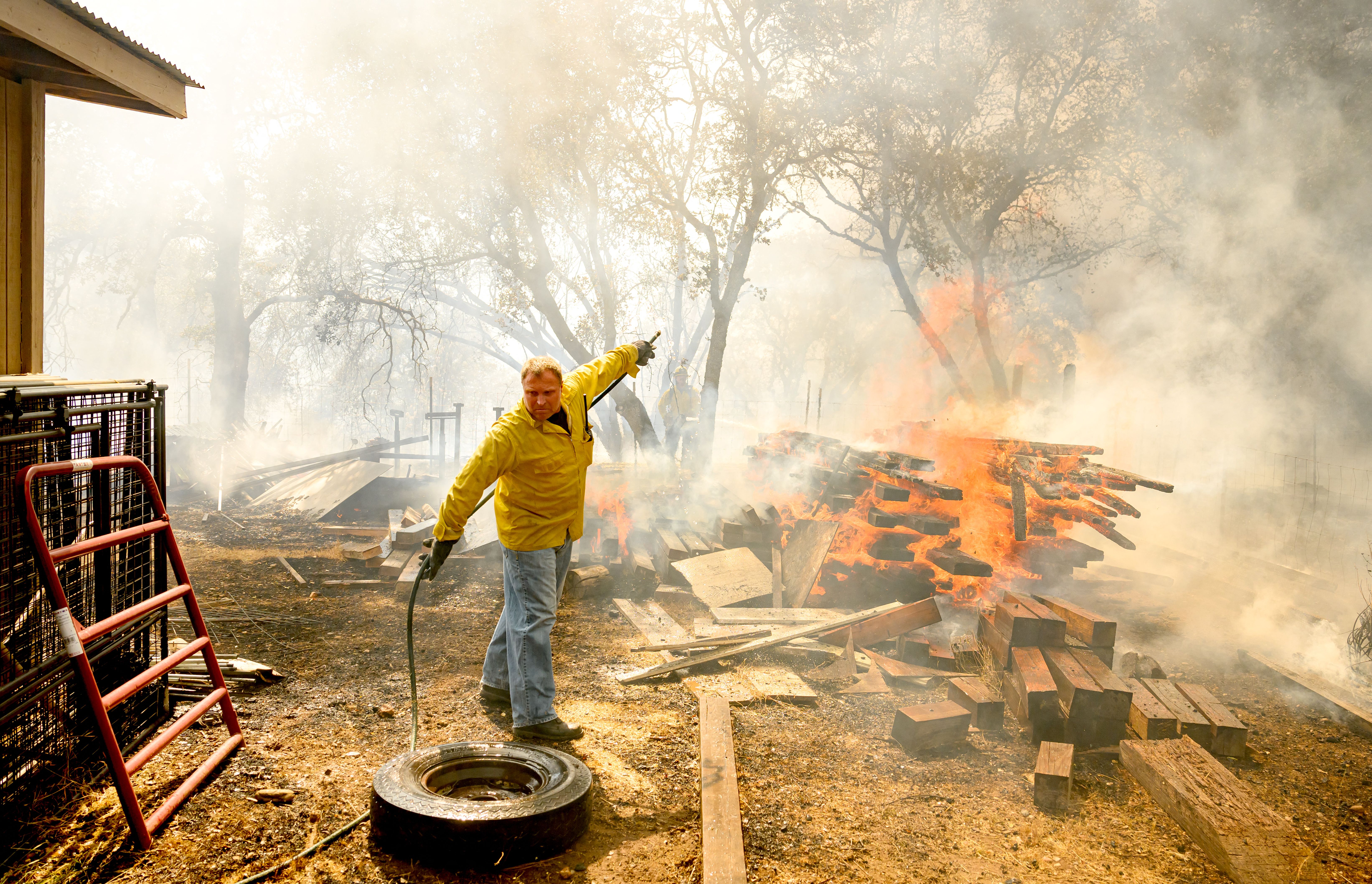
The big picture: With July 4 holiday travel expected to hit an all-time high, record-breaking temperatures are set to continue for up to two weeks across the U.S. West — where 18 large fires are burning. "Dangerous" heat is expected across the South and Mid-Atlantic through the weekend and into next week.
Threat level: Triple-digit high temperatures were expected across the U.S., with excessive heat warnings affecting more than 43 million people on Thursday night, per the National Weather Service.
- Heat was forecast to intensify and spread further up the West Coast through this weekend with more record-breaking temperatures expected, while heat index values of up to 110 degrees were possible amid "oppressive hot and humid conditions spreading into the Southeast and Mid-Atlantic.
- "Dozens of record highs are possible, expressing the rarity of this early-July heatwave," per the NWS said.
- With warm overnight lows set to continue, the NWS urged people in affected states to remain "weather aware and follow the advice of local officials" in taking precautions against the extreme heat, which is the top weather-related killer in the U.S.
State of play: Excessive heat warnings along the West Coast stretched from parts of Washington, Oregon, much of California and portions of Nevada and Arizona.
- Parts of Texas, Oklahoma and Arkansas, were also under excessive heat warnings. Heat advisories stretched from Alabama to Washington, D.C.
In California, red flag warnings are in effect for much of the state, which has been impacted by intense heat since Tuesday.
- New daily temperature records have already been set across the West — including in the California cities of Livermore and San Rafael, which the National Weather Service noted reached 110°F and 100°F, respectively.
- It's possible that Death Valley, California, home to the hottest U.S. temperatures ever reliably measured, could smash or tie the world record, with temperatures above 130°F possible, per the NWS.
The NWS' Bay Area office warned in a forecast discussion that people, pets, livestock and infrastructure were all at risk from the excessive heat that's expected to last for at least a week, with overnight lows unlikely to dip below the mid-80s in some places.
"[It's] very likely that we will see a number of heat- related fatalities throughout this event, not just from homeless populations who may not be able to escape the lethal heat, but from housed people too that perhaps— Excerpt from NWS Bay Area forecast discussion
lack air conditioning (which many houses in the Bay Area do lack
...), or perhaps simply cannot afford to turn it on, even if
they have it."
In Nevada, the NWS' Las Vegas office warned an excessive heat warning would be in effect through at least Monday due to the "rare and dangerous long duration heatwave" across the region,"with temperatures expected to soar 12°F-14°F above seasonal averages through the rest of the forecast period."
- Las Vegas is forecast to break its all-time record high temperature two days in a row, with a forecast high of 118°F on Monday and Tuesday.
Oregon Gov. Tina Kotek announced Wednesday preparedness measures for the enduring heat wave that included opening cooling centers across the state.
- Climate Central research shows about half of Seattle lives in heat islands where warmth is trapped by hard surfaces such as parking lots and pavement, making them typically at least 8 degrees warmer than surrounding areas, Axios' Christine Clarridge notes.
Across the lower Mississippi Valley, high temperatures rising into the upper 90s and low 100s were expected, with heat indices soaring into the 110s across the lower Mississippi Valley.
- "Warm overnight conditions in the upper 70s and low 80s will offer little relief, leading to a dangerous situation for those without access to adequate cooling," per the NWS.
Much of the Interstate 95 corridor was also impacted by heat advisories.
Between the lines: In California in particular, this heat wave, with more than a week of highs in the 110s°F in many inland areas, will be one of the most notable events of the past few decades for its duration and intensity.
- Human-caused climate change, largely from burning fossil fuels such as coal and natural gas, has greatly increased the odds of heat waves and led them to become more intense and longer lasting, multiple studies show.
- Research shows that climate change is leading to larger, more frequent wildfires in the West, which are exhibiting more frequent instances of extreme behavior that makes them more difficult to contain.
Editor's note: Axios D.C.'s Cuneyt Dil contributed reporting. This story has been updated with additional developments.
