"Life-threatening" heat wave hits California as wildfires burn

Add Axios as your preferred source to
see more of our stories on Google.
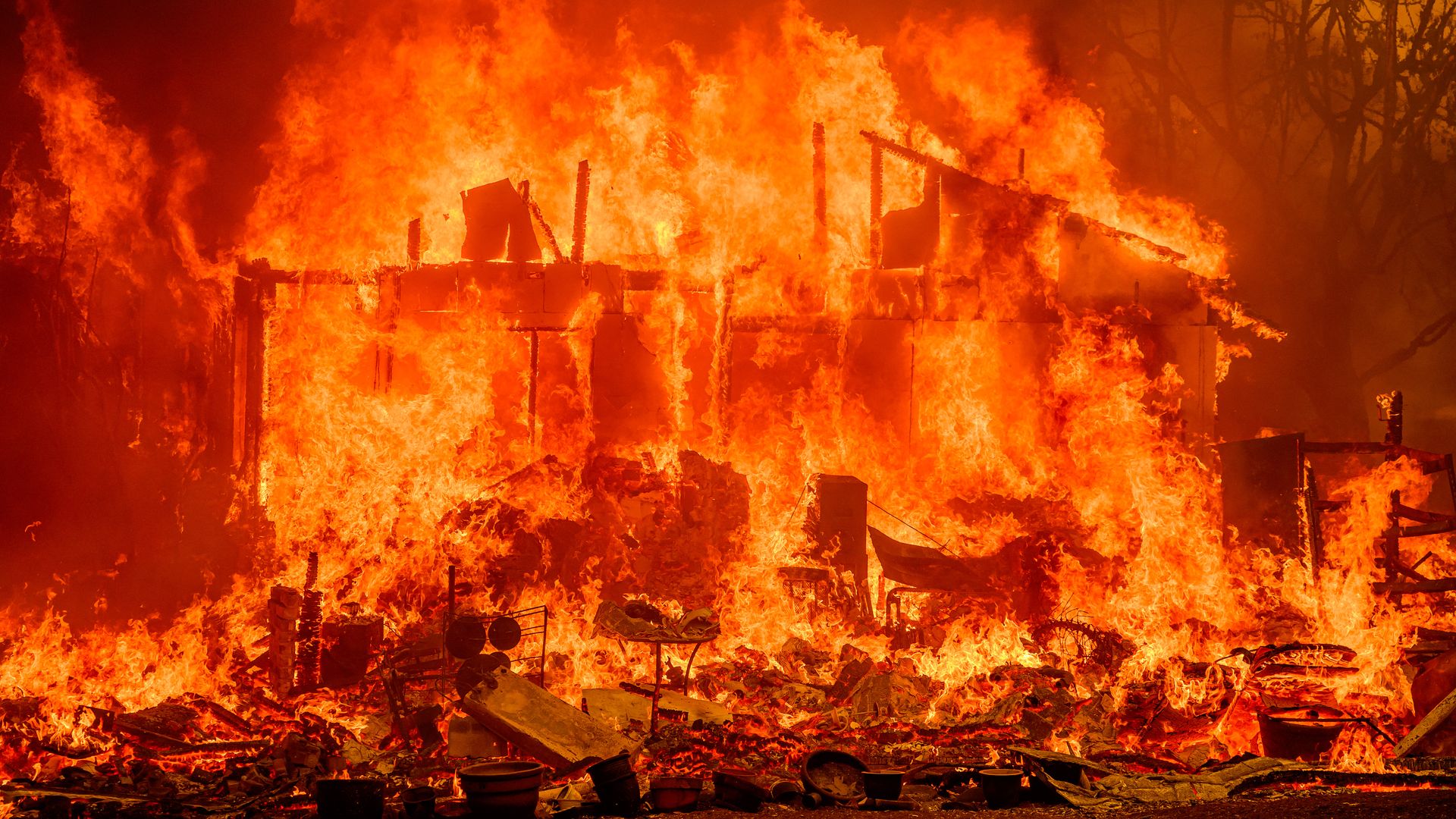
Flames engulf a home during the Thompson fire in Oroville, Calif. Photo: Josh Edelson/AFP via Getty Images.
Editor's note: Read the latest on the heat wave in the West and across the U.S. here.
California's heat wave that began Tuesday looks more intense and longer-lasting than expected, potentially pushing it into all-time record territory.
Why it matters: Up to two weeks of record-breaking heat is on tap across much of California, Oregon and portions of Nevada.
- Already, damaging wildfires have broken out, and the heat itself will be "life-threatening," according to the National Weather Service.
Zoom in: The Thompson Fire in Oroville, fueled by 100-degree-plus temperatures and strong winds, burned homes overnight.
Zoom out: Human-caused climate change, largely from burning fossil fuels like coal and natural gas, is dramatically increasing the odds of heat waves as well as their intensity and duration.
- Including the alerts across the West and more humid heat across the South, a total of 140 million people were under heat warnings and advisories in the Lower 48 states as of midday Wednesday.
Threat level: This heat wave, with highs in the 110s°F in many inland areas, will be highly unusual for its duration and intensity.
- Dozens of daily, monthly and even some all-time records may fall. Redding, Calif. may reach 120°F, while Death Valley could tie its record for the hottest temperature reliably recorded on Earth, at 130°F.
- "I'm not so sure that really any of us will have seen this many days at this sustained level of heat, both daytime and most importantly nighttime heat," said UCLA climate scientist Daniel Swain in a video briefing Tuesday evening.
- Many locations won't go below 70°F, or even 80°F, for more than a week, making cooling access paramount.
- "It cannot be stressed enough that this is an exceptionally dangerous and lethal situation," the NWS office in San Francisco stated early Wednesday.
Between the lines: The heat will rapidly dry out vegetation, making it susceptible to wildfires.
- The Thompson Fire, which occurred on day one of the event, may be a preview of more destructive fires to come.
- Swain said vegetation that is abundant after a wet winter, will rapidly reach record dry levels for mid-July, due to the combination of daytime and nighttime heat.
- The July Fourth holiday threatens to cause more fires, with more people heading into the outdoors, setting off fireworks and pursuing other activities that could ignite fires.
The NWS has issued excessive heat warnings and advisories for unusually long periods, covering Tuesday through next Wednesday in some cases.
- There are signs in computer model projections that this event won't end then either.
- "It's just going to be day after day after day of heat," Swain said.
By the numbers: Computer models the National Weather Service uses show Sacramento remaining above 110°F for daytime highs this week, and only declining to the low 100s°F next week.
- Many inland areas of California are likely to see high temperatures climb all the way to 115°F on multiple days.
- So far, computer models, while flagging the heat wave more than one week in advance, have underestimated the heat's potency and duration.
- The heat and wildfires have economic consequences in addition to threatening human health.
- A report issued this week by the California Insurance Commissioner found that heat waves in the past several years have killed more people in the state than its deadliest wildfires, and cost billions in lost wages, infrastructure damage and other costs.
What they're saying: The NWS is warning of the risks this heat wave poses.
- "Dozens of record highs are possible, expressing the rarity of this early-July heatwave," forecasters wrote in an online discussion Wednesday morning.
- "The duration of this heat is also concerning as scorching above average temperatures are forecast to linger into next week. Heat impacts can compound over time, therefore it is important to remain weather aware and follow the advice of local officials."
The bottom line: This is a heat wave for the record books, with potentially lethal outcomes.
