What's next for Trump's criminal cases after SCOTUS immunity ruling

Add Axios as your preferred source to
see more of our stories on Google.
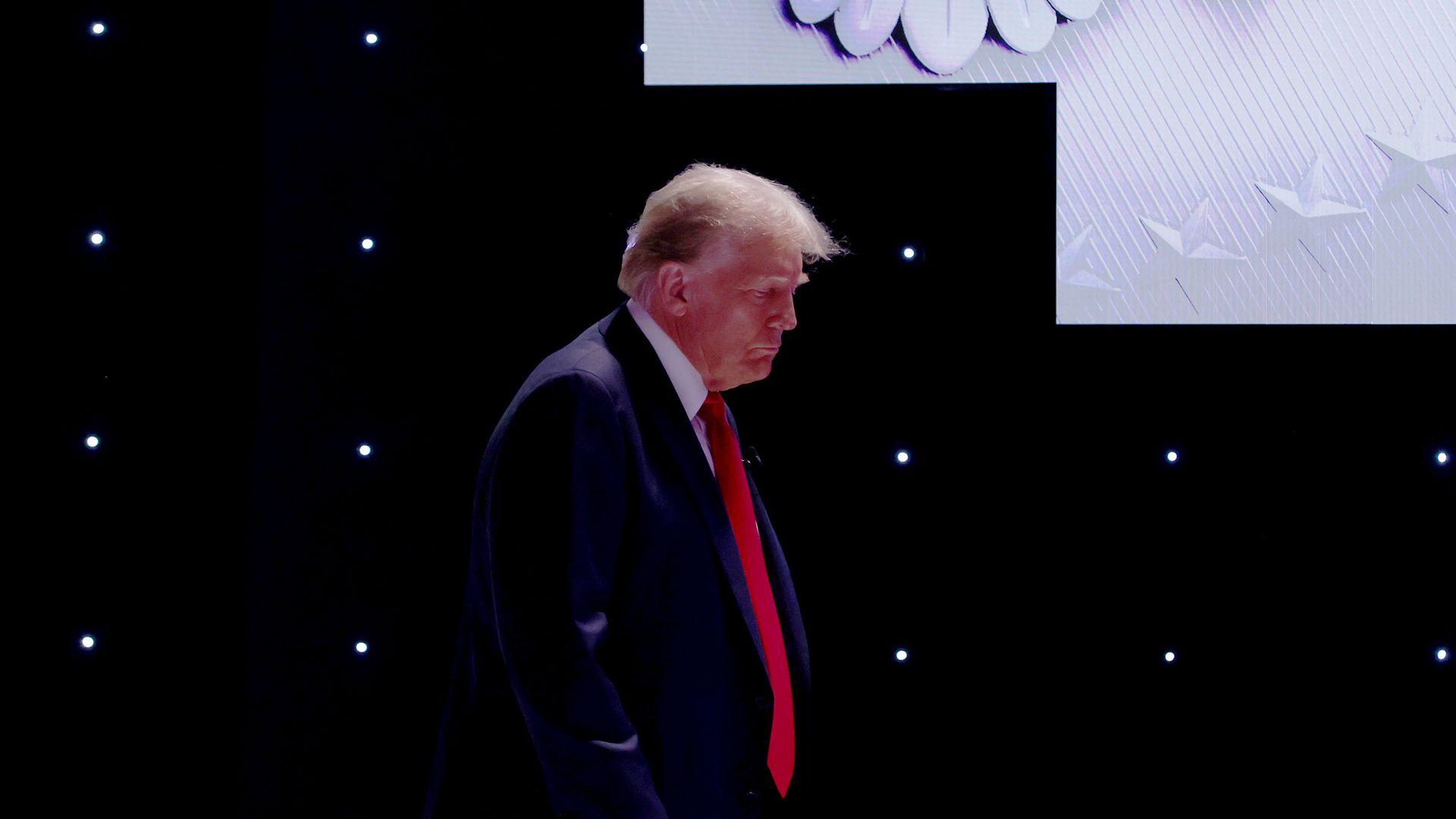
Former President Donald Trump in Atlanta in June. Photo: Justin Sullivan/Getty Images
The Supreme Court's ruling on former President Trump's immunity claims on Monday likely ensures that the federal criminal case stemming from his actions around Jan. 6 won't go to trial before this year's presidential election.
Why it matters: The court's ruling gave Trump immunity from criminal prosecution for "official acts" taken while in the White House, but left it up to lower courts to determine if most of the criminal acts Trump was accused of in the Jan. 6 indictment are "official" or not.
- The Supreme Court ruled Monday that he and other former presidents have "absolute immunity" from prosecution for their constitutionally defined authority, "presumed immunity" for other official acts and "no immunity" for unofficial acts.
Catch up quick: Trump, who was recently convicted for the first time in his New York hush money trial, has sought "absolute" presidential immunity in his three other criminal cases, including the classified documents case against him.
- During oral arguments in April, a majority of the justices appeared inclined to agree that former presidents should have at least some protection from criminal charges, but not the "absolute immunity" Trump sought.
What comes next
The lower court judges overseeing the Jan. 6 and classified documents cases against Trump now have to determine how the Supreme Court's decision applies to those cases, which could be a lengthy process.
- U.S. District Judge Tanya Chutkan — who is overseeing Trump's Jan. 6 case — will determine if some of the acts Trump is accused of in the Jan. 6 indictment are "official" or not.
- If they are, Trump likely can't be criminally prosecuted for them and they will likely be dropped.
The Supreme Court, however, ruled Monday that Trump has immunity from some of the conduct alleged in the Jan. 6 indictment.
- Chief Justice Roberts, writing the court's majority opinion, said Trump is "absolutely immune from prosecution for the alleged conduct involving his discussions with Justice Department officials" because those conversations fell within "his exclusive constitutional authority."
- Roberts also wrote that he "is at least presumptively immune" from prosecution for the indictment's allegation that he and his allies attempted to pressure Vice President Mike Pence to fraudulently alter the election results because Trump was engaging in "official conduct" at the time.
The Supreme Court's ruling will also likely affect Georgia's election inference case against the former president.
- The state, led by Fulton County DA Fani Willis, alleged Trump and his allies attempted to overturn Georgia's 2020 election results by pressuring state officials to tamper with vote counts and by organizing a fake slate of pro-Trump electors.
- In its ruling, the Supreme Court said it could not "neatly" determine whether these acts were official and asked "the District Court to determine in the first instance—with the benefit of briefing we lack—whether Trump's conduct in this area qualifies as official or unofficial."
Impact on 2024 election
The Supreme Court's decision makes it all but certain that voters will not know whether the presumed Republican nominee violated the law by attempting to overturn an election.
- If Trump is elected, he may never go to trial over the alleged criminal conduct, as prosecuting a sitting president goes against current Justice Department policy.
- If the case against Trump is dropped or indefinitely paused, the question of whether efforts to tamper with vote counts, pressure state officials to overturn results and decertify election outcomes fall within the president's official acts would remain unresolved.
How we got here
The Supreme Court agreed in February to take up Trump's immunity claims in his federal Jan. 6 case, which has been frozen since December 2023 pending a final decision on the claims.
- Last year, the court denied special counsel Jack Smith's request to immediately fast-track its consideration and decision on the claims.
Zoom out: Trump's lawyers argued throughout the appeals process that he should not be charged for any crimes he may have committed because he was acting within his official capacity as president around the 2020 election.
- They have also repeatedly claimed that denying Trump immunity could restrict future presidents' approach to leading the country over fear of criminal prosecution after leaving the White House.
The other side: Smith previously argued that Trump's immunity defense, if upheld, would damage the rule of law and the country's democratic process.
- He has argued presidents might assert they are executing laws while committing severe violations.
- Other federal prosecutors argued that Trump's claim went against the framers' intentions of allowing the judiciary to hold an executive accountable.
Go deeper: The Supreme Court vs. the executive branch
