Supreme Court rules Trump has immunity for "official acts"


Add Axios as your preferred source to
see more of our stories on Google.
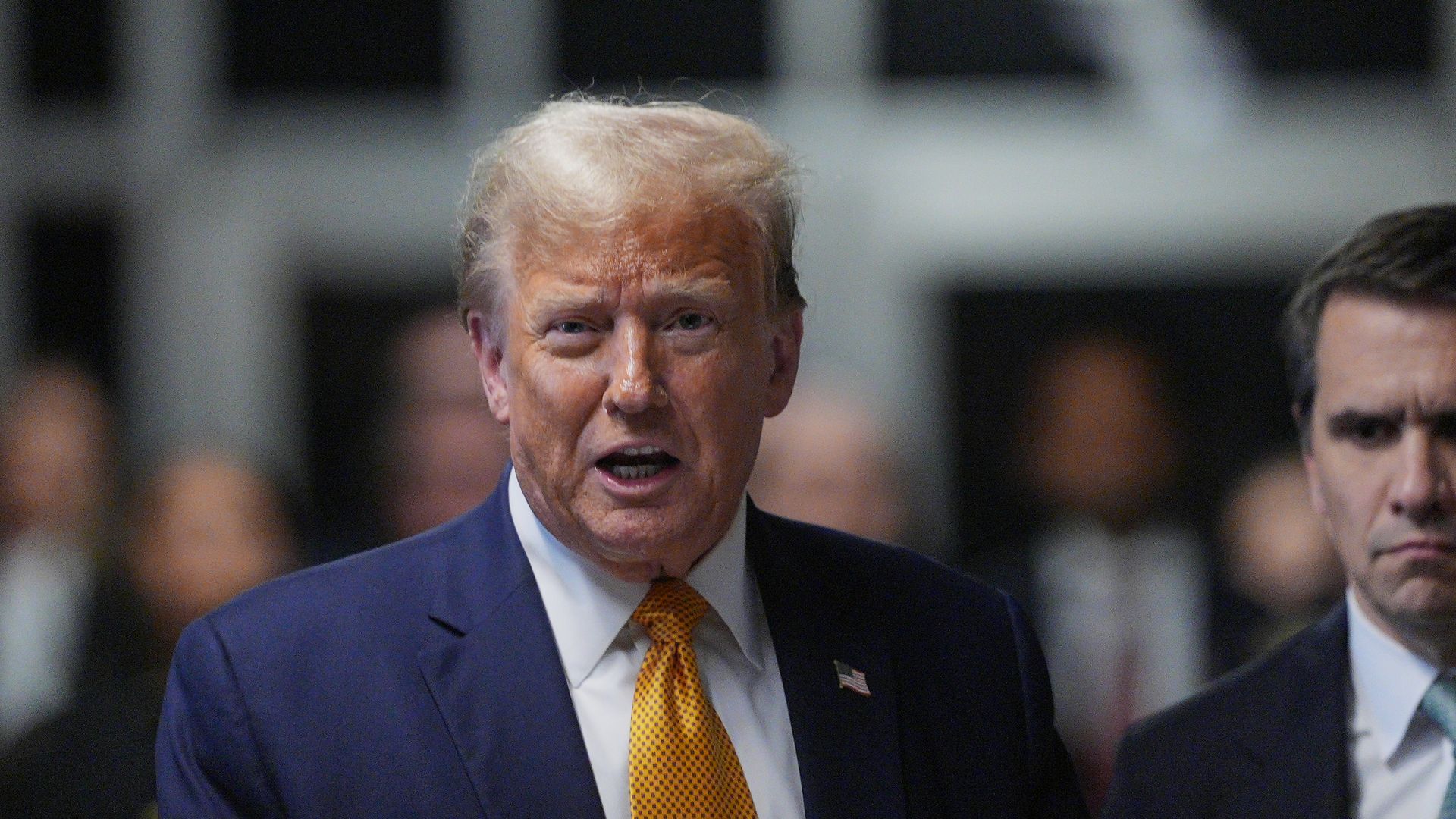
Former President Trump speaks at Manhattan Criminal Court on May 14 in New York City. Photo: Curtis Means - Pool/Getty Images
The Supreme Court on Monday ruled that presidents have immunity for "official acts," but punted to the trial court the question of whether former President Trump's alleged conduct in his Jan. 6 case was protected.
Why it matters: The 6-3 decision, though not a sweeping victory for Trump, all but guarantees that his Jan. 6 case won't go to trial before this year's presidential election.
- The trial had originally been scheduled to take place earlier this year, but was postponed indefinitely.
Driving the news: A former president is entitled to "absolute immunity from criminal prosecution for actions within his conclusive and preclusive constitutional authority," Chief Justice John Roberts wrote in the majority opinion.
- The former president is entitled to "presumptive immunity" for other official acts but "no immunity for unofficial acts," he added.
- It is now up to U.S. District Judge Tanya Chutkan — who is overseeing Trump's Jan. 6 case — to determine whether the acts Trump is accused of in the indictment are "official" or not.
Zoom in: Roberts wrote that Trump is "absolutely immune" from prosecution for any conduct in the indictment involving his discussions with Justice Department officials.
- Roberts wrote that Trump's alleged attempts to get then-Vice President Mike Pence not to certify the electoral college votes "involve official conduct."
- Trump is "at least presumptively immune" from allegations that he pressured Pence, he continued. However, Roberts said it was up to the district court to make the final decision on whether that pressure was outside of the scope of Trump's "official" duties.
The other side: The court's three liberal-leaning justices condemned the majority's ruling.
- "Let the President violate the law, let him exploit the trappings of his office for personal gain, let him use his official power for evil ends ... That is the majority's message today," Justice Sonia Sotomayor wrote in her dissent.
- "The relationship between the President and the people he serves has shifted irrevocably. In every use of official power, the President is now a king above the law," she added.
What they're saying: Trump celebrated the ruling in a Truth Social post Monday, calling it a "big win for our constitution and democracy."
- In a separate post, Trump added that the ruling "should end all of Crooked Joe Biden's Witch Hunts against me."
- A senior Biden campaign adviser told Axios that the ruling "doesn't change the facts" about Trump's actions around Jan. 6.
- Trump "thinks he's above the law and is willing to do anything to gain and hold onto power for himself," they added.
- President Biden denounced the ruling in a Monday evening address as a "dangerous precedent" that "almost certainly means that there are virtually no limits what the president can do."
The big picture: The Supreme Court heard oral arguments in April over Trump's argument that ex-presidents cannot be prosecuted for crimes committed while in office.
- At the time, the justices appeared poised to rule that former presidents have some immunity, but not the "absolute immunity" that Trump contended, Axios' Sam Baker reported.
- Trump's team argued that his actions before the 2020 presidential election were within the "outer perimeter" of the president's official duties.
- They also argued that if Trump is not granted blanket immunity, future presidents may be restricted in how they lead out of fear of criminal prosecution after leaving the White House.
State of play: Trump, who was convicted on 34 felony counts in his New York hush money trial in May, has repeatedly sought to delay his three other criminal cases.
- If he wins back the White House in November, he could order the Justice Department to drop his federal charges.
Go deeper: Trump's trial trap: Voters to be his most important jury
Editor's note: This story was updated with additional details from the ruling and with comment from President Biden.
