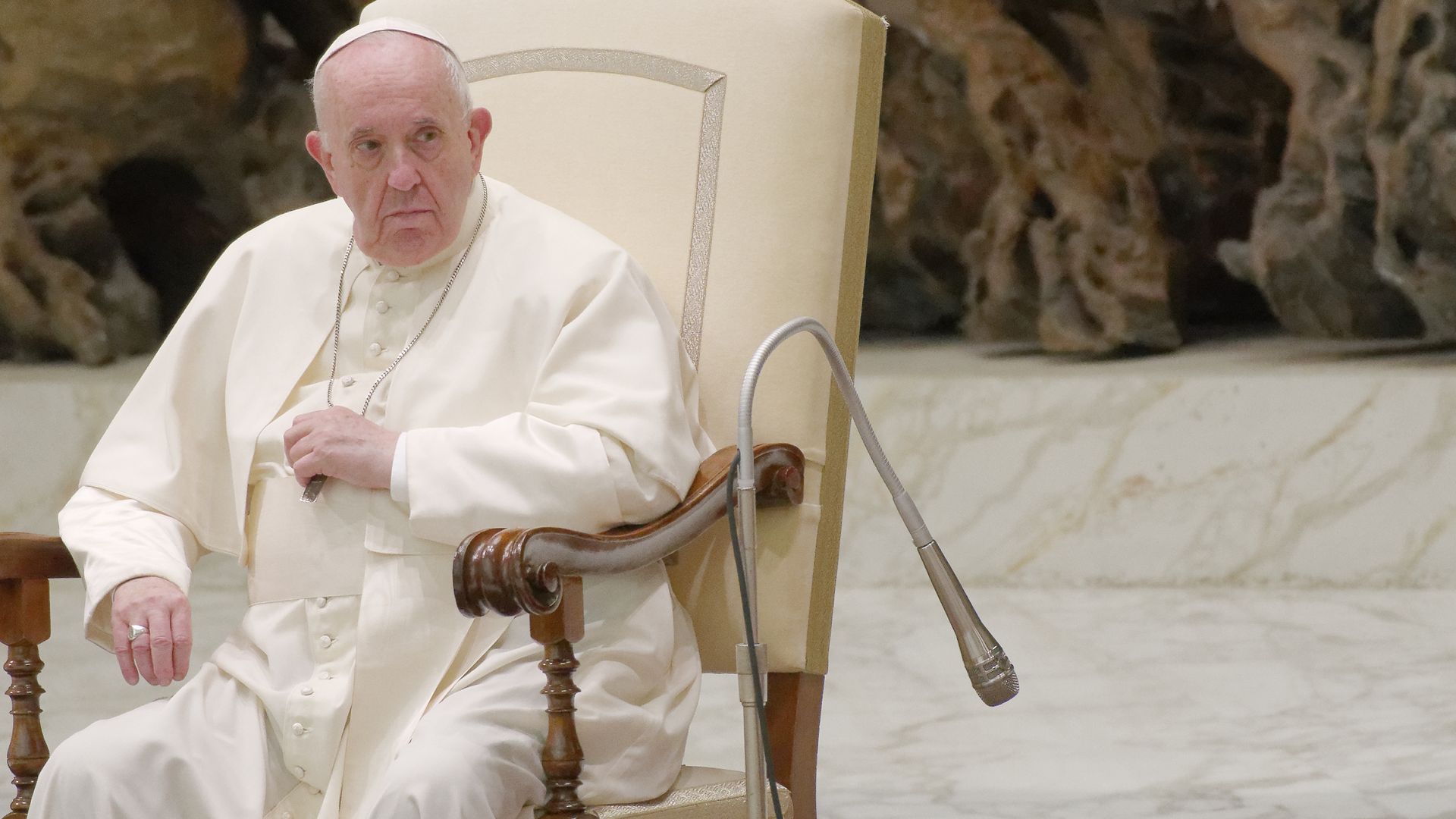
Pope Francis called on pharmaceutical companies on Saturday to release patents to make COVID-19 vaccines more accessible to the poor, Reuters reports.
Why it matters: There is a stark divide between countries that have access to COVID-19 shots and those that don't, and the gap has widened as some wealthier countries have begun distributing third doses.
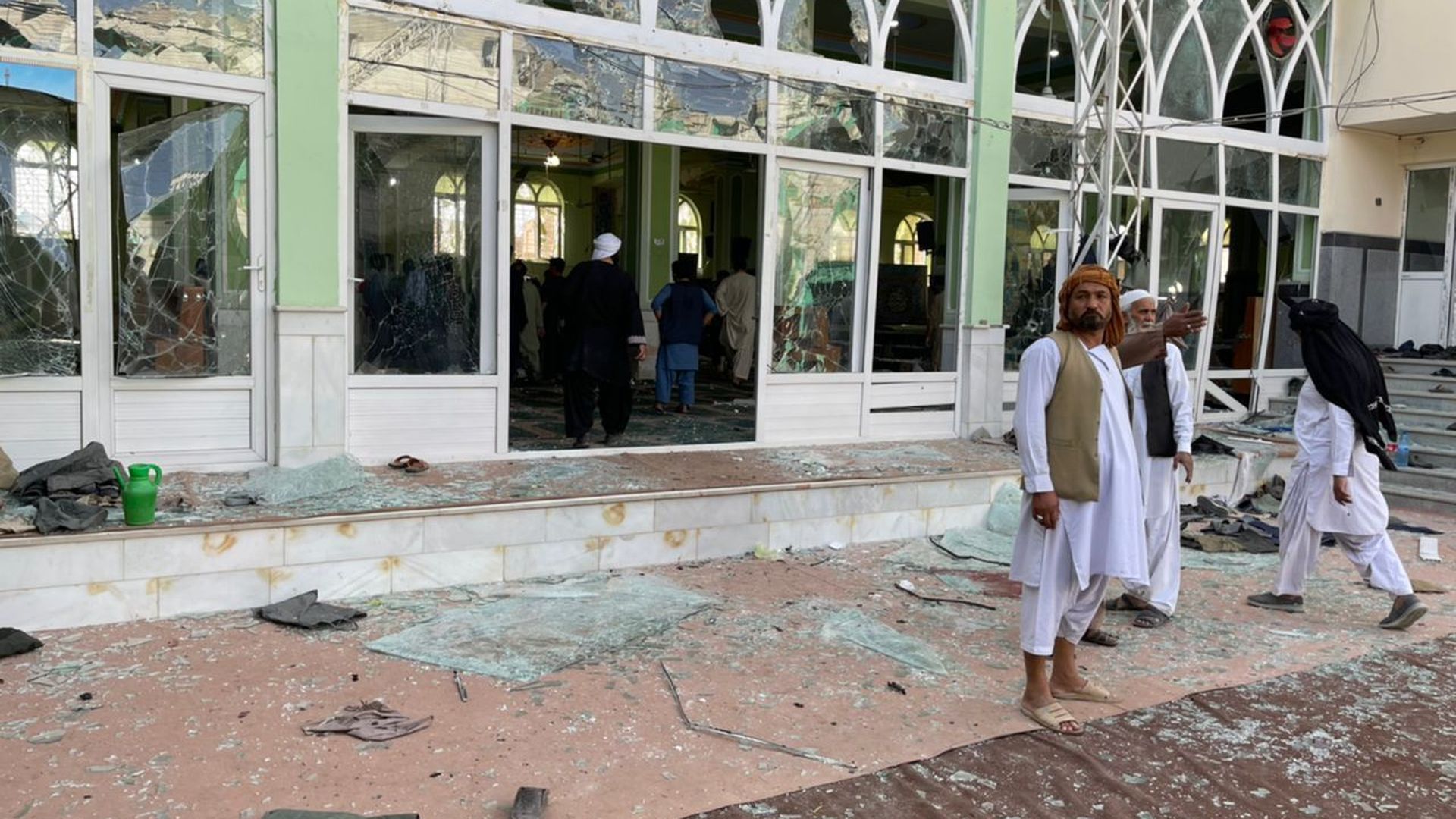
The Islamic State group claimed responsibility for a massive blast that tore through a crowded Shiite mosque in the southern Afghan city of Kandahar on Friday, killing at least 47 people and injuring dozens more, AP reports.
Why it matters: Friday's attack was the deadliest to strike Afghanistan since the U.S. withdrew its troops from the region and is the second major attack on a Shiite mosque in a week, underscoring the Taliban's growing security threat from other militant groups.
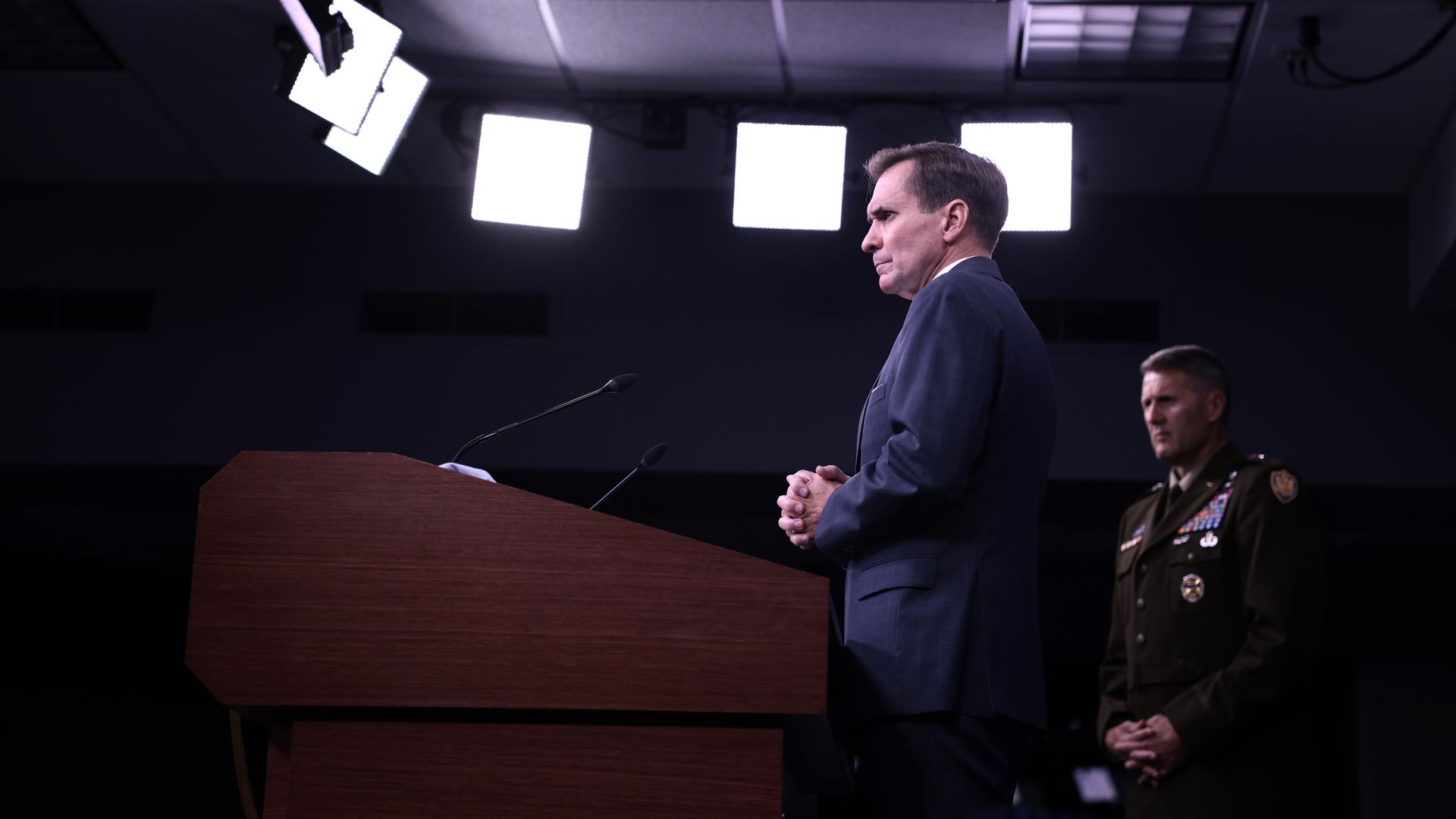
The Pentagon has offered unspecified payments as a condolence to the families of 10 Afghan civilians, including seven children, who were killed in an Aug. 29 U.S. drone strike in Kabul.
Why it matters: Though U.S. military officials initially said the drone strike targeted an Islamic State member, they later admitted that Zemari Ahmadi, an aid worker who was driving the car struck by the drone, was an innocent victim.
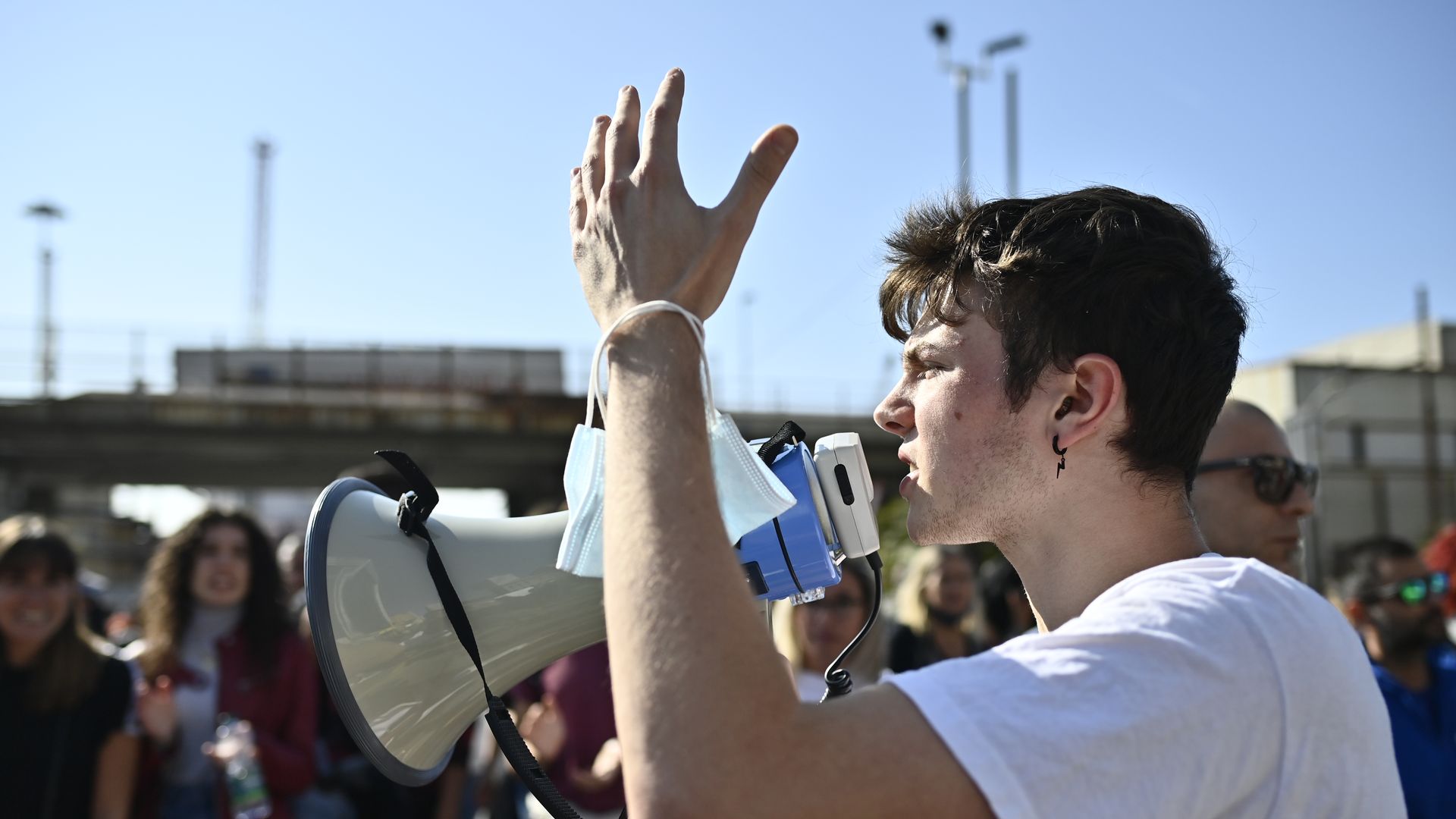
Italy began enforcing one of the world's strictest workplace vaccination policies on Friday, risking protests and worker strikes, the Washington Post reports.
Driving the news: The policy requires all employees — in both public and private sectors — to have a "Green Pass," which shows workers have proof of vaccination, a negative test or have recently recovered from COVID-19, per AP.
A bipartisan group of lawmakers has announced a new bill that would establish an interagency task force to craft a response to China's use of economic measures to further its geopolitical goals.
Why it matters: The draft bill represents growing awareness in the U.S. that economic coercion is a cornerstone of the Chinese Communist Party's ability to project authoritarianism beyond its borders.