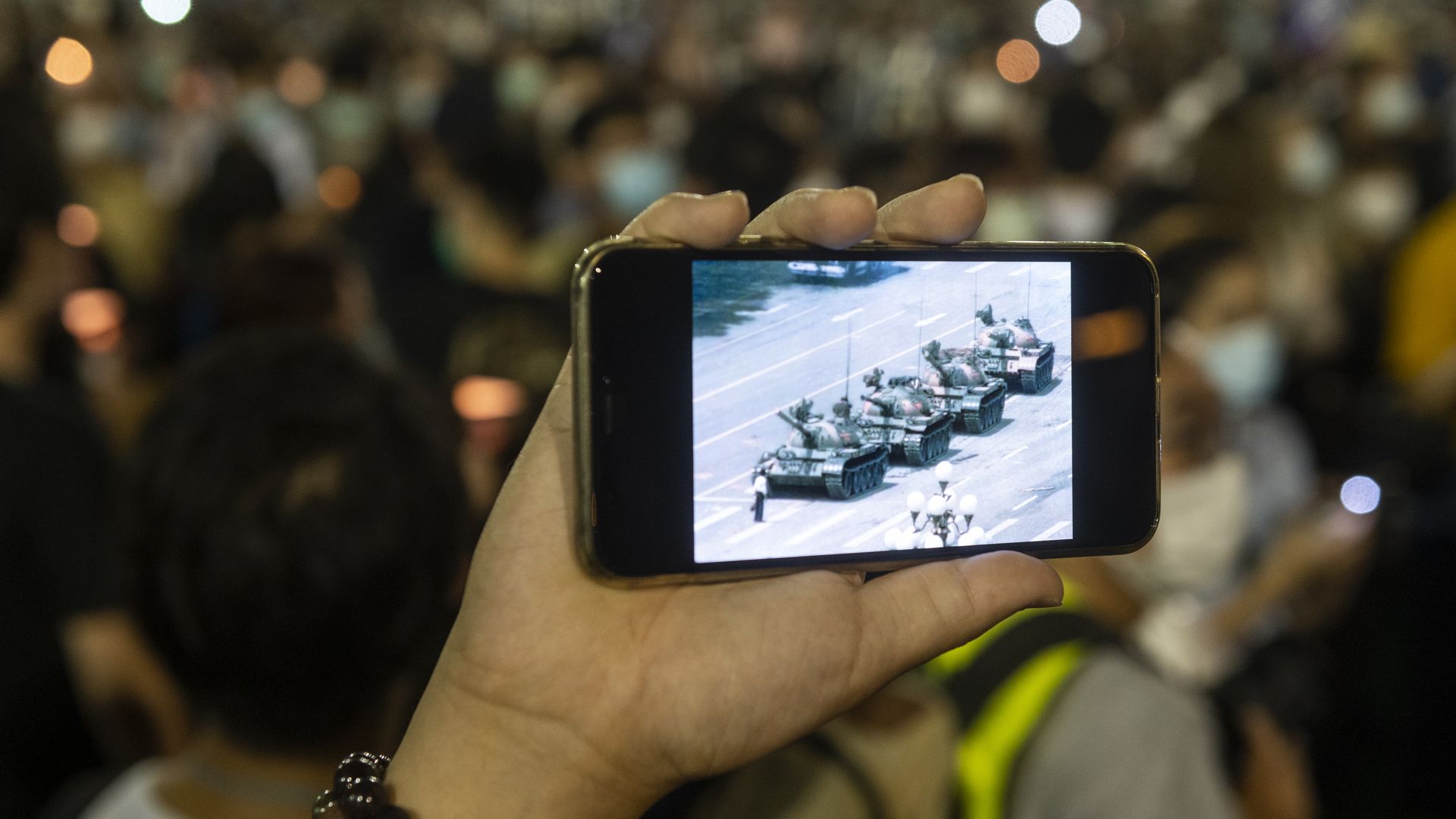
U.S. video conferencing company Zoom issued a statement on Thursday acknowledging that the Chinese government requested that it suspend the accounts of several U.S.- and Hong Kong-based Chinese activists for holding events commemorating the anniversary of the 1989 Tiananmen Square massacre.
The big picture: Zoom claims that it only took action because the Chinese government informed the company that "this activity is illegal in China" and that meeting metadata showed "a significant number of mainland China participants." Zoom said it does not have the ability to block participants from a certain country, and so it made the decision to end some of the meetings and suspend the host accounts.
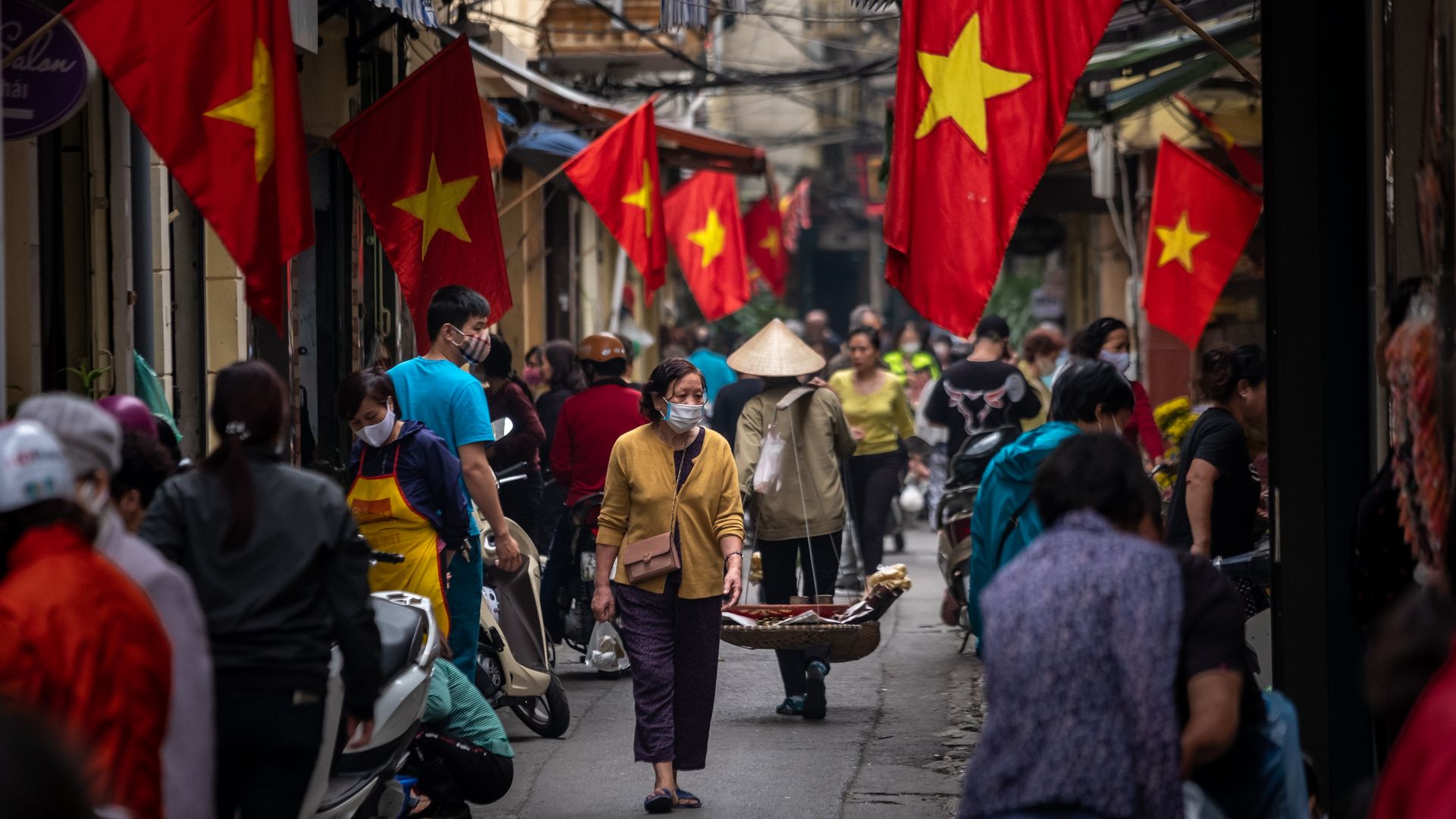
It’s hard to say which is more remarkable: that Vietnam has recorded zero COVID-19 deaths despite a population of 96 million, or that the communist government expects the economy to grow by 5% this year during a massive global recession.
Why it matters: Both numbers deserve some scrutiny, but there’s no evidence a major outbreak is being covered up, and the bullishness about Vietnam’s economy is shared by the IMF and World Bank (though their growth estimates are lower). The southeast Asian country may ultimately be the pandemic’s biggest success story.
The Trump administration and Israel coordinated the U.S. authorization of sanctions against the International Criminal Court announced Thursday during Secretary of State Mike Pompeo’s short visit to Jerusalem last month, Israeli officials tell me.
Why it matters: The prosecutor of the ICC had decided to open an investigation against Israel for alleged war crimes in the West Bank and Gaza pending a review by the court's judges. The judges will make a decision soon, and Israel is seeking to use U.S. sanctions to pressure them into shutting down the investigation.
The U.S. video-conferencing company Zoom closed the account of a group of prominent U.S.-based Chinese activists after they held a Zoom event commemorating the 31st anniversary of the June 4 Tiananmen Square Massacre, Axios has learned.
Why it matters: Zoom has faced growing scrutiny over security concerns and its ties to China.
Update: A Zoom spokesperson confirmed to Axios that the account had been closed "to comply with local law" and said it had now been re-activated.
The 2020 election will bring more Russian-backed online disinformation campaigns aiming to exploit American protests over police brutality and systemic racism in order to foment division and distrust, experts predict.
Where it stands: There’s nothing new about Russia’s tactics — its intelligence agencies have been using disinformation to cynically aggravate U.S. racial tensions all the way back to the Cold War era. But we can’t resolve this problem with cyber countermeasures and informational defenses. It will require actually tackling the root problem of racial injustice itself.