Russian energy chief Alexander Novak said it’s unlikely Russia and OPEC will create a formal, institutional structure for their ongoing crude oil supply management efforts, Reuters reports.
Why it matters: Novak’s comments signal headwinds facing discussions of formalizing the 2-year-old “OPEC+” initiative between the cartel and allied producers, notably Russia, that jointly limits output in order to tighten the market and bolster prices.
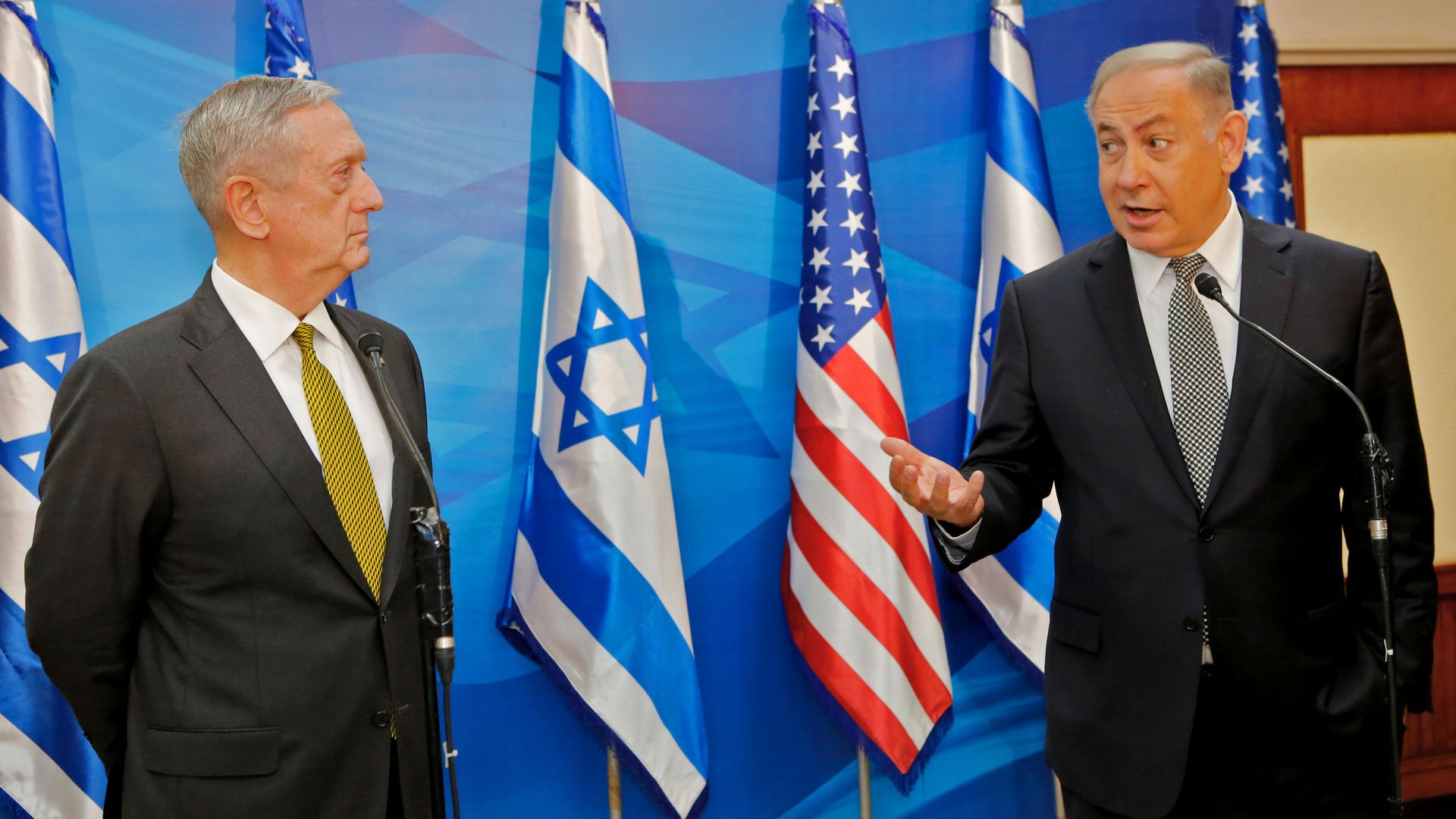
Outgoing Defense Secretary James Mattis rejected a request from Israeli Prime Minister Benjamin Netanyahu to soften the United States' conditions for a $500 million arms deal between Israel and Croatia for the sale of 12 F-16 fighter jets, an Israeli official told me.
Why it matters: Mattis' position practically killed the deal, according to the Israeli official, who is involved in the negotiations. In order to give a green light to the deal, the U.S. demanded that Israel remove the Israeli systems installed in the F-16s and return the jets to their original condition before transferring them to Croatia. The Croatians responded that they would cancel the deal if they couldn't get the "upgraded" Israeli version of the F-16s.
When President Trump and North Korean leader Kim Jong-un held their historic summit in Singapore this June, they signed a statement that they would "work toward a complete denuclearization of the Korean Peninsula."
The big picture: Negotiations have stalled. North Korea is not making a good faith effort to live up to its promises, and the regime has even drawn up its own preconditions for denuclearization that may prove impossible to meet.
Russia conducted a successful test of the hypersonic weapon called "Avangard" and has plans of including it in Russia's arsenal by 2020, CNBC reports.
Why it matters: The weapons have been described by Russian President Vladimir Putin as "invincible." They're capable of carrying nuclear warheads, according to the report, and are capable of reaching targets at 20 times the speed of sound.