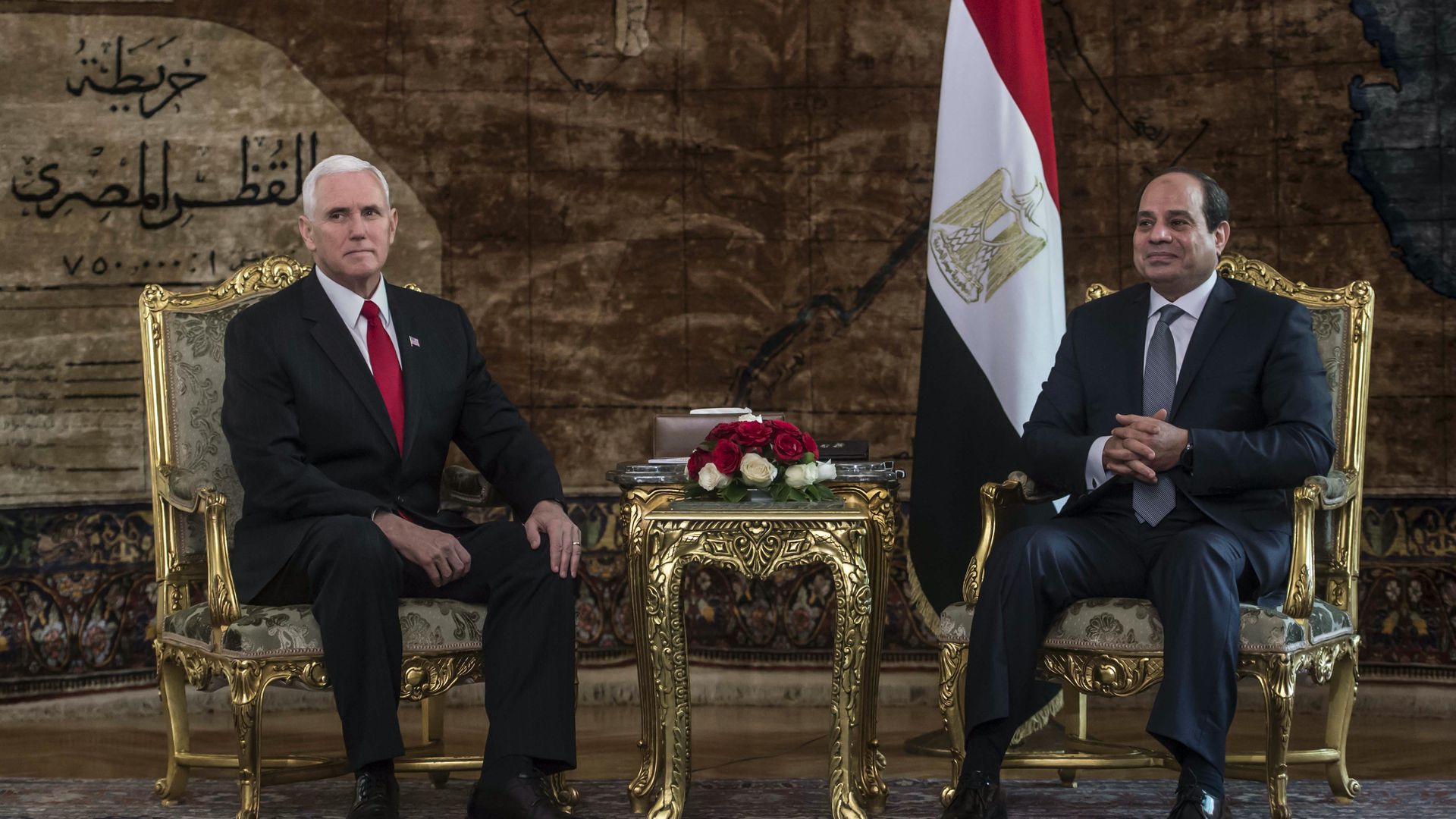
Vice President Mike Pence met with Egyptian President Abdel Fatah el-Sisi in Cairo on Saturday for around three hours, according to the Washington Post, and said that while the countries had previously been "drifting apart," ties had "never been stronger" than under Trump.
Why it matters: NBC's Andrea Mitchell reports that the three hour meeting "focused heavily on counter-terrorism." They also discussed two Americans who were imprisoned in Egypt in 2013, WaPo reports, and Sisi told Pence he would give their cases "very serious attention." Pence and Sisi also discussed terrorism, North Korea, and religious freedom.
One more thing: Egyptian security originally blocked the press from entering the presidential palace where Pence was meeting with Sisi, until they were allowed in to cover "brief statements...that only happened after intense negotiation between Pence's staff and Egyptian authorities," per WaPo. The next stop on Pence's Middle East tour is Jordan.
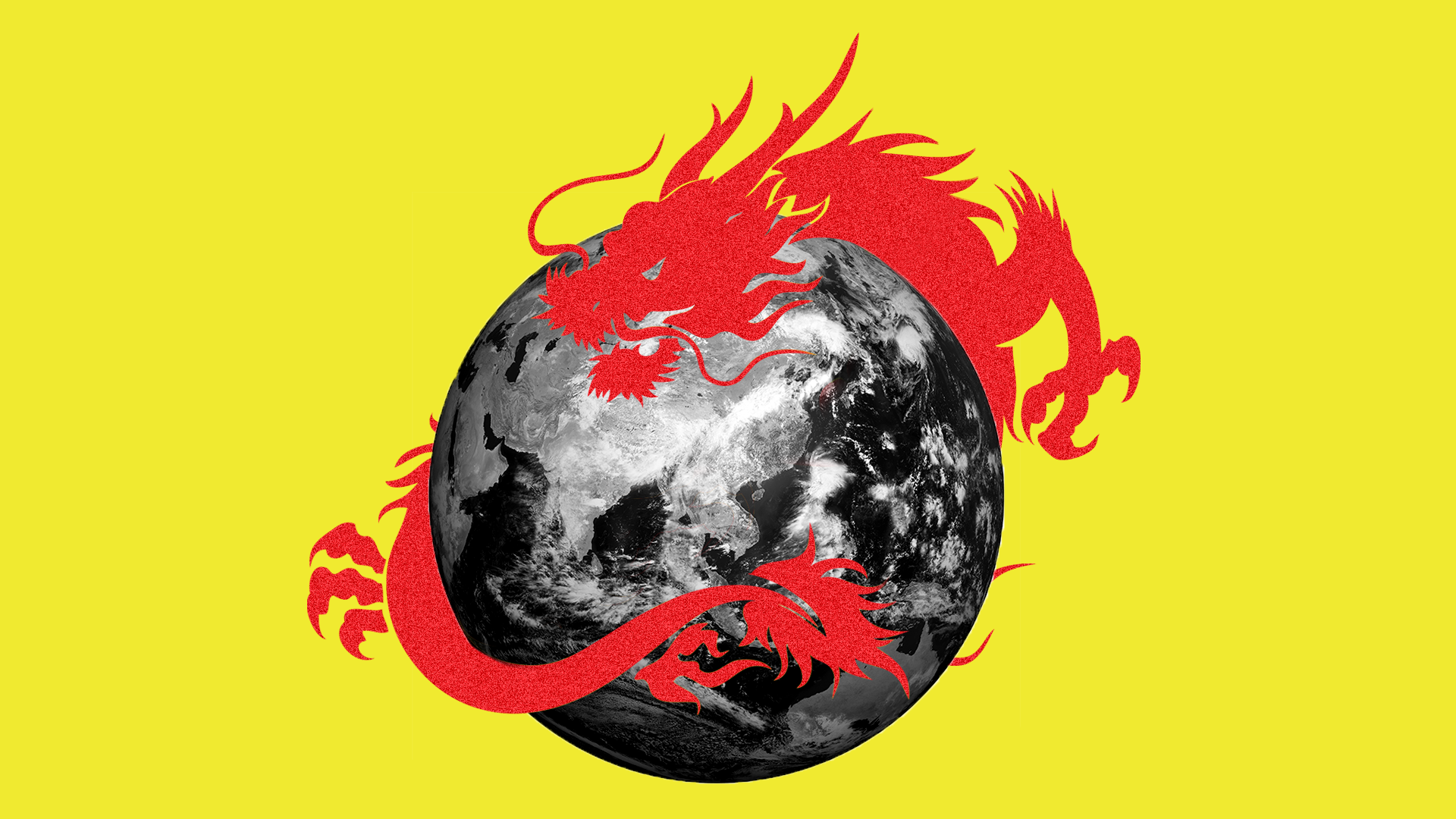
China is embarking on the largest infrastructure project in history, spanning four continents and attempting to link the old Silk Road to Europe — and back to China.
Why it matters: China is increasingly asserting its economic power, and seeking to bolster its global influence. It is undertaking this project at a time when the U.S. can't pass a domestic infrastructure project, and is taking a step back from the world.
Adapted from a Mercator Institute for China Studies map; Map: Lazaro Gamio / Axios
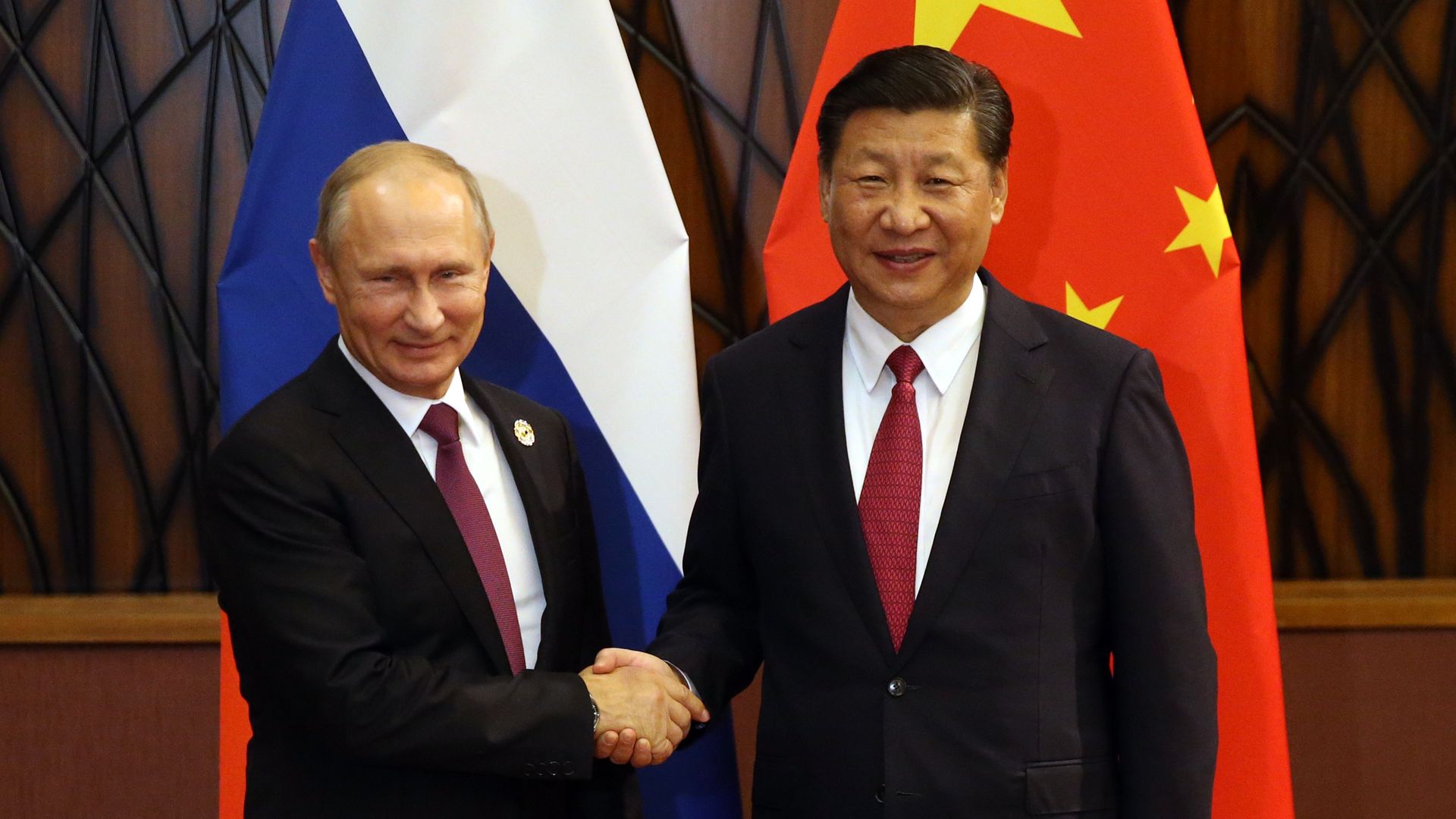
The Pentagon’s newly released National Defense Strategy says China and Russia pose more of a threat to the U.S. than terrorism because they jeopardize U.S. military prowess on a global scale, per AP. Countering China and Russia are now the military’s two top priorities.
Threat level: The assessment points to China’s expanding military and its presence in the South China Sea and to Russia’s aggressive military moves with respect to Ukraine, the Syrian war, and its meddling in the 2016 U.S. presidential election.
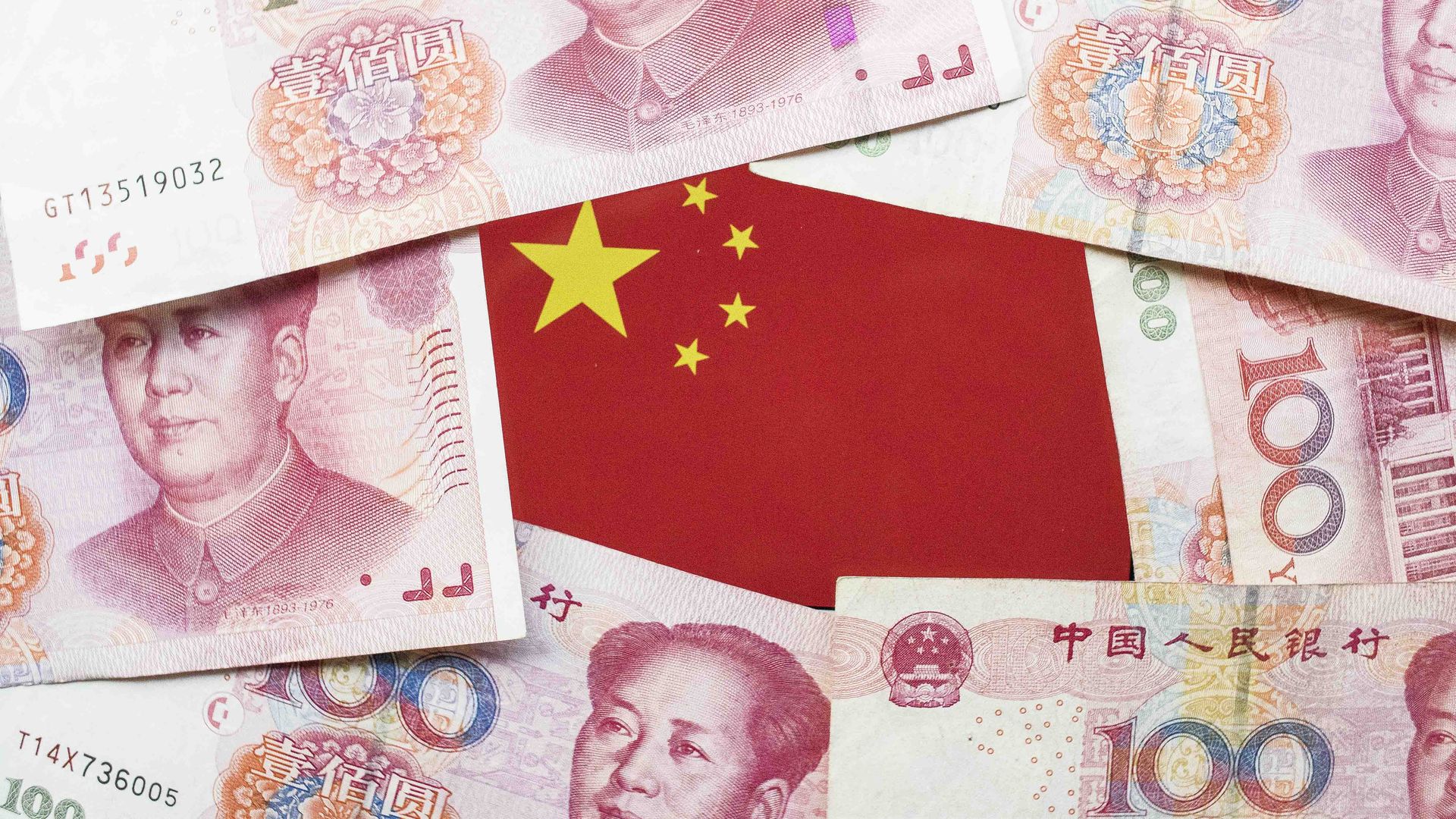
Beijing’s crackdown on capital outflows and investments in non-strategic assets coupled with the increasing hostile environment in Western countries to PRC investment in a growing number of "sensitive" sectors caused China’s ODI to drop nearly 30% in 2017 to around $120 billion.
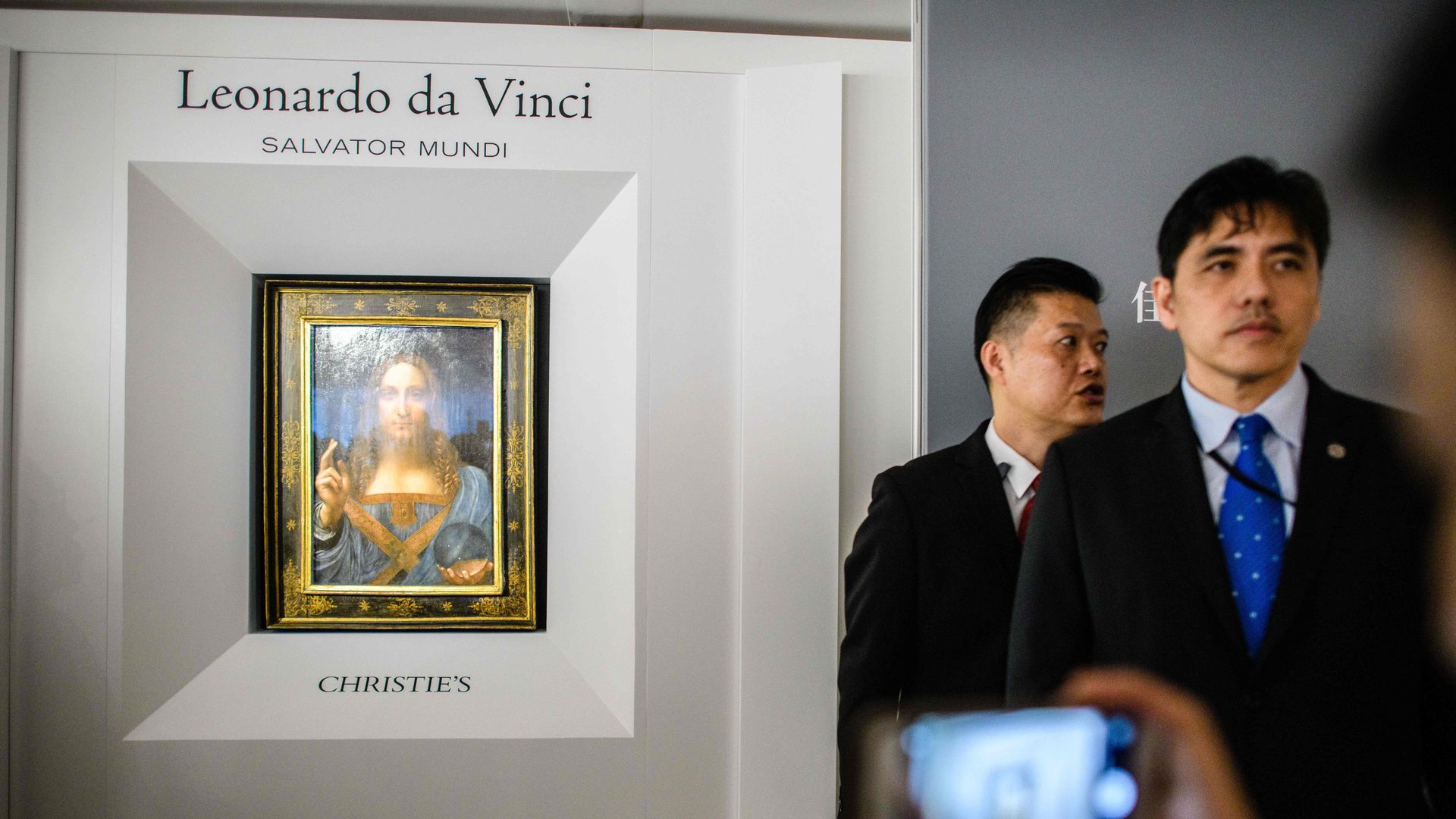
An ex-CIA agent betrays the agency, feeding the identities of local informants to the Chinese, who carry out a systematic and deadly operation to break the network. A years-long search leads FBI agents to the ex-operative’s hotel room, where handwritten notes cause them to suspect he's the mole they’ve hunted for.
Why it matters: These were the events leading up to Jerry Chun Shing Lee’s arrest on Monday, if investigators' suspicions prove correct. The affair ranks among the worst intelligence failures in U.S. history, and crippled U.S. espionage operations in China, according to reporting from the NY Times.
The Chinese Communist Party emphasized its expanding global ambitions in a remarkable 5,500 character treatise on the front page of Monday's "People's Daily."
"The world needs China, as all humans are living in a community with a shared future ... That creates broad strategic room for our efforts to uphold peace and development and gain an advantage.”
— Communist Party "manifesto" on China's role in the world
Why it matters: This is further evidence of the seriousness of China's broad global vision. President Xi Jinping sees a remarkable opportunity, enhanced by the Trump presidency and its “America First” policies, to reshape the global order in ways that legitimize the Chinese political system and create more strategic advantages for the China.