Wednesday's world stories

Don Jr. will talk to House members for Russia probe next week
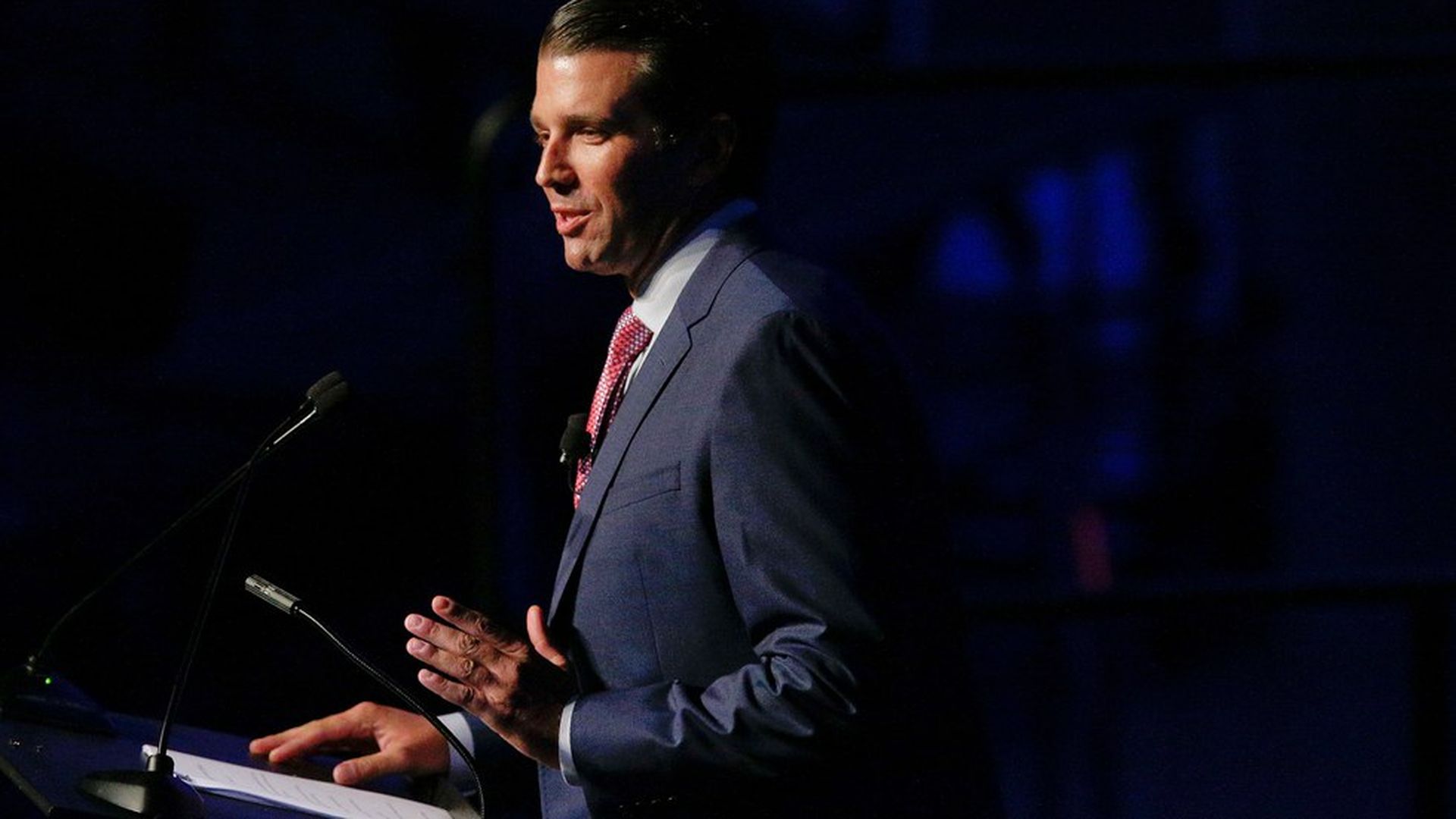
Donald Trump Jr. will speak with members of the House Intelligence Committee next Wednesday behind closed doors as part of their ongoing probe into Russia's attempt to influence the 2016 presidential election, according to CNN. His attorney did not confirm or deny to CNN that Don Jr. would attend.
Context: Don Jr. originally failed to disclose his own meeting with a Russian lawyer last year after he was reportedly promised dirt on Hillary Clinton. He spoke with the Senate Judiciary committee in September, and has also been asked to speak in front of the Senate Intelligence Committee.

U.K. agrees to pay up to €55 billion to exit E.U.
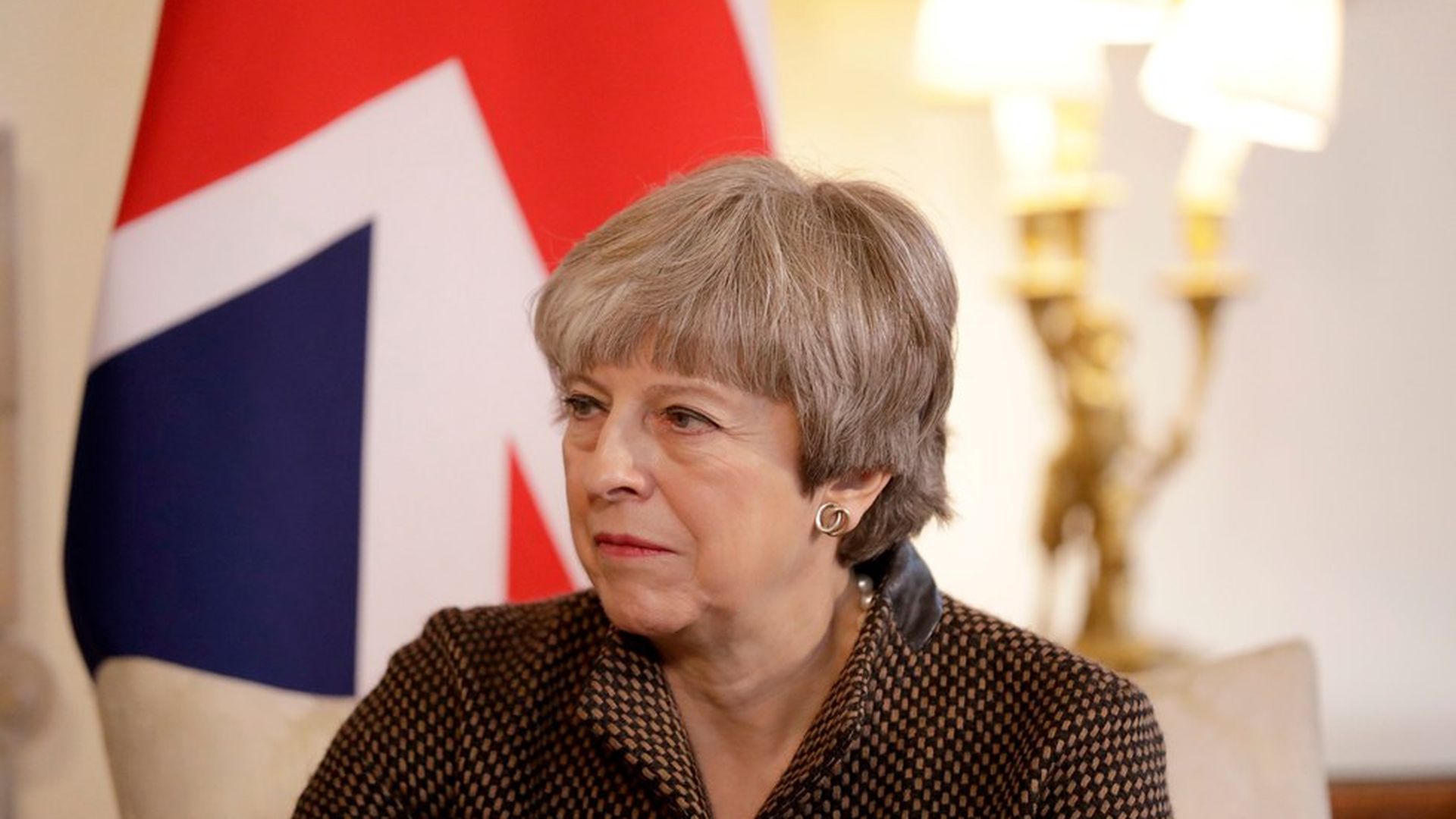
The United Kingdom has agreed to pay the European Union somewhere between €45 billion and €55 billion as a part of its Brexit "divorce bill," according to The Telegraph's Peter Foster. The exact amount will be "left open to interpretation" in order to allow Theresa May's government political cover when presenting the final plan to the British public.
Why it matters: May will risk backlash from hardline Brexit supporters in her Conservative Party by agreeing to such a massive bill for Brexit. But the agreement will allow the U.K. and the E.U. to focus on the two huge issues still hanging over Brexit — the sovereignty of the European Court of Justice for E.U. citizens remaining in the U.K., and the border between Northern Ireland and Ireland.

Five experts and a bot predict Putin's next big surprise
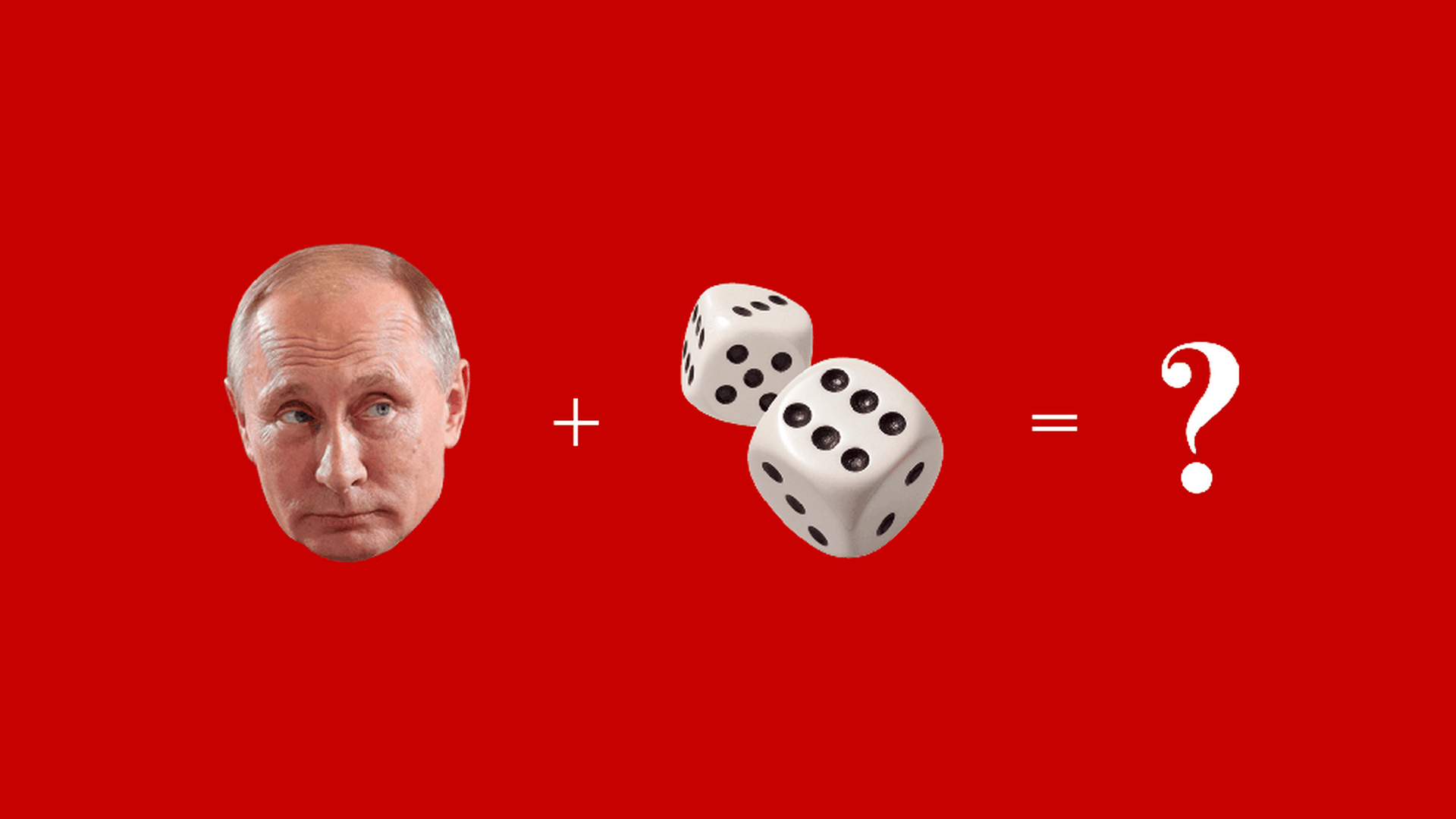
Three times over the last three years, Russian President Vladimir Putin has surprised nearly everyone: in 2014, when he invaded and annexed Crimea; in 2015, when he put down a big military footprint in Syria; and last year, when he manipulated the U.S. presidential election.
The common thread was Putin's ultimate perceived advantages — unpredictability and a willingness to gamble hugely. It's how he has resurrected Russia as an essential power. The question is, what will Putin's next surprise be?

Putin will double down on 'active measures'
Putin will continue to target NATO members through disinformation campaigns and cyber attacks to divide the domestic societies and influence upcoming elections. A major thrust of this campaign will combine the full range of traditional diplomacy and disinformation to push Turkey away from NATO membership. In addition, Putin will likely amplify digital attacks and disinformation to expand Russia's sphere of influence across the Baltic members, forcing NATO countries to validate whether a digital attack truly falls under the collective defense principles in Article 5 of the group's treaty.
Elsewhere, Russia will continue to exacerbate tensions within the Middle East to undermine U.S. interests and destabilize Europe. In addition to its role in Syria, Russia has been linked to the hack that resulted in the regional boycott of Qatar. We can expect more of this combination of digital attacks and disinformation to augment tensions in the Middle East and distract the U.S. Finally, Russia will continue to exert greater influence over North Korea to undermine any potential détente between North Korea and the U.S.
The bottom line: Putin's future efforts will build upon the tactics that have proven successful and combine them into an expansive, global campaign that will either force NATO to evolve into a 21st-century alliance or completely undermine it.

Putin will try his hand at North Korea
To prepare for Putin's next surprise, it's worth keeping his core strategic tenets in mind: Russia must be taken seriously abroad, his leadership cannot be questioned at home, and no opportunity to give America a black eye can be passed over. What ticks all of those boxes? A glance at the map points to North Korea.
Dealing with Kim Jong-un ordinarily falls to a combination of American diplomacy and discreet Chinese pressure. There is a gap in the market here. Rodong Sinmun, the mouthpiece of North Korea's ruling party, recently responded to a tweet from President Trump by saying the American leader had "malignantly hurt the dignity of the supreme leadership," thereby committing a "crime for which he can never be pardoned." The upshot is a death sentence from the Korean people.
The bottom line: Not given to tweeting, and capable of exerting more influence over Pyongyang than is widely recognized, Putin would be able to articulate a package deal that, while not acceptable to Washington, would still be embraced by most of the key regional players.

Putin will strike Donbass
It's not likely that Putin's next surprise move will come until after Russia's presidential election in March. If at that point the transatlantic community appears sufficiently divided, he will look for a way to test NATO.
One option is to foment an ethnic Russian protest in one of the Baltic states. If protesters take control of government buildings, the Kremlin would leverage that toehold to erode consensus around NATO's collective defense protections for the Baltic and Eastern European states. But Putin's more likely move will be further south: If Ukraine makes strides in its economic and political reforms, he could turn up the military heat in Donbass, the pro-Russian region in the eastern part of the country.
Alternatively, he might beef up Russia's basing arrangement with Nicaragua or set up a new base in Venezuela or Cuba, hoping to to pressure Trump to eliminate sanctions and to cave to Russian demands in Ukraine and Syria.
The bottom line: As always, Putin's goal will be to retain power, in part by keeping the United States weakened, divided and out of Russia's sphere of influence in Eastern Europe and Central Asia.

Putin will play possum
Given the political turmoil in the United Kingdom, Germany and the United States, President Putin is likely to play possum well into the spring of 2018. Put simply, there is no book for Putin to provoke the Atlantic Alliance by a military "move of greatness" in the Euro-Atlantic region – say in the Arctic. Furthermore, he needs Trump's support for an end game to the Syrian civil war that will bring about the de facto victory of the Assad regime.
The bottom line: Above all, there is the "tell" that the Russian government is not mobilizing for war, as seen by the decision to cut back in military spending this year in response to lower global petroleum and gas prices — a key source of national income. A surge in military spending would be very ominous, recalling events in Hitler's Germany in 1939 and Japan in 1940 and 1941.