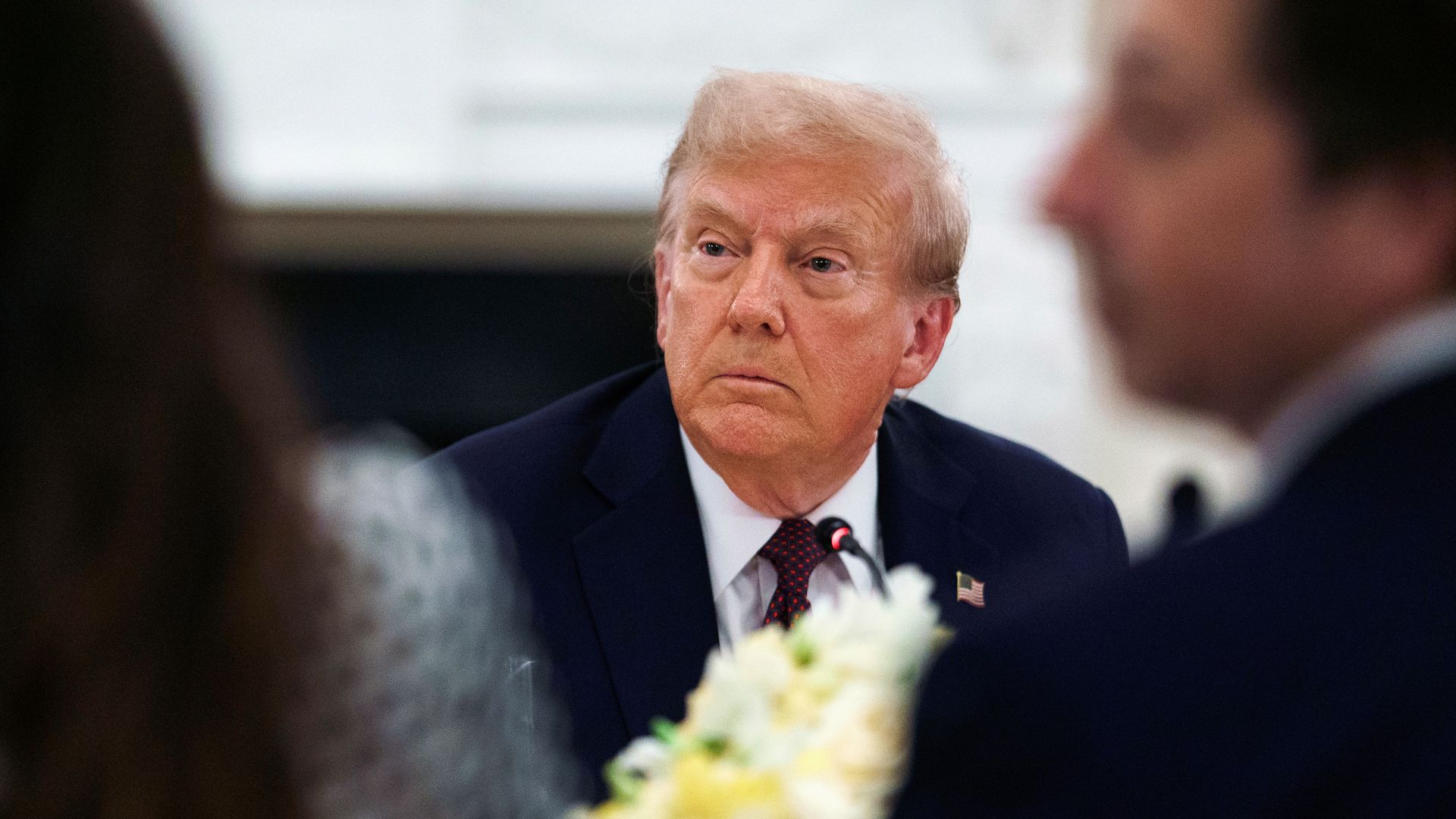
President Trump said on Wednesday that he would impose a 25% tariff on select semiconductors, including the Nvidia chips it plans to sell in China.
Why it matters: The tariffs are part of a broader deal, one in which the U.S. government will reap revenues from allowing Nvidia to sell AI processors in China.
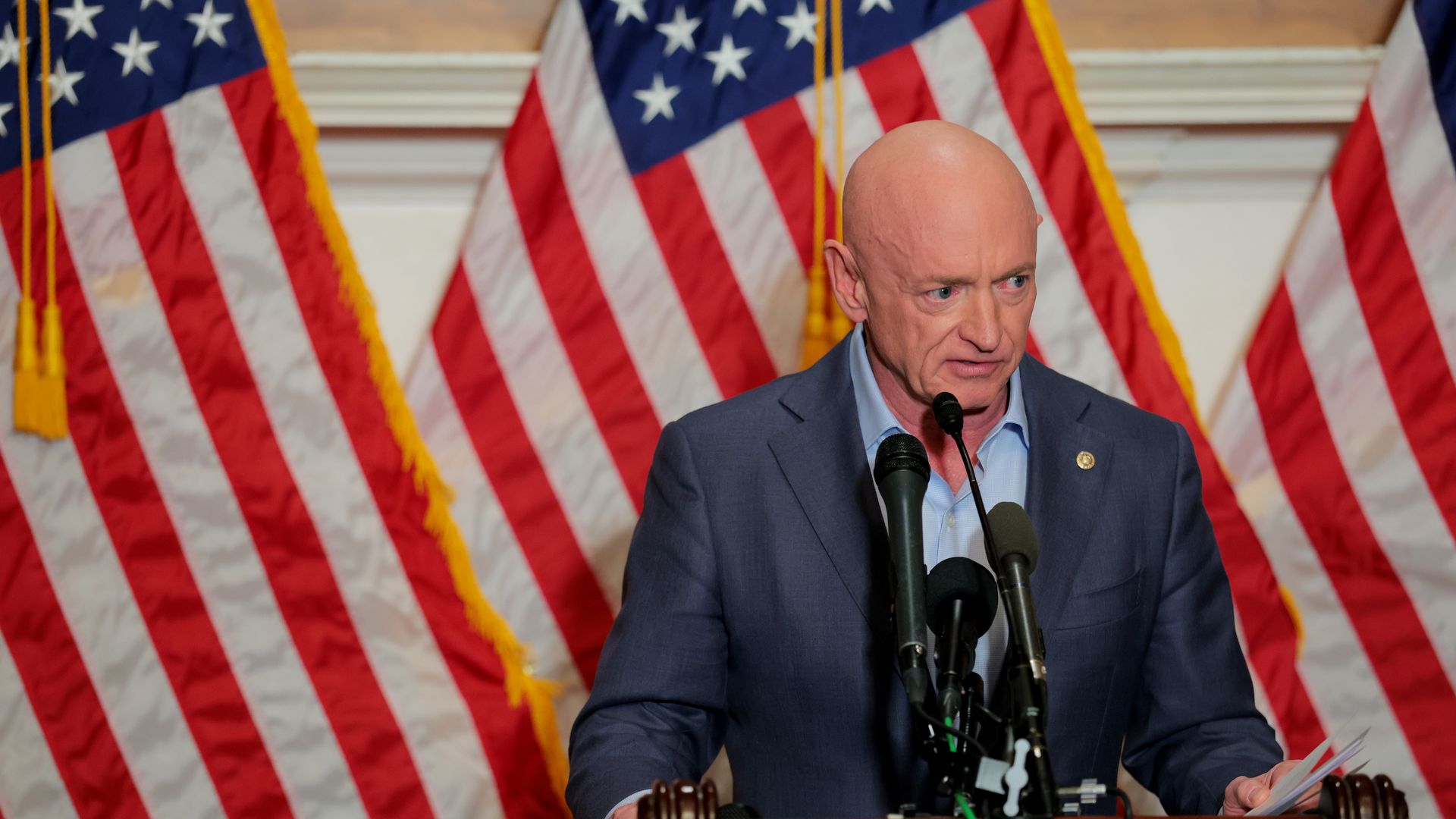
Sen. Mark Kelly (D-Ariz.) says average Americans are too concerned about affordability and other issues to care much about the promise of AI.
Why it matters: Kelly represents a faction of Democrats who don't want to be the anti-AI party, but think that Republicans have gone too far in pushing for a no-rules regulatory environment and have allowed for companies to grow with little oversight.
Backlash over deepfakes made with Elon Musk's AI chatbot Grok is fueling a push on Capitol Hill to give victims the right to sue.
Why it matters: Non-consensual sexual imagery is increasingly targeting people — including members of Congress — across the country, sharpening bipartisan urgency to give victims strong legal recourse.
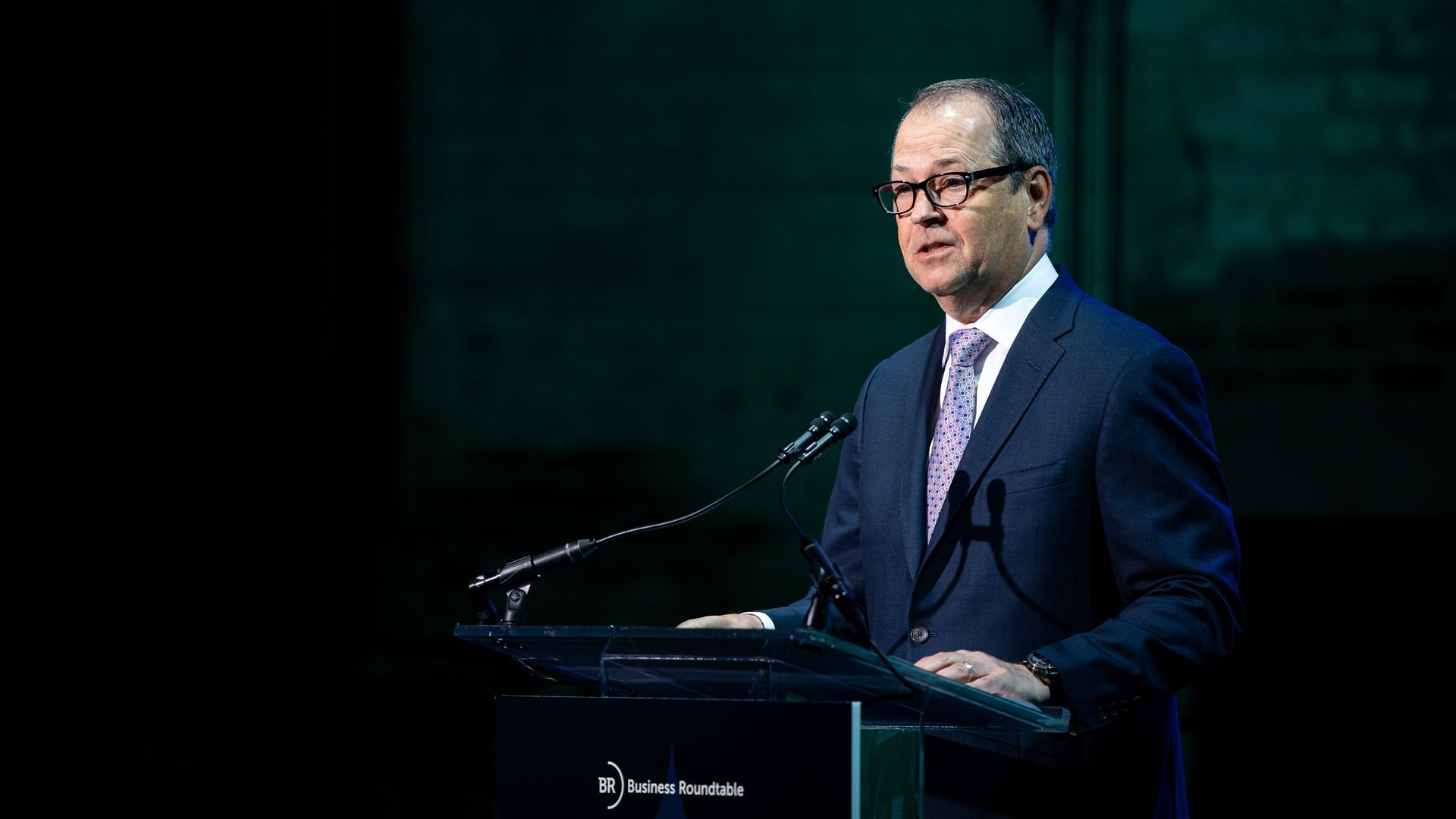
A conversation with Thomas Saueressig, Executive Board Member at SAP SE and Head of Customer Services & Delivery.
1. Around the world, governments are rethinking how they protect and govern data. What global forces are making data sovereignty such a pressing issue right now?
JPMorgan Chase's earnings results included a miss on investment banking revenue and a hit to net income. But CEO Jamie Dimon is still increasing the bank's planned expense growth for 2026 by about $9 billion.
Why it matters: If JPMorgan is spending more, other banks may follow suit, which could fundamentally change the base case for financials this year.
HII chief executive Chris Kastner has "high confidence" the U.S. Navy's future frigate will launch in 2028, following word that the warship will be based on the company's National Security Cutter.
The big picture: The NSC is the centerpiece of the Coast Guard's fleet. It's been in service for almost two decades.
"They know exactly what it can do," Kastner said. "The Navy's been on that ship and fully understands the capabilities of that ship."
AI might one day replace us all — for now though, humans still spend a lot of time cleaning up its mess, according to a Workday survey released Wednesday.
Why it matters: The promise of AI is that it makes work more productive, but the reality is proving more complex and less rosy.
California state Sen. Steve Padilla is pushing to halt the production of toys with AI chatbot capabilities, setting up what could be the first state-level crackdown on AI kids' toys.
Why it matters: AI-enabled toys are raising major concerns about security risks, privacy and kids' exposure to harmful or inappropriate content.
The labor market is stagnant, if not in free fall, but one field stands out as an auspicious one for job seekers, according to Indeed.com.
The big picture: Seven of 2026's top 10 jobs — considering factors like availability, pay and wage growth — are in health care, according to the website's report published on Tuesday.
The advertising industry is entering a new era of growth fueled by AI agents that can more efficiently buy and sell ads on behalf of human marketers.
Why it matters: The rise of agentic advertising has helped offset economic uncertainty that was initially predicted to slow ad growth in 2025 and 2026.
Anthropic is previewing a new tool for non-coders that mostly built itself, engineers at the AI firm say.
Why it matters: The viral popularity of the tool — called Cowork, and designed to help non-coders with everyday work tasks — signals a shift toward software built by AI, with humans guiding the way.
The probe into Federal Reserve Chair Jerome Powell comes as the Supreme Court is weighing just how strong President Trump's grip on independent agencies can get.
The big picture: Trump has taken significant steps to reshape the federal bureaucracy to his liking, but the Fed has eluded him. However, the Supreme Court is set to hear a pair of cases — that of Fed governor Lisa Cook and fired Federal Trade Commissioner Rebecca Slaughter — that could expand the president's power to fire.
The secretive national laboratories scattered across the country are now making public breakthroughs in AI-enabled cyber defense.
Why it matters: National laboratories — including Los Alamos, Sandia and Lawrence Livermore — are behind some of the biggest advancements you've never heard of in cyberspace.
Sen. Dick Durbin (D-Ill.) on Tuesday will call for unanimous consent to pass the bipartisan DEFIANCE Act, a bill to protect people from image-based sexual abuse online, Axios has learned.
Why it matters: Chatbots are coming under fire for producing child sexual abuse material and non-consensual intimate imagery of adults, and people are eager for legal recourse.
China's government last week confirmed that it will review Meta's $2.5 billion acquisition of Manus AI, whose core team last year relocated from China to Singapore.
Why it matters: This could signal an end to "Singapore-washing," a strategy that's helped a number of Chinese tech companies secure foreign investment and commercial contracts.
WebAI, an Austin, Texas-based sovereign AI platform, raised "high double-digit" millions of dollars at a $2.5 billion pre-money valuation, it tells Axios.
Why it matters: The idea is to run AI directly on devices, bypassing the cloud, for the sake of increased privacy, performance, and energy efficiency.
WitnessAI has raised $58 millionfrom high-profile investors, including Ashton Kutcher's Sound Ventures, Fin Capital, Qualcomm Ventures and Samsung Ventures, as it expands into securing AI agents, the company first shared with Axios.
Why it matters: Securing agents is the next battleground in cybersecurity, with defenders racing to lock down non-human identities before hackers get hold of them.
Defense software company Onebrief raised $200 million and snapped up Battle Road Digital, giving its military-planning suite a simulation and wargaming boost.
Why it matters: Onebrief has skyrocketed in just a few short years, riding artificial intelligence and contested logistics waves inside the Pentagon.
Microsoft on Tuesday made a series of commitments regarding future data centers, including a pledge that it will pay its property taxes and electricity bills and minimize water use.
Why it matters: A growing number of communities are opposing data centers arguing that the relatively few jobs they create aren't worth the higher utility bills and cost to the environment.