JPMorgan Chase recoils at Trump's Fed probe, credit card rate cap proposal

Add Axios as your preferred source to
see more of our stories on Google.
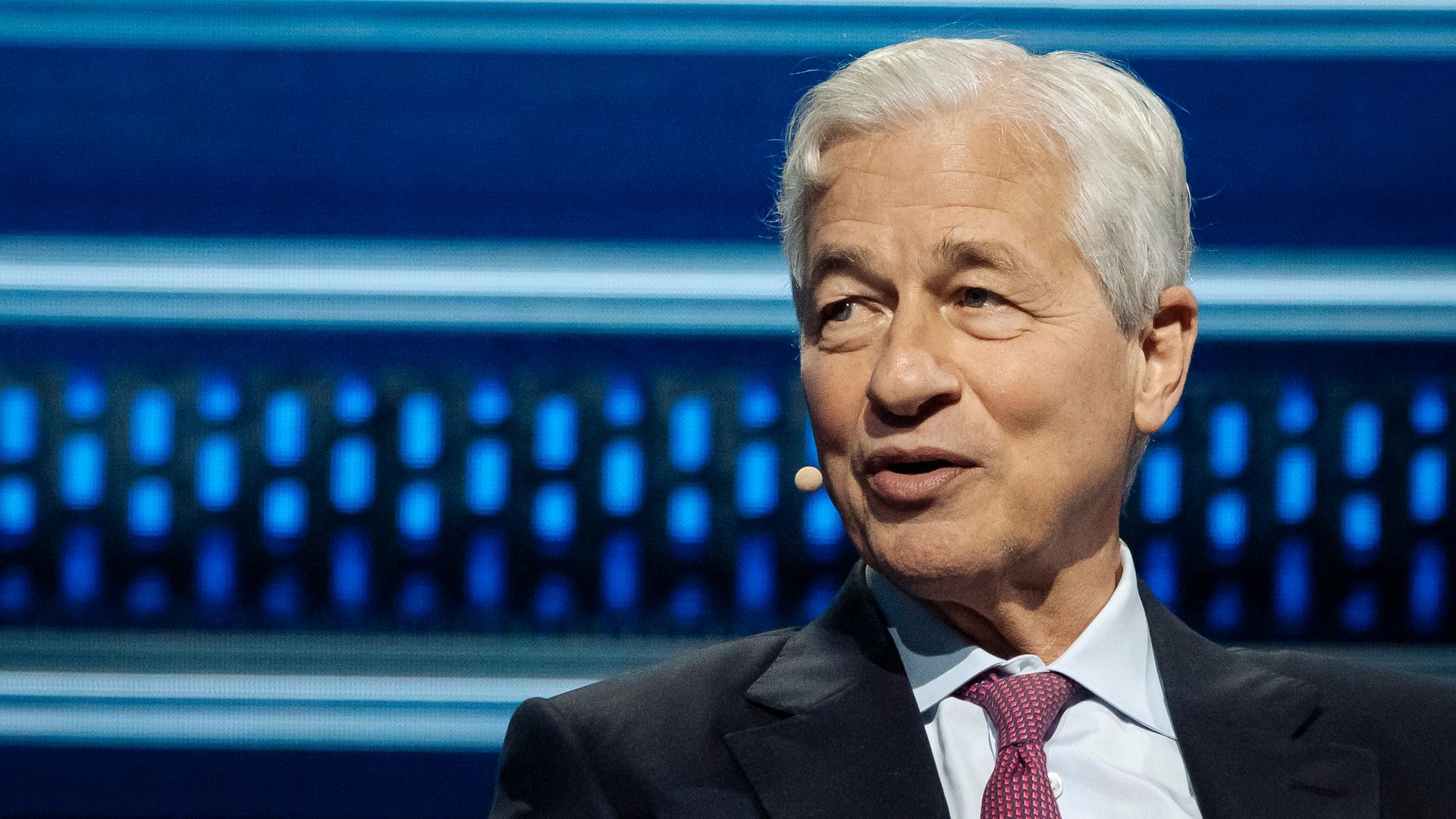
JPMorgan Chase CEO Jamie Dimon speaks during the America Business Forum in Miami on Nov. 6. Photo: Eva Marie Uzcategui/Bloomberg via Getty Images
JPMorgan Chase executives on Tuesday raised concerns about the Trump administration's Fed chair investigation and its proposed credit card interest rate cap.
Why it matters: Wall Street has largely been aligned with the White House on economic matters — but this time is different.
The latest: On a call with reporters Tuesday, JPM CEO Jamie Dimon signaled his distaste for the Trump DOJ's criminal subpoena of Fed chair Jerome Powell.
- On a policy level, Dimon said that "anything that chips away" at Fed independence "is not a good idea," warning it could increase inflation expectations and ultimately lead to higher interest rates.
- Dimon also expressed personal support for Powell: "I want to say that I don't agree with everything the Fed has done," he said. "I do have enormous respect for Jay Powell the man."
On Trump's credit card rate proposal, CFO Jeremy Barnum criticized the White House's call for a one-year cap at 10% — less than half the current industry average.
- Executives said Trump's proposal is short on specifics, but reiterated long-standing industry warnings in the event that any move was made toward price controls on credit card interest rates.
"Our belief is that actions like this will have the exact opposite consequence to what the administration wants for consumers," Barnum told reporters on the call.
- "Instead of lowering the price of credit, we'll simply reduce the supply of credit, and that will be bad for everyone: consumers, the wider economy, and yes, at the margin, for us."
Zoom in: Dimon added that a rate cap would disproportionately hit riskier borrowers. "It would be dramatic on subprime," he said on a later call Tuesday morning with analysts.
- That could have an outsized impact on certain co-brand cards — such as those tied to airlines, hotels and retailers — which often attract borrowers with thinner or weaker credit histories.
- "You would have to adjust your model for the added risk by this and ongoing price control and things like that," Dimon said. "So if it happened the way it was described, [the impact] would be dramatic."
The big picture: Trump's populist turn on consumer finance is creating new daylight between the White House and Wall Street — even as Trump and Democrats converge on rate caps for very different reasons.
What's perhaps more notable is Trump ally and House Speaker Mike Johnson saying Tuesday that an interest rate cap could have "negative secondary effects," noting the possibility of reduced credit access and lower borrowing limits.
- Existing credit card users could also experience a reduction in rewards, experts say.
- Johnson Tuesday signaled Congress would be unlikely to act on a cap proposal.
Yes, but: The idea has a degree of bipartisan support.
- Progressives like Sen. Bernie Sanders (I-Vt.), Sen. Elizabeth Warren (D-Mass.) and Rep. Alexandra Ocasio-Cortez (D-NY) have been vocal proponents of a cap.
- A 10% cap would save Americans $100 billion, per an analysis from Vanderbilt University's Policy Accelerator released last fall, Axios' Emily Peck reported.
The bottom line: Wall Street's support for Trump's financial agenda has its limits.
