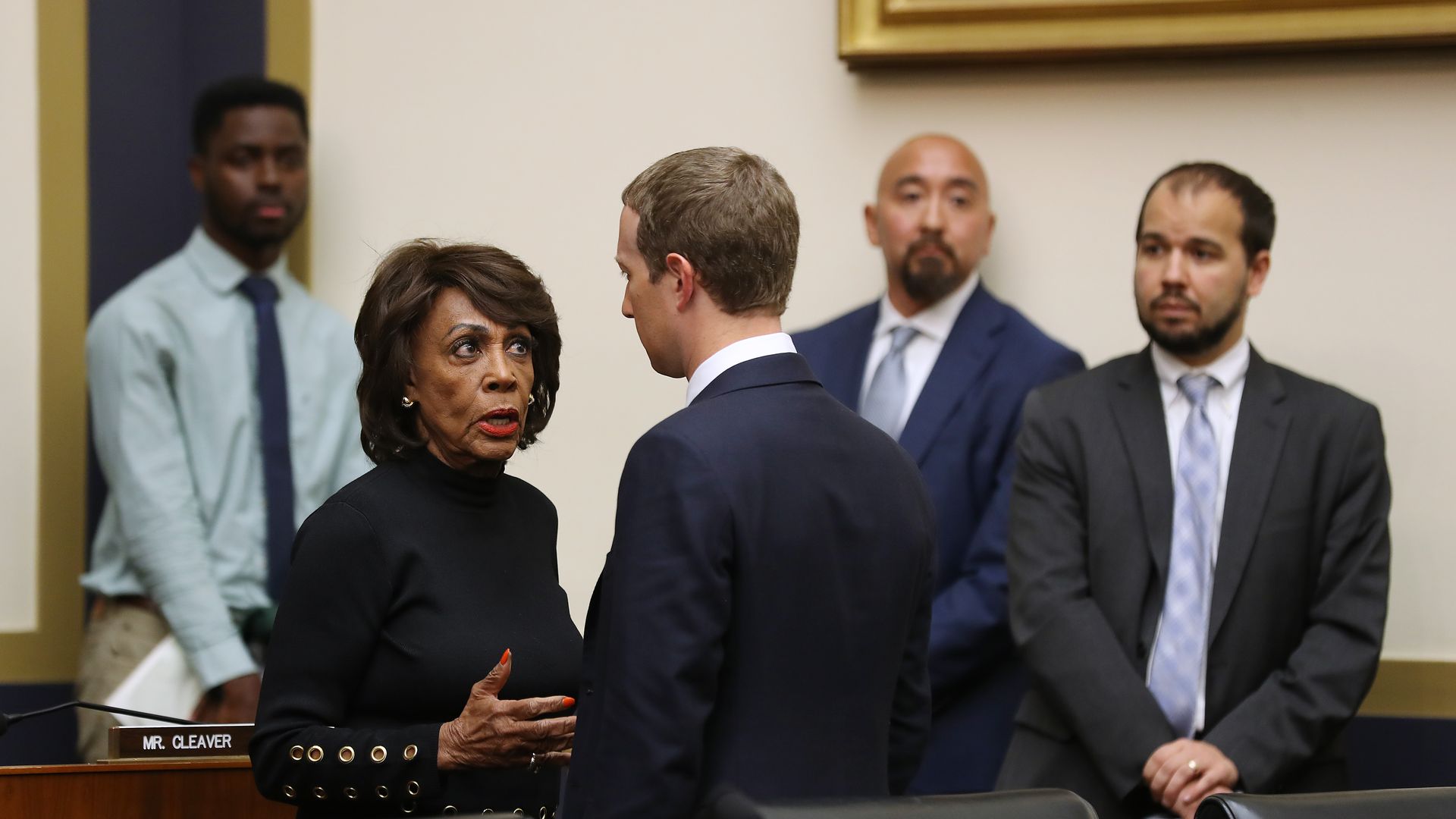
The chair of the House Financial Services Committee, Maxine Waters (D-Calif.), is working on legislation with Rep. Patrick McHenry (R-N.C.) that would create a legal framework for stablecoins, cryptocurrencies that function just like others, but without the price volatility.
Driving the news: This stablecoin legislation is likely to receive a vote in Waters' committee next week, putting it before Speaker Nancy Pelosi ahead of the House going on recess at the week's end, a source familiar with the matter tells Axios.
A plan by the San Francisco police to monitor surveillance video captured by businesses and residents is stoking concerns it will erode citizens' privacy and endanger the rights of protesters and members of marginalized groups.
Why it matters: The proposed policy shift highlights the risk that technology installed for one purpose can easily be adapted for others.
Despite some signs of possible industry slowdown, money is still pouring into video game companies big and small.
Driving the news: Some 651 gaming M&A or investment deals were announced or closed in the first half of the year, totaling more than $107 billion, according to a new report from Drakestar Partners.
Twitter's trial for its lawsuit against Elon Musk will take place over five days in October, the Delaware Chancery Court decided following a hearing in which both parties made the case for their preferred timelines.
Why it matters: This is much closer to Twitter's preferred timeline. The judge sided with the company's arguments that delays will further harm its business.
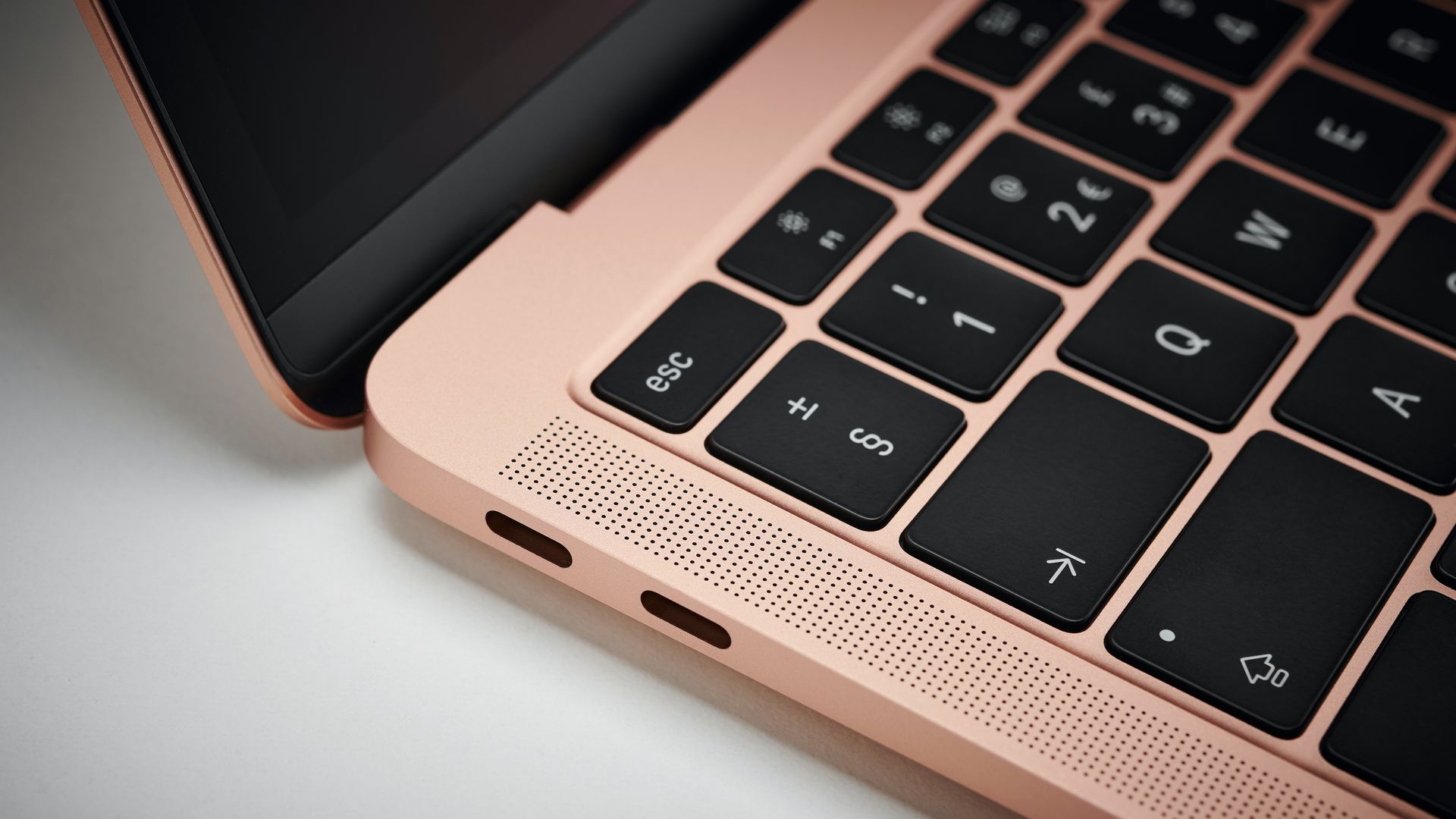
Apple has agreed to a $50 million settlement in a class-action lawsuit over the company's faulty "butterfly keyboard" design.
Driving the news: The settlement covers customers who bought MacBook, MacBook Air and most MacBook Pro models between 2015 and 2019 in California, Florida, Illinois, Michigan, New Jersey, New York and Washington, per the settlement.
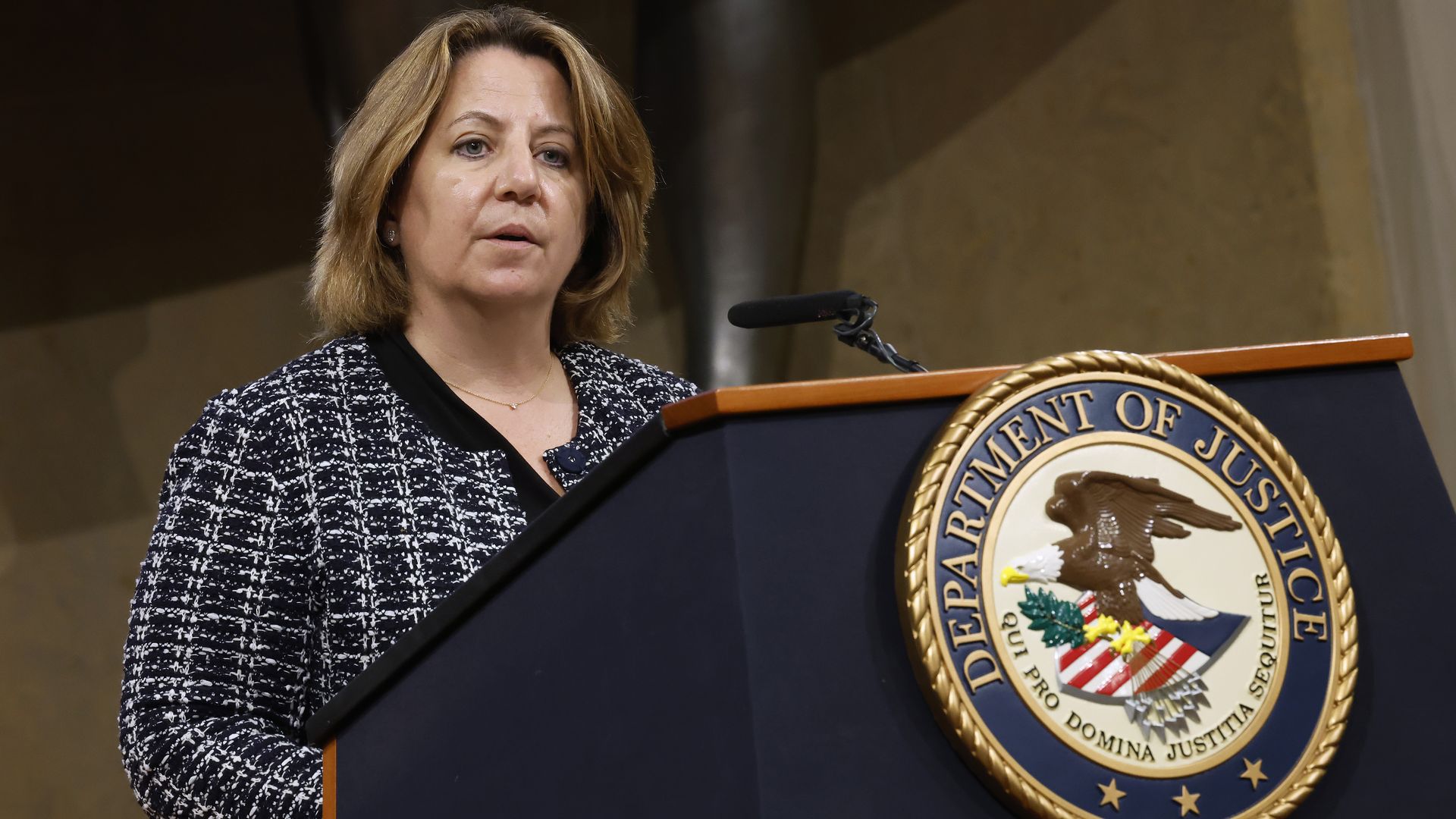
Deputy Attorney General Lisa Monaco said Tuesday that the FBI and Department of Justice recently "disrupted" a ransomware group backed by the North Korean government that targeted U.S. medical facilities.
Why it matters: In one of the group's attacks, Monaco said a Kansas hospital made a $500,000 payment to the cyber group after being hit by ransomware known as “Maui.”
The Russian hackers who breached dozens of U.S. government agencies in the 2020 SolarWinds incident are using a new technique involving Google Drive and Dropbox to break into diplomatic offices in other countries.
Driving the news: Cozy Bear, the Russian state-sponsored hacking group, shared malware-infected files with foreign embassies in Brazil and Portugal in May using Dropbox or Google Drive storage, researchers at Palo Alto Networks said in a report Tuesday.