Saturday's technology stories

Abortion pill interest surges after Roe v. Wade decision

Online interest in abortion pills has soared since the Supreme Court ruled to overturn Roe v. Wade, according to new data from Similarweb data.
Why it matters: Abortion pills will likely become the next major point of contention between abortion rights activists and opponents of abortion, Axios’ Jacob Knutson reports.
Google will delete user location history for visiting abortion clinics

Google announced Friday it will start deleting user location history whenever someone visits an abortion clinic, domestic abuse shelters or other similar locations.
Driving the news: “If our systems identify that someone has visited one of these places, we will delete these entries from Location History soon after they visit,” Jen Fitzpatrick, a senior Google executive, wrote in a blog post.

Meta's "self-selection" hint as layoffs ramp up

Executives are calling out the bloat inside their companies, and challenging workers to evaluate themselves.
Why it matters: Workers have enjoyed almost two years of flexibility and having the upper hand. But they may find the tables are turning as the economy loses steam, and tech companies start handing out pink slips.
Driving the news: Leaked audio of a staff meeting yesterday inside Meta reveals the company has cut plans to hire engineers by at least 30% this year, while raising the bar for existing employees, according to Reuters.
- "Realistically, there are probably a bunch of people at the company who shouldn't be here," CEO Mark Zuckerberg was also heard saying, Reuters reports.
- “Part of my hope by raising expectations and having more aggressive goals, and just kind of turning up the heat a little bit, is that I think some of you might decide that this place isn’t for you, and that self-selection is OK with me,” he added. Axios has reached out to Meta for comment.
- His comments echo those of Tesla CEO Elon Musk, who has been saying, reportedly, that the company was becoming "overstaffed in many areas" and that people who didn't want to come into work shouldn't work there at all.
The big picture: Meta and Tesla are among at least a dozen tech companies trimming, or cutting back on growing, their workforces amid a slowdown in the economy.
What to watch: Outplacement firm Challenger, Gray & Christmas is getting ready to be busier.
- “Labor’s always a kind of slow [and] lagging indicator of what’s happening in the overall economy,” Andrew Challenger, senior vice president at the firm, previously told Axios.
Influencers more integral than ever to marketers

Influencers on social media have become so integral to the process of selling merchandise that they’ve become appendages to the largest marketing organizations in the world.
Why it matters: Online creators, whether on YouTube, Instagram or TikTok, have not only been filling a role to pitch products, but also to plug gaps in creativity as advertising agencies have shrunk.

Google agrees to $90 million settlement with app developers

Alphabet's Google Inc. will pay $90 million to settle with app developers who argued Google used agreements with smartphone makers to shut them out of various revenue streams.
Why it matters: The settlement, announced yesterday, marks a victory for app makers accusing Google and Apple of app store dominance, arguing their platforms are anticompetitive.


SF Fed President Mary Daly on the crypto crash and more
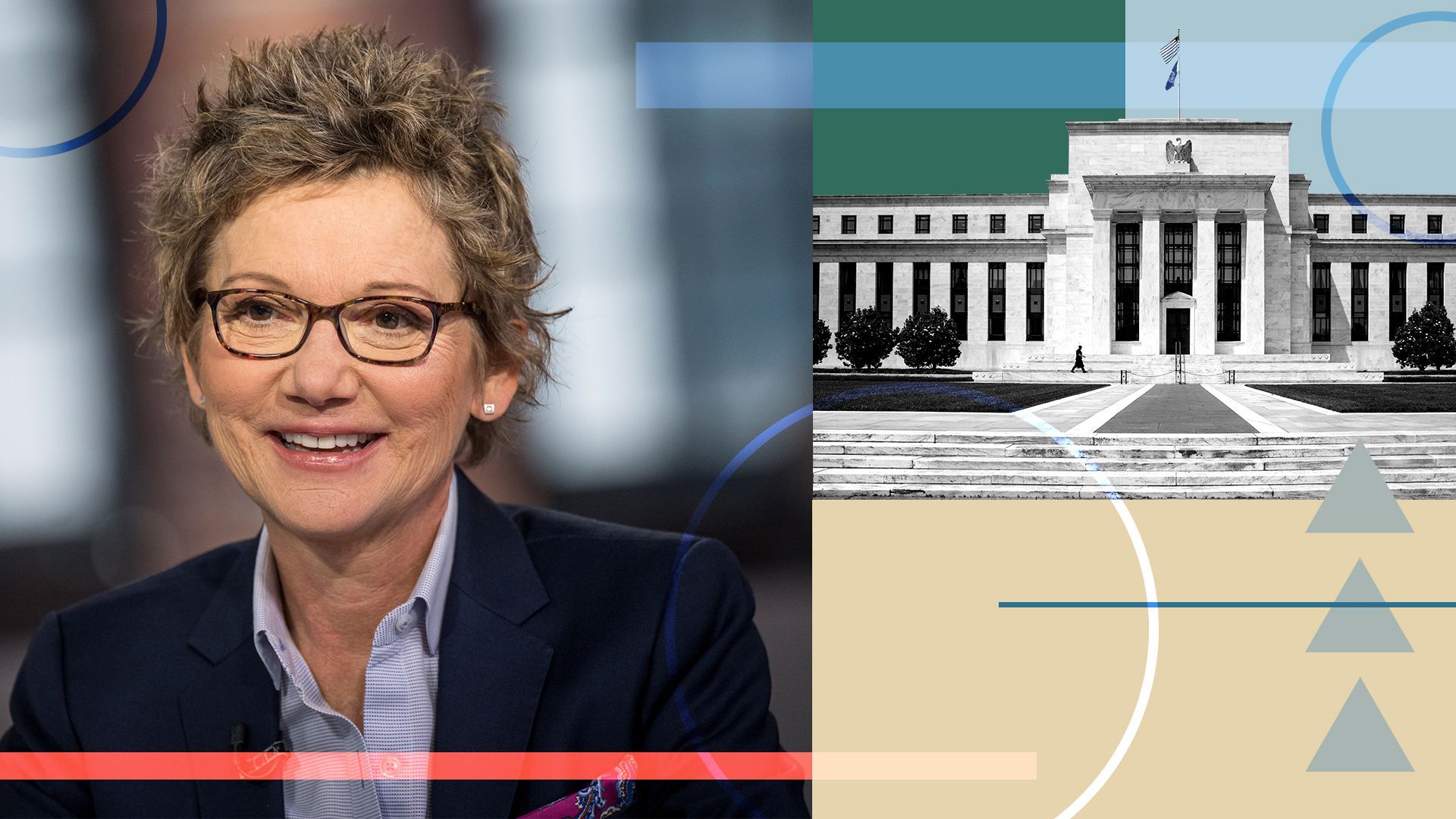
On Thursday, the Axios Macro team spoke with Mary Daly, president of the Federal Reserve Bank of San Francisco, about a wide range of topics. Here are some lightly edited highlights from the interview.
On the interest rate path ahead and what might change her views on the need for rate increases:
- "My own views on policy… are that we need to get to something like the neutral rate of interest by the end of the year, which in my judgment would be to around the 3.1% range of a nominal Fed funds rate."
- "And so what would unwind the need to do that? Well, if there were some extraordinary, unexpected developments in the economy that pull inflation down rapidly, or [the] supply chain would repair or some other global shock that we had to deal with, but none of those things are happening" at the moment, she says.
On the latest inflation reading, showing a 6.3% rise in consumer prices over the past year:
- "The data on inflation are coming in more or less as expected. … My expectation was that we would be high for another several releases. And so this is just confirming that the data are coming in strong in a negative sense. They're coming in too high. And thus, we have to stay on our policy course if we're going to do our part to restore price stability."
On when the Fed might slow the pace of interest rate hikes:
- "I would say 75 [basis points] in July, and then you figure out what else needs to be done so that we can get to 3.1% by the end of the year. So that is likely to be some natural slowing of the pace of interest rate hikes in terms of the magnitude."
- "It's more about getting to where we need to be, and how much do we do that? It could be the case that we're very uncertain about how the economy will play out and we want to take 25 basis point increases at a time, but I don't feel that uncertainty is the pervasive thing happening today. I think that really is about next year."
On whether it might make sense to speed up the pace of shrinking the Fed's balance sheet in light of continued high inflation:
- "When we decided on [the pace of balance sheet reduction], one of the things that I really was focused on is, you want to pick a pace that you think is durable across a range of outcomes."
- "So the economy goes slower than you think, but the adjustments on interest rates go far quickly and the economy slows down more quickly. So it's slower. Will this pace still work? The other one is what if we have to do more, will the pace still work?"
- "So I feel this pace is a really good pace because it gives us that durability across a range of potential developments in the economy."
- "The funds rate is like our speed boat adjustment tool, and [the] balance sheet is like a tanker ship. So you want your tanker ship to be on a good course that's really robust to a variety of developments, and you want to make any fine-tuning of your rate path with your more nimble instrument, and that would be the funds rate and forward guidance," Daly argues.
On the widespread financial troubles among venture capital-backed tech firms and the crypto industry, and whether it might have broader economic significance:
- "What I'm hearing from my contacts — who are either in venture funds, or they're in companies funded by venture capitalists, or they have a crypto presence — is that this was a pretty rapid ride up to some levels that look like a little bit frothy to me, frankly, and not probably long-term sustainable. So corrections in those marketplaces are not surprising."
- "In terms of the real economy effects, I was doing a CEO roundtable in LA last week. And they all came to the same conclusion, which is they lost a lot of younger people to the idea that you could work a little bit in trading crypto, and so they quit their jobs. And now they're getting calls back saying, 'Well, probably the working thing is a good gig, and I want to invest in the diversified portfolio.'"
- "So the real economy seems to have two sides to it: There are layoffs, there's definitely layoffs, but these individuals are quickly able to find other jobs."
- "And some of the softer labor supply in the 25 to 35 group is now firming up a bit. People are coming back in in ways that I'm anecdotally hearing. Now we'll have to watch to see if it scales to actually seeing it in the aggregate data. But right now, I'm hearing it. And that's a positive sign for many of the firms here."
On the housing market:
- "Households are in very good shape from a budgetary perspective, and that means that the systemic risk from housing slowing is just not there."
- "The slowing I'm seeing so far is a positive development for the housing market. There are so many people who are priced out because of the unbridled price appreciation. Slowing that down a little bit and giving builders and others a little room to breathe, I think will allow some opportunities to create a more sustainable plan in the housing market, which we clearly need."

Compound's founder is unworried about DeFi defaults

Decentralized finance (DeFi) may seem weird, but it's not going to implode like other crypto lenders have, at least not according to Robert Leshner, the CEO of Compound Labs and founder of one of DeFi's blue chip protocols, Compound Finance.
Why it matters: Outsiders reading the odd story about cryptocurrency might think any company doing finance with bitcoin nearby is "DeFi," but it's not. It's only DeFi if it functions autonomously, out in the open.

BlockFi's investors could get wiped out
/2022/07/01/1656685829088.gif?w=3840)
Crypto's cataclysmic first half ended on Thursday with a disputed CNBC report that crypto lender BlockFi could be sold to FTX for a base price of just $25 million.
Why it matters: BlockFi has raised around $1.2 billion in venture funding, from investors like Dan Loeb, Tiger Global and Bain Capital Ventures. There are lots of different ways to calculate VC returns but, in this case, all methodologies lead to sadness.
Next post-Roe battlefield: Online abortion information
/2022/06/30/1656608482964.gif?w=3840)
Conservative activists, having won their goal of being able to criminalize abortion, are now aiming to limit or ban online information-sharing on the topic.
Driving the news: In the wake of the Supreme Court's Dobbs ruling overturning Roe V. Wade, tech platforms are already struggling to moderate abortion-related content and fight misinformation around the topic.