The creator economy has produced thousands of social media entrepreneurs who have built mega-audiences in the millions — larger than many media companies. Often, they operate in parallel universes, with little overlap between platforms.
Why it matters: What differentiates social platforms is no longer their features, but their values and communities. What makes one person popular on one platform may not make them remotely interesting or influential on another.
Donald Trump's "big lie" playbook — the collection of falsehoods alleging that the 2020 election was stolen through voting fraud — mirrors the tactics used by sophisticated spreaders of disinformation.
The big picture: Research from the Harvard Kennedy School Shorenstein Center shows there's a typical cycle that people use to manipulate the media and spread disinformation. Trump's dissemination of false claims of a stolen election demonstrates how the cycle works.
Crypto venture capital is a different game than traditional venture capital, which isn't something that every participating firm has yet to fully appreciate.
Why it matters: The key is matching the asset class in which you're investing.
Taking the stand to close out the first day of her trial’s defense, ex-Theranos CEO Elizabeth Holmes highlighted to jurors some of the due diligence her early investors performed.
Why it matters: Though Holmes was included on her defense’s list of potential witnesses, it was unclear whether she would actually testify.
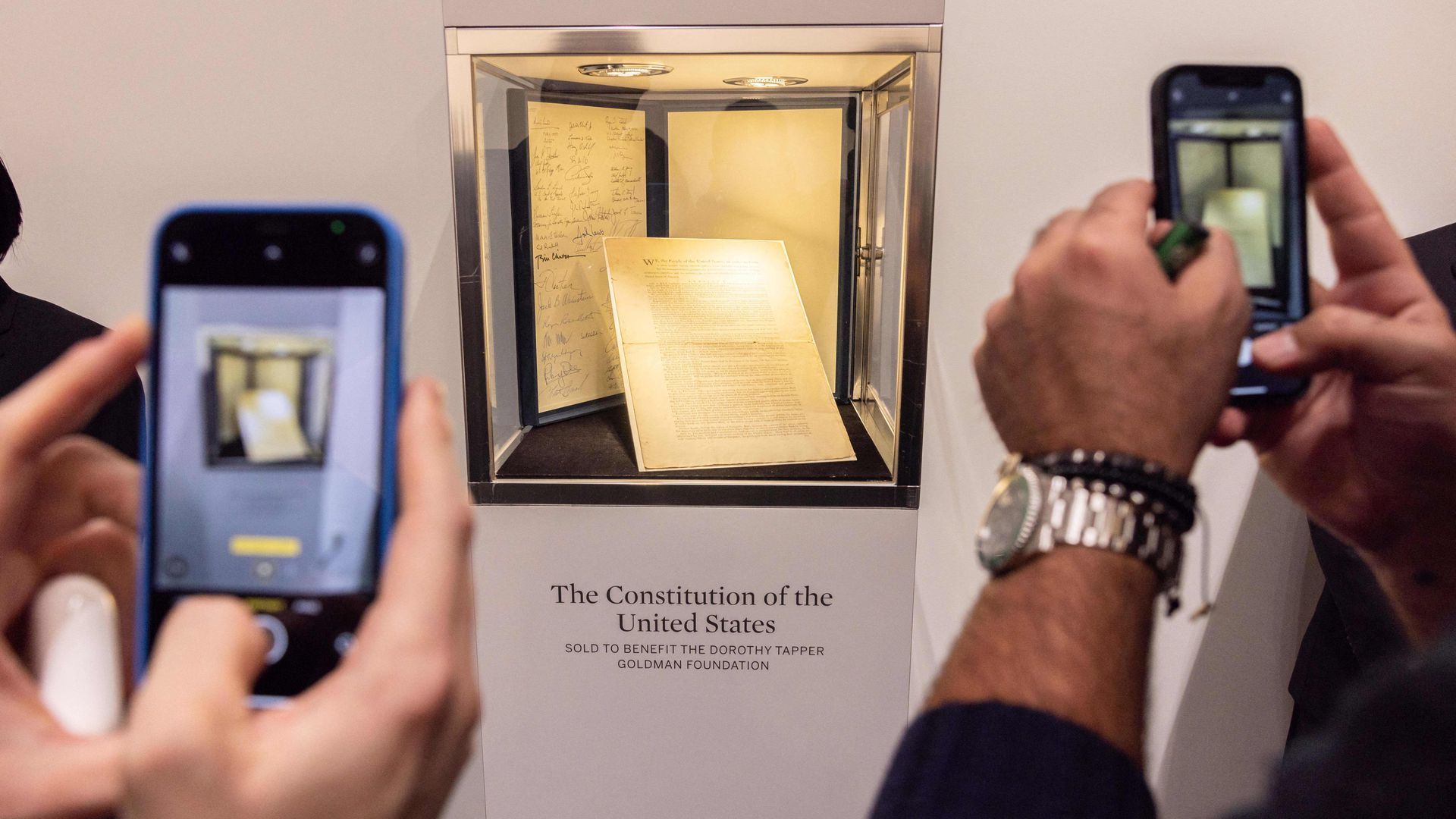
The story of a group of cryptocurrency traders failing to buy a copy of the Constitution shows just how much of a gulf there still is between the real world and the crypto world.
Driving the news: Hedge fund billionaire Ken Griffin outbid a group of 17,437 donors in an auction at Sotheby's last night, promising to pay $47.4 million for the document.