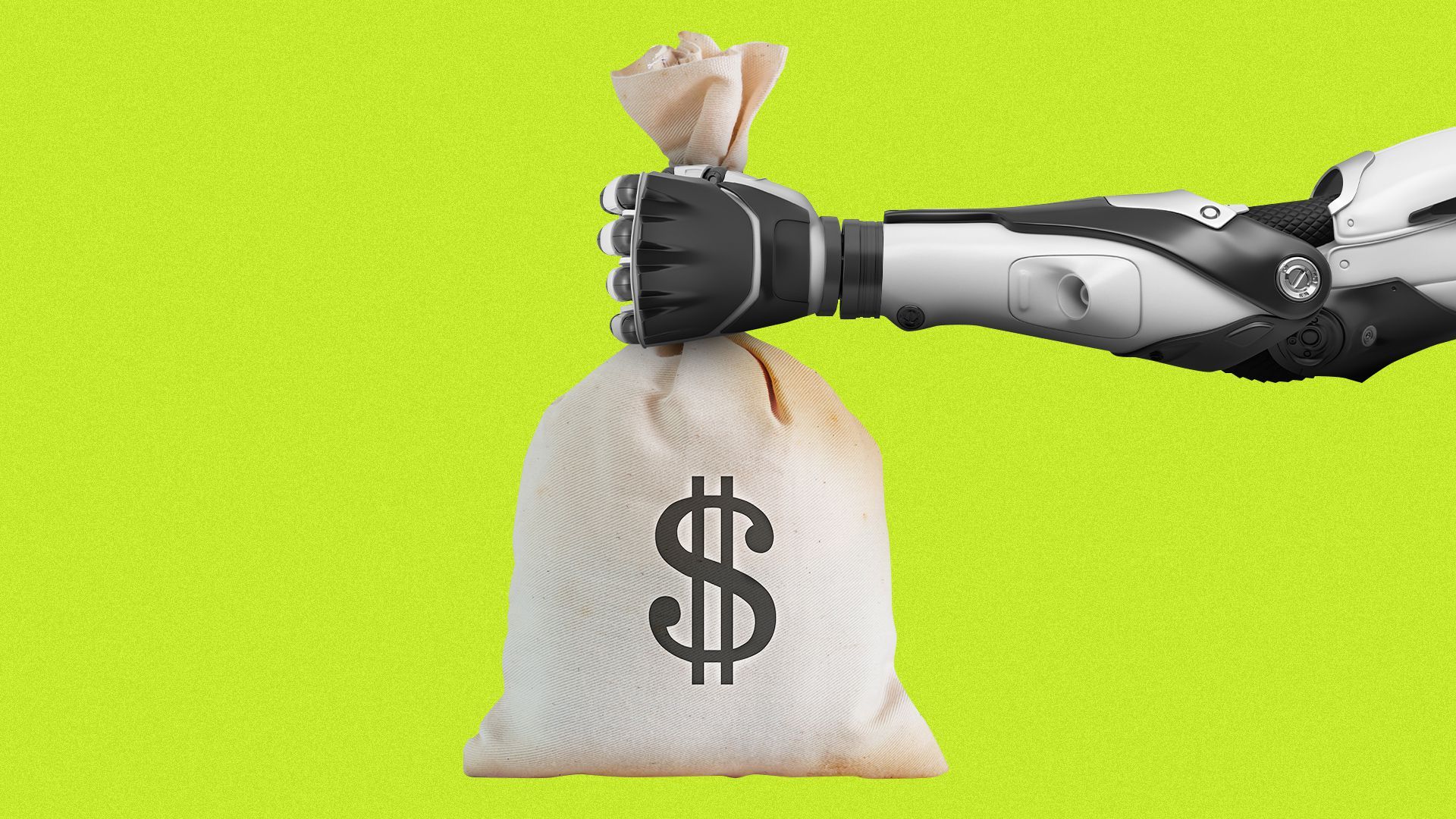
Taxes targeted at firms that employ robots over human workers would be counterproductive, a new article argues — and no, it wasn't written by a robot.
Why it matters: A growing number of technologists have argued that taxing companies that invest in robots would help reduce inequality and cushion job losses caused by automation, but such a tax could cost more than its worth by slowing economic growth, WSJ's Richard Rubin writes.
The announcement of a new Gearbox studio in Montreal yesterday extends an extraordinary streak of studio openings in what was already one of the global capitals for video game creation.
A new federal program that offers $50 a month to pay for internet service has enrolled 5 million households, the Federal Communications Commission said Friday.
The big picture: There are tens of millions of low-income Americans eligible for the Emergency Broadband Benefit program, and digital inclusion experts say more on-the-ground work is needed to connect those households.
For all their differences, Europe, China and the U.S. are making remarkably similar moves in tech policy.
The big picture: Nations and regions with wildly differing political systems and cultures have converged on a shared set of responses to the power of big tech firms: rein in the companies, avoid dependencies and subsidize critical networks and technologies.
Apple said Thursday it will relax some App Store rules in order to settle a class-action lawsuit brought by U.S.-based developers over its store terms.
Why it matters: Apple will let developers communicate with users about alternative payment methods outside of the App Store. It will also set up a $100 million fund for small developers and make some other changes to its practices, but it's keeping its overall commission structure.