San Francisco on Friday announced a temporary 15% cap on fees delivery companies can charge restaurants during the coronavirus crisis.
Why it matters: Food delivery has skyrocketed as residents remain confined in their homes except for essential trips. The service has become the primary source of revenue for restaurants as they can no longer serve on-site patrons.
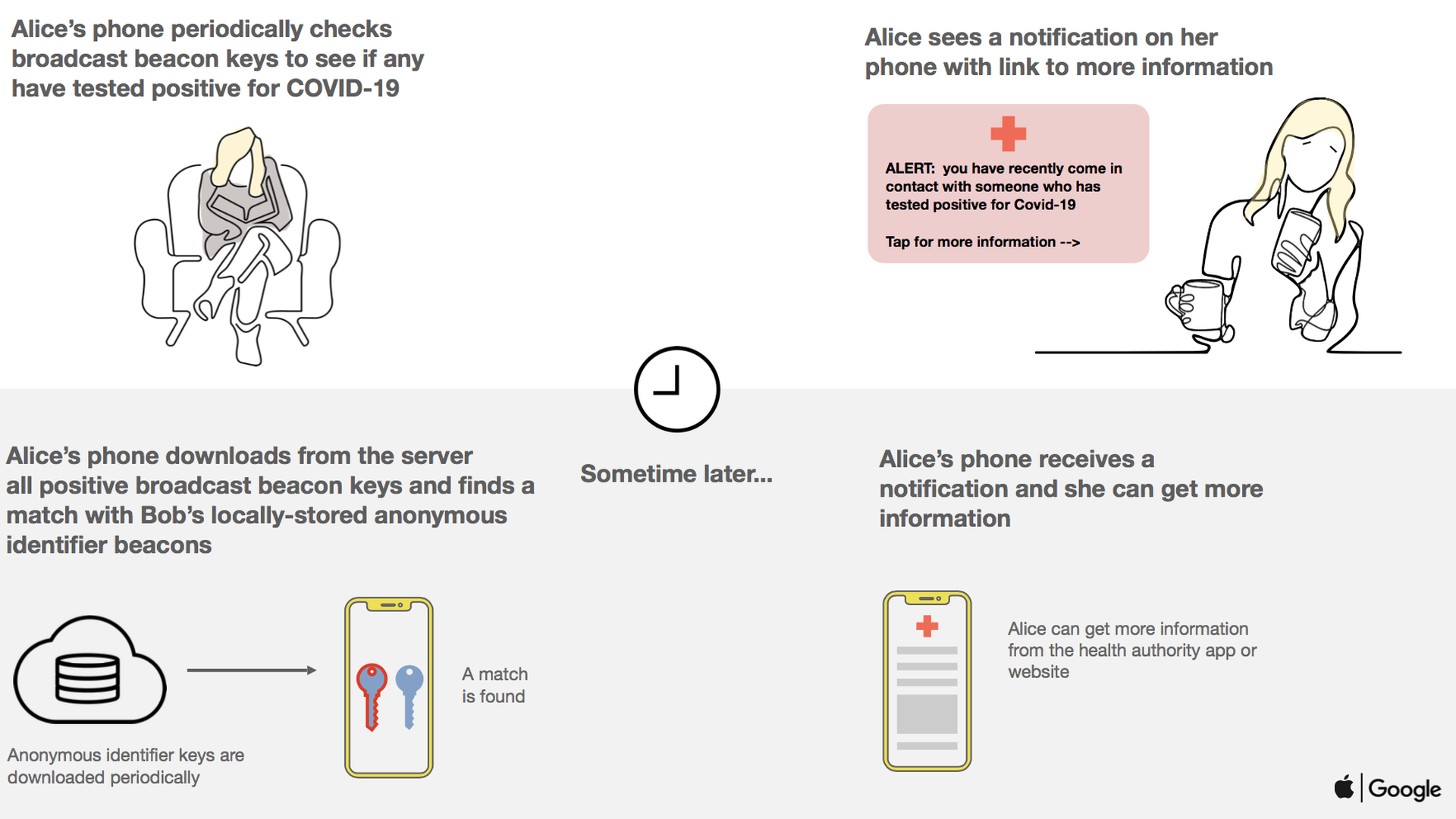
Apple and Google on Friday announced a joint effort to notify people via smartphone — on an opt-in basis — if they've come into contact with someone with the coronavirus, without having to share users' location information with government authorities.
Why it matters: Contact tracing is seen as a key means for allowing society to reopen from shelter-in-place orders, but there have been significant privacy concerns about requiring people to share their location and other personal data with the government.
As the coronavirus pandemic quickly upended the U.S. economy and everyday life, it has also prompted entrepreneurs to devise clever solutions to new problems.
What’s happening: Founders have quickly spun up projects like Frontline Foods and StopCovid-19 to tackle urgent needs like generating revenue for restaurants and keeping essential service workers informed of fast-changing health guidelines.
Spaces CEO Brad Herman had an early warning about COVID-19 because his startup supplies VR attractions to a number of theme parks in China. Realizing that the business he spent the last few years building was going to evaporate, Herman quickly found a new way to apply his team's know-how: helping companies host Zoom teleconferences in VR.
Why it matters: Many startups are rethinking the viability of their core businesses in the wake of the coronavirus. Spaces' move is one of many such pivots likely to crop up in the coming months.
The Justice Department led a group of executive branch agencies in calling on federal regulators Thursday to revoke a Chinese state-owned telecom company's permission to provide service in the U.S., citing national security concerns.
Why it matters: It's the latest crackdown from the federal government on China-based communications companies amid tensions between Washington and Beijing over a range of issues.
Americans' desire for more human connection as the coronavirus pandemic forces them to stay at home is leading to a surge in phone calls, the New York Times reports.
By the numbers: Verizon told the Times it is now handling an average of 800 million wireless calls a day throughout the week — more than double the number of calls it handles on Mother's Day, which is typically one of the busiest call days of the year.
Chinese-owned short video platform TikTok said Thursday it is donating $250 million to the coronavirus relief effort and offer more than $100 million in additional advertising credits.
The big picture: TikTok is the latest tech company to offer aid, with a significant portion of its donation coming in the form of cash.
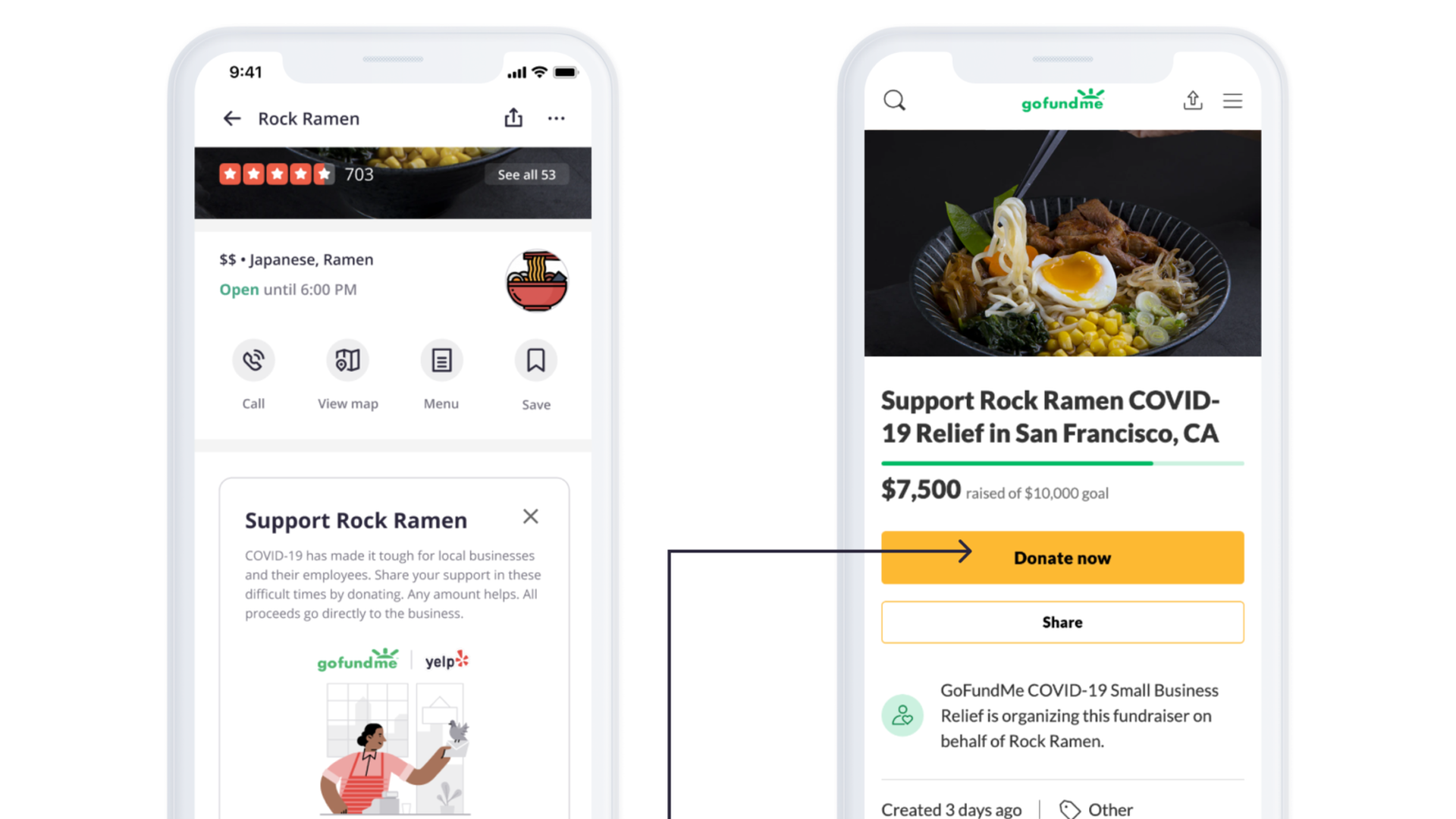
Yelp told employees Thursday that it is cutting 1,000 jobs and furloughing another 1,100 workers amid a massive drop in its business.
Why it matters: Yelp is the latest company catering to small businesses that has seen much of its customer base decimated amid the COVID-19 outbreak and related shutdowns.
The Senate Commerce Committee will examine how companies and the government are using consumer data in response to the coronavirus pandemic through a so-called paper hearing Thursday.
The big picture: Lawmakers' efforts to pass a bipartisan federal privacy law have stalled, but expect privacy considerations to be a key driver in questions about data use.



/2020/04/10/1586490370452.gif?w=3840)