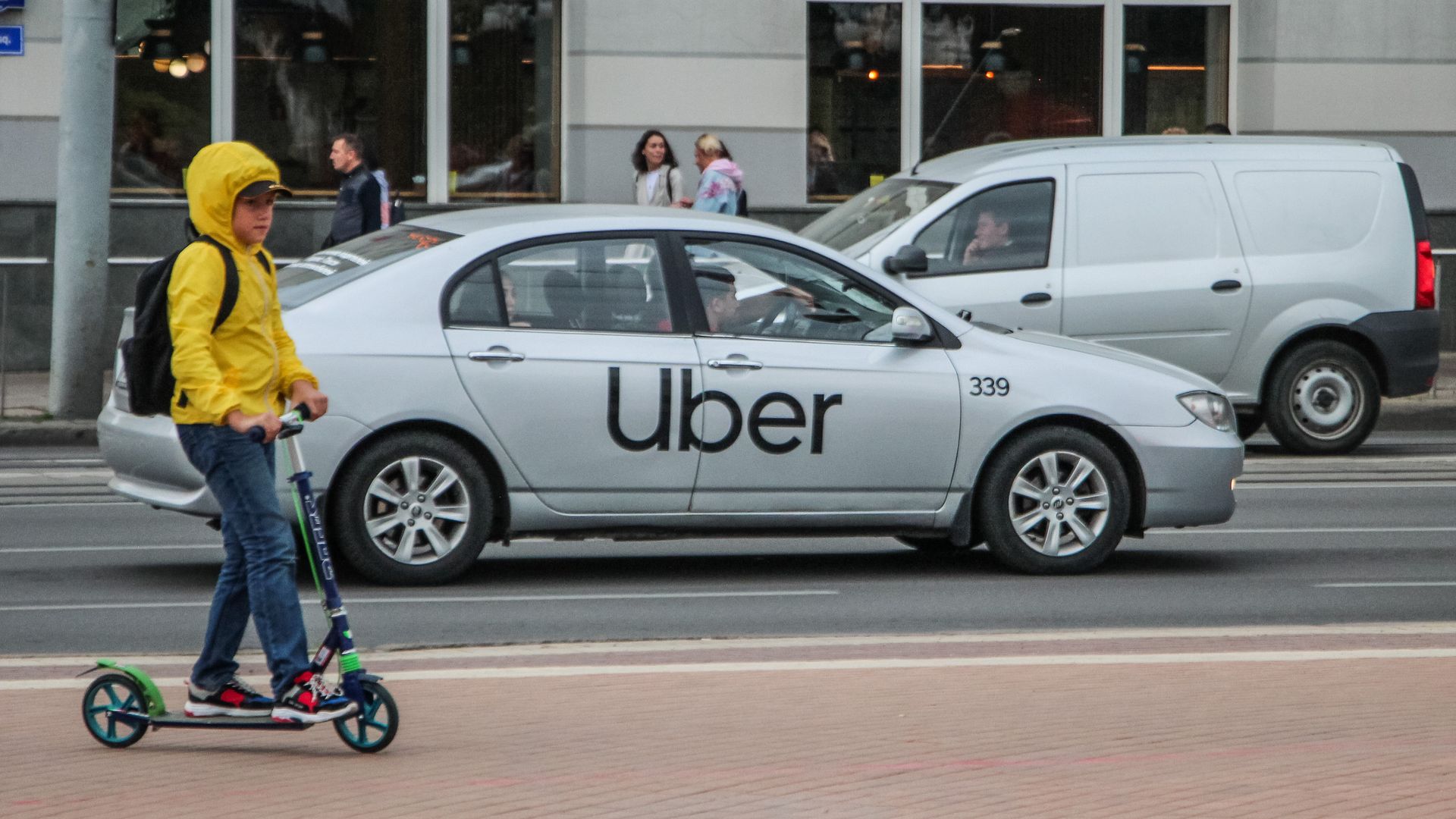
Uber will halt its operations in Colombia at the end of the month, after a judge found the transportation company violated the country's competition rules, Reuters reports.
Why it matters: Uber is likely to look for ways to get back into Columbia, though this comes as a blow to a business that is trying to show investors it can turn a profit and continue growing, especially in regions like Latin America. Uber called the decision "arbitrary" in a statement, and said it violated its right to due process, per Reuters.
This week, I ticked off a bucket list item while in Las Vegas — riding in the Goodyear blimp.
How it happened: Goodyear, which was touting its predictive fleet management services at CES, invited a handful of auto beat reporters to experience a blimp ride over The Strip.
David Drummond is stepping down as chief legal officer of Google's parent company Alphabet, amid an internal investigation into sexual misconduct that involved Drummond both for how he handled complaints (including one against former Android chief Andy Rubin) and for his own workplace relationships.
Why it matters: Drummond has been with Google for nearly two decades, and in charge of everything from its legal and regulatory strategy to its investment activities.
Why it matters: The mobility mash-up shows how multiple industries are converging around their desire to own the transportation experience for consumers — whether they are riding alone, or with strangers, with a robot behind the wheel or soaring over cities.
Netflix may have gone viral with a humorous tweet about password sharing this week, but Wall Street sees the practice as a drag on the company and its rivals to the tune of billions of dollars in revenue each year.
Why it matters: With competition growing and the cost of content continuing to increase, some streaming companies are likely to consider cracking down on the widespread practice.
Facebook, TikTok and Reddit all updated their policies on misinformation this week, suggesting that tech platforms are feeling increased pressure to stop manipulation attempts ahead of the 2020 elections.
Why it matters: This is the first time that several social media giants are taking a hard line specifically on banning deepfake content — typically video or audio that's manipulated using artificial intelligence (AI) or machine learning to intentionally deceive users.