In a shift that is roiling typically cocooned computer scientists, some researchers — uneasy in part about the role of technology in the 2016 election — are urging colleagues to determine and mitigate the societal impact of their peer-reviewed work before it's published.
The big picture: The push — meant to shake computer scientists out of their labs and into the public sphere — comes as academics and scientists are suffering the same loss of popular faith as other major institutions.
Sometimes, a computer science researcher produces a paper whose findings, if published, might lead to societal harm. Now, some experts are questioning the default course of action: publishing the paper anyway, potential damage be damned.
Why it matters: The call to suppress some research challenges decades-old principles in computer science and could slow work in a field that drives the economy, helps define the future of work and is the subject of intense global competition.
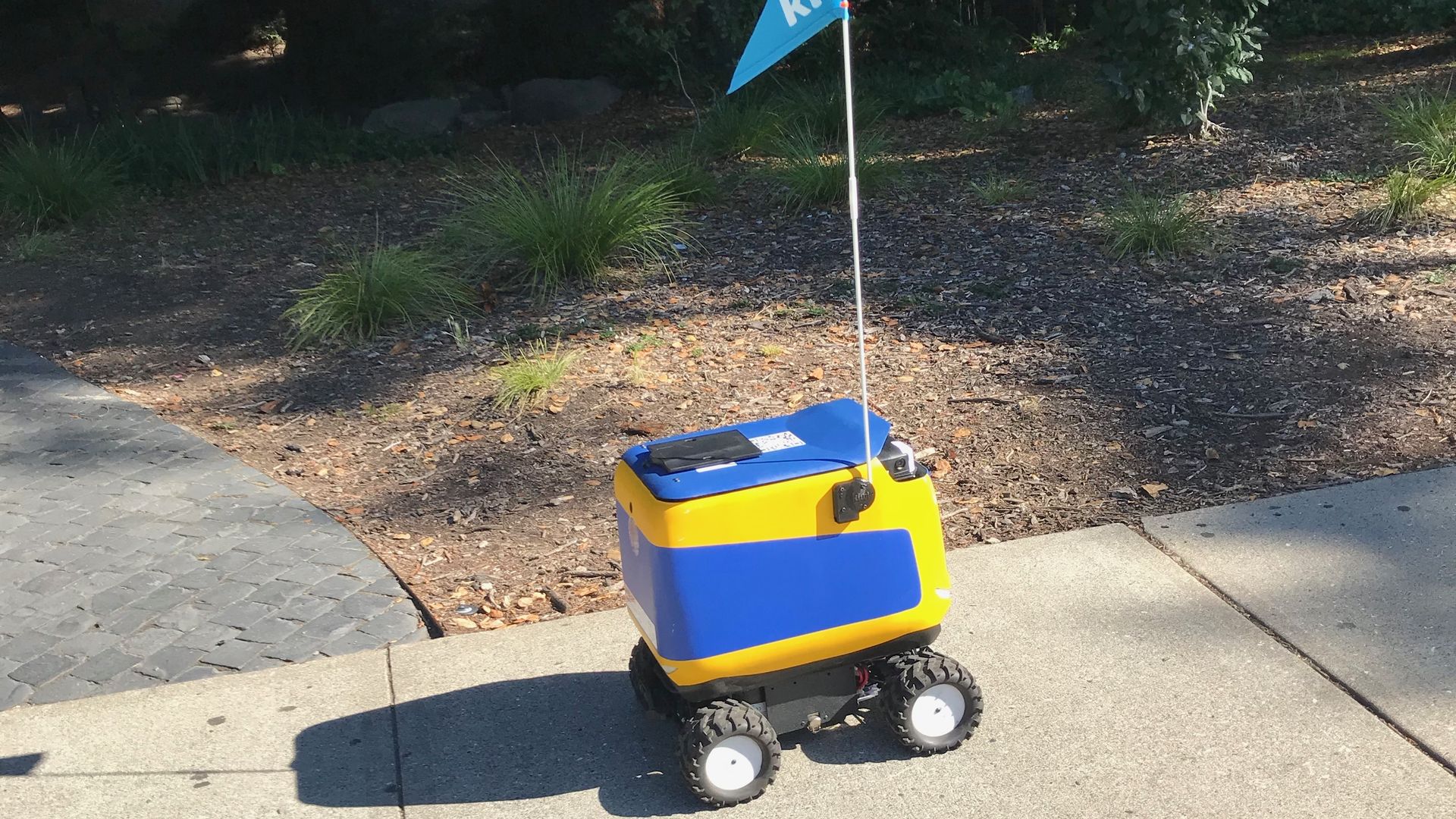
Heading back to Axios' San Francisco office after a meeting with a Berkeley professor, I nearly collided with an icebox-sized tub with wheels and a flagpole, sporting Cal colors.
What it's doing: The sidewalk robotis one of around two dozen that roam UC Berkeley and nearby parts of town, delivering food to students and residents. Kiwi, the Berkeley-based company behind this bot, has already made more than 10,000 deliveries, Techcrunch reports.
We always assumed technology and the naked transparency of social media would feed people’s taste for freedom and thirst for democracy.
The big picture: Right now, that assumption looks flawed: Technology might actually solidify the standing of despots and provide them with a new way to exert their power.
After Amazon missed deliveries across the country, the U.K.'s Advertising Standards Authority (ASA) will rule this week whether the retail giant's 2-day Prime delivery claims are misleading and will stop allowing the company to promise one-day delivery to its customers, according to The Times U.K.
Why it matters: The ultra-fast, one to two day delivery is a hallmark of Amazon’s pitch to customers and forced the industry to match this in order to compete with it. So whether or not it lives up to it is a big deal for Amazon, and by not living up to the delivery promise, the company puts its U.K. customer base at risk. According to the Times, Amazon brought substantial criticism in the country after paying only £1.7 million in taxes on revenues of £2 billion.
A Twitter spokesperson told CNN that seven of the tweets from conspiracy theorist Alex Jones flagged in a previous CNN investigation violated the platform's rules, but that no action is being taken because the tweets were recently deleted.
A pileup of controversies over how Facebook, Twitter, YouTube and Microsoft moderate content on their sites is highlighting how thoroughly major tech companies have become arbiters of speech.
Why it matters: This isn't a job Silicon Valley wants — these companies have long argued the value of freewheeling, unsupervised, boundary-stretching online discourse. But it's the new normal in a media world where power to publish and unpublish now sits with a few companies that aren't prepared for that role.