Uber and Lyft each held talks to acquire Skedaddle, a startup that creates group bus rides by matching customers headed in the same direction, Axios has learned.
Lyft says it's currently "not in discussions to acquire Skedaddle," and it's unclear if conversations with Uber remain active. Both Skedaddle and Uber declined comment.
Why it matters: Ride-hailing companies have long touted carpooling, and a service like Skedaddle could help them tackle the "groups" category (e.g., charter buses to sporting events).
Rep. Todd Rokita (R-Ind.) said in a Thursday letter to top antitrust regulators that the Federal Trade Commission and the Justice Department should probe Google's market dominance.
Why it matters: The FTC decided not to pursue an antitrust case against the search giant in 2013, a major win for the company. But since then, the climate has soured for major tech companies in Washington. "It is time for your agencies to reopen reviews of Google to ensure that its business practices comply with the law," said Rokita in a letter to FTC Chairman Joe Simons and top DOJ antitrust lawyer Makan Delrahim.
"How Smart TVs in Millions of U.S. Homes Track More Than What’s on Tonight," by N.Y. Times' Sapna Maheshwari: "[D]ata companies have harnessed new technology to immediately identify what people are watching on internet-connected TVs, then using that information to send targeted advertisements to other devices in their homes."
Why it matters: "Samba TV[, one of those data companies,] has even offered advertisers the ability to base their targeting on whether people watch conservative or liberal media outlets and which party’s presidential debate[s] they watched."
Amid the global race for supremacy in artificial intelligence, two more tech companies have joined Google in refusing to work on military and police surveillance projects, a sign of the brewing rift between tech players and the government.
Why it matters: Some experts worry that, to the degree AI-focused companies go their own way, the field may lose the long-term, fundamental focus of government-funded programs that have produced some of the world's most hallowed inventions.
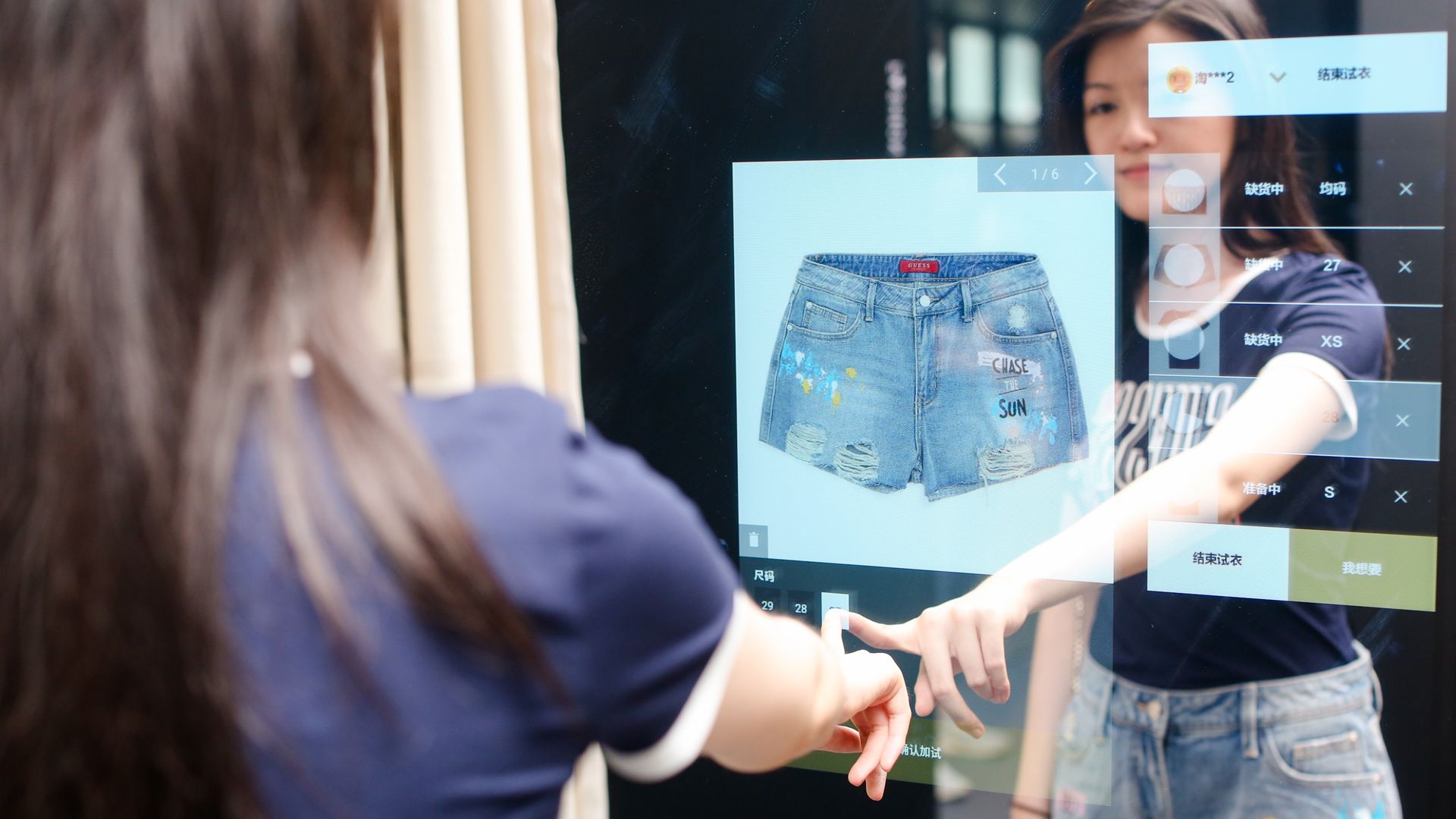
Everything is automated and powered by artificial intelligence — or soon will be — in a new fashion shop opening tomorrow in Hong Kong. From the time you enter, using an app to open an electronically locked sliding glass door, to the time you leave, you may never see another human apart from other shoppers.
The big picture: Last month, I toureda model of the store on Alibaba's Hangzhou campus. Steven Keyang Shi, who leads the Alibaba tech team creating the store, told me that the objective is to merge e-commerce and brick-and-mortar retail — to make shoppers see them as one organism.