Not every fin moving slowly in dark waters needs its own theme song.
Why it matters: Basking sharks are one of the sharks most often mistaken for great white sharks when seen from above water. Both are known to swim near the ocean surface with their dorsal fin visible, but there are some key differences in appearance.
The fin of a basking shark is overall more rounded, with a slightly curved back edge.
A great white shark will have a more pointed fin with a sharp tip. The back edge may be torn or jagged.
Great whites can be found in any U.S. coastal waters, while basking sharks are everywhere except the Gulf Coast.
Threat level: Danielle Haulsee, chief science officer at Hubbs-SeaWorld Research Institute, says, "Basking sharks are not dangerous. They may be intimidating due to their large size and wide-open mouths, but they pose no threat to humans."
Basking sharks are filter feeders, so they swim with their mouths open to collect tiny plankton.
The big picture: If you see a fin in the water, Haulsee recommends remaining calm.
"Try to determine if it is a shark or another finned friend like a dolphin or porpoise," Haulsee says. "Dolphins will surface briefly to breathe and then swim back under the water, whereas the fin of a shark swimming at the surface will remain out of the water."
"If you believe it is a shark, remain calm and slowly swim back to shore or your boat, keeping your eyes on the fin if possible."
Avoid splashing around, as that may lead to the shark confusing you for prey.
The bottom line: Haulsee says, "Remember that healthy ecosystems require a balance of predators and prey, so while we may fear sharks, we need to respect their important role as the top of the food chain to ensure the health of our oceans."
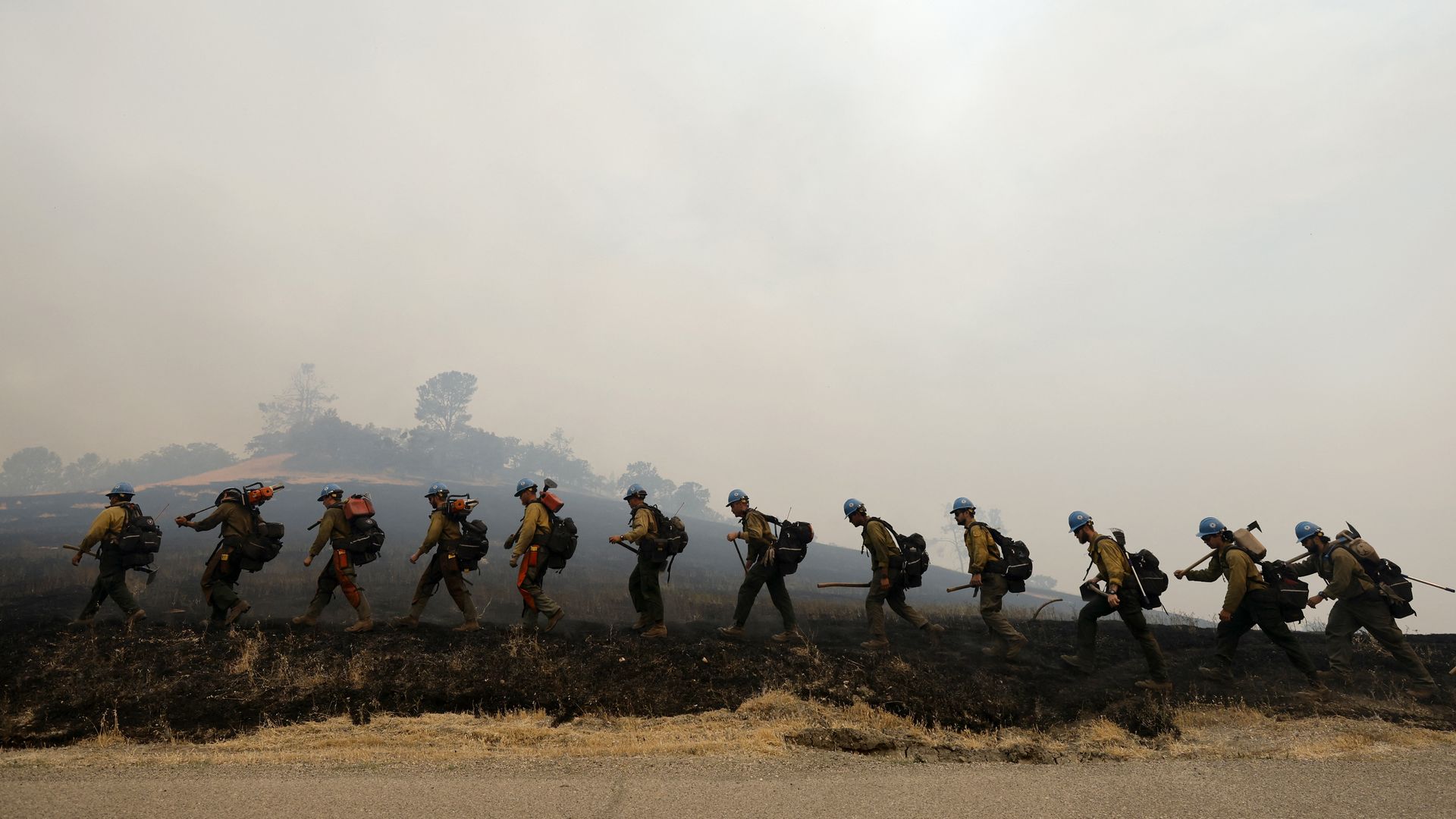
Massive wildfires burning across the U.S. West during the record heat wave prompted evacuation orders in several states over the weekend — including one in Southern California that's threatening homes including the late Michael Jackson's former Neverland Ranch.
The big picture: 24 large fires have been burning across the Western U.S., per the latest details from the National Interagency Fire Center — including eight in California and two in Utah, where hot, dry and windy conditions brought "critical fire weather" concern for central and southern parts of the state Sunday.