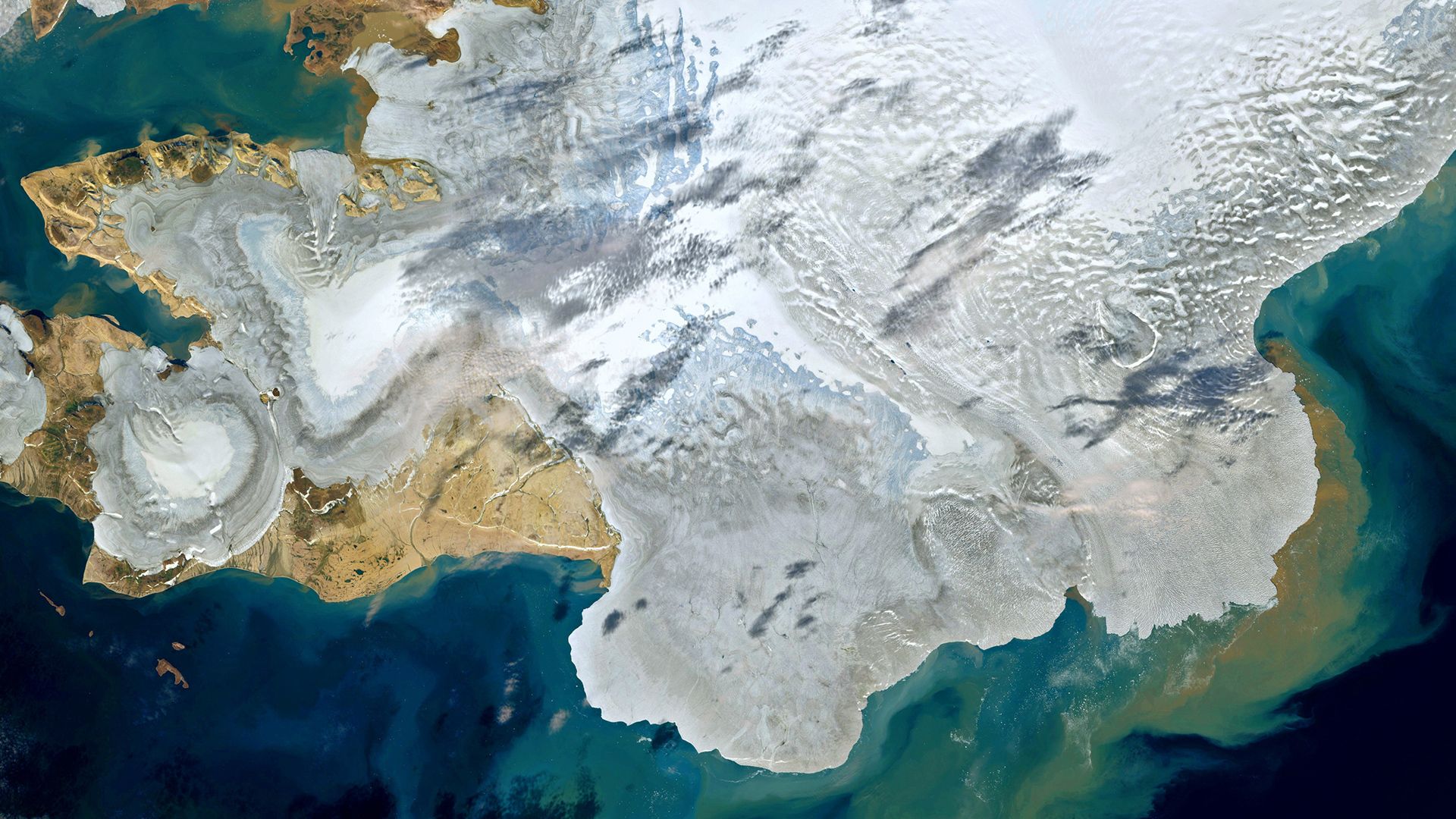
The Norwegian Arctic Archipelago of Svalbard, situated northeast of Greenland, is seeing a record melt season tied to human-caused global warming, scientists tell Axios.
Why it matters: The meltwater is pouring into the Atlantic Ocean, where it helps to raise sea levels. The rapid melt this year demonstrates Svalbard's status as one of the fastest warming places in the Northern Hemisphere, at about three times the rate of lower latitudes.
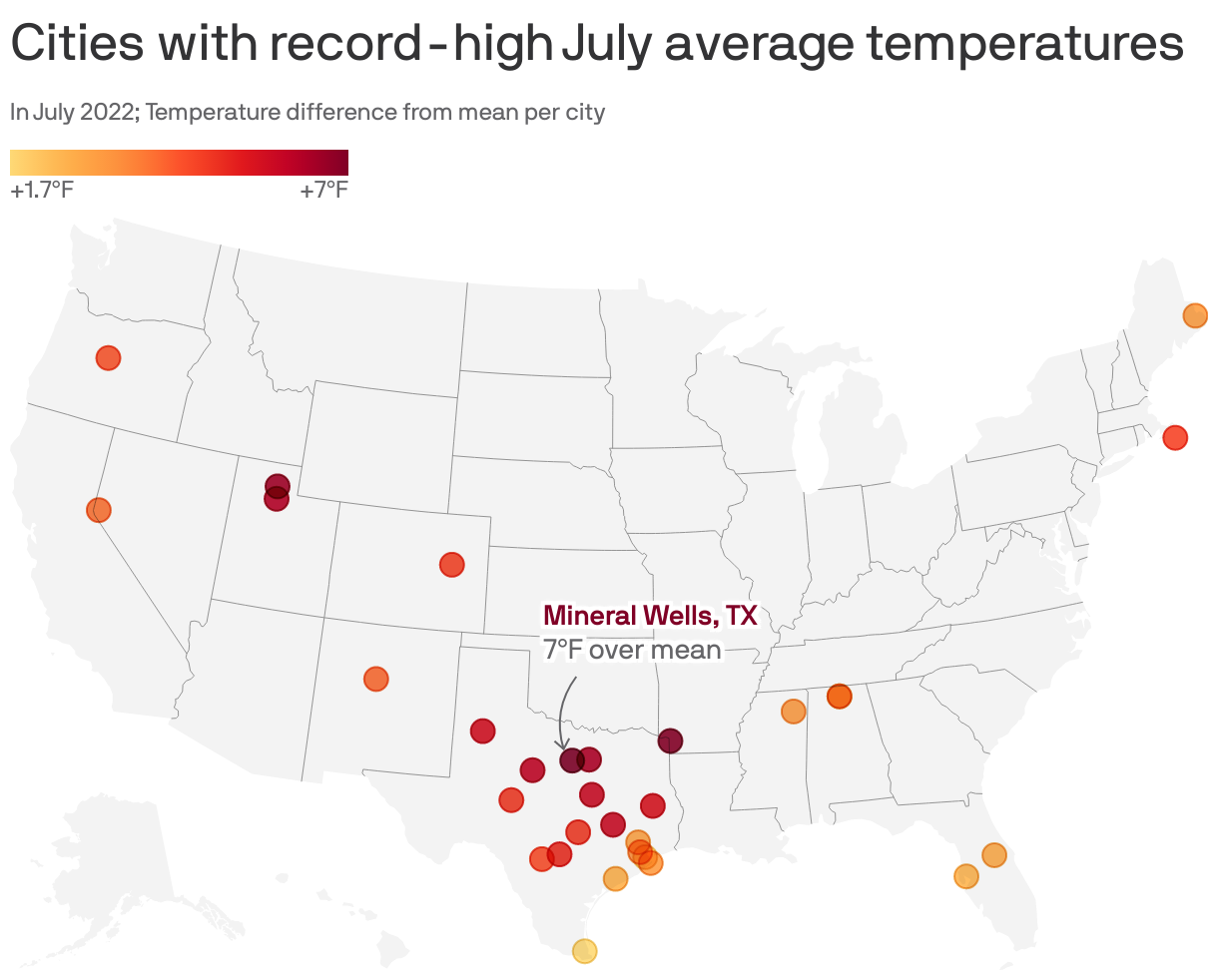
New data shows that at least 43 locations across the U.S. set or tied for their hottest July on record, according to data from the National Oceanic and Atmospheric Administration (NOAA) via the Southeast Regional Climate Center.
Driving the news: The record-breaking temperatureswere concentrated in Texas, Tennessee, Alabama, Mississippi, North and South Carolina and Oregon.
Researchers at Yale University recently used an experimental system to restore the cells and some function to vital organs of pigs an hour after the animals died, according to a new preliminary study published in the journal Nature on Wednesday.
The big picture: The study's results confront the idea of irreversible death and raise philosophical and ethical questions about our definition of death.
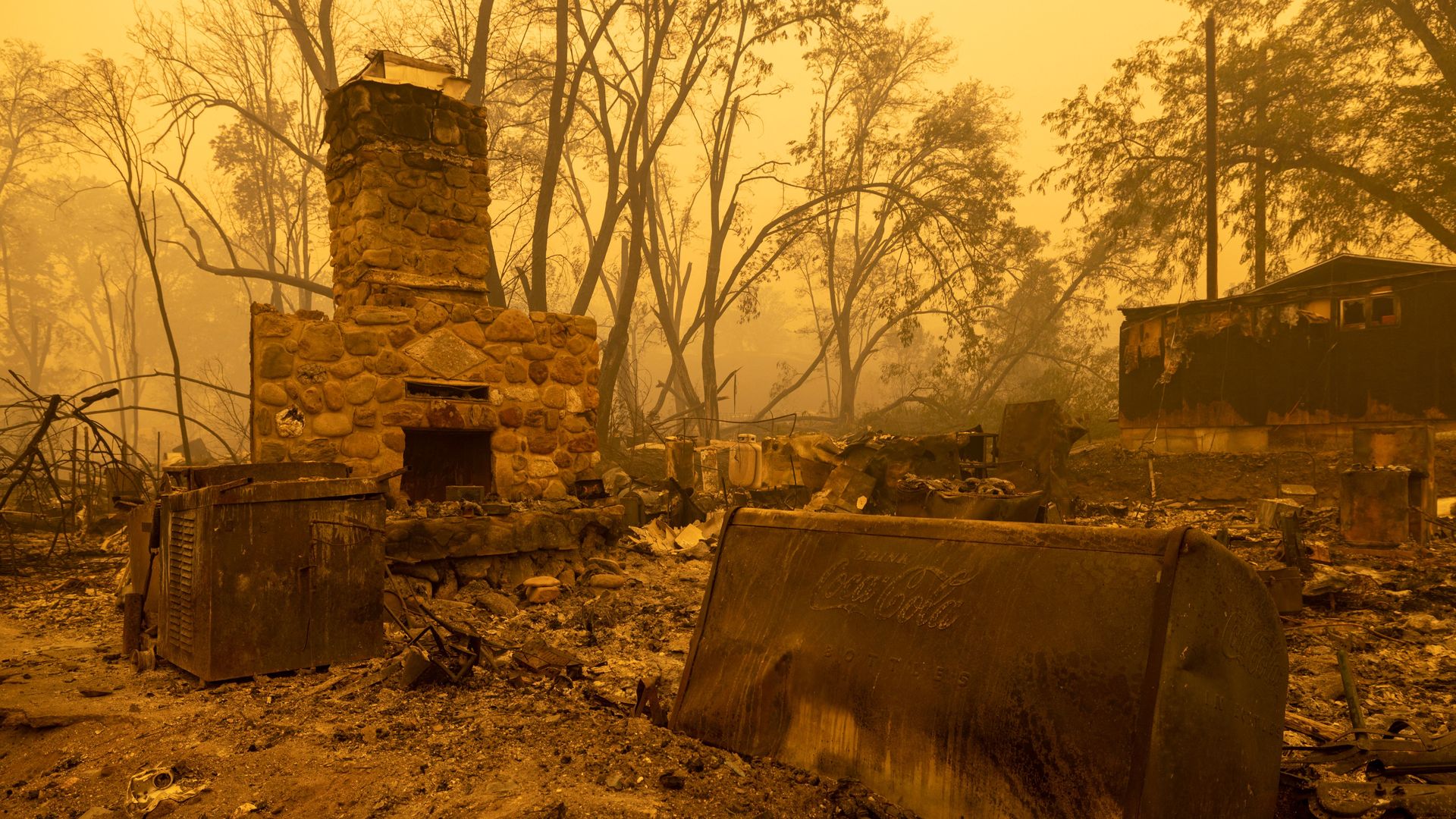
California's McKinney Fire, located near the Oregon border, has burned nearly 57,500 acres of land and conditions this week are ripe for continued fire spread.
Why it matters: The McKinney Fire is the state's largest wildfire so far this year and has prompted evacuation orders and a state of emergency declaration in California's Siskiyou County.
Political leaders and climate activists often say that human-caused climate change presents an existential threat to humanity, or could lead to a global catastrophe, but this is rarely defined.
Driving the news: A group of top climate scientists has come forward to argue that more rigorous research is urgently needed into such worst-case scenarios, which they call a "climate endgame."