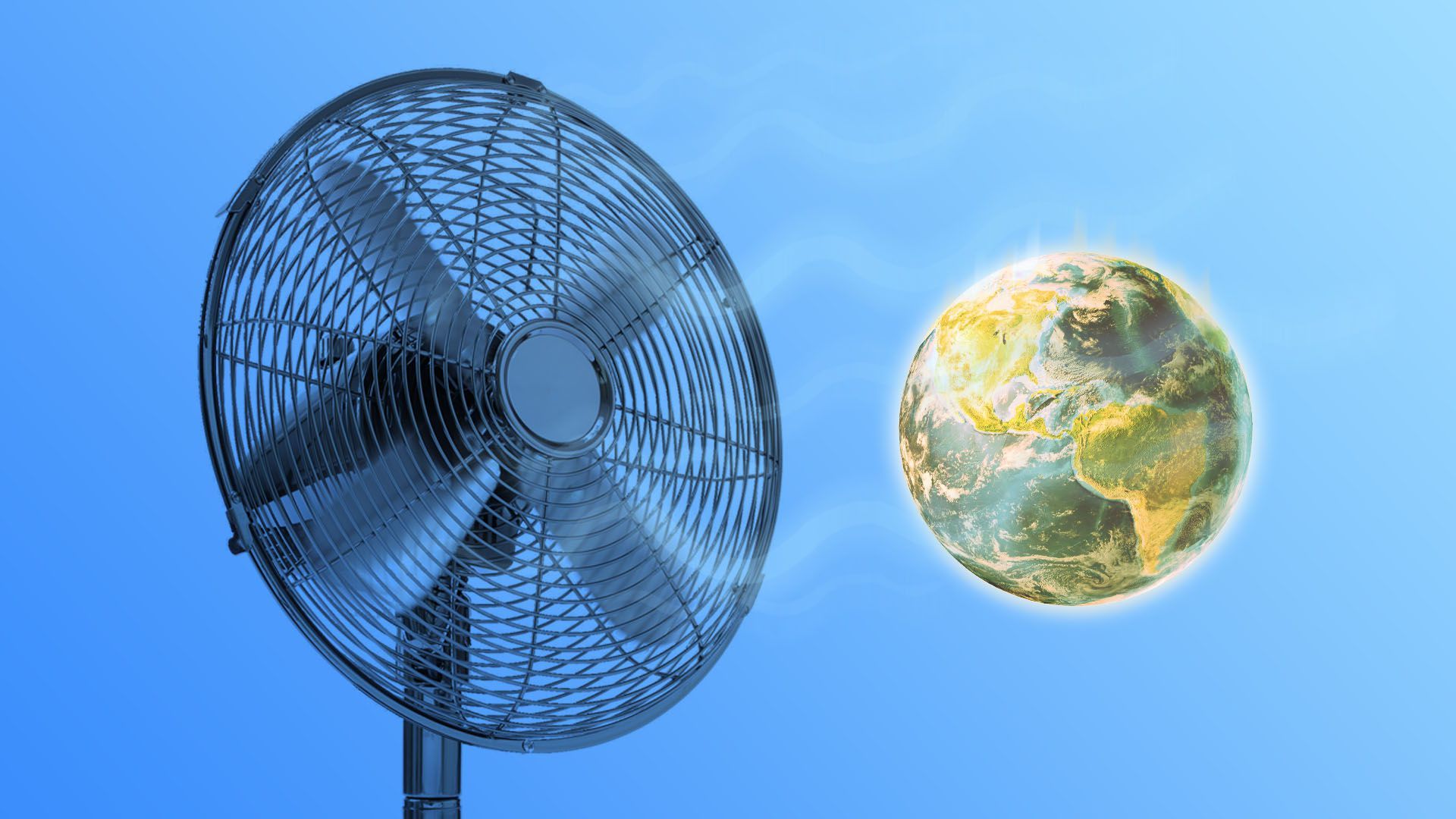
Two heat waves an ocean apart are inextricably linked.
Why it matters: These kinds of interconnected heat waves could become even more extreme in the future, as human-caused climate change affects the jet stream winds responsible for them.
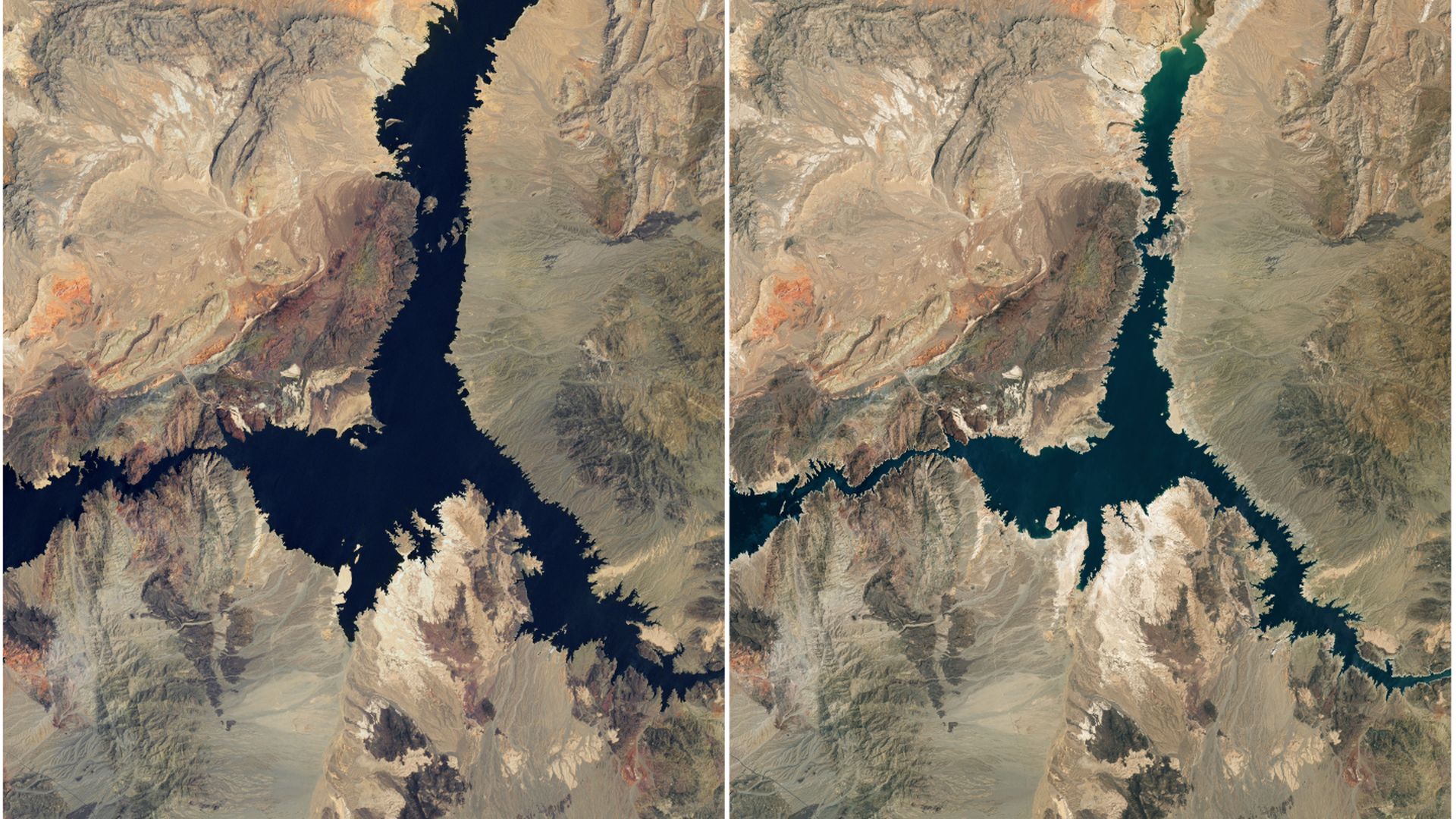
Lake Mead's water levels have sunk to the lowest since 1937, when the reservoir was being filled for the first time, according to newly released satellite pictures from NASA.
Why it matters: The images show the dramatic change in the lake's water levels in the past 22 years, a trend that continues to accelerate amid the effects of climate change. Lake Mead, the largest reservoir in the U.S., was at 27% of capacity as of Monday, per NASA. The dwindling water supply has led to multiple wildfires.
Over 104 million people are under heat warnings and advisories across the U.S. on Thursday as dangerous heat continues to roast the southwest, south-central, and eastern U.S. according to the National Weather Service (NWS).
Why it matters: Excessive heat events are the leading weather-related killer in the U.S. and can greatly strain the power grid, leading to power interruptions. Climate change from greenhouse gas emissions is causing heat waves to be more severe, frequent and longer-lasting.
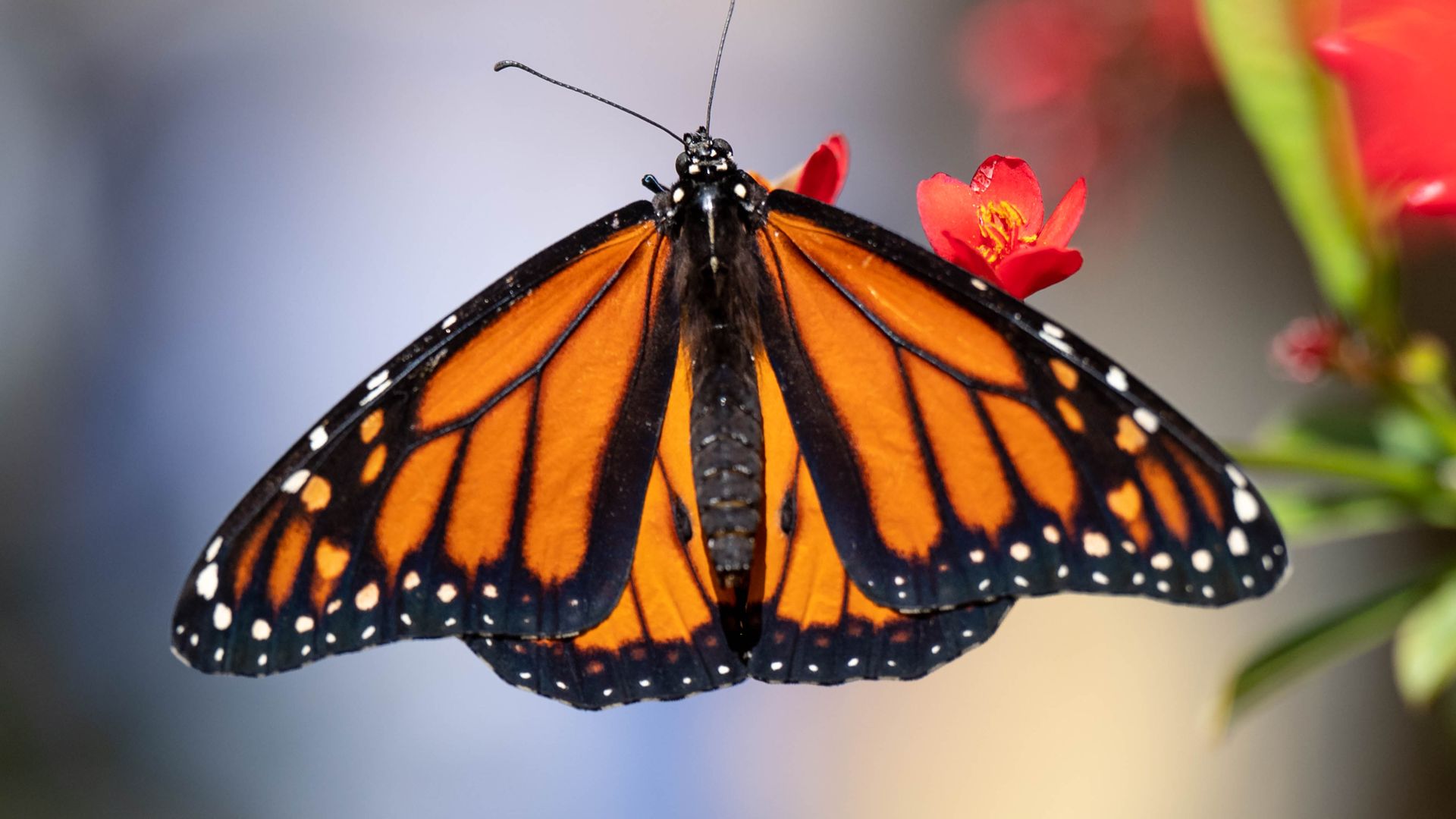
The migratory monarch butterfly endemic to North America has been categorized as an endangered species by the International Union for Conservation of Nature.
Why it matters: The monarch's native population has shrunk between 22% and 72% over the past decade. Its decline is largely due to climate change, deforestation and pesticide use, which kills the milkweed the monarchs feed on, the IUCN said Thursday after adding the butterfly to its "red list" of threatened species for the first time.