X-ray astronomy is helping to reveal new details about the nature of the universe.
Why it matters: For thousands of years, humanity's understanding of the universe has been dominated by what can be seen. Now, by measuring the invisible X-rays, infrared signals and gravitational waves emitted across the universe, scientists are getting a clearer understanding of the events that shape the cosmos.
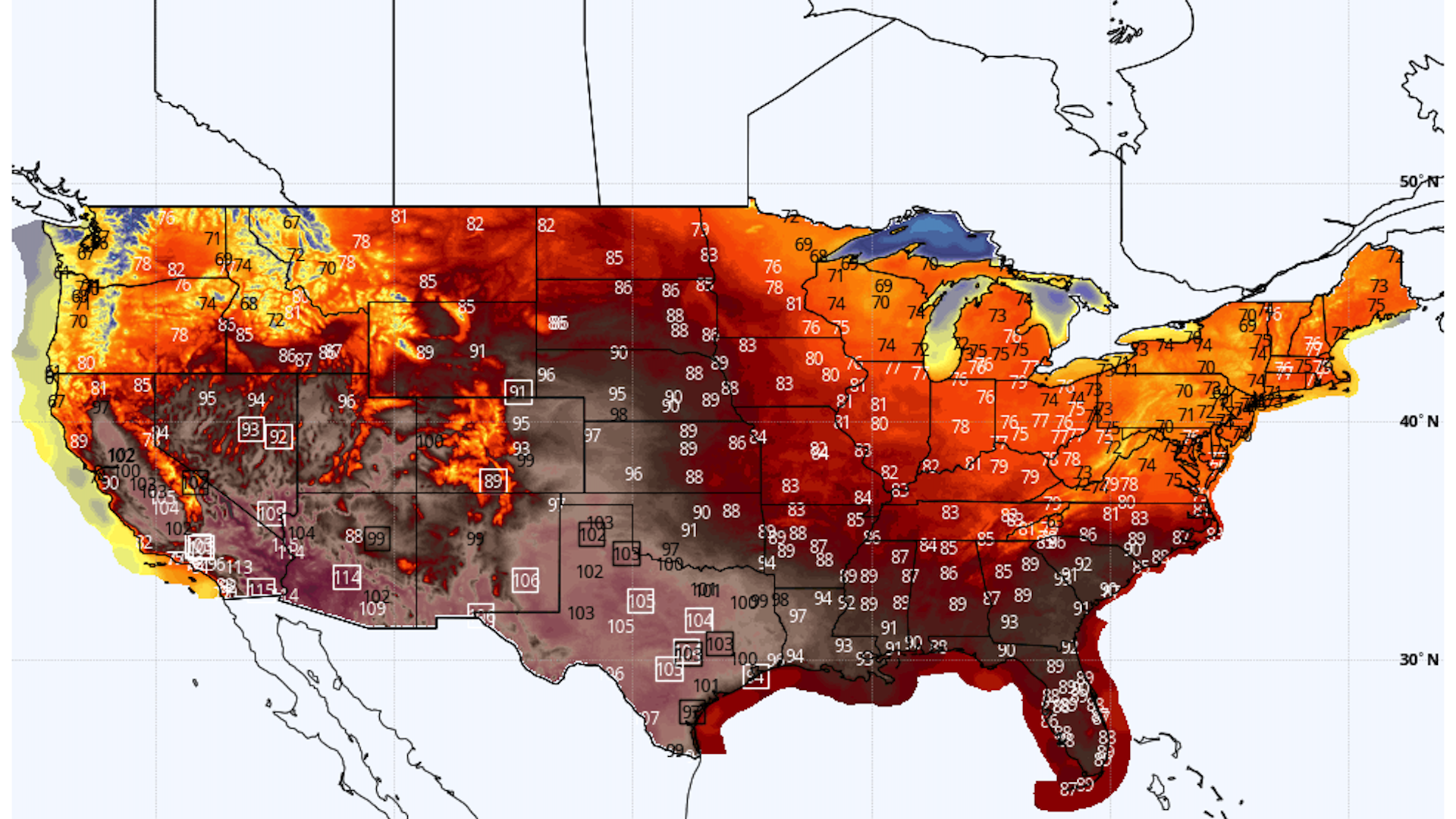
Forty-two million people are under heat watches and warnings in the Southwest into the weekend as a heat dome strengthens over the region, with temperatures soaring to hazardous levels from Texas to Arizona and northwestward into California's Central Valley.
Why it matters: Extreme heat is the leading weather-related killer in the U.S., and the first such event of the season can be particularly dangerous since people are not yet accustomed to such high temperatures.
NASA is setting up a team to look into reports of unidentified aerial phenomena.
Why it matters: There have been about 400 UAP sighting reports, and today, there's congressional and public interest in nailing down exactly what they could be.
Scientists have found microplastics in freshly fallen Antarctic snow for the first time.
Why it matters: Researchers from New Zealand's University of Canterbury discovered tiny plastic particles in all 19 samples taken from sites along the Ross Ice Shelf, per a study published Wednesday in the science journal The Cryosphere.
The U.S. is in store for another summer of extreme heat, hurricanes, droughts and wildfires — threats that are all escalating because of climate change.
The big picture: Parts of the Arctic are already burning. So are parts of New Mexico. After two years of especially devastating summer disasters, experts say the potential for catastrophe is only growing.