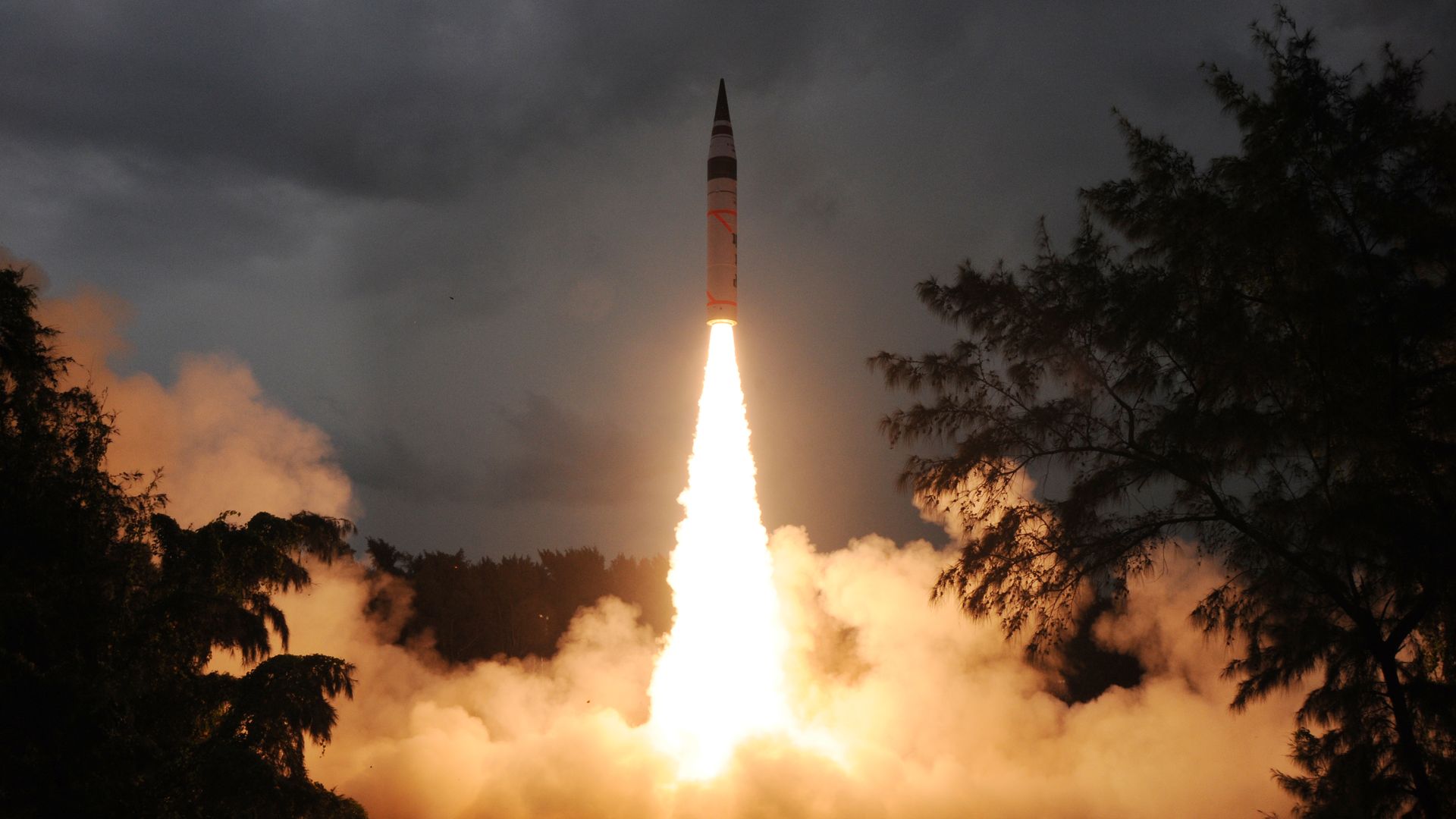
A new study argues that a nuclear war between India and Pakistan would cause global cooling and planet-wide food shortages.
Why it matters: Scientists have debated the climatic effects of nuclear war. New computer models show even a comparatively limited nuclear exchange could have global impacts on food production that would eclipse the worst famines in documented history.
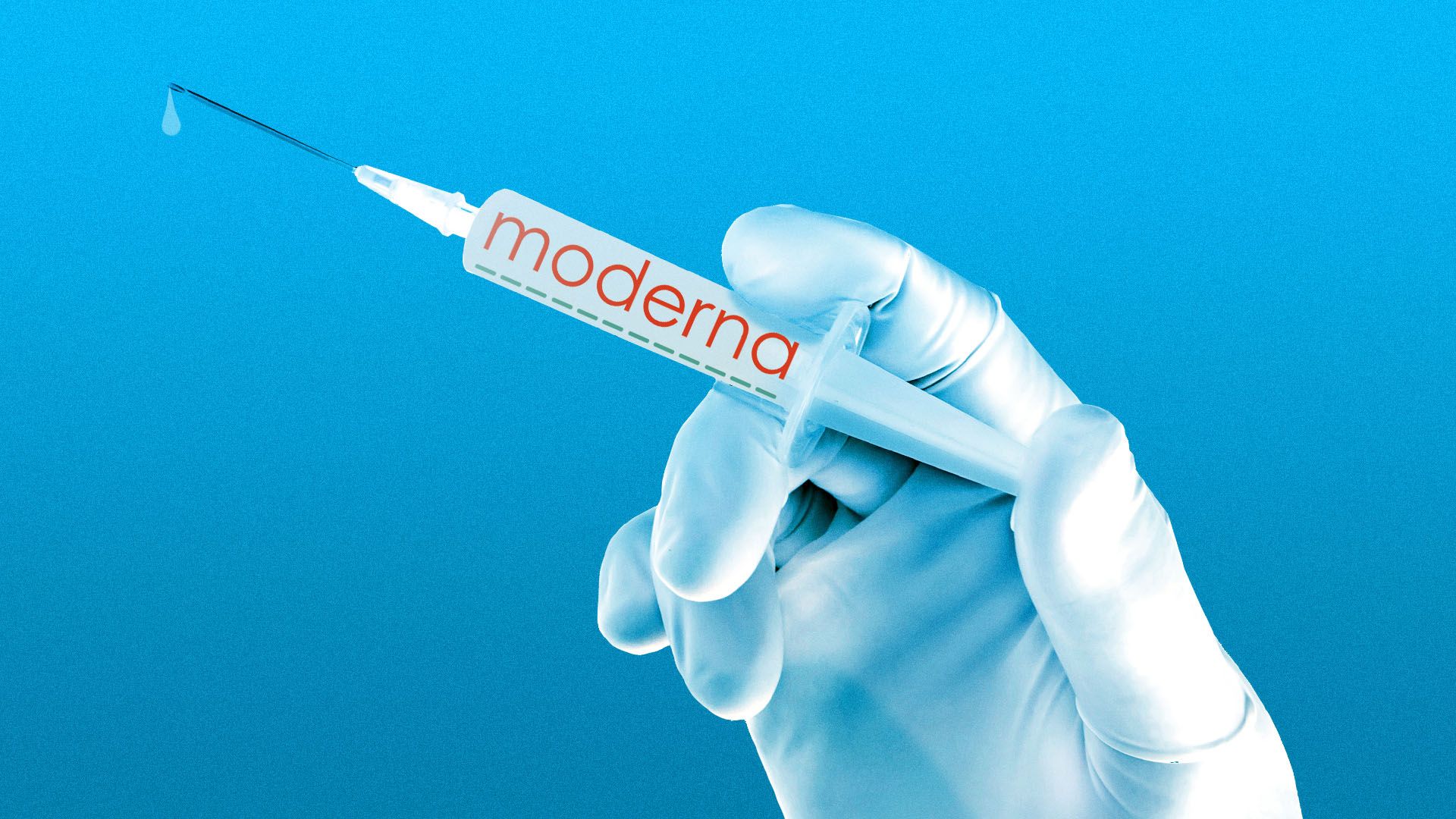
Moderna has moved incredibly quickly to begin testing a potential vaccine for the new coronavirus in U.S. patients. The biotech company went from taking the genetic sequence of the new coronavirus to manufacturing its first batch of vials in less than a month.
Reality check: Best-case scenario, a vaccine could be ready for production by next year — but that's assuming the drug proves to be both safe and effective, which is completely unknown right now.
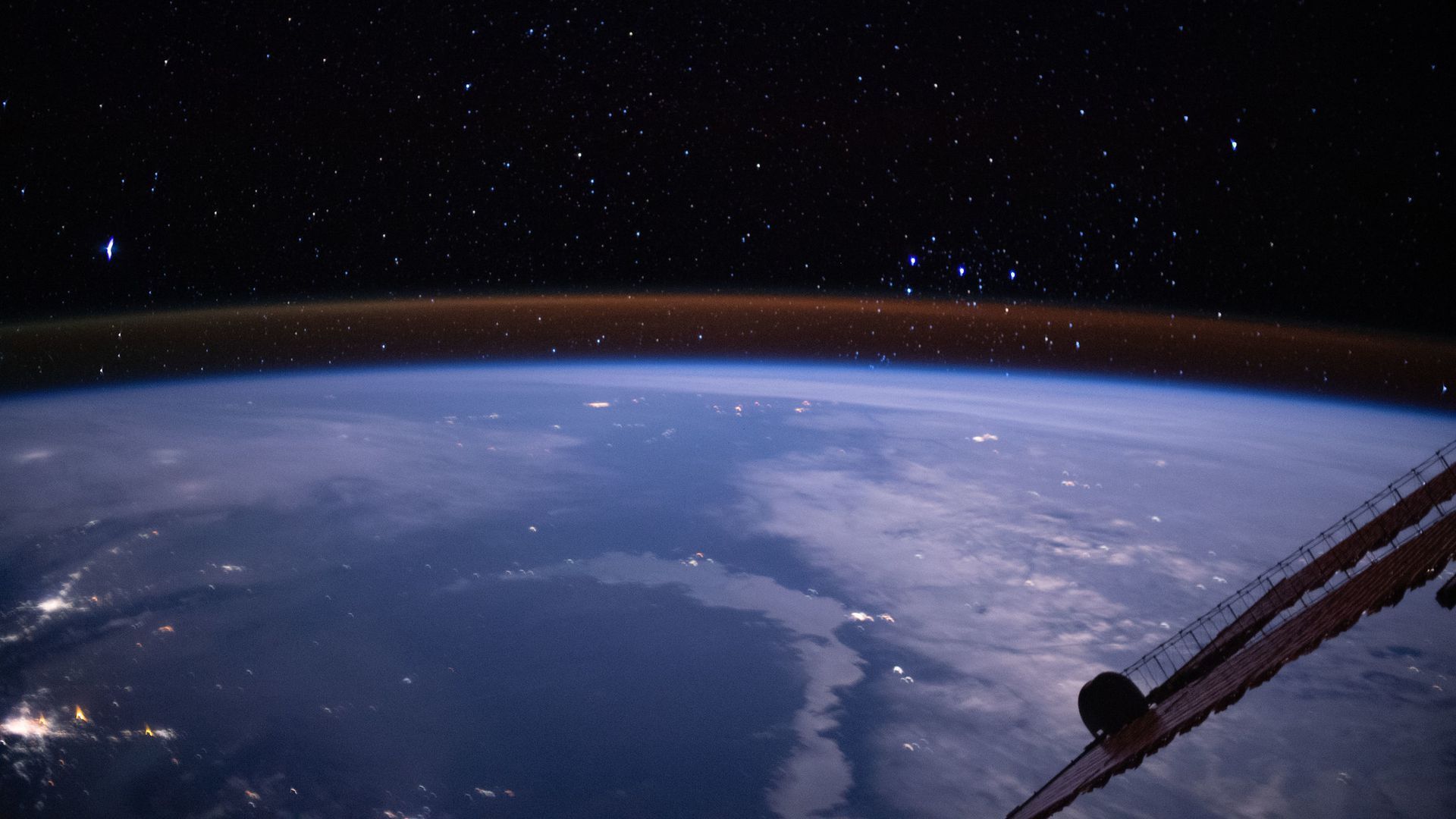
Earth's atmosphere glows from space. This photo taken earlier this month shows the thin copper-tinted limb of the atmosphere as seen from the International Space Station.
How it works: The time-lapse photo was snapped as the orbiting outpost passed 262 miles above Kazakhstan. If you ever want to try to spot the station from your own backyard, you can use this handy tool to find out exactly when the space laboratory will pass overhead.
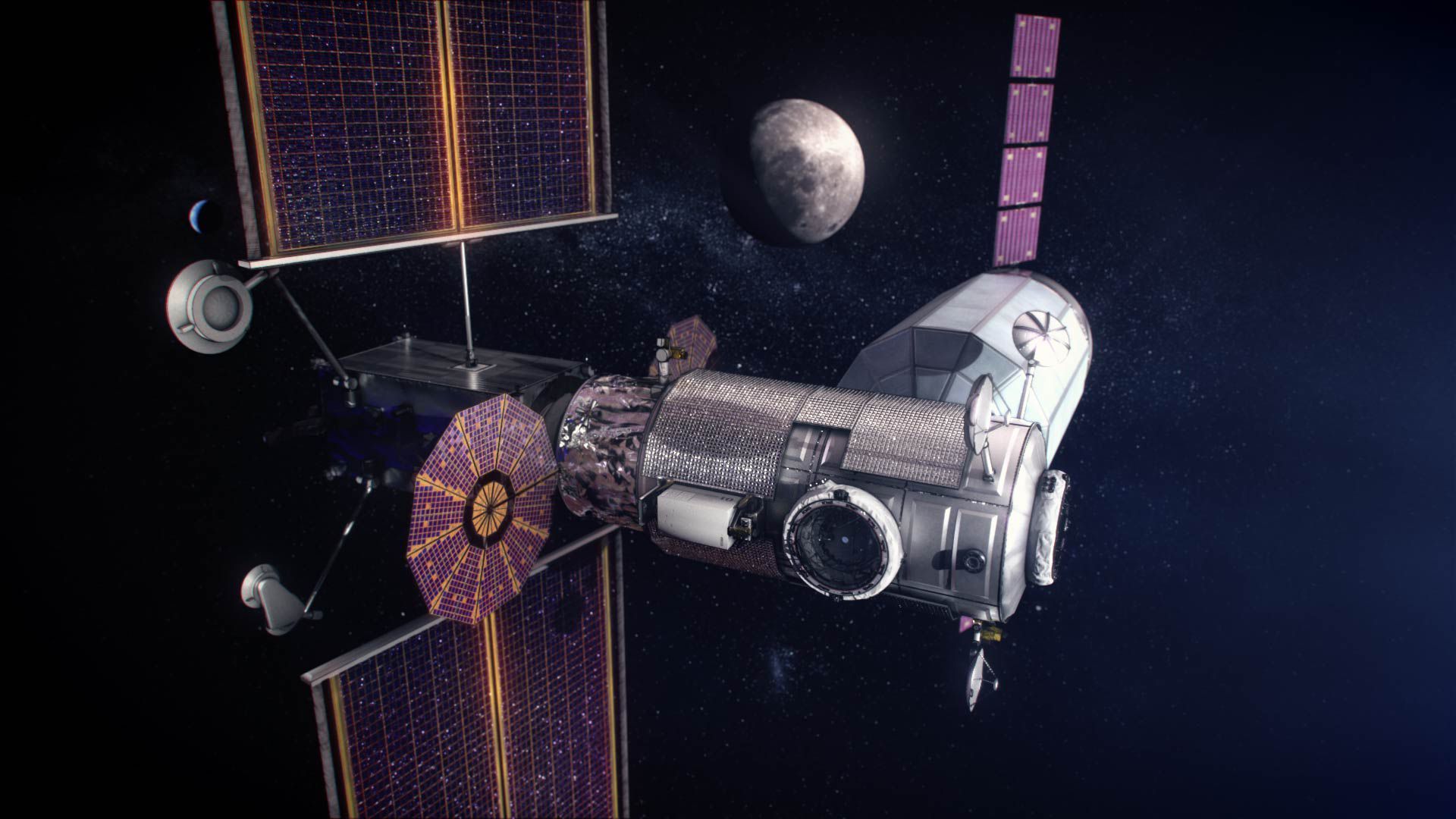
Two experiments designed to monitor the space environment will eventually orbit the Moon on NASA's small Gateway space station.
Why it matters: The experiments will keep an eye on the radiation environment in lunar orbit in order to help scientists learn how to keep astronauts safe as they explore deep space.
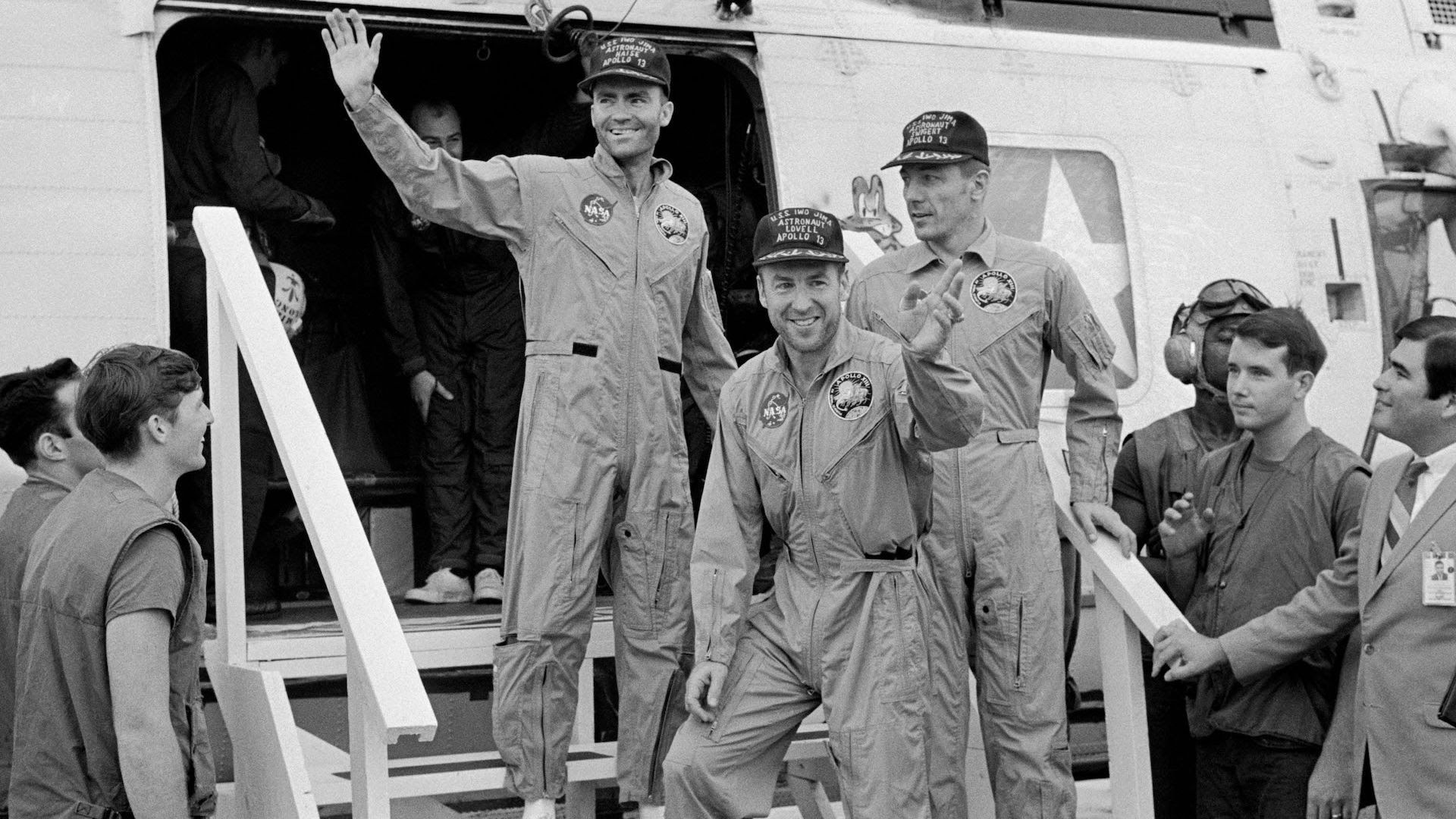
A new website lets space fans around the world experience the highs, lows, terror and ultimately the joy of the troubled Apollo 13 mission in 1970.
The big picture: This marks the third real-time Apollo website released to date. Apollo 11 and Apollo 17 also got this treatment from creator Ben Feist.
From canceled conferences to a delayed Mars mission, the space industry is starting to feel the effects of the coronavirus pandemic as it spreads across the globe.
Why it matters: Hundreds of thousands of people are already experiencing the devastating effects of the pandemic.
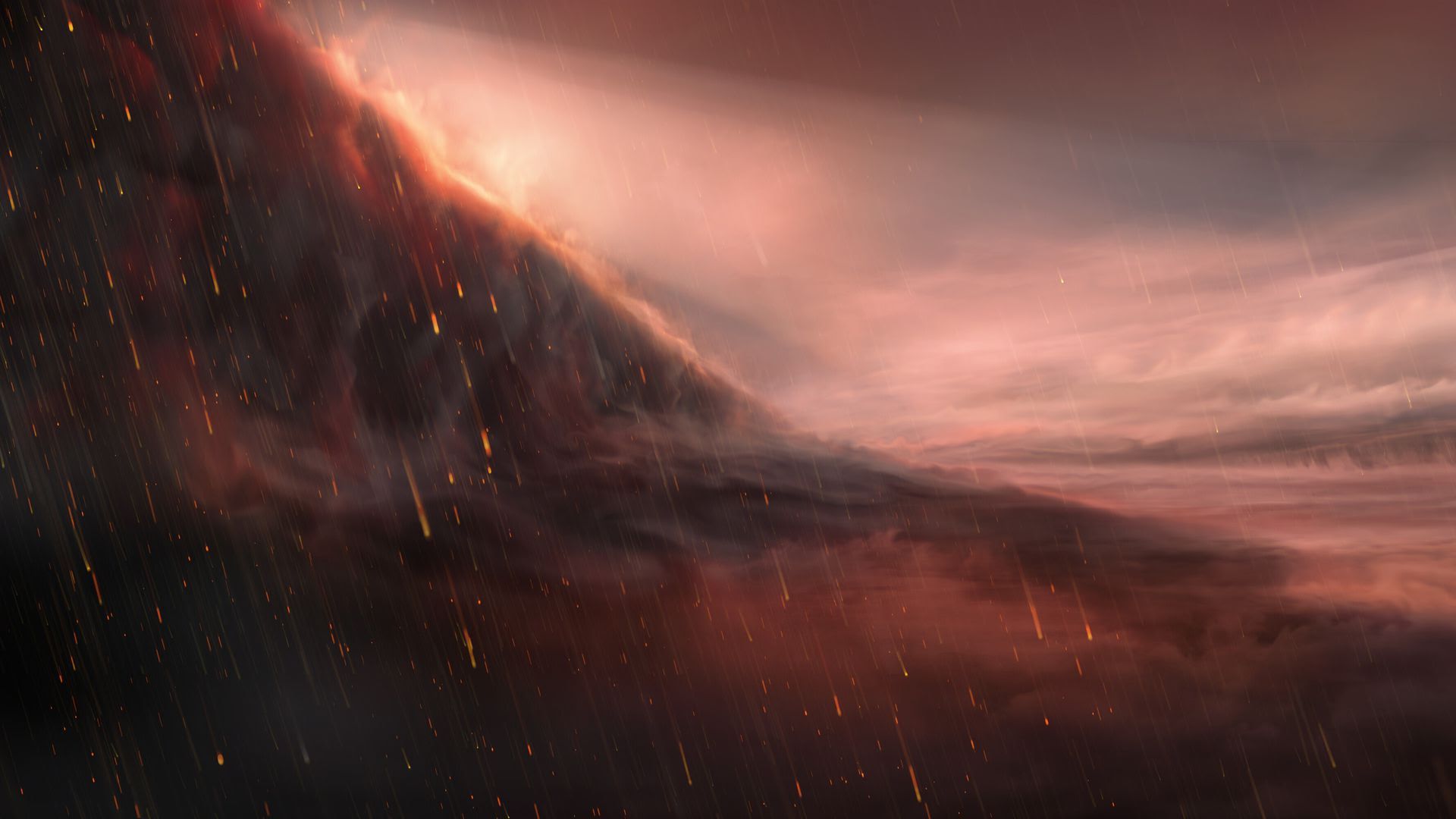
A telescope in Chile has found a world 640 light-years from Earth that rains liquid iron, adding to the strange tapestry of planets far from our own.
Why it matters: The more that scientists understand about planets circling other stars, the closer they get to finding out just how unique (or common) our solar system — and therefore life — is.



/2020/03/17/1584464847300.gif?w=3840)