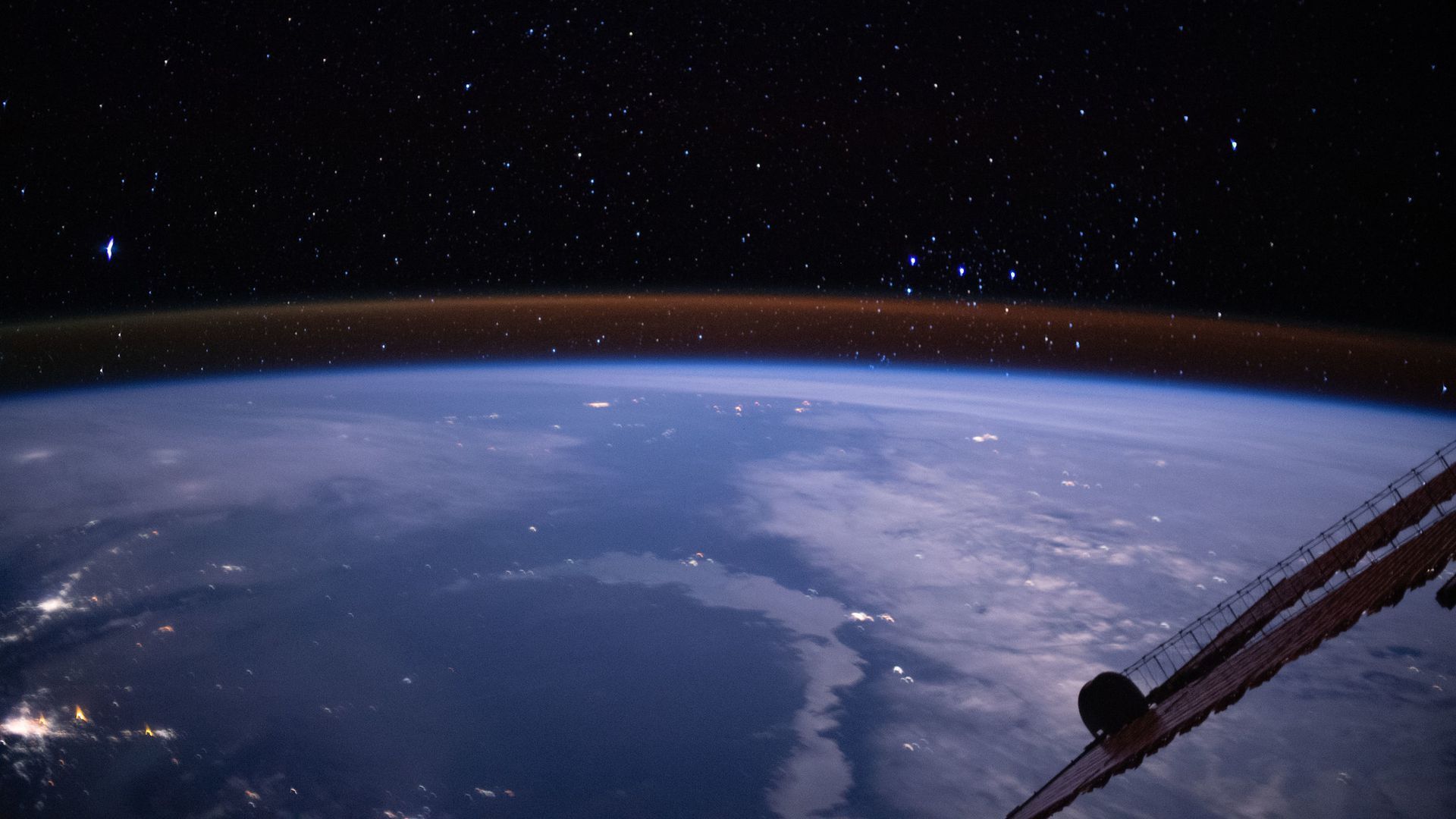
Earth's atmosphere glows from space. This photo taken earlier this month shows the thin copper-tinted limb of the atmosphere as seen from the International Space Station.
How it works: The time-lapse photo was snapped as the orbiting outpost passed 262 miles above Kazakhstan. If you ever want to try to spot the station from your own backyard, you can use this handy tool to find out exactly when the space laboratory will pass overhead.
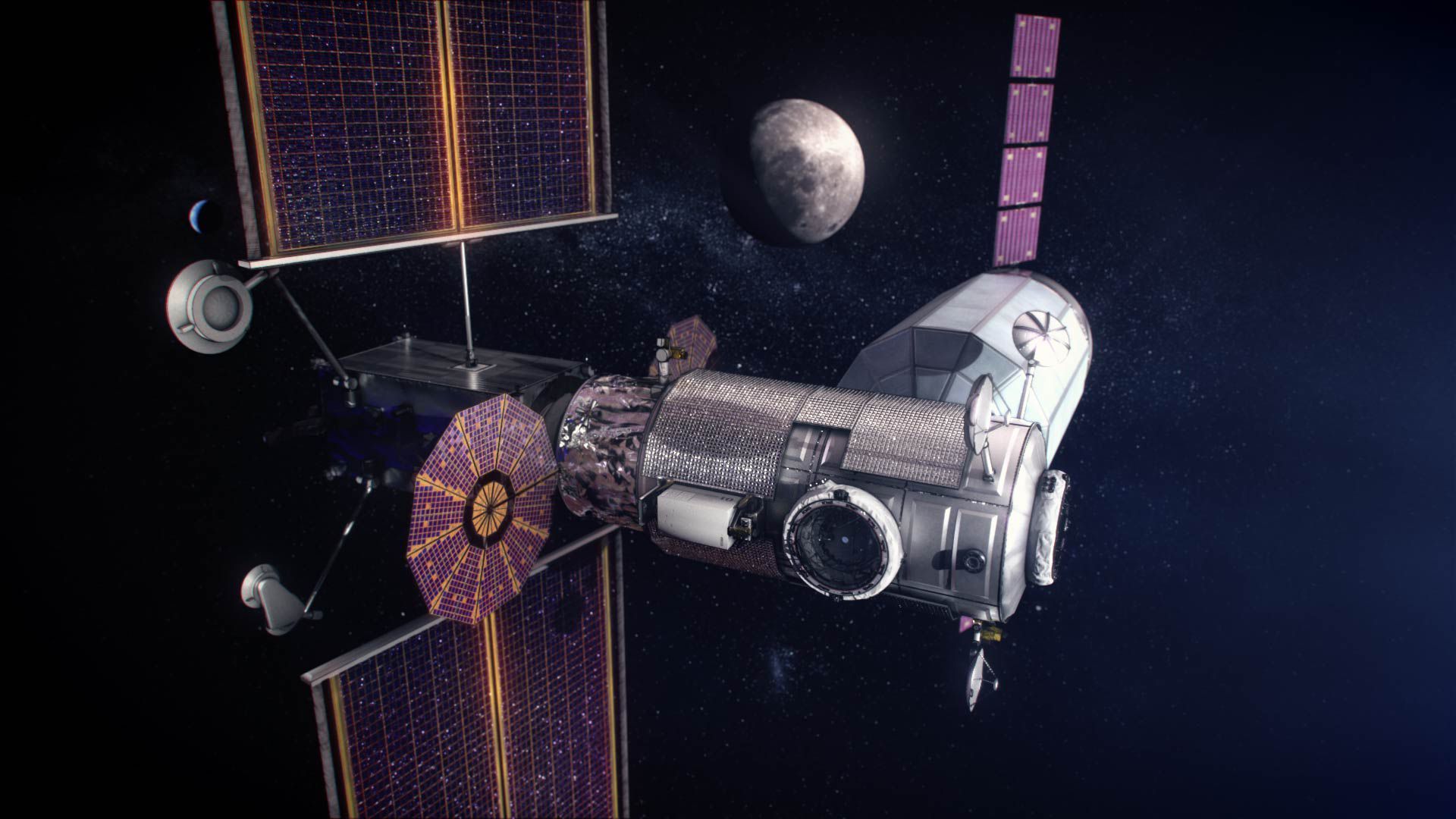
Two experiments designed to monitor the space environment will eventually orbit the Moon on NASA's small Gateway space station.
Why it matters: The experiments will keep an eye on the radiation environment in lunar orbit in order to help scientists learn how to keep astronauts safe as they explore deep space.
A new website lets space fans around the world experience the highs, lows, terror and ultimately the joy of the troubled Apollo 13 mission in 1970.
The big picture: This marks the third real-time Apollo website released to date. Apollo 11 and Apollo 17 also got this treatment from creator Ben Feist.
From canceled conferences to a delayed Mars mission, the space industry is starting to feel the effects of the coronavirus pandemic as it spreads across the globe.
Why it matters: Hundreds of thousands of people are already experiencing the devastating effects of the pandemic.
A telescope in Chile has found a world 640 light-years from Earth that rains liquid iron, adding to the strange tapestry of planets far from our own.
Why it matters: The more that scientists understand about planets circling other stars, the closer they get to finding out just how unique (or common) our solar system — and therefore life — is.
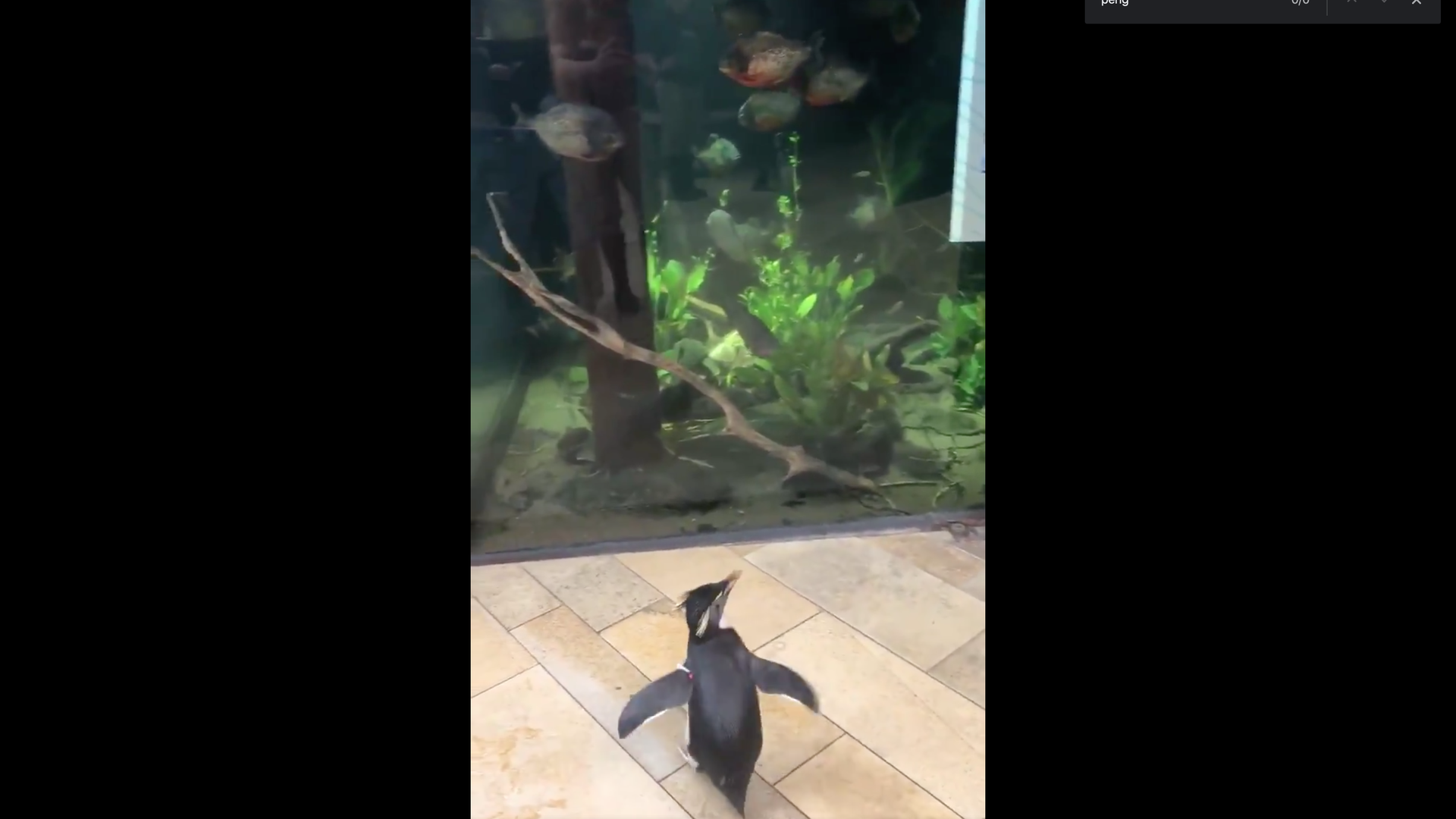
The Shedd Aquarium in Chicago is one of many venues around the country that has been forced to close over the novel coronavirus outbreak — and with no people around, the resident penguins have taken to exploring the place.
Details: Shedd Aquarium shared a video to Twitter Sunday of a Wellington the rockhopper penguin on a "field trip to meet other animals." The aquarium told the Chicago Tribune caretakers are "getting creative in how they provide enrichment to animals" and "introducing new experiences, activities, foods and more to keep them active, encourage them to explore, problem-solve and express natural behaviors."


/2020/03/17/1584464847300.gif?w=3840)