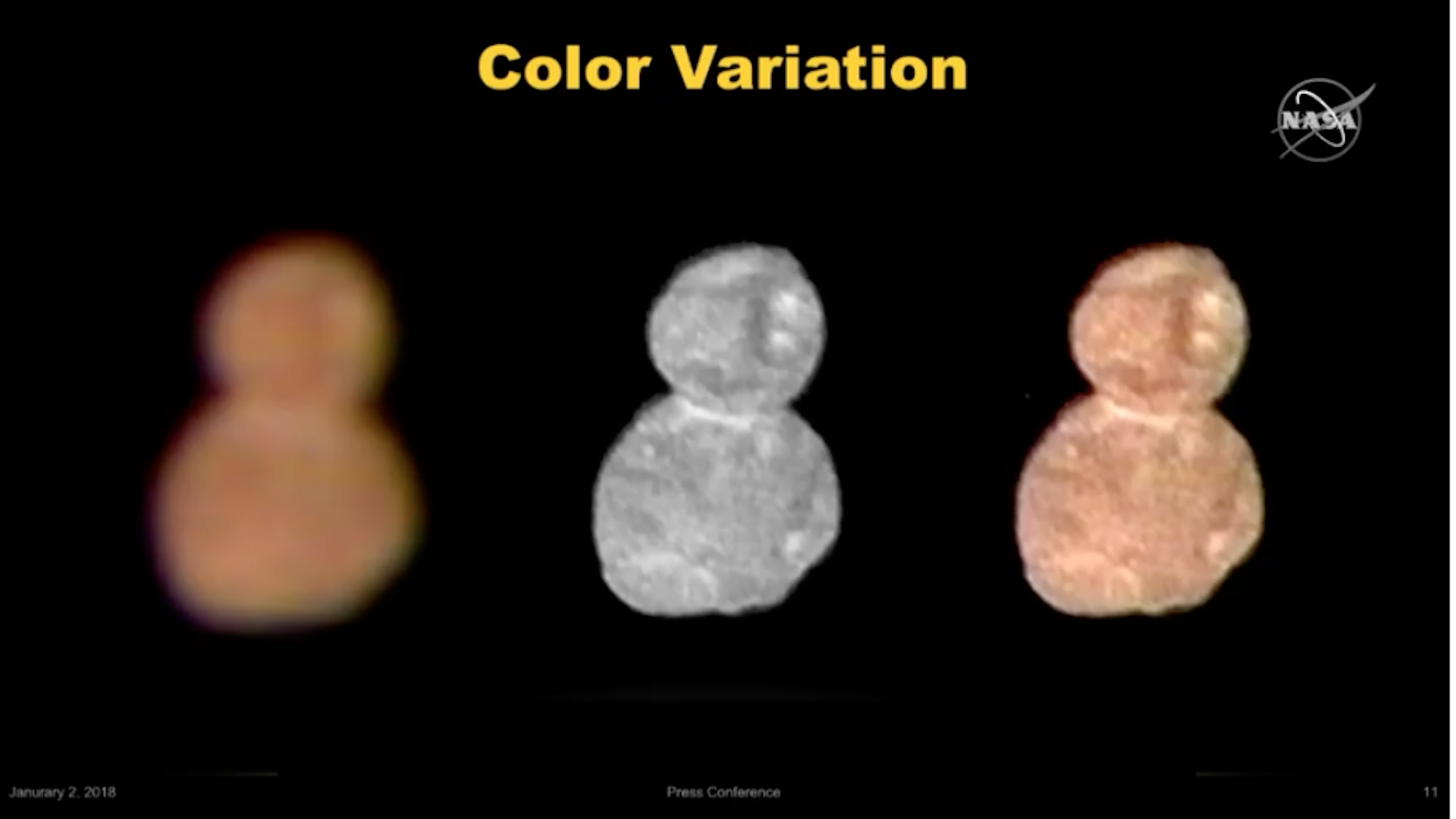
The early data from the historic New Year's flyby of a space object nicknamed "Ultima Thule," located about 4 billion miles from Earth, reveals that it's comprised of two joined spheres that are reddish in color.
Why it matters: This is the first so-called "contact binary" ever studied closely by a spacecraft, according to Alan Stern, principal investigator of the New Horizons mission. Ultima Thule used to be two separate, icy objects that are now fused together, according to NASA. It is located in a region of our solar system known as the Kuiper Belt and thought to be a time capsule dating back to the formation of the solar system itself about 4.6 billion years ago.
A few years ago, a Silicon Valley billionaire decried that he and his friends dreamed of flying cars, and instead got 140 characters. He was wrong: They, along with entrepreneurs and governments around the world, got much more — a space race on steroids.
The big picture: From Dubai to the U.S., Tokyo to Moscow, Tel Aviv to Beijing and more, billionaires, privateers and political leaders are vying to land on the Moon, colonize Mars, mine asteroids — and just get off the Earth. "Whatever we have evolved into hundreds and thousands of years from now, we'll look at these decades as when the human race moved off the planet," said Peter Diamandis, chairman of the X-Prize Foundation.
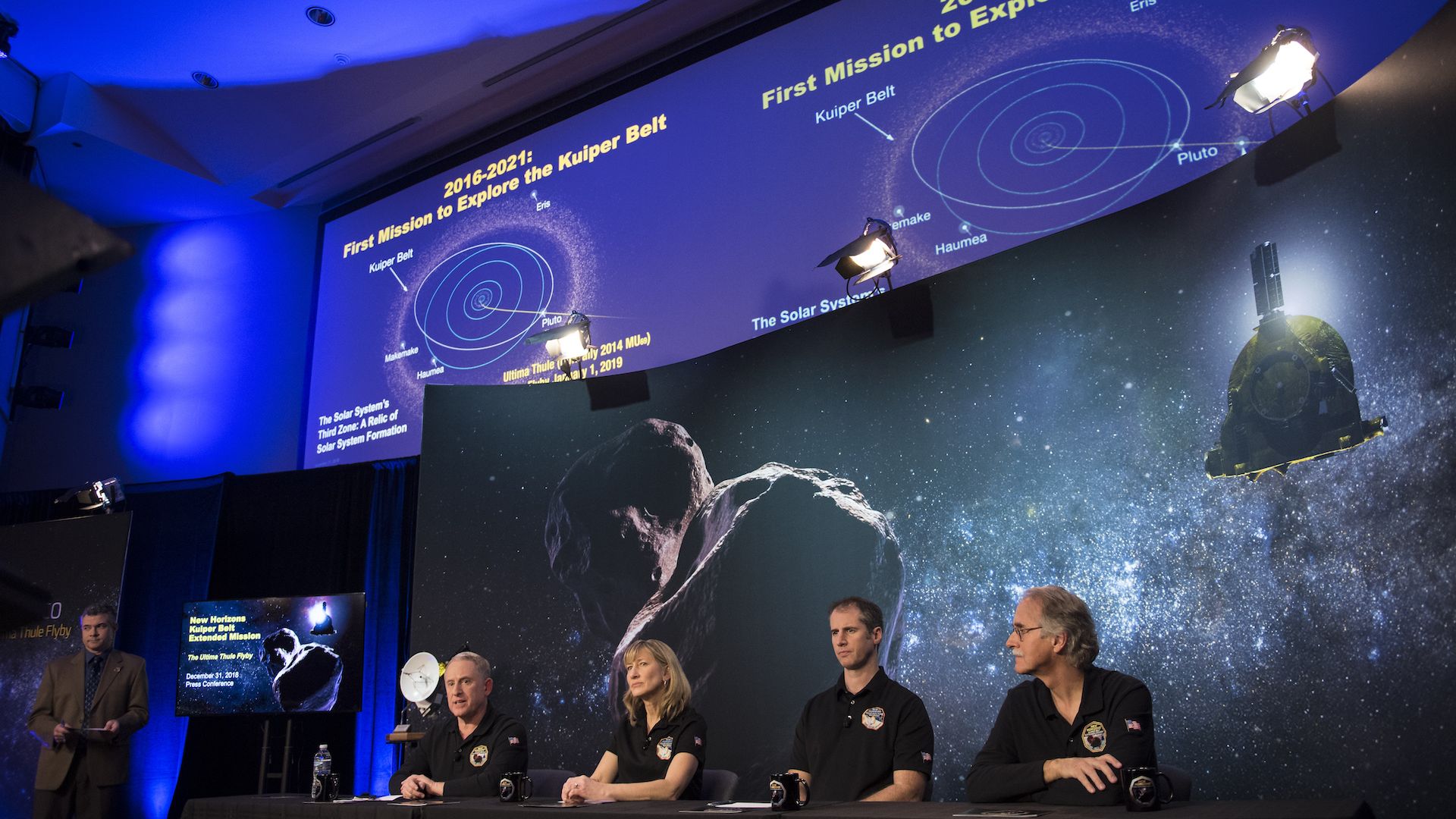
NASA's New Horizons spacecraft phoned home on Tuesday morning, confirming that the spacecraft successfully completed the most distant flyby ever conducted of a space object. At 12:33 a.m., the craft passed within about 2,200 miles of a Kuiper Belt object known as Ultima Thule.
Why it matters: Ultima Thule, which is located about 4 billion miles from Earth, is thought to be a time capsule from the formation of the solar system itself about 4.6 billion years ago. Information from New Horizons is expected to provide researchers with new data about how planets form.