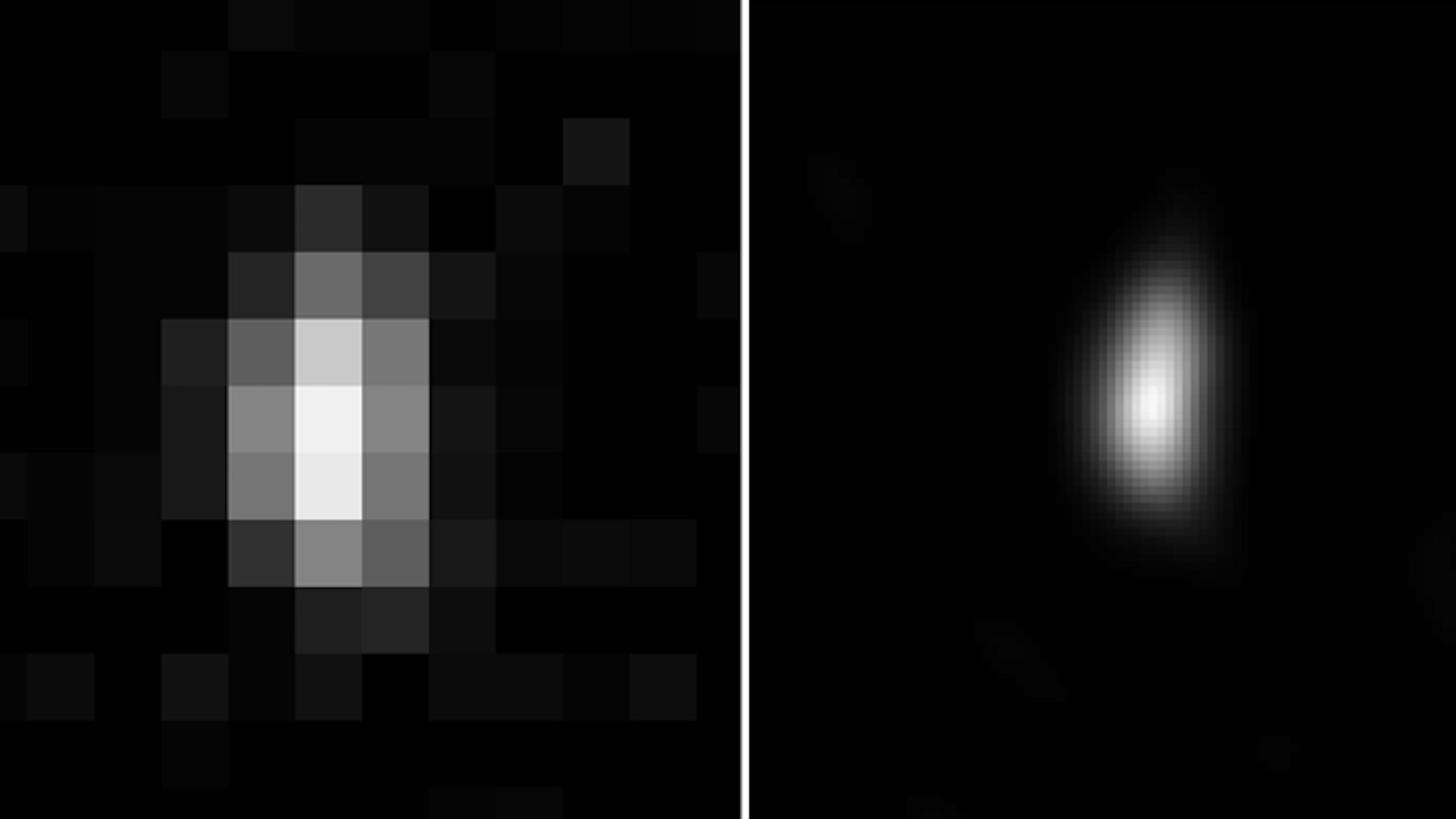
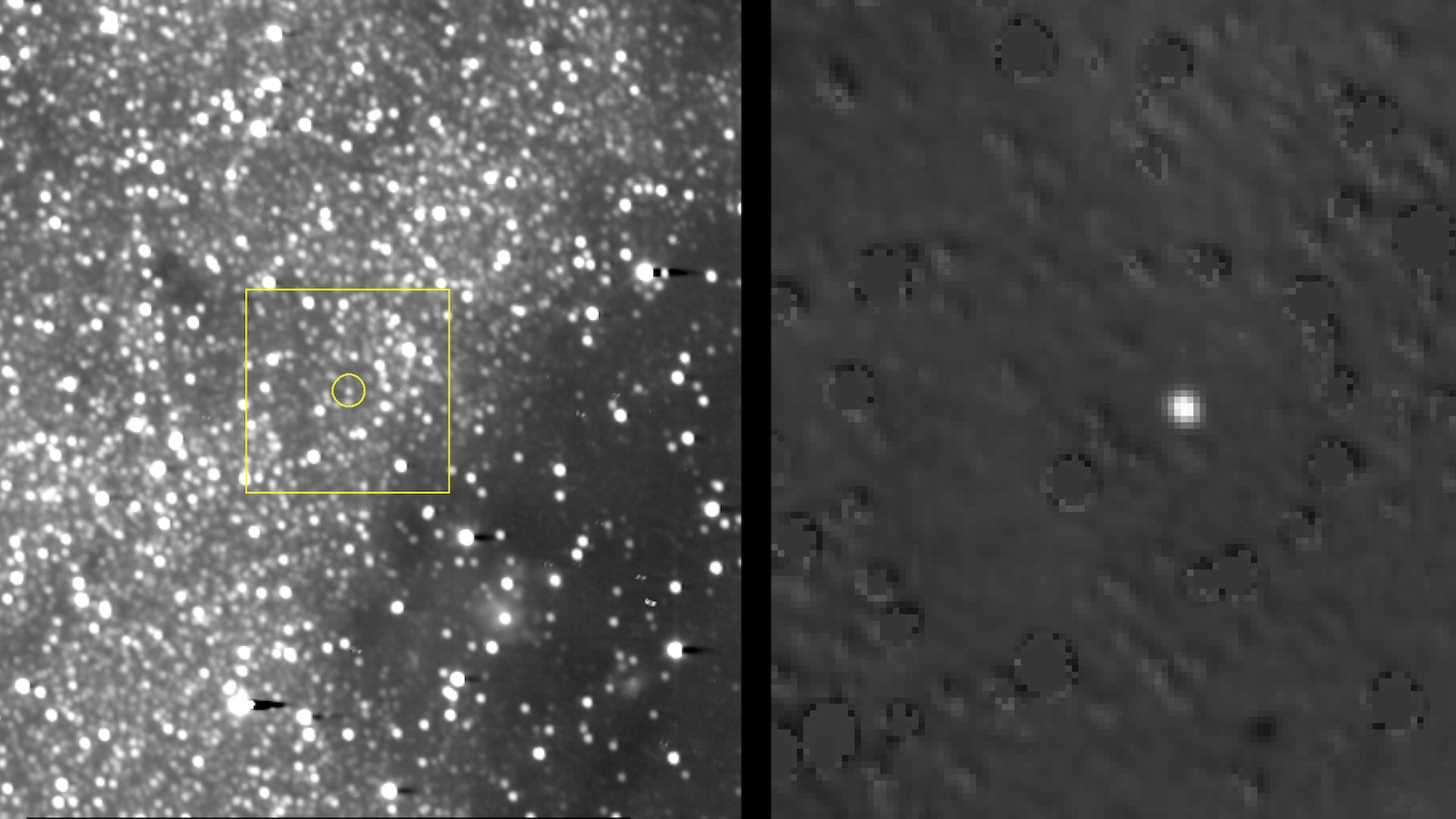
NASA's New Horizons spacecraft is on track to make space exploration history just 33 minutes into 2019 Eastern time, scientists said Monday. That's when it's expected to pass just 2,200 miles away from a tiny object known as Ultima Thule, located about 4 billion miles from Earth in a region of space known as the Kuiper Belt.
Why it matters: The flyby may give scientists new and vital insights into how the solar system and planets like Earth first formed. This is the first time scientists have ever closely studied a Kuiper Belt object, and scientists said Monday the flyby is proceeding according to plan but without a guarantee of success.
On New Year's Day, NASA's New Horizons spacecraft is expected to make history by conducting the most distant flyby ever, by zooming past an object a billion miles past Pluto. It's called "Ultima Thule," meaning "beyond the known world."
Why it matters: The spacecraft, which is the same one that sent back dazzling images of Pluto in 2015, is slated to be the first to explore an object in the Kuiper Belt — a region of icy bodies beyond the orbit of Neptune that are thought to be leftovers from the solar system's early days.