Tuesday's science stories

There might not be flowing water on Mars
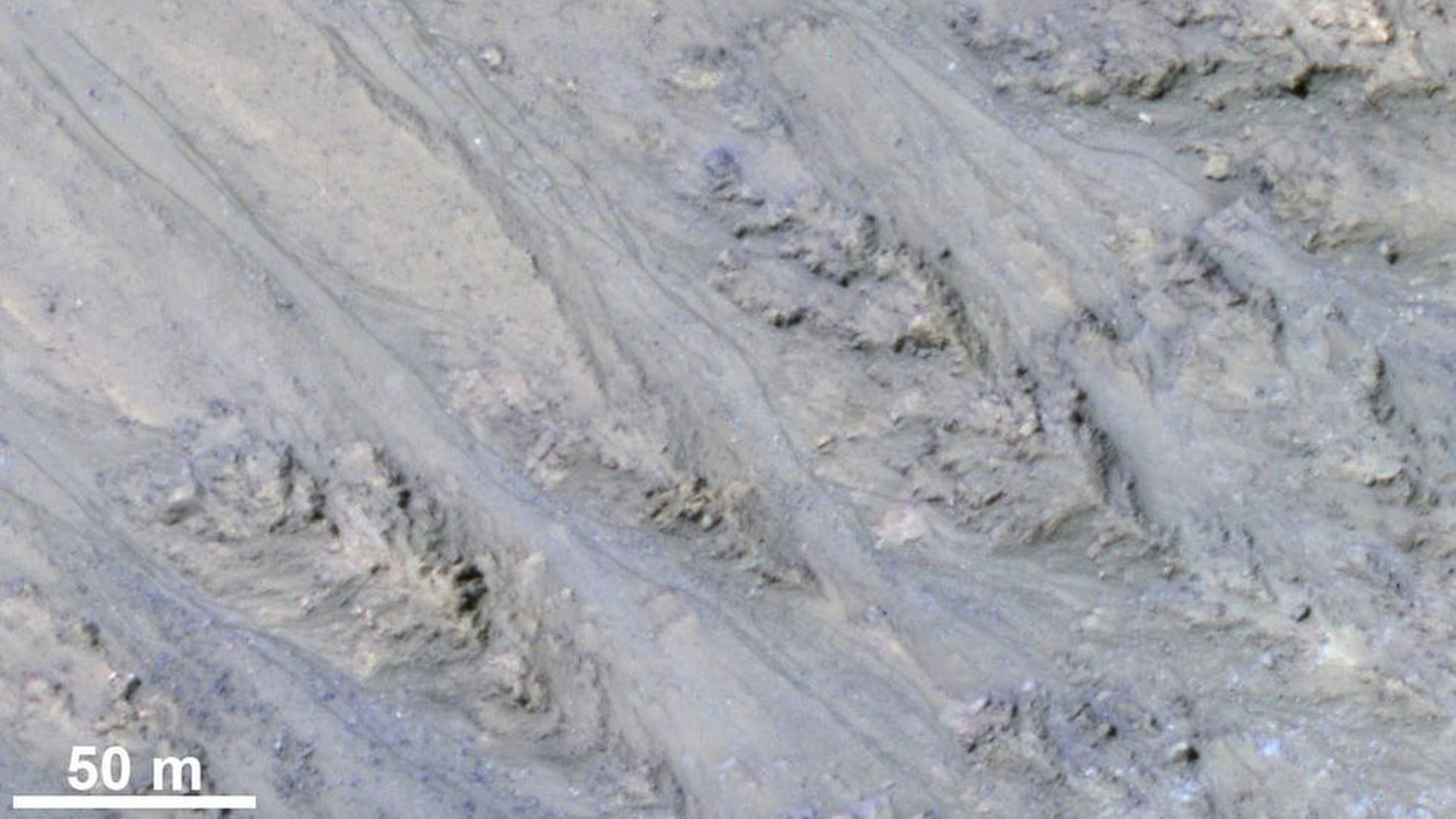
Hopes of flowing water on Mars are evaporating. In 2015, scientists announced they had found dark streaks on mountains on Mars. At the time, they believed the streaks were formed by running water. However, a paper published Thursday in Nature Geosciences suggests the streaks were instead shaped by falling sand.
Why it matters: It seems counterintuitive, but this could make plans to travel to Mars a little easier. If there's running, liquid water on Mars, there could also be life. And that means that any missions would have to go to great lengths to avoid contaminating it. The authors note any water that is present would likely be "inhospitable to known terrestrial life, alleviating planetary protection concerns."
- That doesn't mean there isn't life on Mars, but it's even less likely than before — and it probably won't be contaminated by any bacterial hitchhikers humans might send along.

First asteroid seen from outside our solar system has bizarre shape
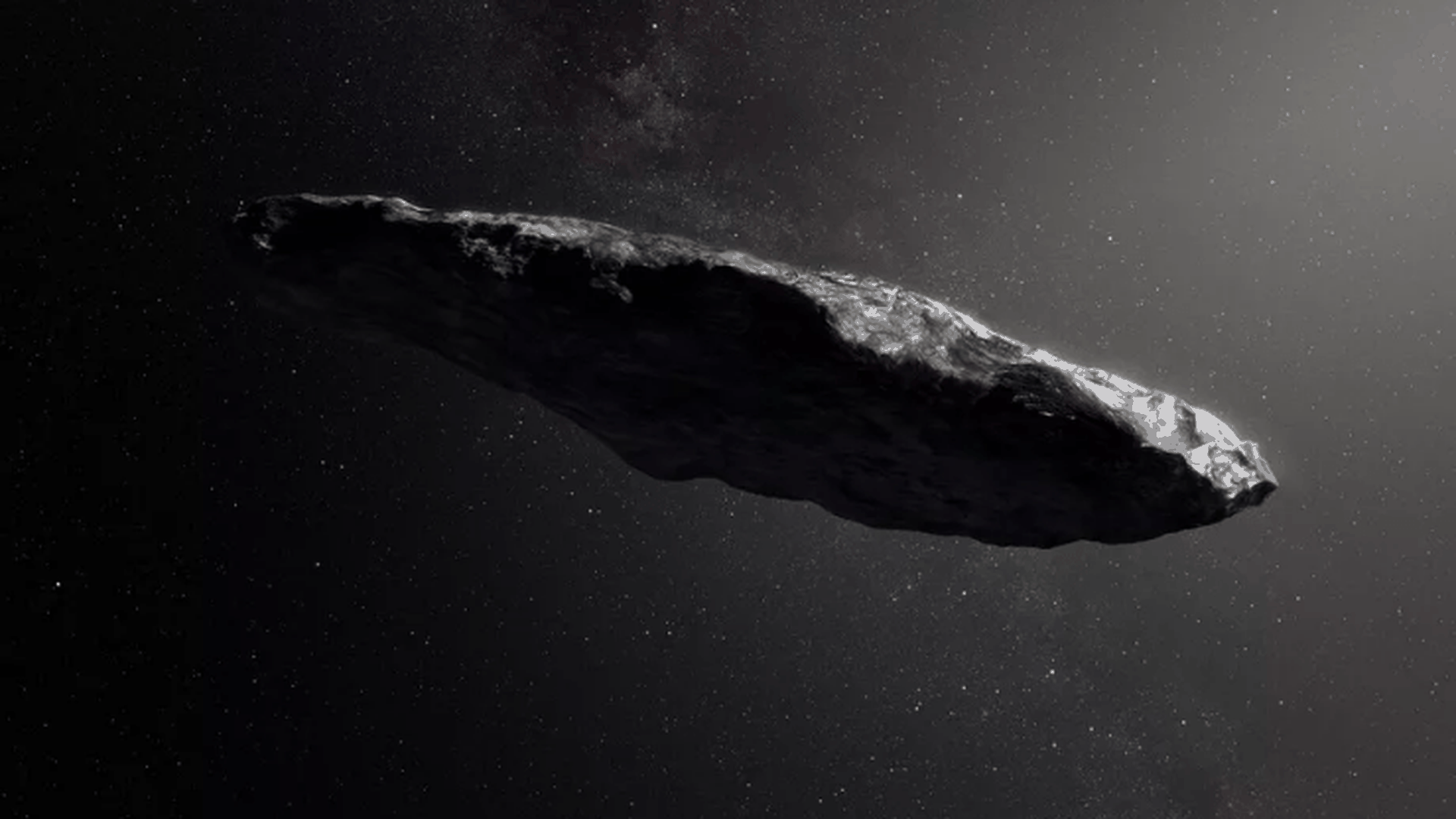
Astronomers today confirmed that an asteroid first spotted zipping through our solar system last month came from another star system. 'Oumuamua — Hawaiian for "a messenger from afar arriving first" — is one of the most elongated cosmic objects known to date.
Why it matters: 'Oumuamua's bizarre shape is unlike any other asteroid seen yet, and could "provide new clues regarding into how other solar systems formed," according to a NASA press release.

Watch the wind blow...
/2017/12/15/1513307063795.gif?w=3840)
Using NASA mathematical models and satellite observations of sand, sea salt and smoke moving across the Western hemisphere, researchers at Goddard Space Flight Center created this visualization of the 2017 hurricane season.
What you're seeing: Sand and dust from the Sahara (seen in brown), sea salt picked up by the winds of hurricanes Irma, Harvey, Jose and Maria (blue) and smoke from wildfires in the western U.S. (gray) travel thousands of miles on wind. Across the Atlantic, Hurricane Ophelia takes form off the coast of Africa.
Why it matters: Simulating currents — in this case, from July 31, 2017 to November 1, 2017 — can be used to better understand the conditions under which storms form and evolve.