Friday's science stories

Harrowing Harvey stories emerge
"Don't touch me: I'm dying": "One man used his last words to save a friend's life, warning him away from a live electrical wire. Another died checking on his uncle. Several others were last seen helping people out of floodwaters. They're among Harvey victims who lost their lives trying to save other people. They range from 6 years old to 89. Their stories are emerging as the death toll from the storm continues to mount." (AP)
How drones are being deployed after Harvey
Commercial drones are being used to quickly scope out damage, map 3-D views of the flood zone and help with rescue efforts in the areas devastated by Hurricane Harvey.
Drone inspectors: Outside of disaster recovery, one of the fastest-growing uses for commercial drones is to inspect infrastructure, property and equipment. That's how companies and local government officials are putting drones to use, especially in badly flooded areas that are still too dangerous for people to venture into.

Harvey weakens to tropical depression as death toll rises to 38
What began as a Category 4 Hurricane has now weakened to a tropical depression, and the region that was pounded with heavy rain for six straight days is finally beginning to survey the damage that some experts say will cost more than Katrina and Sandy combined to repair.
The remnants of the hurricane, which has killed at least 38 people, began traveling up the Mississippi Delta this morning. Although it appears the worst is over for Texas, many areas remain underwater and tens of thousands of people are still seeking refuge in overflowing shelters.

Harvey's health threats will loom even after floodwaters recede
As evacuations in Houston progress and people here move into shelters, a number of health problems are likely to surface, especially from infectious and tropical diseases that may affect the entire Gulf Coast region. Why it matters: Even before Harvey, we identified the Gulf Coast as America's "soft underbelly" of disease due to a confluence of extreme poverty, urbanization, subtropical climate and climate change, and population shifts. The vulnerability is especially evident following tropical storms and hurricanes. Katrina was followed by an uptick in skin infections from Staph bacteria and "flesh-eating" Vibrio, intestinal bacterial infections, and respiratory diseases due to crowding in shelters. We might expect the same from Harvey. Also concerning are the health effects of mold or environmental contamination from industrial chemicals. Houston is the mosquito capital of the U.S. Individuals fleeing homes will be exposed to mosquitoes in the short term, although in many cases the floods will wash away their breeding sites. But the flooding may leave behind new mosquito sites, and heading into the fall and in 2018 we might expect increases in West Nile virus infection and possibly dengue, chikungunya, and Zika.
What's needed: The CDC and state and local health authorities need to implement comprehensive programs for disease detection and prevention that can be leveraged in the aftermath of natural disasters. Disease monitoring is especially urgent for flood-affected areas and our Gulf's impoverished regions that are particularly at risk need special consideration.
The bottom line: Hurricanes and tropical infections that follow them are a new normal on the Gulf but we know they are coming and how to mitigate their impact. On that front, we should be singled out for special emphasis.

Pence holds prayer service for victims of Harvey in Texas
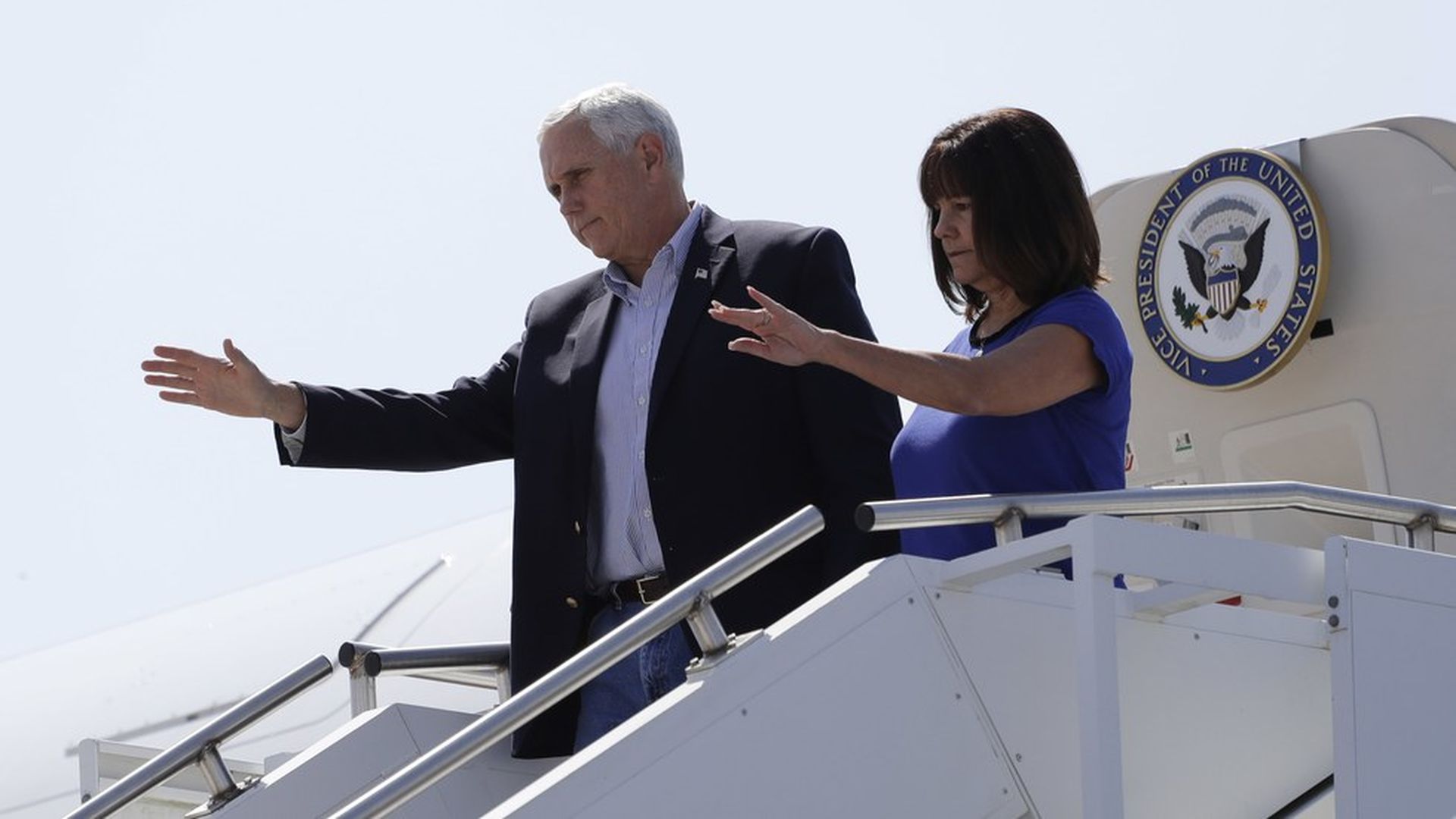
Mike Pence and his wife Karen are in Texas today visiting various residents who have been affected by Harvey. They started their trip in Corpus Christi, then headed to Rockport where they surveyed the city's wreckage and held a prayer service for victims outside of a badly damaged church.
- Trump will return to Texas on Saturday, Pence said. The destination will be announced later today.
- The biggest concern is housing. Pence told reporters on Air Force 2 that FEMA has already manufactured 2,000 houses and has ordered 4,000 more, per Bloomberg's Jennifer Jacobs.
- Day of prayer: Gov. Greg Abbott declared Sunday, Sept. 3, "a day of prayer in Texas."
- Key quote: "President Trump sent us here to say that we are with you. The American people are with you. We are here today, we will be here tomorrow, and we will be here every day" until Texas rebuilds.
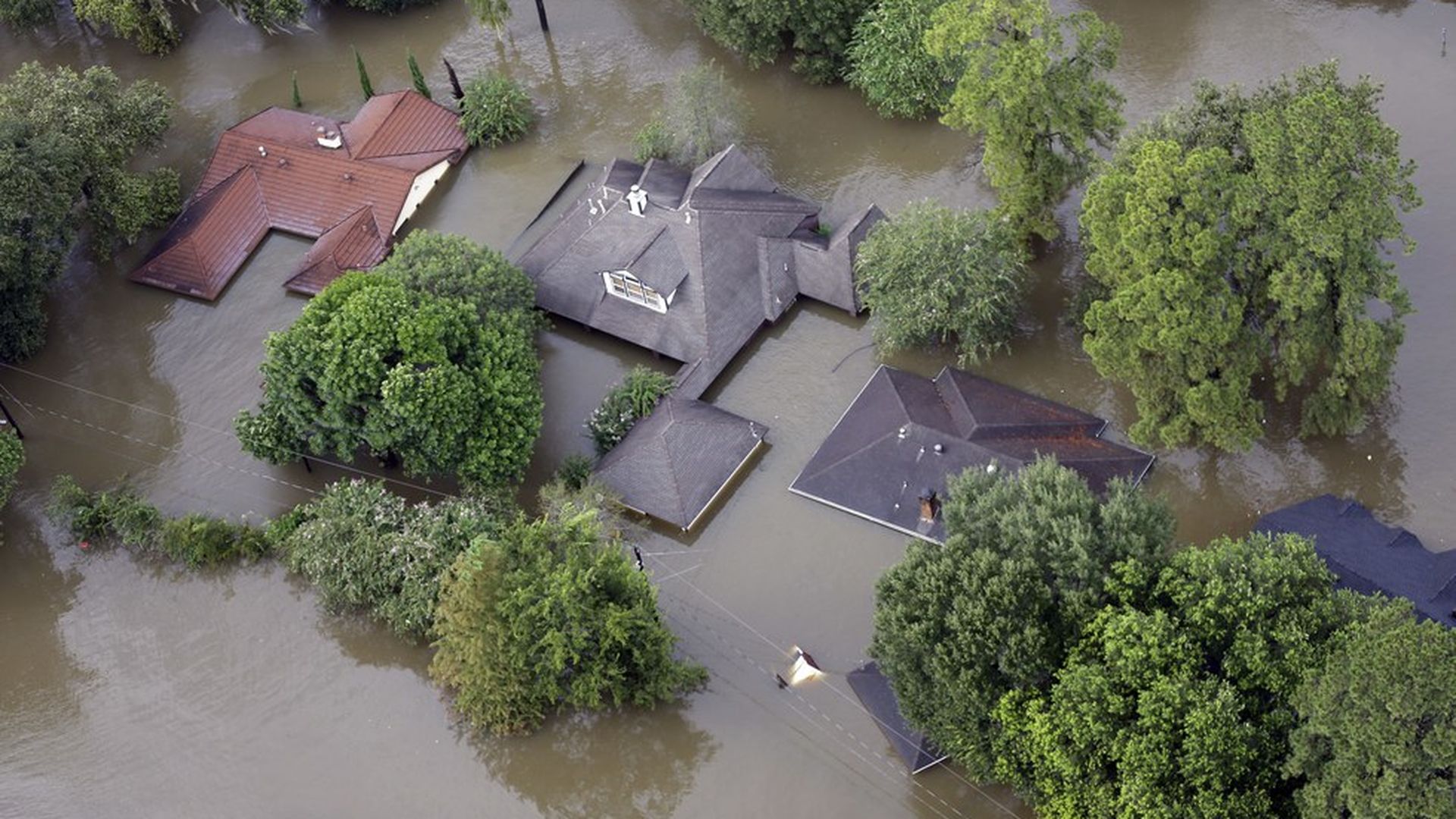
Photos: Harvey's devastation from the air
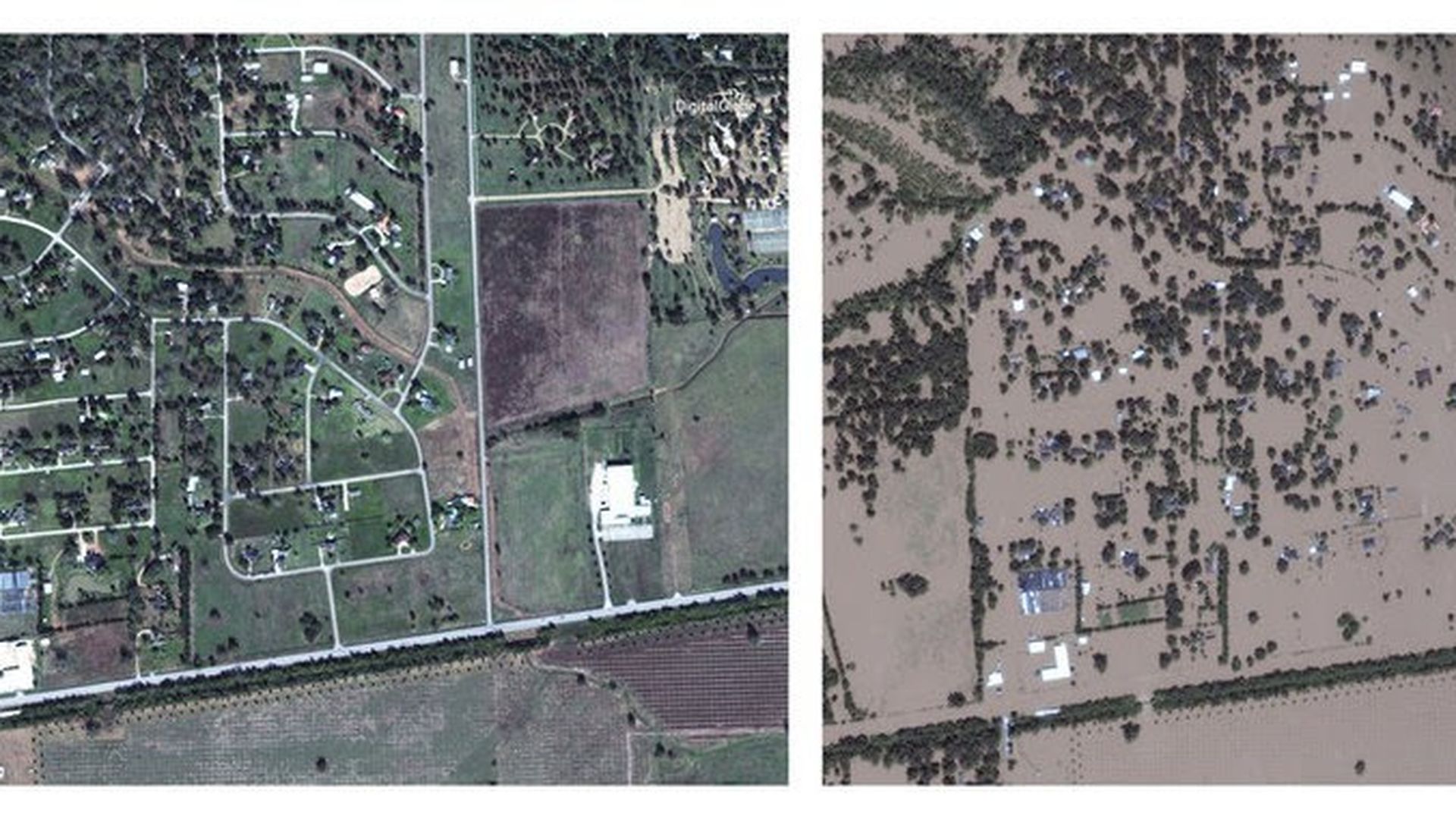
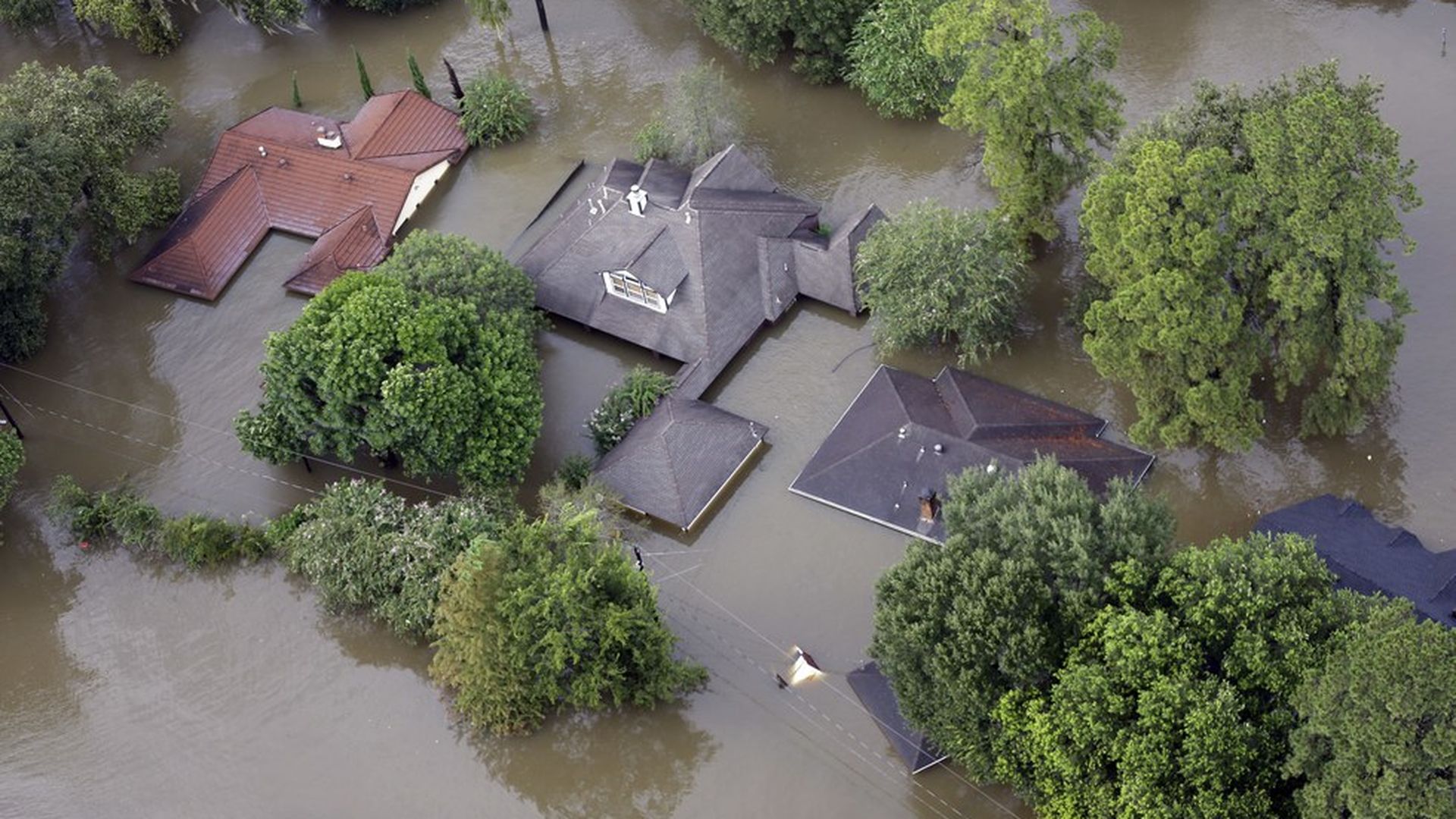
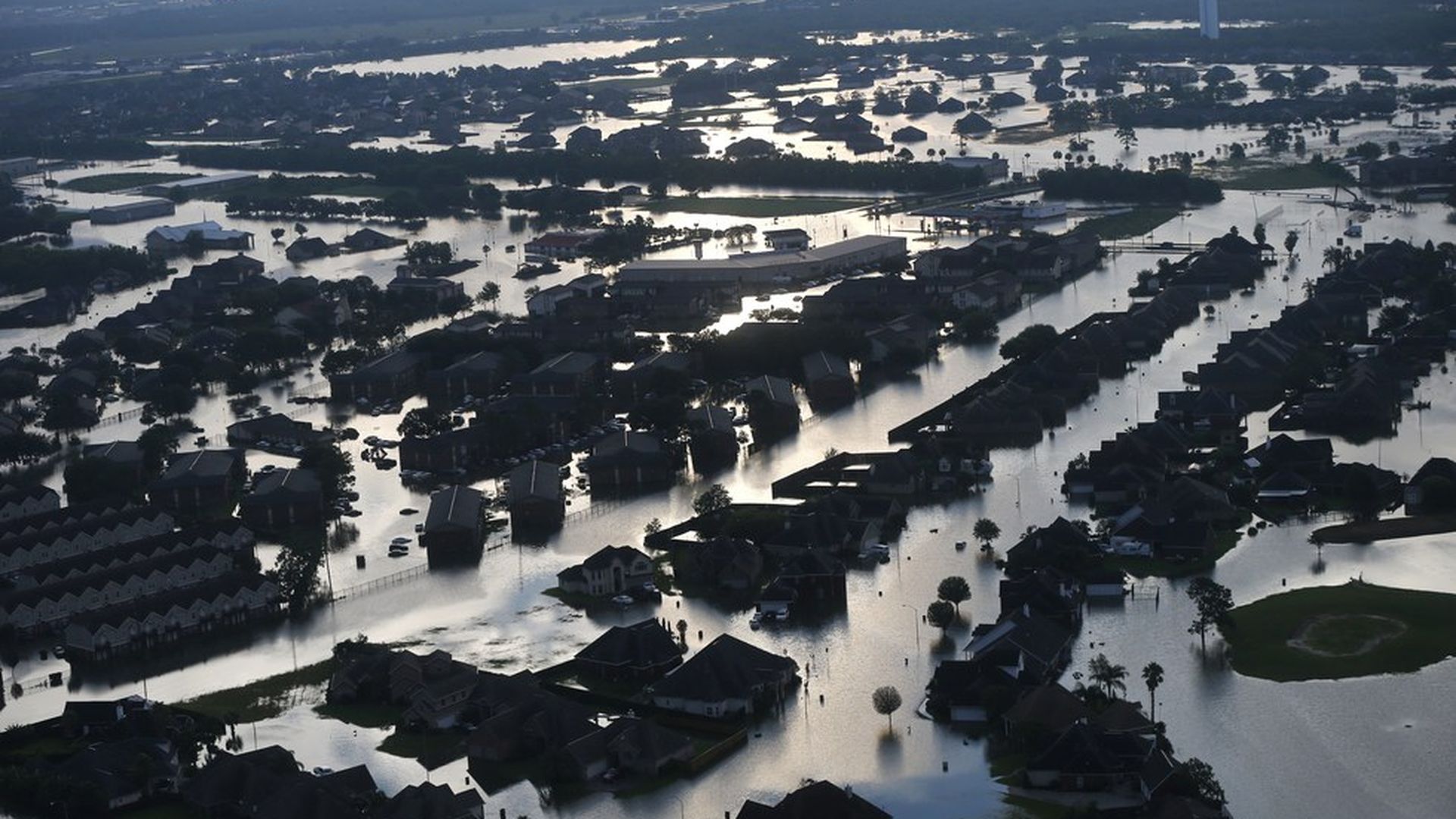
AP's David Phillip, who has lived in Houston for two decades, 17 of his photos on one page. The pictures show "rows of suburban streets turned into canals and brownish floodwaters creeping up to rooftops. ... [A] mansion's long cul-de-sac driveway resembles a drawbridge over a moat."

Harvey could cost more than Katrina and Sandy combined
Accuweather projects Harvey could be "the most costly natural disaster in United States history," and estimates that its economic impact on GDP is $190 billion, which exceeds that of Katrina and Sandy combined.
- "Much of the damage ... is uninsured." (Bloomberg Businessweek)
- "Harvey is straining the global superhighway of the energy trade," per WSJ: "More than a dozen refineries are affected — including the country's two biggest, Saudi Arabian Oil Co.'s Motiva facility in Port Arthur and Exxon Mobil Corp.'s Baytown facility — cumulatively representing more than 30% of U.S. refining capacity."
- "Katrina Survivors Relive Ordeal," per WSJ: A dozen years ago, "Katrina uprooted residents to cities across the U.S., but Houston received the largest share outside Louisiana. Of the 150,000 to 200,000 evacuees who initially arrived in Houston, as many as 40,000 remain."
- Houston Chronicle banner: "THREATS RISE FROM RESERVOIRS, RIVERS: As sun finally returns, a devastated region tallies the damage." (Read the digital paper free.)