November 15, 2023

Happy hump day, folks. We have a look at how prospects for reauthorizing pandemic preparedness programs remain murky, even though the House Republican CR kept dollars flowing into January.
- We also have updates on the House Energy and Commerce health subcommittee's markup of PBM and Medicare legislation — and Sen. Raphael Warnock's designs on further capping insulin costs.
1 big thing: PAHPA outlook no clearer after CR

Illustration: Sarah Grillo/Axios
House Republicans may have kept some pandemic preparedness programs funded into January with their continuing resolution, but odds for reauthorizing the Pandemic and All Hazards Preparedness Act remain unclear amid more scrutiny from the House Freedom Caucus, Victoria reports.
Why it matters: A reauthorization could address cracks in the nation's health security system that COVID-19 exposed and settle questions about the development of medical countermeasures and the Strategic National Stockpile before the next public health crisis hits.
- The CR extended certain PAHPA programs until Jan. 19. They include authorities for the Biomedical Advanced Research and Development Authority, the assistant secretary for preparedness and response at HHS and the National Disaster Medical System.
What they're saying: Rep. Chip Roy, a Freedom Caucus member, has taken particular issue with PAHPA and has been increasingly outspoken against renewing the program as-is.
- "It's concerning for me with respect to how we handled COVID and the distribution of vaccines and the sort of empowerment of the federal government in engagement and push of vaccines," Roy told reporters on Tuesday.
- "I'm concerned about having these reauthorizations that are popped into all of these big bills," Roy said. "That's the problem with CRs and omnibuses. There's crap buried in there that's problematic."
Catch up quick: This isn't the first time right-wing Freedom Caucus members have taken issue with PAHPA reauthorization.
- In August, the group led by Roy urged then-Speaker Kevin McCarthy not to bring a reauthorization to the House floor without cutting funding levels, establishing a vaccine liability commission and making certain COVID-related data transparent.
- The House Energy and Commerce Committee approved a PAHPA reauthorization in July but split along party lines on how to address drug shortages.
- The Senate HELP Committee approved its bipartisan version of a reauthorization in July and included language to address drug shortages.
- PAHPA expired at the end of the fiscal year on Sept. 30, but has been sustained through the appropriations process. Its authorization has lapsed several times in the past.
Threat level: Lobbyists who follow PAHPA closely said the Freedom Caucus' focus on programs connected with the COVID response are clouding prospects for reauthorizing the law anytime soon, or passing a robust compromise package with policy changes.
- "Negotiations are not going well right now and unless the Chip Roys can be placated, hard to see how they will get to a package," said one lobbyist who advocates on PAHPA reauthorization.
- The lobbyist said the most likely outcome they saw was a two-year extension of the provisions in the CR, perhaps in January or later.
Of note: More than 100 organizations, led by the Johns Hopkins Center for Health Security sent a letter to congressional leadership on Tuesday urging them to reauthorize PAHPA for five years before the end of this year.
2. E&C takes up PBM, Medicare coverage

Illustration: Brendan Lynch/Axios
The House Energy and Commerce health subcommittee is in the process of advancing a series of bills around such issues as PBM changes and how Medicare covers innovative new products, Peter reports.
Driving the news: Many of the policies are bipartisan, but a few received some pushback from Ranking Member Frank Pallone.
- On the more bipartisan end were the PBM measures, which are similar to many of the bipartisan changes that the Senate Finance Committee has been working on.
- For example, a bill to "delink" PBM compensation from the price of a drug and make compensation a flat fee, passed by voice vote. The goal is to remove an incentive for PBMs to prefer higher-priced drugs.
Yes, but: Pallone said he opposes a bill to give four years of temporary Medicare coverage to breakthrough medical devices while CMS works on a permanent coverage decision.
- He said the CBO informally estimates the measure would cost $7 billion to $12 billion and and that it could require Medicare cuts to offset the new spending.
- Backers, including Democratic Rep. Anna Eshoo, said it would increase patient access to important innovations.
The big picture: Overall, health subcommittee Chair Brett Guthrie acknowledged that some of the proposals are not yet paid for, but said the committee would work to have full offsets by the time the measures go before the full committee.
3. Insulin cap update: Warnock targets year's end
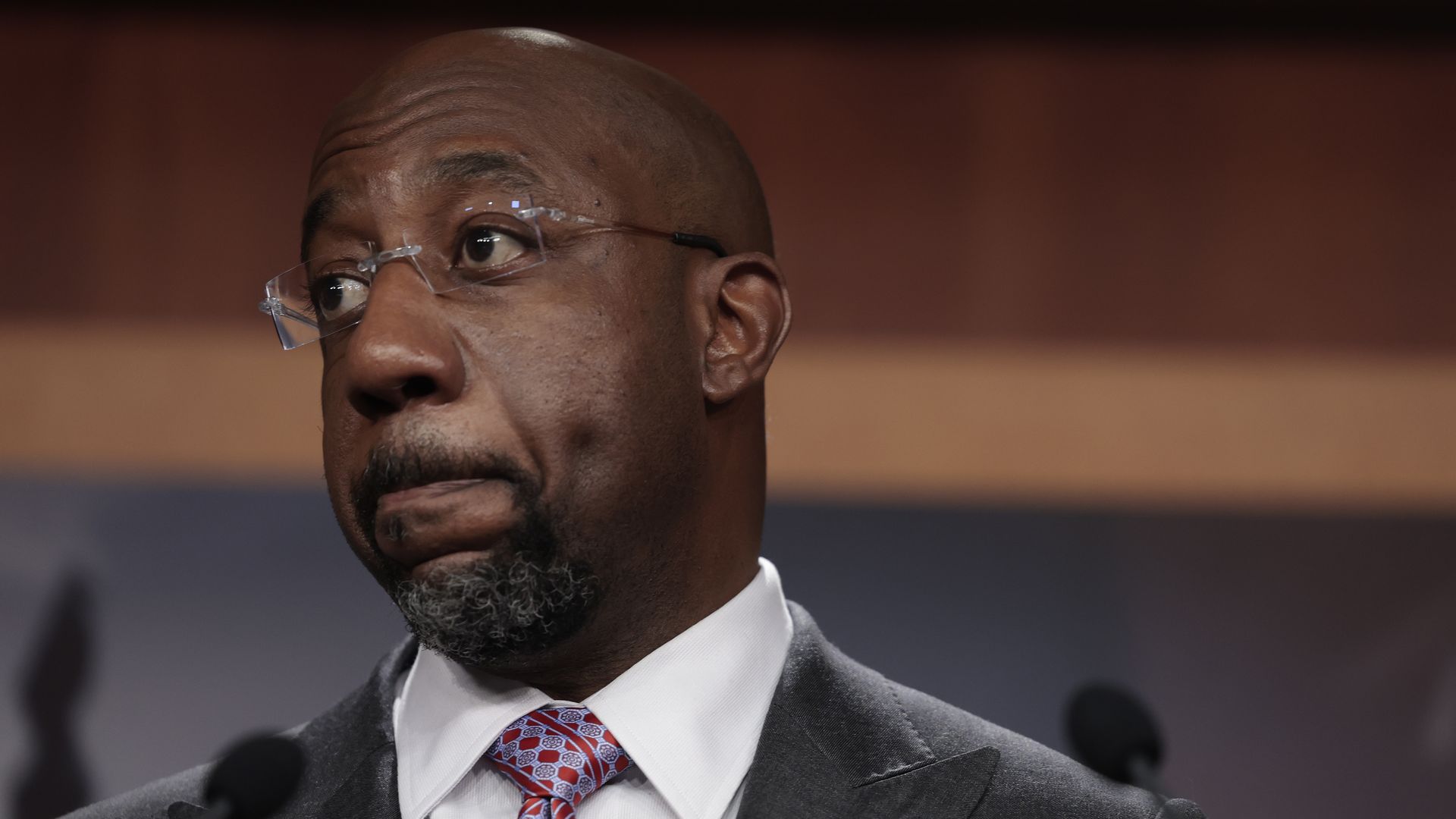
Warnock speaks at the Capitol. Photo: Anna Moneymaker/Getty Images
Sen. Raphael Warnock's goal for passing legislation capping insulin costs is the end of the year, and he is hoping to have a full CBO score soon, Peter reports.
Why it matters: The push to limit patient expenses at $35 per month for people with private insurance or who are uninsured has been ongoing for months.
What's next: Warnock said a key step is getting a full CBO score. The CBO scores the $35 cap for private insurance at $629 million over 10 years, according to Warnock's office, far from an insurmountable amount to offset.
- They are waiting for the score for the other part of the bill, providing the $35 cap for uninsured people. HHS estimates that program at $670 million over a decade.
- "We've worked with the leader to get that expedited and I hear that we're pretty close, so that's really the next step," Warnock said of a full CBO score. There is still no offset identified, but Warnock said having the full CBO score is a key step to getting the offset.
What they're saying: "My goal is to get this moved, to see this on the floor before the end of the year," Warnock said.
The big picture: The bill, cosponsored by GOP Sen. John Kennedy, now has six GOP cosponsors, including newly-added J.D. Vance and Josh Hawley.
- Sens. Jeanne Shaheen and Susan Collins have their own insulin legislation, which will have to be combined somehow with the Warnock-Kennedy measure.
✅ Thank you for reading Axios Pro Policy, and thanks to editor Adriel Bettelheim and senior copy editor Bryan McBournie.
- Do you know someone who needs this newsletter? Have them sign up here.
View archive