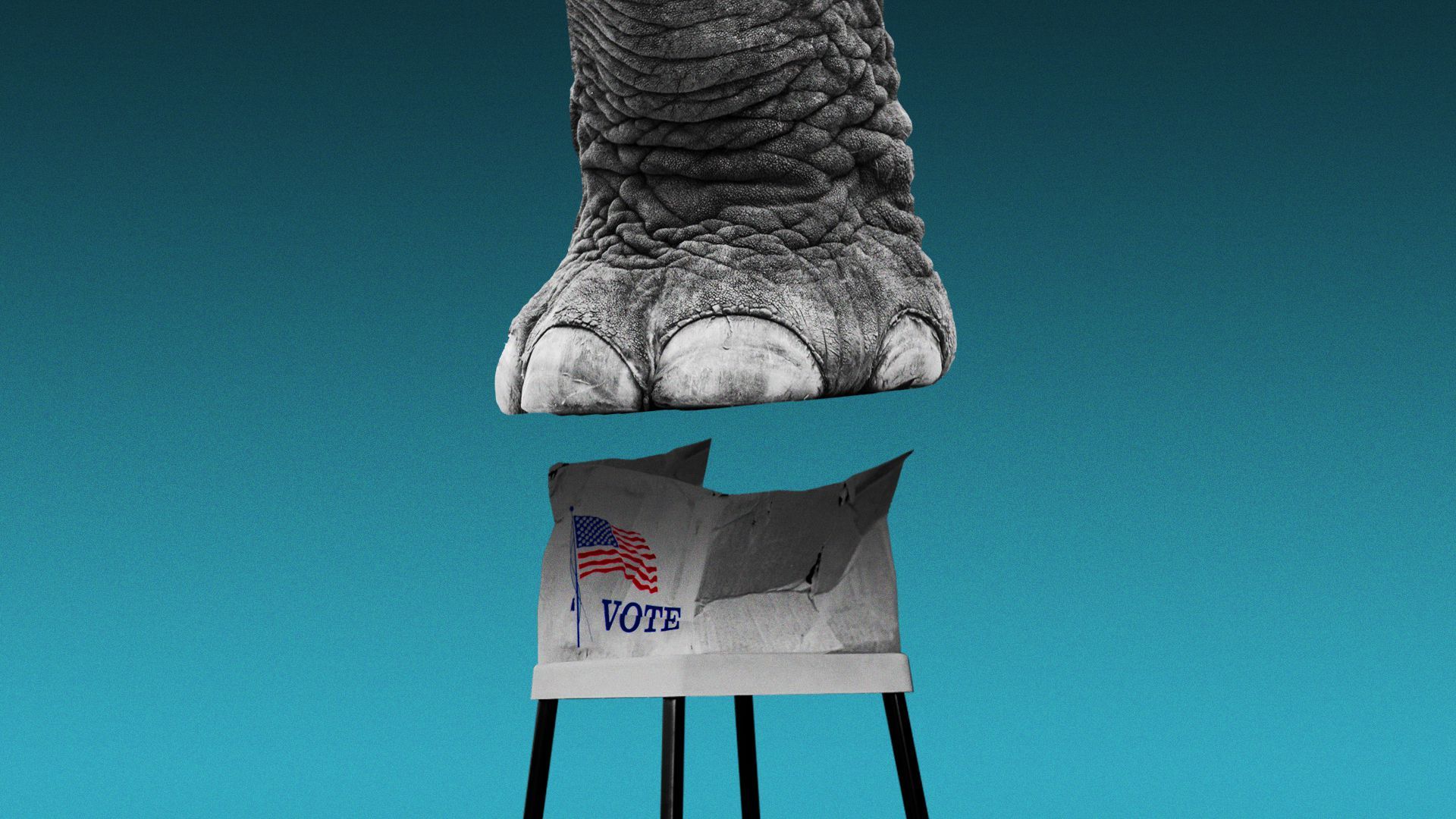
Redistricting and a flood of departing incumbents are paving the way for more extreme candidates in this year's midterm elections.
Driving the news: At least 19 House districts in 12 states are primed to attract such candidates — hard partisans running in strongly partisan districts — according to an Axios analysis of districts as measured by the Cook Political Report's Partisan Voter Index (PVI).
As federal voting rights legislation stalls in Congress and activists seek alternative forms of legislating, they're increasingly looking to the ballot initiative process to allow voters to make political changes on their own.
Why it matters: While that could be viewed as expanding direct democracy, these efforts are being met by opposition in overwhelmingly red and purple states. Lawmakers and leaders there are working to make it harder to legislate through the referendum process.
A defamation suit by Sarah Palin, who has spent more than four years battling The New York Times over a corrected editorial, will be heard in Manhattan federal court Monday, Reuters reports.
Why it matters: The trial, expected to last five days, marks a rare instance of a major media company defending its editorial practices before an American jury.
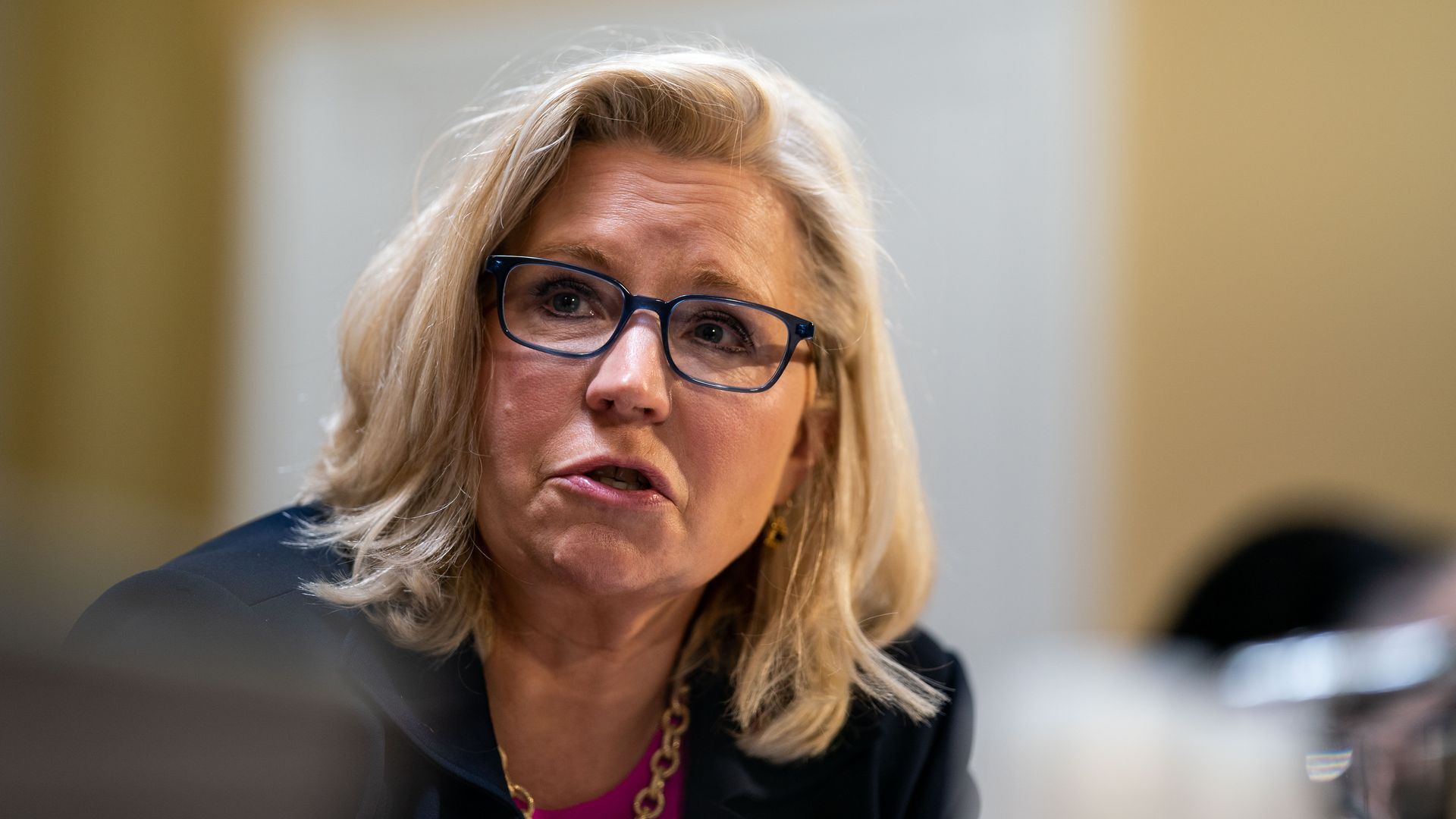
Harriet Hageman, the GOP primary candidate endorsed by former President Trump to unseat Rep. Liz Cheney (R-Wyo.), won a straw poll held by Wyoming Republican State Central Committee on Saturday, per the Casper Star Tribune.
Why it matters: Hageman won 59 votes, while Cheney only amassed six, according to the Star Tribune. The vote comes eight months ahead of the GOP contest. Although it has no bearing on the primary, it shows Cheney is still facing backlash from within her own party.
Significant majorities of Americans believe the country is headed in the wrong direction and that American democracy is in danger, according to a new poll from NBC News.
Why it matters: Having recently completed his first year in office, President Biden is facing a difficult reality of an ongoing pandemic, a stalled agenda and the low polling numbers that result.
Rep. Bennie Thompson (D-Miss.), chair of the committee investigating the Jan. 6 Capitol riot, told CBS' "Face the Nation" on Sunday his panel has information that points to the Trump administration making plans to have the military "potentially seize voting machines."
Driving the news:Politico this week was the first to report that a draft executive order directing the secretary of Defense to seize machines was among the documents that Trump lawyers tried to stop the Jan. 6 committee from obtaining.
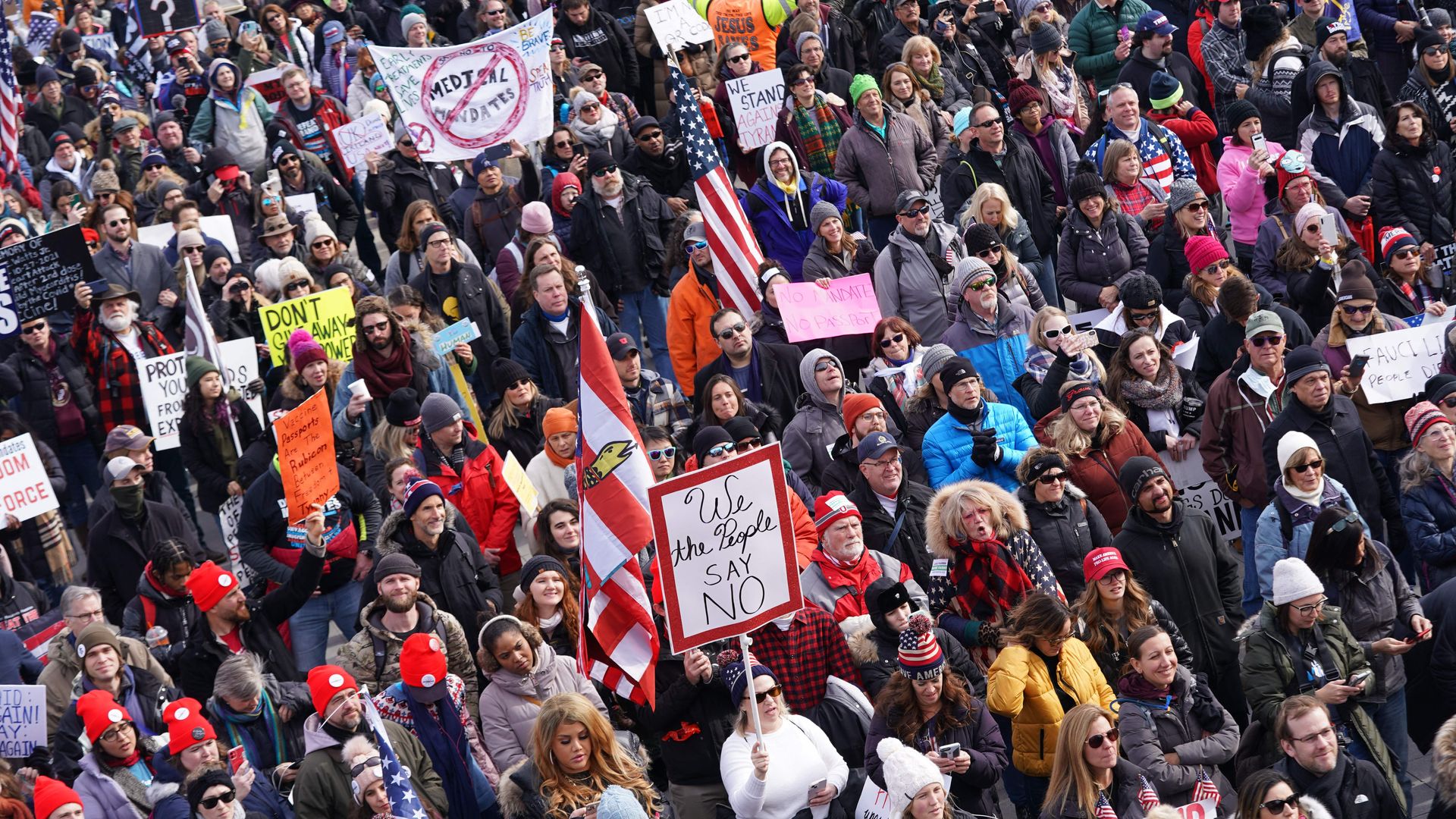
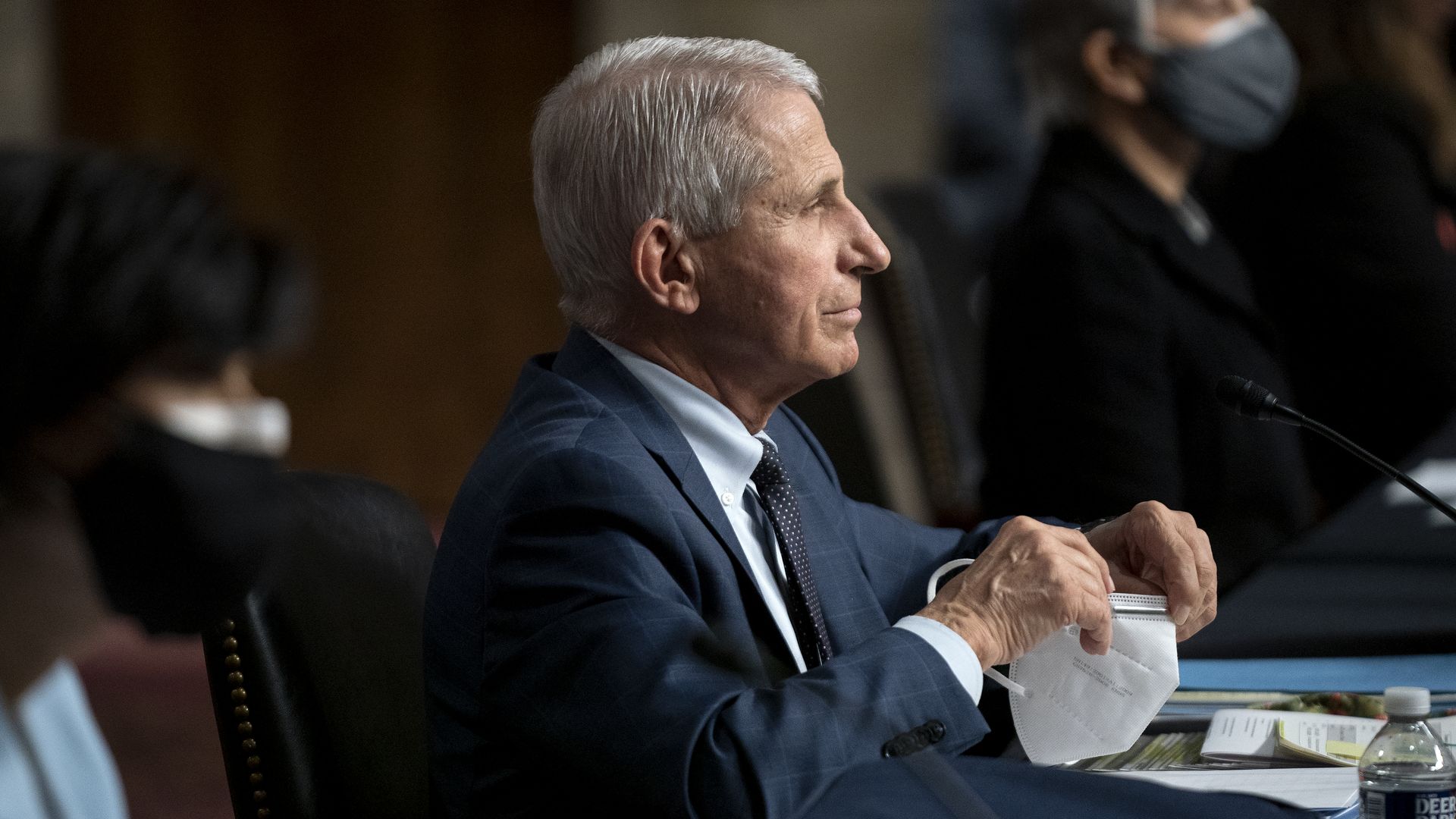
NIAID director Anthony Fauci said Sunday he is "confident as you can be" that most states will reach a peak in Omicron coronavirus cases by mid-February.
Why it matters: Asked about the prospect on ABC's "This Week," Fauci said that while you "never want to be overconfident," the pattern of how Omicron cases peak in other countries suggests that the U.S. is headed in "the same direction."
Sen. Bernie Sanders (I-Vt.) said Sunday that he agrees with Arizona Democrats' vote to censure U.S. Sen. Kyrsten Sinema after her vote against changing the Senate's filibuster rules.
Driving the news: Sanderstold CNN's "State of the Union" he believesSinema and Sen. Joe Manchin (D-W.Va.), who also voted against the measure, have "sabotaged" President Biden's agenda. The rule change would have provided a path in the chamber for Democrats to pass their voting rights bill.
Why it matters: The North Carolina pastor has called for the removal of monuments dedicated to the general he says is his slaveholding ancestor. Confederate apologists have disputed his family connection to the general, and he says he's been bombarded with death threats.