Axios What's Next

April 19, 2024

1 big thing: Going Cali Sober on 4/20
Illustration: Shoshana Gordon/Axios
Companies that make cannabis-infused drinks are encouraging people to ditch booze for weed on 4/20 — the longstanding pot holiday, Jennifer writes.
Why it matters: More people are going "California Sober" — no alcohol or hard drugs, just marijuana, thank you — but the medical community is split over whether this is a good idea.
- The practice is known as "harm reduction," which involves swapping out your biggest demon for a smaller one.
- "We're saying, 'Drink this when you're socializing as a healthier alternative to alcohol,'" says Jake Bullock, the founder and CEO of Cann, which makes weed-infused seltzers.
Driving the news: THC drinks have become a product category for people who want a gentle buzz without smoking — and folks who struggle with alcohol use.
- 4/20 has become a big marketing hook. (4/20 is doper slang for marijuana, and has turned April 20 into a big, lit celebration.)
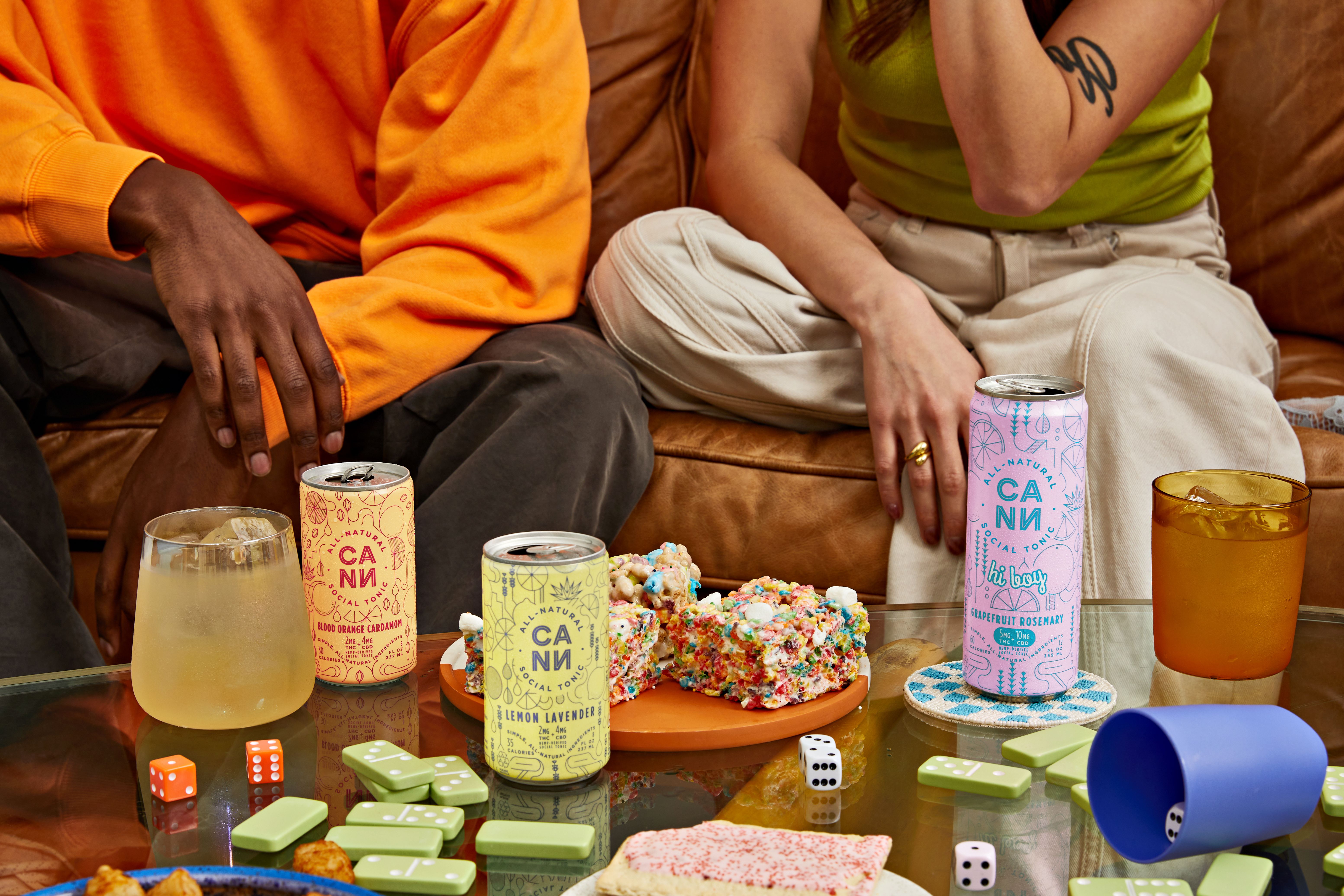
- There are now dozens of drinkable products on the market, with names like Happi, Cantrip, Cann, Boldt and Artet (which calls itself a "cannabis aperitif").
- They come in pretty cans and fruity flavors (like blood orange cardamom and grapefruit rosemary) that mimic the fun of boozy cocktails.
- Cann, for example, is running 4/20 promotions and hawking the benefits of cannabis over booze: No more "hangovers and texts to your ex."
What they're saying: "As a society, we drink our intoxicants," said Amanda Reiman, a harm reduction scholar and chief knowledge officer at New Frontier Data, a cannabis industry consultancy.
- "That's how we consume coffee; that's how we consume alcohol," she told Axios.
- "I foresee a day in the future where you go to a bar and your choices are caffeine, alcohol or cannabis."
Yes, but: Alcoholics Anonymous and other 12-step programs don't condone going "Cali Sober," and doctors are divided over it.
- "Too many people are still falling for this fad," Lantie Elisabeth Jorandby, chief medical officer at Lakeview Health in Jacksonville, Florida, writes in Psychology Today.
- Marijuana can damage the brain, particularly in young people.
- Some doctors say that if you're addicted to one substance, you're going to be addicted to any substance you try, and your only choice is abstinence.
The other side: "The phenomenon of being 'Cali sober' is taking the recovery world by storm," Peter Grinspoon, a doctor at Massachusetts General Hospital, writes for STAT.
- "It isn't cheating to use medicines or other substances to maintain recovery," says Grinspoon, who teaches at Harvard Medical School.
Where it stands: Nora Volkow, director of the National Institute on Drug Abuse — considered one of the nation's leading experts — takes a middle-ground stance.
- "Rigorous research on the potential risks, benefits and health effects of cannabis use is urgently needed," she said by email in response to questions from Axios.
- She noted "emerging evidence on the potential therapeutic uses of constituents of cannabis" as well as "an increase in the emergence of adverse health effects associated with cannabis."
Zoom out: While all cannabis businesses see 4/20 as a sales peg — for gummies, chocolate, smokables — it's the cannabis drink makers that are pushing hardest to reshape the stoner holiday.
- They want us to hoist a frosty can of ganja instead of suds — a trend that dovetails with Gen Z souring on alcohol.
- Each can has a low dose of THC — typically 2 mg to 10 mg — so you can pace your high once you learn your tolerance.
Zoom in: Customers of THC beverages tend to fall into three categories: Baby Boomers who want to quit drinking, parents who want to stay clear-headed, and young people who never started drinking in the first place, said Cann's Bullock.
- Among people with alcohol use disorder (the most accepted way to refer to alcoholism these days), people who quit 100% sometimes welcome help from THC drinks, gummies and/or smokes.
- Others use the drugs to pare their drinking back to normal levels.
- "The people Cann helps the most are really heavy alcohol drinkers," Bullock said.
The bottom line: While marijuana is an intoxicant, it's not potentially fatal like alcohol — and it's not associated with the same kind of violent behavior and sloppiness that's typically seen with booze.
2. Record EV registrations in Washington State
Illustration: Shoshana Gordon/Axios
3. America's fastest-growing metro area

A view of Lake Mirror and the Frances Langford Promenade on a recent afternoon. Photo: Kathryn Varn/Axios
4. Ditch Park City? Say it ain't so, Sundance!

General view of the Egyptian Theatre sign during the Sundance Film Festival on Jan. 23 in Park City, Utah. Photo: Mat Hayward/Getty Images
Axios What's Next

The next decade of big, sweeping changes will unfold in cities and communities where new technologies like 5G, AI and drones are transforming how we work, live and play together. What’s Next will guide you through the revolution.