Axios Media Trends

February 07, 2023

Today's Media Trends, copy edited by Sheryl Miller, is 1,805 words, a 7-minute read. Sign up here.
Situational awareness: 🎵 Grammys ratings jumped 30% from last year, but viewership still lags far behind the pre-pandemic era. At least 12.4 million people tuned in, compared to more than 18 million viewers in 2020.
1 big thing: Scoop ... Inside Sun Group's Forbes bid

Illustration: Annelise Capossela/Axios
A group of investors led by India-based Sun Group is trying to lure tech billionaires and Hollywood types to join its bid for Forbes, which values the firm at $800 million, sources told Axios.
Why it matters: The group is projecting that with investments in new growth areas, like a venture investing platform and an education services arm, parts of Forbes' business could be worth billions of dollars in five years.
State of play: A pitch deck detailing the opportunity is being circulated to possible investors ahead of finalizing a bid for the company in the next month, two sources said.
- Sun Group vice chair Shiv Khemka, who is leading the effort, is targeting high-profile individuals, like tech billionaires, who might be interested in owning a piece of a media brand.
- GSV, a U.S.-based investment firm that previously led a buyout deal for Forbes, is also involved.
Details: In the deck described to Axios by sources pitched on the opportunity, the investor group argues that Forbes — which it values at roughly $800 million today — could one day be worth billions across three new business lines.
- 🛒 Forbes Valley, a business segment based on the idea that the company will be able to make more money from Forbes' digital audience through things like e-commerce and recommendations, could be worth $4 billion by 2028, it argues.
- Of note: Forbes currently owns 40% of a recommendations business called Forbes Marketplace that investors think will grow to nearly $400 million in revenue by 2027.
- 💰Forbes Club, a venture investment platform that offers Forbes "communities" access to proprietary deal flow, could drive between $270 million to $290 million in cash flows by 2028, the plan says. Communities are described as Forbes' lists of influential people, like its "30 Under 30" franchise.
- 📚 Forbes Education, a business built on leveraging Forbes' Rolodex of influential people to create licensed educational content — like branded trainings and professional certificate programs — could drive revenues between $250 million and $270 million by 2028, according to the plan.
Noticeably missing from the pitch are any investments linked to crypto.
- A previous bid for Forbes led by GSV was centered around Forbes' future as a web3 publisher.
By the numbers: In 2022, Forbes brought in roughly $285 million in revenue and $50 million in earnings, according to the deck.
- The group predicts that by 2028, it will be able to grow its revenues by 17% CAGR and its earnings by 25% CAGR.
- Forbes Media didn't comment. Sun Group didn't respond to a request for comment.
👀 What to watch: Whether Khemka and Sun Group can raise enough money for the company from those looking to get their hands on a piece of a media brand for vanity purposes, based on projections that seem aspirational.
2. Scoop: Jimmy Finkelstein raises $50M
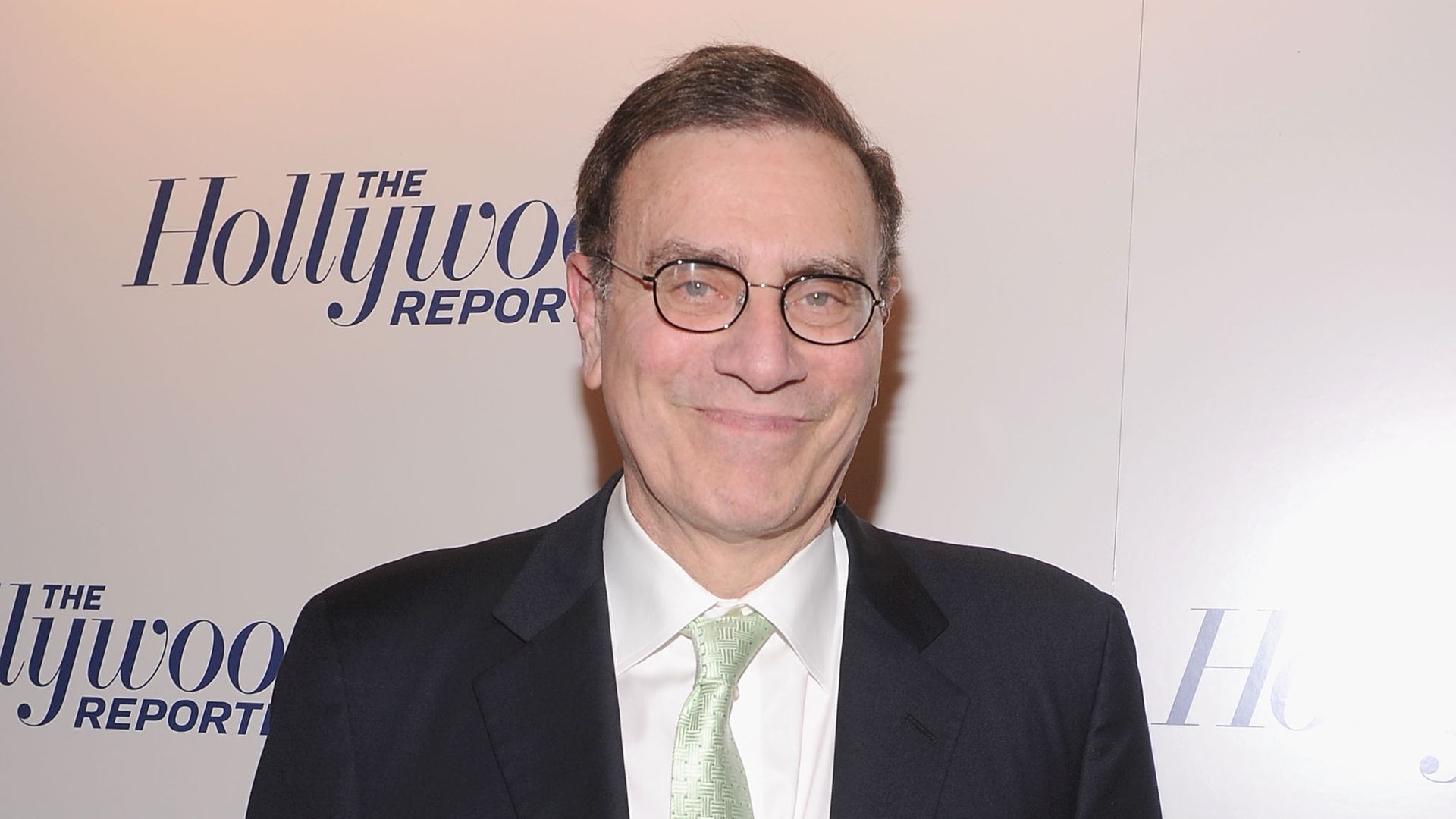
Photo: Jamie McCarthy/WireImage
Jimmy Finkelstein, a longtime media investor and entrepreneur who formerly owned The Hill, has raised $50 million for his new venture called The Messenger, sources told Axios.
By the numbers: In total, he's hired roughly 35 people, with the goal of hiring several hundred more throughout the year.
- He's already brought on most of the company's senior leadership team, including a top editor, as he readies for a launch in the first quarter.
🔍 Why it matters: Most media upstarts push for earned media and press coverage ahead of launch, but Finkelstein has tried to avoid the spotlight, hiring dozens of executives and raising tens of millions of dollars mostly in secret.
Driving the news: The company has hired veteran entertainment journalist Dan Wakeford, formerly the editor-in-chief of People Magazine, as one of its top editors, sources told Axios. The Daily Beast first reported about Wakeford and the company's new name Monday.
- Wakeford will help lead a newsroom focused on four major topics, including entertainment, news, politics and sports, sources told Axios. The company may still try to hire another top executive to lead the newsroom with Wakeford, two sources said.
- Neetzan Zimmerman, the veteran audience development executive who famously helped grow The Hill into a traffic behemoth, is also joining the company as VP of content.
- Dana White, formerly the chief marketing officer of the Hollywood Reporter and Billboard, has joined as chief activation officer.
- Kimberly Bernhardt, formerly the head of communications at Bustle parent BDG Media, is the chief communications officer.
- Mia Lehmkuhl Libby, who was most recently the chief revenue officer at The Daily Beast, has joined as chief revenue officer. Her hiring, as well as the hiring of Richard Beckman — Finkelstein's longtime right hand — as president, was reported by Semafor in October.
Catch up quick: Finkelstein began raising money for his new venture in late 2021, shortly after he sold The Hill, a D.C.-based political newspaper, to Nexstar for $130 million.
3. No one cashing out in Vox deal
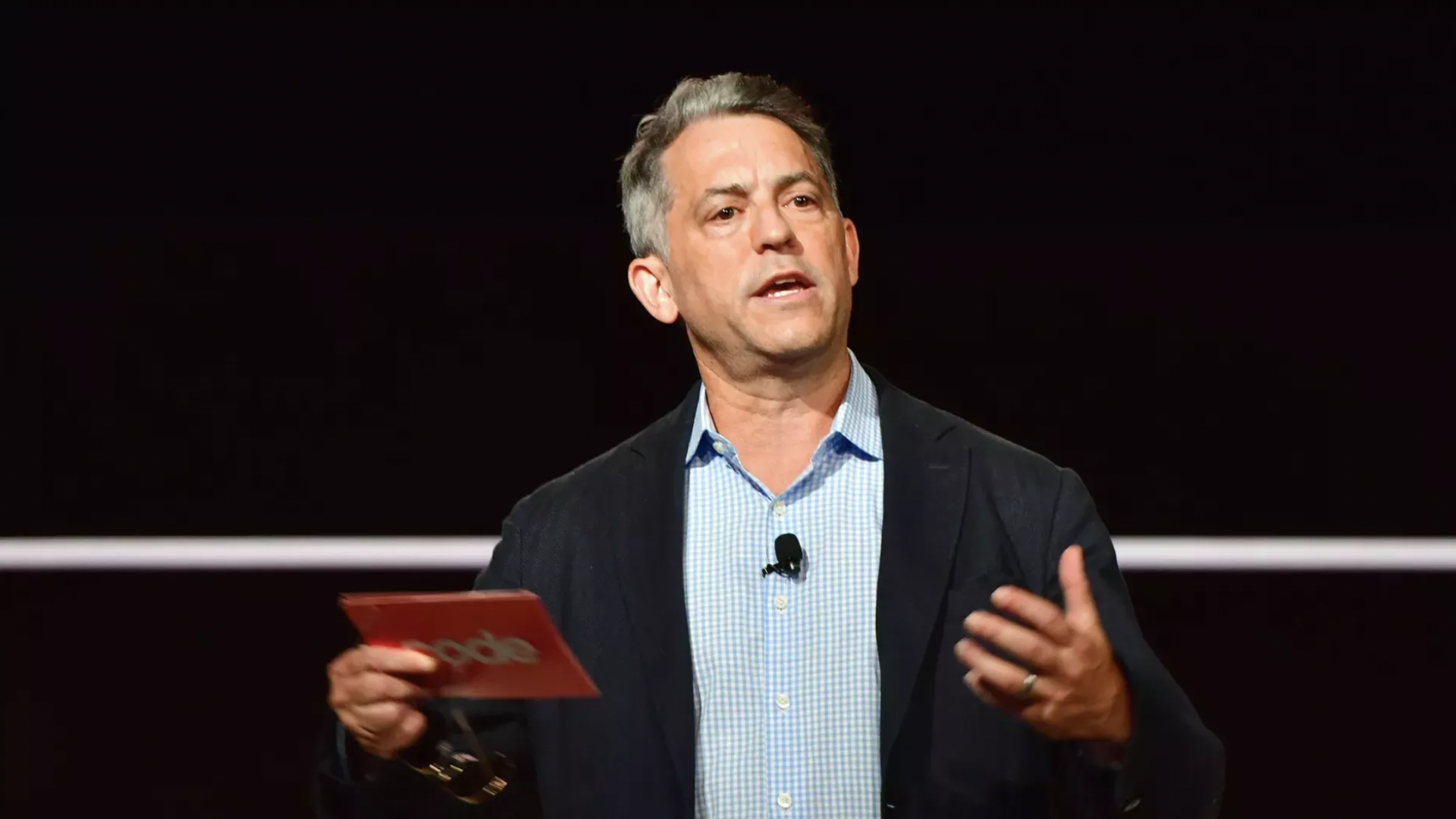
Vox Media CEO Jim Bankoff. Photo: Jerod Harris/Getty Images for Vox Media
Vox Media, the digital media holding company whose titles include New York Magazine, Eater and The Verge, has raised $100 million from Penske Media Corp., according to two sources familiar with the situation.
- Axios has learned that the entire $100 million investment is primary capital, which means that no existing shareholders sold into the deal.
- The New York Times first reported about the investment.
Why it matters: The investment values Vox at $500 million, which is just half of what the company was worth when NBCUniversal invested in 2015.
- It's also less than Vox's annual revenue, which tracks with how rival BuzzFeed also is trading well below its top line.
Be smart: The money will help Vox Media weather a brutal ad market while remaining independent, and it makes Penske the company's largest outside shareholder.
- Vox Media, as Axios previously reported, has discussed other strategic options, including a sale of all or part of its business.
📉 The big picture: Several digital media companies are looking to sell now that the ad market has slowed, but with BuzzFeed trading at a value far less than its revenues, private companies aren't getting the valuations they are looking for from investors using BuzzFeed as a comparison.
4. Media vs. robots

Illustration: Brendan Lynch/Axios
The rapid rise of generative AI tools like ChatGPT could displace dozens of media companies if they don't move quickly to adapt to a new internet reality.
Why it matters: Facebook's many pivots pushed media outlets to move their focus away from social media and toward search — but now experts predict another major disruption for publishers relying on search traffic.
Be smart: The past few years gave rise to a slew of successful digital media companies — like J2, Dotdash Meredith and Red Ventures — that focused on monetizing search traffic, while social media-reliant publishers struggled to adapt.
- But the content that has done well on search, such as evergreen articles that help people answer questions or provide recommendations, is poised to be challenged by artificial intelligence.
🔎 Zoom in: In an early example of what's coming, BuzzFeed last week said it will use OpenAI software, similar to the popular generative text site ChatGPT, to automatically write quizzes, beginning this month.
- BuzzFeed doesn't plan to use AI to write journalistic articles, which seems to be a line that most publishers aren't eager to cross.
🔮 What's next: As search-based content becomes more commoditized, media brands will need to pivot toward serving specific audiences, rather than the masses.
- "Trying to compete on efficiency with robots never works," said Brian Morrissey, former president and editor-in-chief of Digiday, and author of The Rebooting, a Substack newsletter on media. "They always win."
5. Streamers ink new deals
Out Tuesday morning:
- 🏈 DAZN Group signed a 10-year deal with the NFL to make DAZN the exclusive streaming home for NFL Game Pass International beginning next season.
- 📺 Atmosphere, a B2B streaming media company, has raised $65 million in a series D round that values the company at $1 billion, Axios' Kerry Flynn reports.
- 🍔 Roku struck a deal with DoorDash to let viewers order food via interactive TV ads.
Go deeper: Sign up for Axios Pro Media Deals authored daily by Kerry Flynn and Tim Baysinger.
6. End of the tabloid era

Photo Illustration: Scott Olson/Getty Images
The National Enquirer's owners say they've struck an agreement with a joint venture called VVIP Ventures to acquire the U.S. and U.K. editions of the Enquirer, the National Examiner and the Globe in an all-cash transaction for an undisclosed amount.
- Why it matters: The sale of the Enquirer, a storied gossip rag that became engulfed in scandals in recent years, is the latest American tabloid giant to change hands as the era of print gossip fades.
What's happening: A small group of powerful voices has been replaced by hundreds of digital influencers and gossip sites that run the same rumors, often with even less accountability.
- While many print tabloids run articles without bylines and using anonymous sources, it's still clear who owns most magazines. Online, even that small layer of accountability is often missing.
🖼️ The big picture: With few exceptions, most major U.S. print tabloids failed to adjust to the digital era. So their audiences have aged with them.
- Left with smaller business prospects, many titles have been sold for a fraction of their former values to buyers eager to salvage what's left of once-powerful brands.
- Some celebrity and gossip magazines, like Ok! Magazine, have ceased printing but remain online.
🇬🇧 The one major exception has been the Daily Mail, a British tabloid whose U.S. version has become one of the most-trafficked American websites.
- The Daily Mail's successful online presence in the U.K. helped jump-start its U.S. digital presence at a time when other tabloids weren't investing much in their websites.
🍿 The big picture: Many of today's biggest internet gossip stories are peddled by anonymous people and accounts.
- The viral Instagram account DeuxMoi, which rose to popularity during the pandemic, made a name for itself by posting anonymous tips about everything from celebrity coffee orders to Hollywood affairs.
7. 1 fun thing: Super Bowl ads fetch record rates
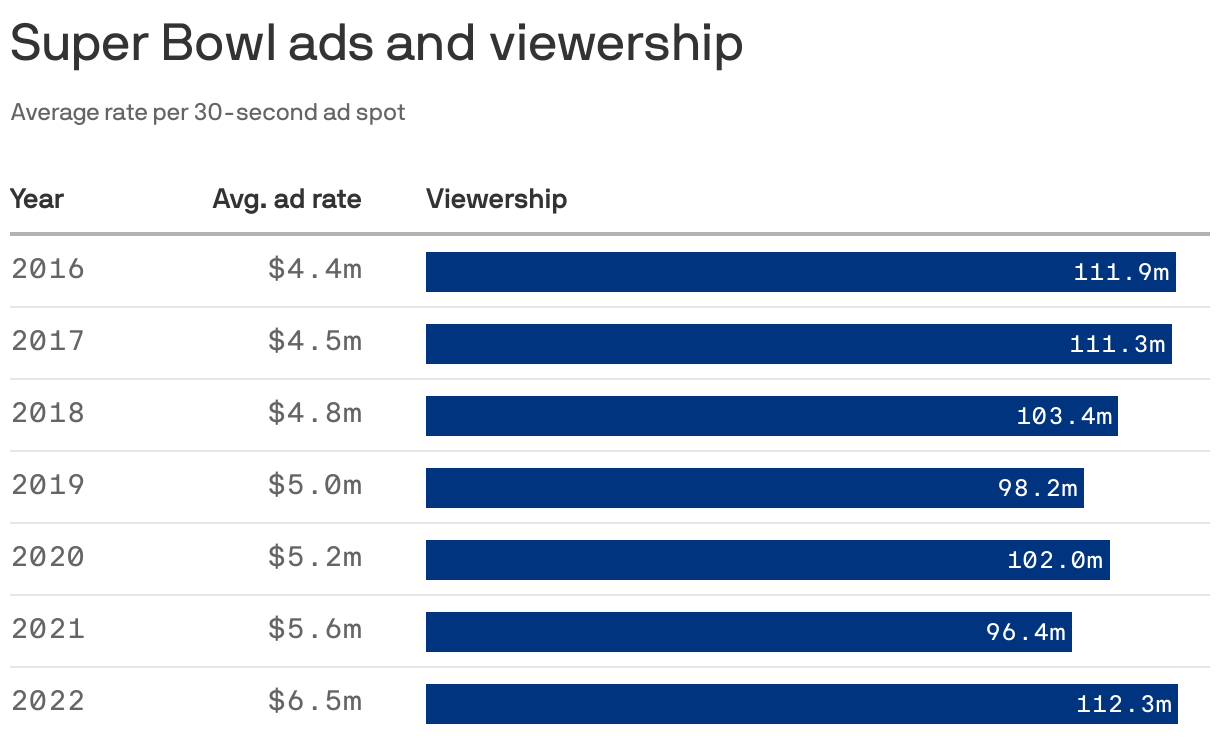
Fox Sports has sold out of ad placements for the Super Bowl, Deadline reports. Some 30-second spots are fetching more than $7 million.
Why it matters: This year's event is notably missing one major category: crypto.
- Fox executives told Sports Business Journal that the lack of crypto advertisers was in part to blame for a slower ad sales process for this year's game compared to last year's game on NBC.
- This year's game won't have any crypto ads after firms pulled out amid the FTX scandal and market declines. Around five crypto ads were aired last year.
The big picture: Super Bowl ad rates continue to soar, despite the fact that viewership hasn't grown as proportionately in recent years.
- Advertisers are willing to pay a huge premium to message during the game because it's one of the last remaining TV events in America that's widely watched at the same time.
What to watch: This year, Fox executives are expecting record viewership across live and streaming television, Sports Business Journal reports.
Sign up for Axios Media Trends

Sara Fischer’s inside look at the forces reshaping media.