Axios Media Trends

September 10, 2024

Today's Media Trends, copy edited by Sheryl Miller, is 1,958 words, a 7½-minute read. Sign up.
👀 Sneak peek: After seven years, I am trying something new for Media Trends subscribers. I'd love to share some ideas if you're open to chatting with me about your feedback. please connect here.
1 big thing: Saving LA news
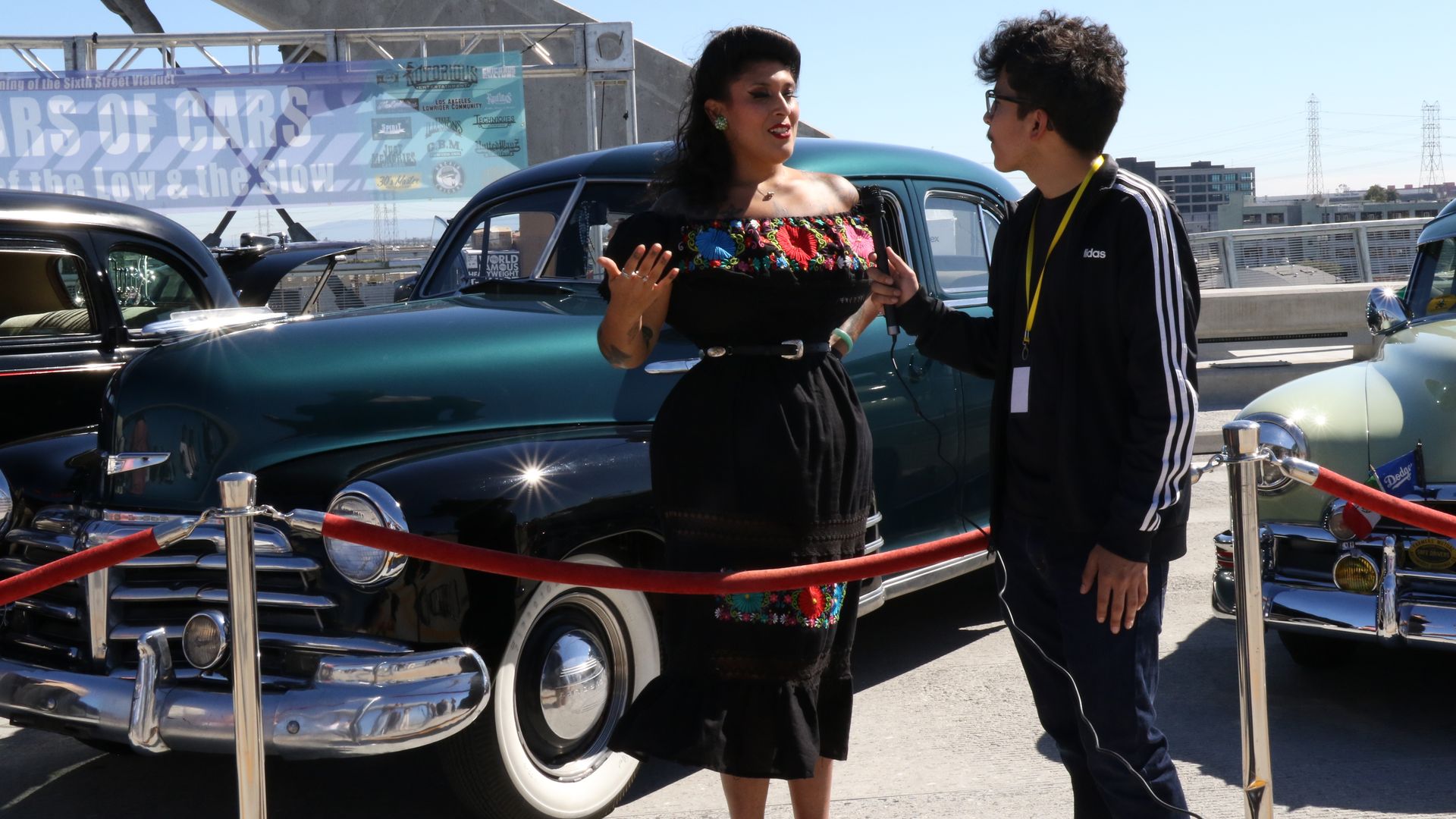
A group of well-known media leaders and philanthropists have teamed with the American Journalism Project to raise $15 million for a new Los Angeles-based local news initiative.
Why it matters: The local news ecosystem in LA, the second-largest city by population in the U.S., has been decimated in recent years by layoffs and cutbacks related to business challenges.
Zoom in: In addition to the AJP, the initiative's funding partners include a slew of heavy hitters, including Snap CEO Evan Spiegel's family fund, The Annenberg Foundation, The Eli and Edythe Broad Foundation and many more.
How it works: The initiative will create a nonprofit news organization to support hyper-local newsrooms that serve LA residents.
- The organization will be governed by a board that includes former LA Times executive editor Kevin Merida, Emmy-award-winning Spectrum News anchor Giselle Fernandez, and others. It will be chaired by former La Opinión CEO and editor Monica Lozano.
- The group will launch and operate community publications in areas that need more coverage. It will also partner with existing local outlets and journalism schools to coordinate free content sharing and special projects.
- In areas that lack a strong community news outlet, the initiative will look to build new newsrooms modeled after Boyle Heights Beat, the bilingual, community newsroom that serves Boyle Heights and east LA.
Follow the money: The business model for the new organization will be similar to other AJP-backed local news outlets, such as Signal Ohio and Block Club Chicago.
- Coverage will be free and politically independent. The organization will take philanthropic support and will lean into membership revenue from readers. It will broker corporate sponsorships around some editorial products, including events, AJP CEO Sarabeth Berman told Axios in an interview.
The big picture: More philanthropy dollars are being funneled into hyper-local outlets as newspapers continue to fold.
- The Texas Tribune, a nonprofit, nonpartisan news outlet focused on state politics and policy, announced new plans to launch a slate of hyper-local newsrooms, starting with Waco and Austin.
Part 2: News fades in the City of Angels

While most of the media industry has faced financial challenges over the past few years, the local news ecosystem in Los Angeles has been hit particularly hard.
- The Los Angeles Times, once one of the most powerful regional newspapers in the country, cut 115 staffers in January, months after laying off 74 newsroom staffers amid advertising declines last year. The cuts disproportionately impacted Latino staffers and led to an exodus of its most senior newsroom staff.
- LAist has cut 28 employees through buyouts and layoffs this year amid financial challenges. It laid off 20 staffers the year prior.
- LA Weekly, an alternative weekly magazine, saw most of its senior staffers exit following a buyout announcement in March.
- DotLA, a tech news site, laid off all eight of its editorial staffers last June.
- L.A. Magazine laid off multiple staffers earlier this year amid financial challenges, per The Wrap.
3. Scoop: NYT tech workers vote to authorize strike
The New York Times Tech Guild, which represents more than 600 staffers, voted today to authorize a strike in protest of stalled contract negotiations with the Times' management, sources confirmed to Axios.
Why it matters: The guild, which was formed in 2022, has yet to secure a contract after more than two years of bargaining.
Driving the news: Of the union's 622 workers, 89% participated in the strike authorization vote today and an overwhelming majority supported the vote to strike.
Between the lines: It's unclear when the guild plans to strike, but with the elections coming up, any time in the near future would be problematic for the Times.
- The Wirecutter union held a five-day walkout over the Black Friday holiday weekend in 2021 and struck a deal with management days later. (It re-signed another three-year contract earlier this year.)
- The Times' main editorial union held a one-day walkout in December 2022 and struck a contract deal after more than two years of bargaining in May 2023.
The big picture: The tech guild represents the largest union of tech workers with bargaining rights in the country, per the NewsGuild.
- As such, union organizers are looking to set a precedent for other tech unions via its contract negotiations with the Times.
- Beyond fighting for wages, it's also bargaining for various workplace policies, including remote work rights and unique just cause protections.
4. News trade expands amid AI fears

The News/Media Alliance has added 26 new members in the past year as news outlets scramble to get aligned on lobbying for AI protections, its CEO Danielle Coffey told Axios.
Why it matters: Membership for the trade group, which historically represented local newspapers, was in decline a decade ago.
- Now, digital operations of TV networks and digital-first outlets are joining their print counterparts as the AI rights battle intensifies.
- Of the group's more than 2,200 members, new entrants over the past year include BBC, CNN, The Economist, Future, TEGNA, The Guardian, U.S. News & World Report, NBCUniversal News Group and Ziff Davis.
- "I think people are starting to get that there's a marketplace imbalance and that we're significantly harmed," Coffey said.
State of play: The group is heading to Capitol Hill tomorrow to lobby for AI protections, as well as other issues like fair competition and privacy, Coffey said.
- It will meet with Sens. Amy Klobuchar (D-Minn.) and Chuck Schumer (D-N.Y.), as well as other House and Senate lawmakers.
- In total, over 100 Hill meetings are scheduled for news leaders across 17 state news associations and various new and old members.
Yes, but: With so many news companies striking deals with AI firms, Coffey is prepared to defend the news industry's position that those deals, without regulatory pressure, will never reflect the true market value of her members' content.
- Those deals "will never reflect fair market value, while there's uncertainty around whether they lawfully have to pay. Otherwise, they're just doing it out of the goodness of their heart, so it will artificially deflate the amount paid to news companies," she said.
What to watch: NMA is asking the DOJ to consider a remedy in its search antitrust case against Google (see below) that would give news companies the ability to opt out of parts of Google's AI-driven search products because there's no way they can monetize their intellectual property in that environment. Google, she said, has yet to strike any licensing deal with her members.
5. Second historic Google antitrust trial

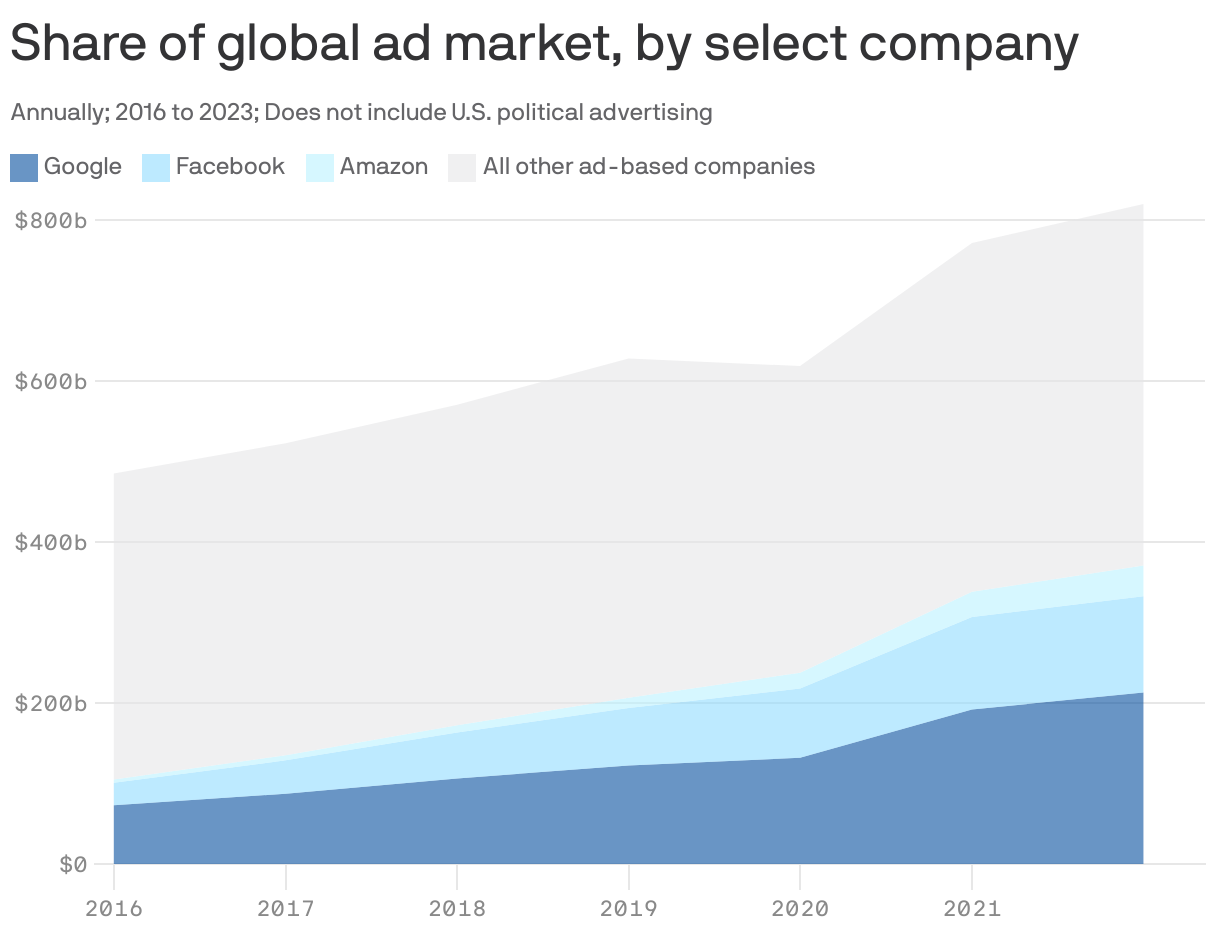
A landmark Justice Department case charging Google with violating antitrust laws in its ad tech business began in a federal court in Virginia yesterday.
- The Justice Department suit seeks to force Google to sell off its Ad Manager suite — a toolkit it has built over the course of many years through various multibillion-dollar acquisitions.
- Google argues its services aren't anti-competitive and untangling the Ad Manager from the rest of its ad business would be very complicated.
Why it matters: Google already lost one major antitrust case this year when a federal judge ruled the tech giant violated federal antitrust rules to maintain a monopoly in the online search market.
- A second loss could lead to sweeping changes in the firm's core business as it fights for leadership in the AI era.
Reality check: While the government is still considering remedies in its search case, it never called for an outright breakup of the company. The ad tech lawsuit does.
What's next: The trial is likely to last several weeks, and a ruling from the judge will take additional weeks or even months.
6. TV blackout fight gets ugly ahead of debate
The distribution fight between Disney and DirecTV is getting messier ahead of tonight's first presidential debate between former President Trump and Vice President Kamala Harris.
- DirecTV on Sunday filed a complaint with the FCC accusing Disney of negotiating in bad faith and crushing any hope that the dispute would be resolved ahead of the "Monday Night Football" kickoff on ESPN.
Why it matters: The complaint represents an extreme step, given that regulators rarely intervene in these kinds of industry spats.
State of play: Disney networks, including ABC and ESPN, are still blacked out for roughly 11 million DirecTV satellite subscribers across the country.
- While subscribers can still access tonight's debate for free with TV antennas, they can't access the debate on ABC through their satellite subscriptions until the dispute is resolved. (Other networks will simulcast the event.)
7. MAGA's media meltdown


Conservative media is facing a rare moment of introspection, rocked by a series of scandals that have drawn new scrutiny to the right's favorite influencers.
Why it matters: The battle for MAGA's future is unfolding not just at the ballot box, but online — where traditionally pro-Trump forces are suddenly feuding over antisemitism, revisionist history and Russian disinformation.
Driving the news: At the center of the firestorm is Tucker Carlson, who has drawn sustained backlash for hosting a guest on his podcast who called Winston Churchill "the chief villain" of World War II.
- Elon Musk promoted the interview with Darryl Cooper, who Carlson suggested was "the best and most honest popular historian" in the U.S. — then backtracked after X users accused Cooper of Nazi apologia.
- Even hardcore conservatives were gobsmacked by Carlson giving voice to Cooper, the latest in a string of controversial guests — Vladimir Putin among them — whom Carlson has interviewed since leaving Fox News.
Yes, but: Carlson's mainstream relevance may have waned since he was stripped of the top-rated show in cable news, but his influence on the "America First" movement remains unrivaled.
Zoom out: Amid the Carlson outrage, the Justice Department revealed an indictment last week accusing Russia of a scheme to pay right-wing influencers to unwittingly spread propaganda ahead of the election.
- Pro-Trump content creators Tim Pool, Benny Johnson and Dave Rubin were among those who the DOJ says were deceived by Tenet Media, a Tennessee-based company covertly funded by Moscow.
- All three — who described themselves as "victims" of the bombshell allegations — have millions of followers on X and are staples of the platform's daily right-wing discourse.
- Canadian activist Lauren Chen, who founded Tenet along with her husband and has frequently attacked Trump from the right, was fired by Blaze Media on Thursday.
The bottom line: The fissures in MAGA's media machine aren't simply a product of Russian disinformation — and they didn't appear overnight.
- The Israel-Hamas war, for example, has spurred some elements of Trump's "America First" base to embrace the type of antisemitism that Republicans often condemn on the left.
- Candace Owens, a longtime darling of the pro-Trump movement, left the Daily Wire in March after clashing with founder Ben Shapiro over her antisemitic conspiracy theories, which she continues to promote.
8. 🎙️1 pod thing: Peter Kafka returns to Vox

Peter Kafka, a veteran media and technology journalist, is reviving his old "Recode Media" podcast under a new name, "Channels," with the Vox Media podcast network, he told Axios in an interview.
State of play: Kafka will continue to write full time for Business Insider as a chief correspondent, but he'll work with Vox Media — his old stomping ground — as a production, distribution and sales partner for "Channels," he said.
- He also worked out an arrangement with Vox Media CEO Jim Bankoff where he'll own the podcast, giving him freedom and flexibility.
- Kafka will continue to cover the technological disruption of the media industry through interviews that highlight success stories and learning moments.
Zoom in: "Channels" launches tomorrow as a weekly show featuring long-form interviews with senior executives in the media and tech industries.
- "Recode Media" followers will be automatically redirected to "Channels" in their podcast feeds, which means Kafka doesn't need to build an entirely new audience from scratch.
- The show will be free, supported by advertising and widely available.
What's next: Kafka's first episode, featuring an interview with the New Yorker's David Remnick, will be out on Sept. 11. Ironically, Remnick was Kafka's first interviewee when he launched "Recode Media" in 2016.
Sign up for Axios Media Trends