Axios Markets

November 13, 2023
π It's Monday, and we are here for you. And David Cameron, the former U.K. prime minister known for calling for the Brexit vote, is back.
Today's newsletter is 1,148 words, a 4.5-minute read.
1 big thing: Mindful of this economic moment
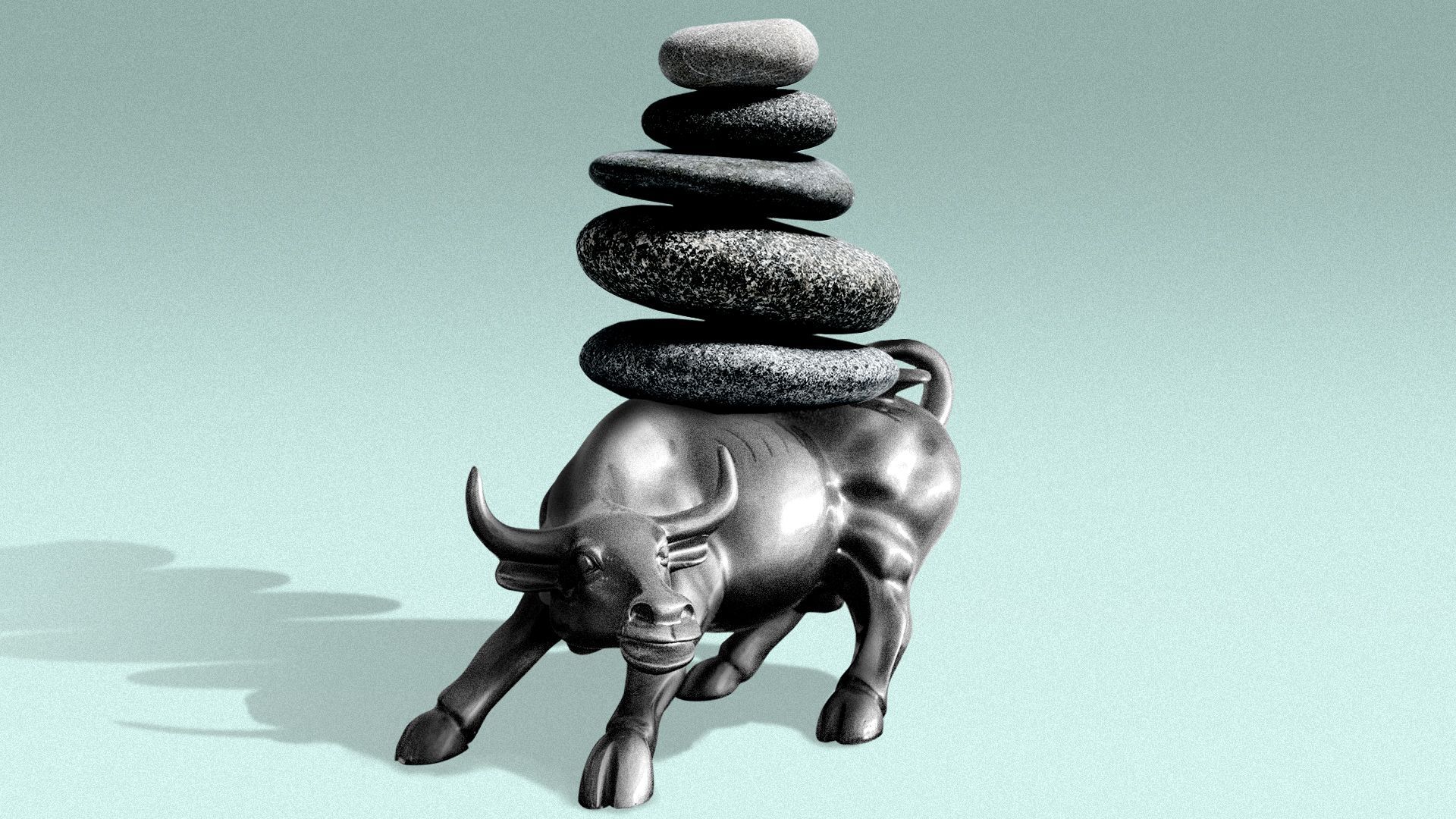
Illustration: Annelise Capossela/Axios
Meditation practice is changing my perspective on the economy and markets, Matt writes.
Why it matters: The perpetual search for the next recession or crash β and the longing for a return to pre-COVID prices, office life, or trade β risk blinding us to the economic realities of the present.
State of play: A great work-from-home perk is that after I get my daughter on the bus, I have about 45 minutes that I don't need to spend rushing to catch a train.
- For the last year, I've used that time to meditate, with a focus on mindfulness.
- Basically, this means I sit for about half an hour, focusing on sensations β such as the feel of my breath going in and out β to situate myself in what is happening at the moment.
- Thoughts come and go. But I try not to judge them, listen to them, or get too fixated on them.
Be smart: It might sound a bit granola, but mindfulness delivers real mental health benefits. It reduces anxiety, improves happiness, and regulates anger.
- It's also been helpful for my job, which involves staying up on the wild swings in opinion, never-ending hot takes, and endless hand-wringing over what's next for the economy.
Context: Over the last year and a half, the Federal Reserve's historic shift to fight inflation with sharp interest rate hikes ignited a frenzy among economists β and people like me β about where the economy was going.
- The overwhelming consensus? Recession was pretty much inevitable.
- And for good reason. In the past, similar interest rate increases were associated with gnarly downturns.
But, but, but: The predictions have been wrong β so far.
- Unemployment is under 4%. GDP rose at a nearly 5% rate last quarter. Inflation has been returning to earth in fits and starts.
The intrigue: Hardly anyone seems to appreciate this. And that's where I see a connection to meditation.
- The objective reality is that the U.S. economy is as strong as I've ever seen.
- But the fixation on forecasts for recession, which dominated the economic discussion over the last year, has left readings on economic sentiment for consumers and executives alike at levels we usually only see during recessions.
- In a nutshell: Psychologically, America is experiencing a recession that doesn't actually exist.
Between the lines: That's not to say the economy is perfect! Housing, cars, and other essentials are much more expensive than they used to be. Restaurants and retail shops are weird and understaffed. Global trade patterns are changing in unpredictable and potentially dangerous ways.
- But fixating on such facts alone means you also might miss some really interesting and hopeful things.
For instance: We just had some of the best productivity numbers in decades, something economists say is a key to improving standards of living.
- Unions, like those for rail and auto workers, are notching big wins β also a distinct change from recent history β potentially signaling workers might start getting a bigger share of the economic pie.
- A massive investment boom is going on right now in domestic manufacturing, something that could create good jobs for generations.
The bottom line: Will it last? From a mindfulness perspective, the answer is of course, no. It will not last. Nothing ever lasts.
- The best we can do is notice what's happening right now.
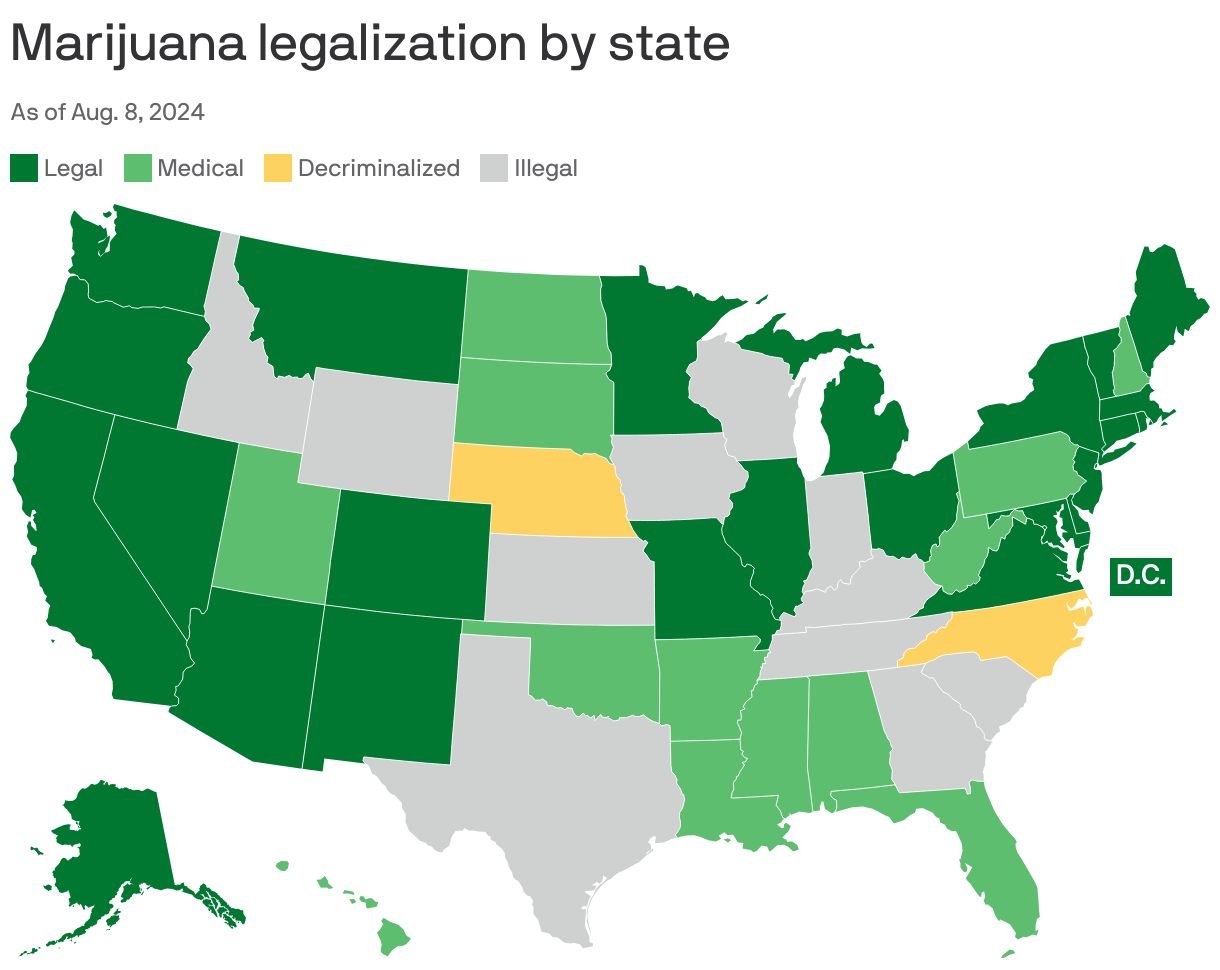
3. Mapped: Legal weed

More than half of Americans reside in states where marijuana will be legal after Ohio voters last week approved a measure to allow recreational marijuana use, Axios' Kelly Tyko writes.
- Ohio became the 24th state to allow adult cannabis use for nonmedical purposes; medicinal use is legal in 38 states.
The big picture: The legalized marijuana market is worth $64 billion and has nearly tripled in three years as legalization efforts have swept the nation, a 2022 Coresight Research report found.
- A landmark federal bill that would protect banks that work with cannabis companies advanced out of the Senate Banking Committee in September.
By the numbers: Seven in 10 Americans think marijuana use should be legal, according to a new Gallup poll released Wednesday of 1,009 adults.
- The majority support crosses political party lines, Gallup found with 87% of self-identified Democrats, 70% of Independents, and 55% of Republicans backing legal marijuana.
What's next: TD Cowen analyst Eric Assaraf wrote last week that we should expect "state-based legalization efforts will continue to shift toward red states as the number of pickup opportunities in blue states has narrowed."
- "This is an important trend to watch as legalization in conservative states could improve the political calculus on the federal level," Assaraf wrote.
4. What we're watching: Labor edition
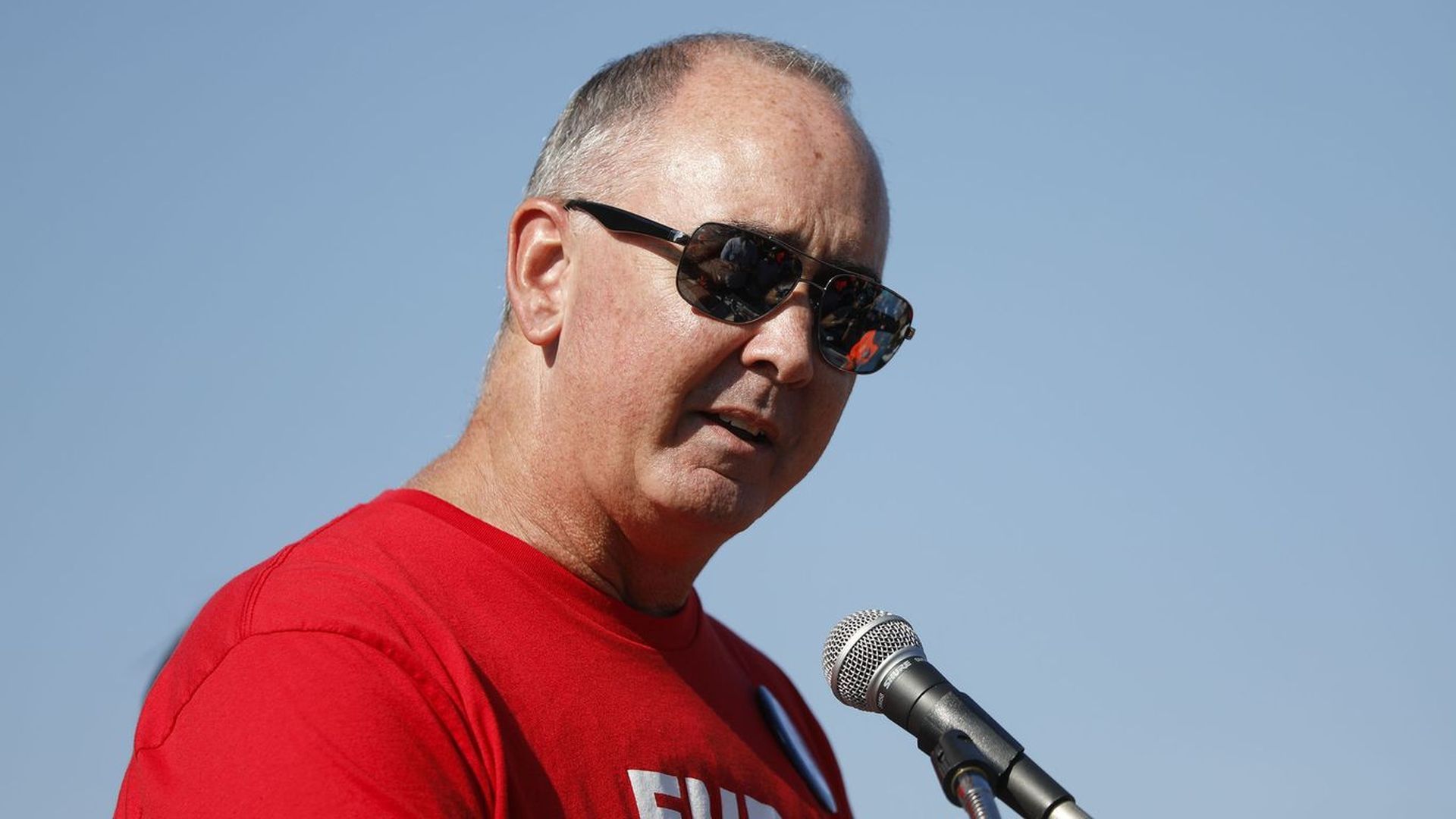
United Auto Workers president Shawn Fain speaks at a Labor Day Rally on Sept. 4 in Detroit. Photo: Bill Pugliano/Getty Images
UAW president Shawn Fain and two other prominent Big Labor leaders are set to appear before a Senate committee tomorrow morning to talk about the union resurgence in the U.S., Emily writes.
Why it matters: With several big strikes now wrapped up β and yielding positive results for workers β the labor renaissance is moving forward.
Zoom out: All the union activity of the past year or so is catching Wall Street's attention. That includes the UPS and UAW deals, negotiations with hotel workers in Las Vegas, and strikes by actors and writers.
- "S&P 500 executives and analysts talked about unions on earnings calls more this year than any other on record, according to data going back two decades," reported Bloomberg.
Yes, but: Voting is underway on the new UAW contract, and it hasn't been totally smooth sailing. Ford production workers in Louisville just voted against the deal.
State of play: The hearing is before the Committee on Health, Education, Labor, and Pensions, chaired by Bernie Sanders (I-Vt.), which you might be able to glean from its title, "Standing Up Against Corporate Greed: How Unions are Improving the Lives of Working Families."
- It appears to be the first time Fain, hot off his big win against the Big Three automakers, will appear at Congress. (One of Fain's top deputies, UAW communications director Jonah Furman, once worked for Sanders.)
- Fain will be joined by Teamsters president Sean O'Brien β who led UPS workers to what is widely viewed as a strong contract this summer βΒ and Sara Nelson, who heads the largest flight attendants' union in the country and is viewed as a labor star. (Read a profile of Nelson in the New Yorker.)
Up next in labor activity: The union that represents Starbucks workers says thousands are set to strike or picket at hundreds of stores βΒ in a "Red Cup Rebellion" β on Thursday to coincide with Red Cup day, when the coffee chain gives out its limited edition holiday cups.
- It's one of Starbucks' busiest and most profitable days.
Was this email forwarded to you? Subscribe here.
Axios Markets is edited by Kate Marino and copy edited by Mickey Meece.
Sign up for Axios Markets

Stay on top of the latest market trends and economic insights