Axios Markets

November 18, 2024

π Happy Monday! We're so glad to be back in your inbox.
- Today we're talking about how the election changed the vibes, and Courtenay Brown has news on a federal crackdown on cross-border deals that might continue into the Trump 2.0 era.
- That's in 1,140 words, a 4-minute read.
βοΈ Situational awareness: Spirit Airlines filed for bankruptcy this morning after its merger efforts with JetBlue failed and losses spiraled out of control.
π The AM Executive Briefing is a limited-term membership from Axios cofounders Mike Allen and Jim VandeHei providing deep reporting, insight and fresh analysis on how Washington REALLY works. Join today.
1 big thing: It was politics all along
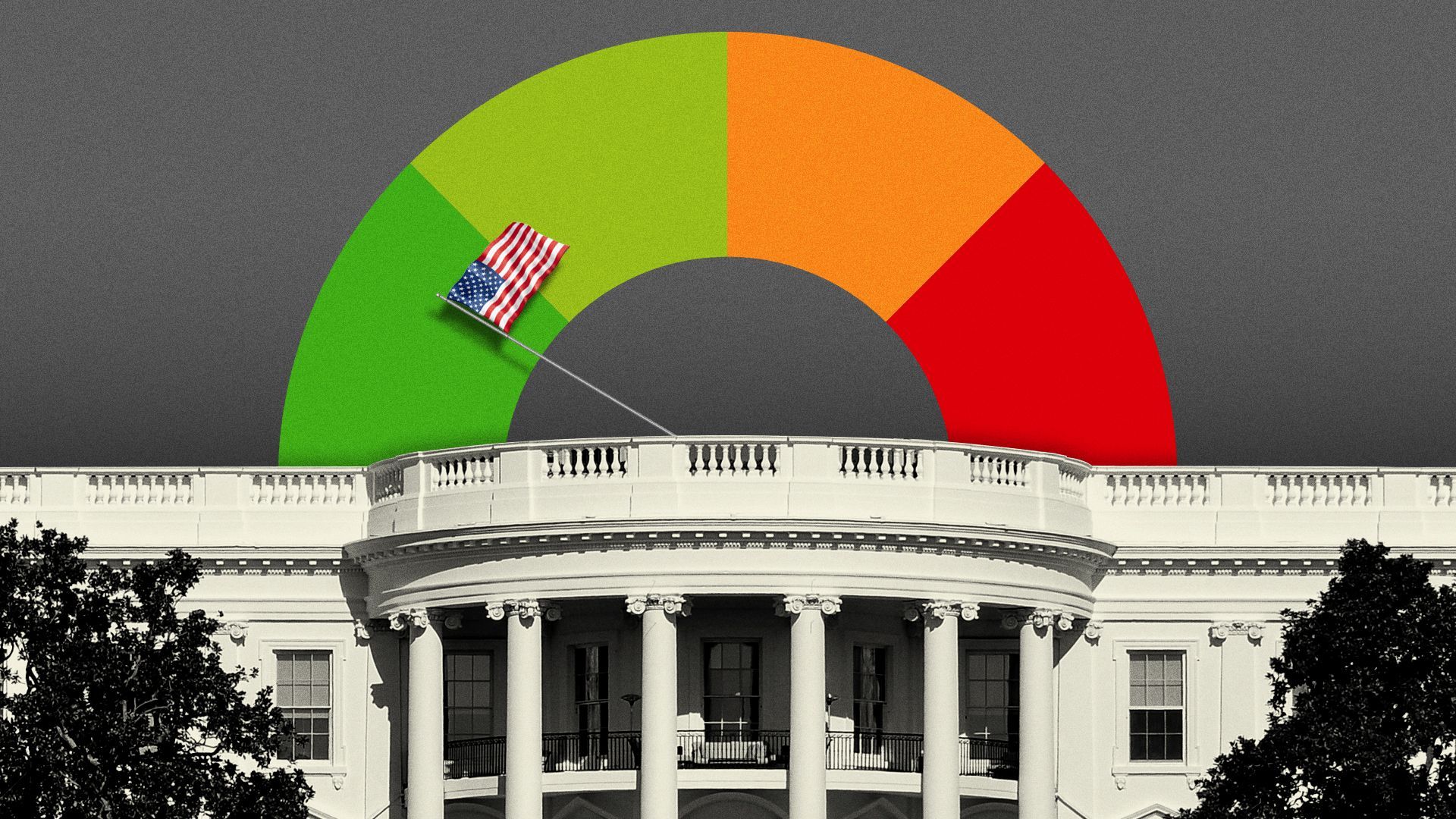
After years of wondering why there was a disconnect between how Americans feel about the economy (bad) and the actual state of the economy (pretty good), we may have the answer β it was politics all along.
Why it matters: If politics is the main driver of consumer sentiment, then it's no longer nearly as useful as an economic indicator.
The big picture: A real-time measure of consumer sentiment abruptly turned positive last week for the first time since June 2021, asΒ Republican optimism surged on Donald Trump's victory. (See the chart below.)
- Overall sentiment hit 100.6 on Nov. 11, according to the Morning Consult Consumer Sentiment Index. (Anything over 100 is positive.)
Flashback: For years, sentiment was an important leading indicator for investors and economists. It could foreshadow a coming recession, for example, faster than other economic data that take longer to come out.
- "If an economic forecaster were trapped on a desert island with only data on consumer confidence," using this measure to hazard a guess about the economy "would not be a bad idea," concludes an explainer from the Federal Reserve Bank of St. Louis published in 2003.
Zoom in: Since the pandemic, the measure's usefulness stumbled.
- Even with low unemployment, falling inflation and a growing GDP, consumer sentiment has been at levels last seen during the Great Recession.
- The disconnect led to the coining of a new term, "vibecession," to describe Americans' dismal mood.
- "The fact that macroeconomic indicators have become so divorced from consumer sentiment, it's reasonable to ask does this even matter from an economic standpoint anymore?" asks Ben Harris, vice president and director of economic studies at the Brookings Institution.
How it works: Both Republicans and Democrats see the economy more favorably when their party controls the White House, but the GOP skew is far more pronounced.
- That's per an analysis of University of Michigan sentiment data from two Stanford economists published last year.
- The Republican partisan bias is two-and-half times larger than it is for Democrats, write Ryan Cummings and Neale Mahoney in their paper.
Put another way: "Republicans cheer louder when their party is in control and boo louder when their party is out of control," they write.
Reality check: That asymmetry explains 30% of the difference between observed consumer sentiment and what you would predict using economic fundamentals, they found.
- Inflation explains another chunk. Even though the rate of inflation has fallen quite a bit this year, consumers are still adjusting to higher price levels. It's a process that takes a few years.
- Other factors contributed to the sentiment slump that economists still don't fully understand. In the Wall Street Journal, Greg Ip wrote about "referred pain," or pessimism about the economy that may "reflect dissatisfaction with the country as a whole."
What to watch: It's still early days, so we'll be watching post-election data closely as it comes in.
- The University of Michigan's survey, the best-known measure of consumer sentiment, is out Nov. 22.
The bottom line: If the gloomy data was just about partisanship, "then the vibecession was really just vibes," Kyla Scanlon, author of "In This Economy?"Β who coined the term, tells Axios.
2. Charted: GOP elation


Heading into the election, Republican sentiment was negative, per Morning Consult's index, as it had been essentially since President Biden entered the White House.
- It spiked to a sunnier 107.5 in the days after Trump won.
The big picture: "It's pretty clear politics was a big part of it," Brookings' Harris says.
Zoom in: Democratic sentiment fell at the same time, but the drop was mild in comparison and the overall index still turned upbeat.
Between the lines: Misinformation is also playing a role here βΒ with Republicans and Democrats receiving different information on the state of the economy from different news outlets and platforms.
- "Misinformation is causing havoc," Harris says.
3. Biden administration adds teeth to scrutiny of foreign deals

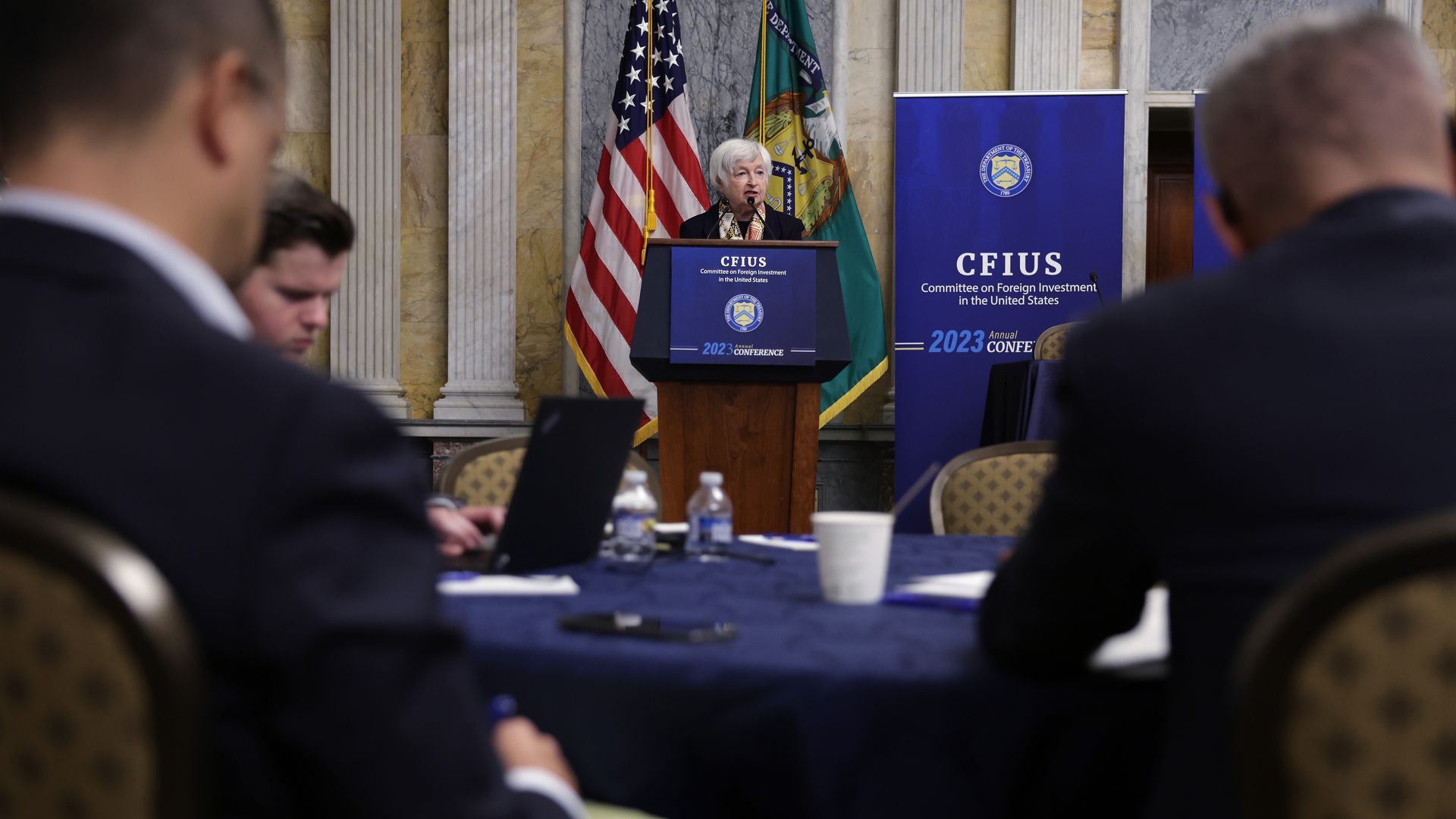
The White House will beef up the powers of the secretive committee charged with reviewing cross-border deals, Axios has learned.
Why it matters: The panel will have more authority to decide the fate of foreign-linked mergers at a time when such combinations β including those involving China β are more politicized than ever.
- It is likely among the final major Biden-era rules impacting the business community β a parting shot that could be politically difficult to roll back.
Zoom in: The Committee on Foreign Investment in the U.S., better known as CFIUS, will get expanded subpoena power to assess national security risks β even before it officially reviews a transaction, according to a release seen by Axios.
- CFIUS will be able to impose higher fines for any misstatements or omissions β as much as $5 million per violation, up from the current threshold of $250,000. The rules also expand the circumstances under which the committee can levy these fines.
- CFIUS will also be authorized to set strict timelines for companies to respond to its proposals.
The big picture: The final rule set to be issued today, which Axios first reported was under consideration, signals the intent for a more proactive β and potentially tougher β review panel.
- In the last two years, Treasury says CFIUS has issued three times more penalties than in its previous 50 years.
- Its new power could chill the deal surge some expect under the incoming Trump administration β or at least put transactions under a sharper microscope.
4. π° "Knife fight" for Treasury

President-elect Trump, after racing through the first half of his Cabinet picks, is slowing his roll on one of the highest profile jobs β Treasury secretary β to consider more options, transition sources tell Axios.
- Trump will meet at Mar-a-Lago this week with two new candidates: Kevin Warsh, the youngest person to become a Federal Reserve governor, and Marc Rowan, the billionaire CEO and cofounder of Apollo, the private-equity giant.
Why it matters: Trump was dissatisfied with the earlier finalists for Treasury β hedge-fund manager Scott Bessent and Howard Lutnick, CEO of the Wall Street firm Cantor Fitzgerald.
- The battle between the two is being called "a knife fight, with Mr. Lutnick as the primary aggressor," according to the New York Times, which first reported the new names.
State of play: Bessent and Lutnick remain in the hunt. But now they might be in a derby for a runner-up job β director of Trump's National Economic Council, or perhaps Commerce secretary.
- It's not clear Lutnick would take a backup job.
Between the lines: Trump cares a lot about pedigrees, and is obsessed with markets. That combination could make Warsh an attractive option.
- Warsh, 53, was a Fed governor from 2006 until 2011. He works with legendary hedge fund billionaire Stan Druckenmiller, who said before the election that the markets were predicting a Trump victory.
- Warsh's long game is still Fed chair. But that could come later in Trump's term.
Rowan is worth at least $9 billion.
Thanks to Ben Berkowitz for editing and Anjelica Tan for copy editing!
Sign up for Axios Markets