Axios Latino

November 14, 2023
👋🏽 How's everyone doing today?
🔖 Thanks for reading this newsletter. Sign up here if you haven't already!
👀 En español 👀
This newsletter, edited by Astrid Galván, is 1,403 words, a 5.5-minute read.
1 big thing: Getting climate funding to the neediest
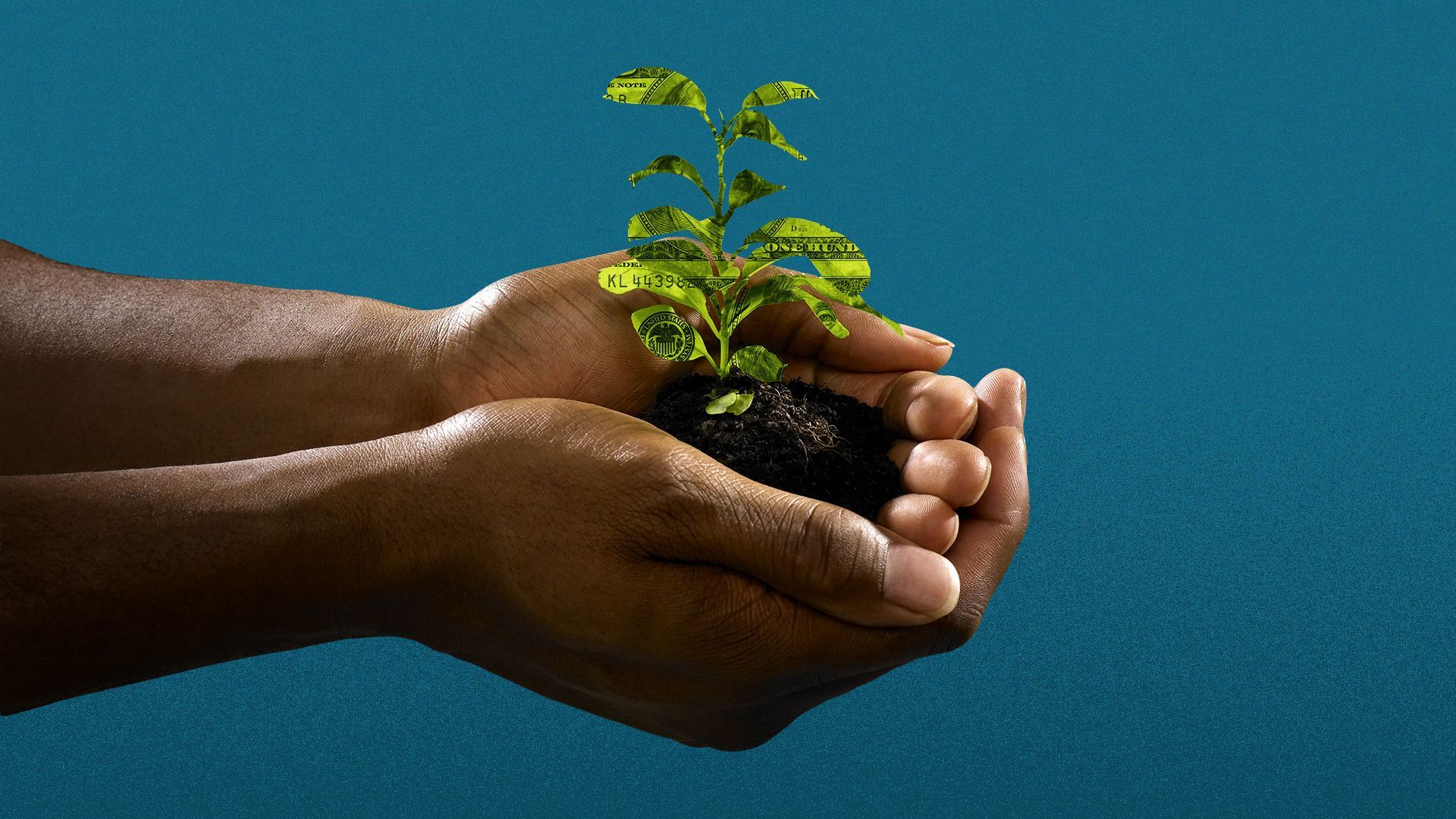
Illustration: Allie Carl/Axios
Community organizations that serve and are led by people of color are banding together to secure some of the billions of federal dollars earmarked for environmental and climate causes, Astrid writes.
Why it matters: People of color are disproportionately affected by climate change and pollution, yet funding for programs that would help them has largely gone to large, national groups instead of community-led ones, sources say.
What to know: The federal government in recent years has made billions of dollars in funding available through the Inflation Reduction Act and other legislation.
- But applying for and receiving federal grants is extremely burdensome and lengthy, particularly for community-based organizations that are resource-strapped, says Sharon Chen of Front and Centered, a coalition in the state of Washington that works on environmental and climate issues.
- Even if they are approved for a grant, the organizations have to front the money before the government reimburses them, which many environmental justice organizations can't afford to do, Chen adds.
What's happening: Advocacy groups and non-profit financial institutions are joining forces to give organizations a better shot at getting grants. Earlier this year, they launched the Justice Climate Fund, which they say is the first-ever coalition to help grassroots organizations obtain grants through the Environmental Protection Agency.
- The Biden administration has also created a grant-making program that allows local organizations to help other groups secure funding. Chen's organization, where she is a resource manager, is one of those grant-makers.
Zoom in: Cynthia Torres, director of resource and development for Affordable Homes of South Texas, tells Axios Latino the National Association for Latino Community Asset Builders (NALCAB), which is part of the Justice Climate Fund, is helping her organization apply to the EPA for funding to install energy-efficient appliances and solar roof panels in new and renovated homes.
- The organization is a mortgage lender; provides financial counseling to low-income families; and rehabilitates or builds houses in the McAllen, Texas, area, which is majority Hispanic and, like many cities in the U.S., suffers from a housing shortage.
- A lot of the families the organization serves are "living in substandard conditions," Torres says.
- "Some of them don't have the money to pay for their light bill, so when you try to talk to them about maybe solar roofing or things like that, they can't even ... picture ... how can they afford that in the long run."
2. Amazon drought exposes ancient engravings
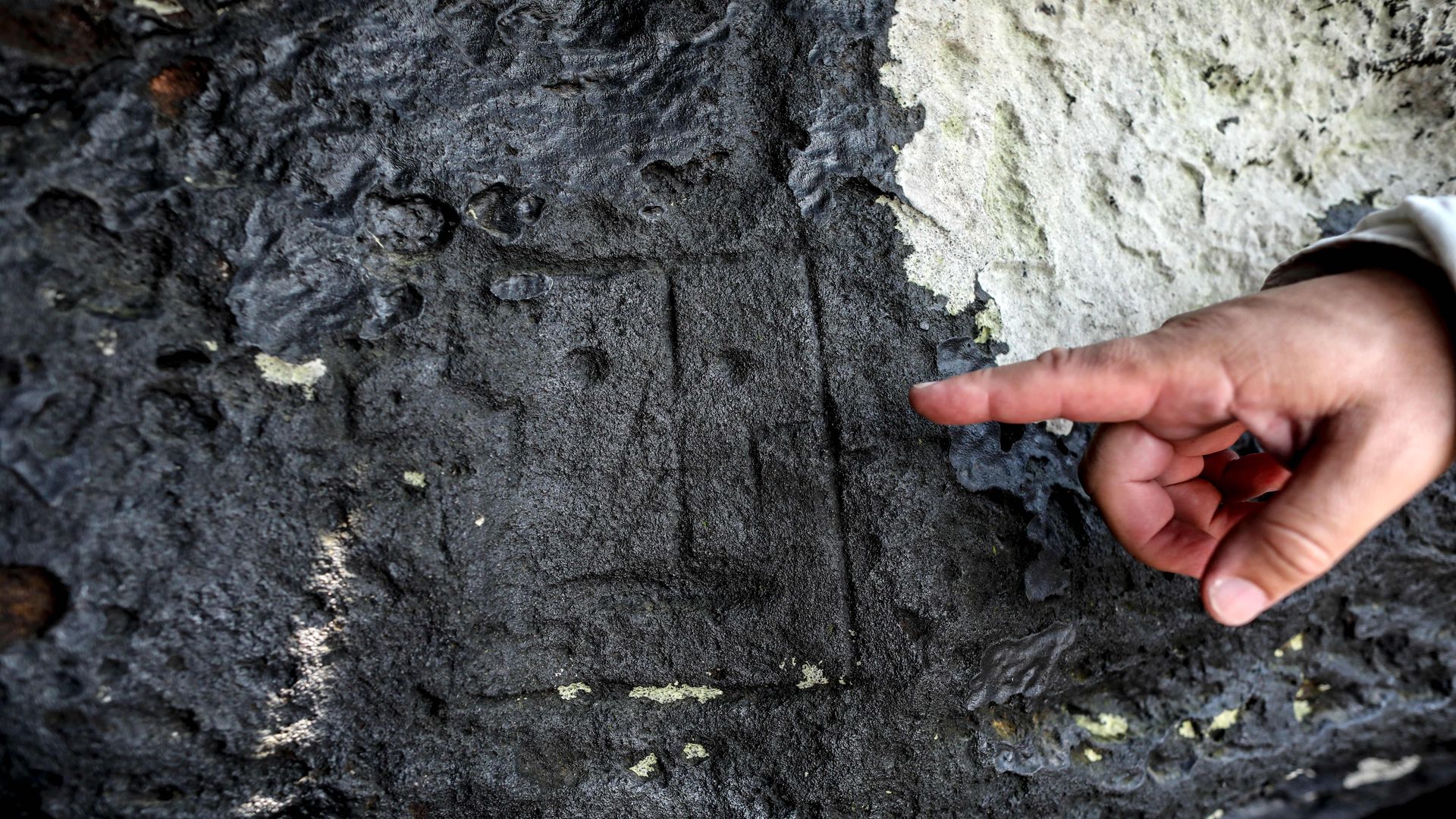
Visible for the first time in years, rock engravings at a Ponta das Lajes archeological site in Manaus, Brazil. Photo: Michael Dantas/AFP via Getty Images
An ongoing, historic drought in Brazil's Amazon region has exposed archeological sites that researchers plan on studying for the first time, Marina writes.
The big picture With rivers at their lowest point in 120 years, at least three new archeological sites have been found in the past few weeks, according to Brazil's National Institute of Historic and Artistic Heritage.
- The sites include centuries-old rock carvings and engravings depicting people and funeral urns.
- The drought has also had an immense impact on marine life, which has been dying off, and on the local economy.
- A previous drought, in 2010, had uncovered engravings at Ponta das Lajes, in Manaus, that subsequently were submerged but are now visible again.
Details: The findings could show archeologists a clearer picture of how populated the area was at different times, the Brazil institute says.
- It could also indicate how groups moved around and adapted as tides changed centuries ago, archeologist Claide de Paula Moraes told Brazilian outlet UOL.
- "Maybe the water levels were generally lower and these rocks, that nowadays are usually submerged, were exposed."
- Another archeologist, Filippo Stampanoni Bassi of the Museum of the Amazon botanical gardens, told UOL that changes in river currents and depth have become much more frequent in modern times, making the area less habitable.
Between the lines: The dry season in Brazil usually ends in October, but it has stretched out because of climate change, deforestation and the El Niño phenomenon.
3. Single Latinas struggle to own homes

Illustration: Allie Carl/Axios
Single Latinas who live alone have among the lowest rates of ownership of any group in the U.S. due to low-wage jobs and a housing market that needs more regulation, experts tell Astrid.
The big picture: Home ownership is seen by many as a pathway to wealth building — and rent in many cities has skyrocketed.
By the numbers: An analysis by the National Women's Law Center (NWLC) released last week shows that nearly 39% of Latinas who are single and live alone owned a home in 2021, compared to close to 62% of non-Hispanic white women in similar circumstances.
- The rate for that year was 37% for single, non-Hispanic Black women who live alone.
- It was 52% for Native women and 52% for Asian American, Native Hawaiian and Pacific Islander women
- Overall, close to 55% of all single women owned a home.
- Slightly more than 57% of non-Hispanic single white men owned a home.
Yes, but: Overall Latino homeownership rates have been steadily increasing and have outpaced other racial/ethnic demographics since the 2008 crash, says Orlando Camargo, communications director for the National Association of Hispanic Real Estate Professionals.
- Despite sky-high interest rates, Latinos in 2022 added 349,000 new homeowner households — one of the largest single-year gains for Latinos in the last 10 years, according to the organization.
- The homeownership rate reached 49.4% for Hispanics in the third quarter of 2023, according to the U.S. Census Bureau.
What they're saying: "Going into the COVID-19 pandemic and the economic recession, we already had a lot of housing insecurity for Black women and Latinas that was just compounded and, unfortunately, their recovery has been far from equitable," Sarah Hassmer, director of housing justice for the NWLC, tells Axios Latino.
- Hassmer adds that poorly regulated lending practices led to banks disproportionately targeting Black women and Latinas with subprime mortgages. Subprime mortgages were part of what led to the 2008 financial crisis and resulted in many people losing their homes to foreclosure.
- Latinas are less likely to have generational wealth or help with down payments, and many work in low-wage jobs, Hassmer adds.
- Down payment assistance programs, particularly for first-time and first-generation homebuyers, would help, as could rent-to-own programs or community land trust models, she says.
4. Stories we're watching
Illustration: Natalie Peeples/Axios
1. Colombian President Gustavo Petro announced he'll travel to the Asia-Pacific Economic Cooperation (APEC) summit in San Francisco this week to seek his country's inclusion in the group.
- The annual summit, hosted this year by President Biden, will be held Thursday and Friday and include face-to-face meetings.
- The APEC has not accepted new members for more than two decades.
2. Ociel Baena, a judge in Mexico who was the first person in the country to be issued a passport with a nonbinary designation, was found dead yesterday in their house.
- Authorities say there was evidence of violence, possibly pointing to a hate crime. Baena was an outspoken LGBTQ+ rights defender.
- Mexico has no official statistics, but a tally from the nonprofit Letra Ese found an average of seven LGBTQ+ individuals were killed each month in 2022.
3. The Ecuadorian Constitutional Court announced that starting next week it will discuss the legalization of euthanasia for cases of severe degenerative illnesses.
- The debate surrounding "right to die" laws has been growing across Latin America in the past two years.
5. 👛 Smile to go: Historic bartering

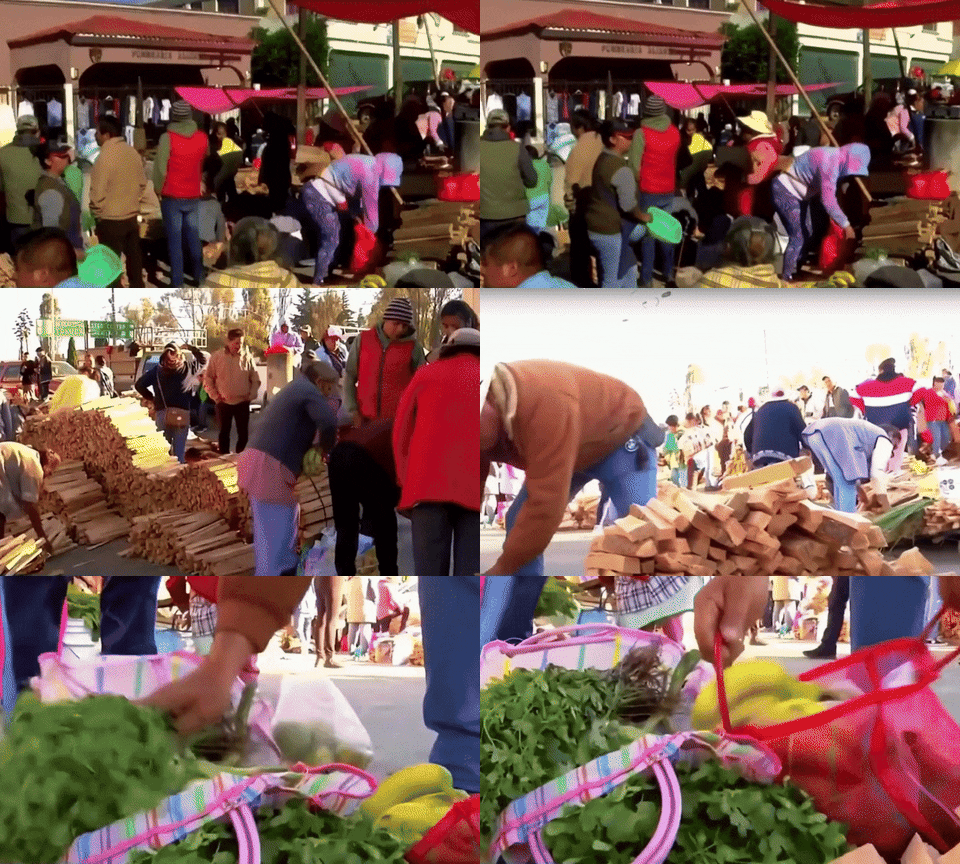
Having money is not the main concern for people in search of basic goods at this special market in the state of Mexico, Marina writes.
Details: The Santiago Tianguistengo street market carries on a pre-Hispanic legacy of barter-only trades.
- People who otherwise would have a hard time affording fresh produce can get it there in exchange for firewood, soap, handwoven clothing and other goods.
- The Tianguistengo open air market has been catalogued by Mexican authorities as one of the oldest ongoing barter sites.
What they're saying: "We bring the bread we didn't sell that day, exchange it for firewood, and use that to fire up the oven for the next day's bread," says Perla González, a baker, to Noticias Telemundo.
🥣 Marina is thankful for pozole as she tries to regain strength from a heavy cold.
💃🏾 Russell is editing photos from his 6-year-old daughter's flamenco performance this weekend.
🎄 Astrid is going to redecorate the Christmas tree when her children go to sleep.
Thank you to Carlos Cunha, Laurin-Whitney Gottbrath and Axios Visuals for their many contributions.
Sign up for Axios Latino

Keep tabs on the stories that most affect the U.S. Latino community on both sides of the border, a collaboration with Noticias Telemundo.