Axios Latino

It's March! Welcome.
💌 Help us spread the word about this newsletter! Sign up here.
🪅 Give a shout out to someone you know who's done something exciting lately, and they may be featured in our weekly pachanga series! Reply to this email.
👀 En español 👀
This newsletter is 1,419 words, a 5.5-minute read.
1 big thing: Abortion rights' new peril in Latin America

Illustration: Shoshana Gordon/Axios
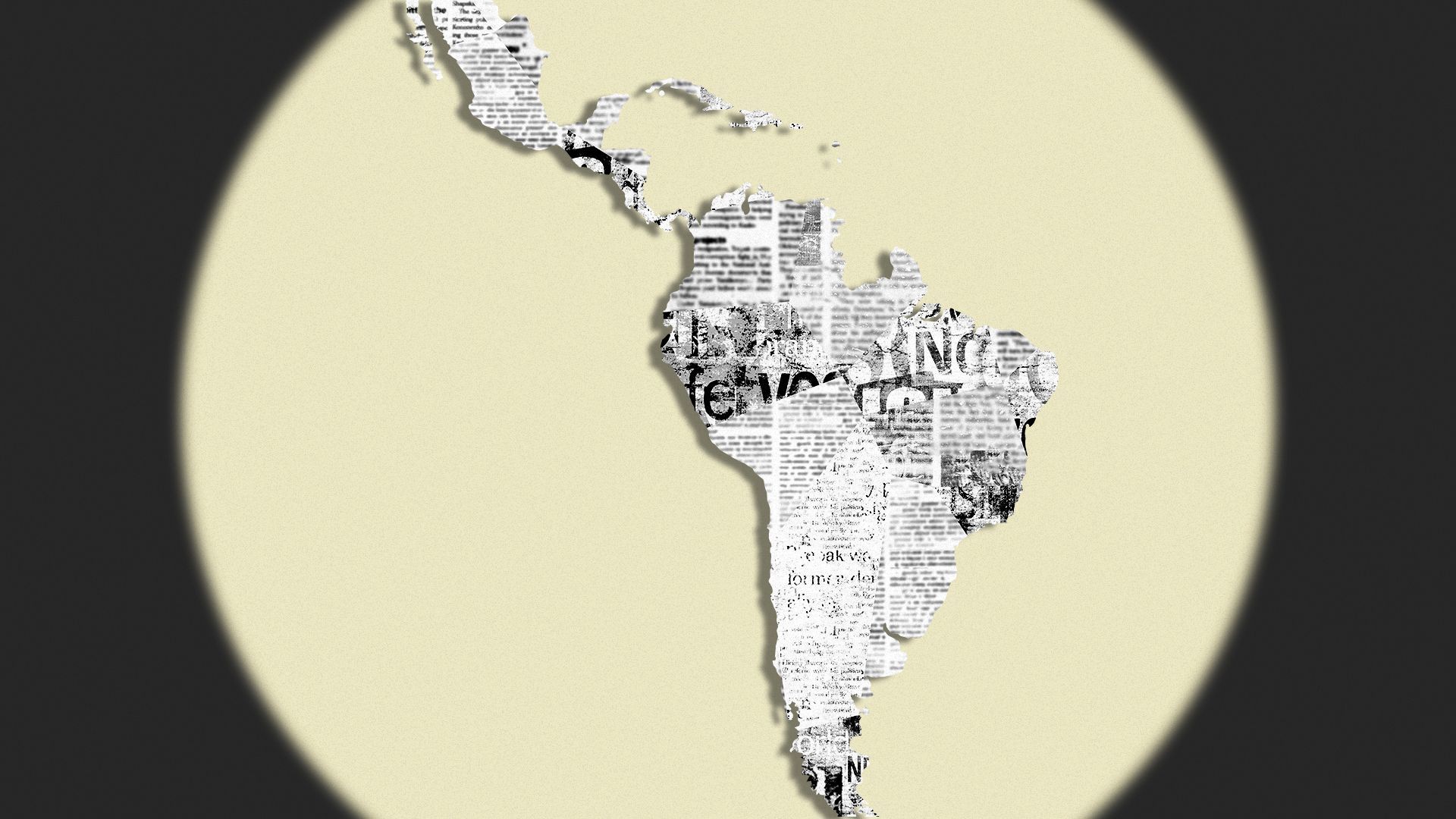
Concerns in Latin America that abortion rights could face setbacks similar to those in the U.S. are adding urgency to the protests planned for International Women's Day this Friday, Marina writes.
Why it matters: Regions of Latin America already are some of the most dangerous in the world for people who wish or need to terminate a pregnancy.
Threat level: Abortion bans can jeopardize the lives of women in trauma situations where continuing the pregnancy puts a woman's life at risk.
- Last month, Adilka Féliz, a senator's legal aide in the Dominican Republic — where there is a full ban on abortion— died from complications after an emergency premature birth procedure. She had an unviable pregnancy but was denied an abortion, her mother says.
The bans also carry legal dangers for people who suffer miscarriages.
- In El Salvador, women have been jailed for allegedly trying to abort a pregnancy when they seek medical attention, though almost all have been freed after a 2021 order from the Inter-American Court of Human Rights.
State of play: Since 2020 Mexico, Colombia and Argentina have decriminalized or legalized voluntary abortion. Brazil is considering decriminalizing abortions in the first 12 weeks of pregnancy.
- Those nations' courts and lawmakers argued prohibitions impinge on individuals' right to autonomy and that bans pushed people to turn to unsafe alternatives.
- When Argentina's Congress legalized abortion until the 14th week of pregnancy, lawmakers cited official statistics showing more than 3,000 women had died from clandestine abortions.
Yes, but: The rights gained in those countries are now in peril, activists say.
- Argentine President Javier Milei's party last month submitted a draft bill to once again criminalize abortion, saying it's an unjustifiable practice. His government also withdrew funds from the Ministry for Women and Gender, which runs programs for domestic-violence victims and offers free menstrual hygiene products.
- Access to a voluntary abortion isn't assured in Mexico and Colombia despite being decriminalized because local or state authorities can impede federally recognized rights.
- Abortion pills are difficult to get in many areas and some state authorities haven't clarified the rules for in-clinic procedures, so providers still fear repercussions, says Georgina Díaz, a Mexican OB/GYN who's campaigned for abortion rights.
Between the lines: Milei and other far right leaders in Latin America have been emboldened in their opposition to abortion rights since the U.S. Supreme Court overturned Roe v. Wade, a recent report from the group Fos Feminista found.
What they're saying: "The United States went backwards and is now navigating an environment of restrictions that is generally new to them," Paula Ávila Guillén, director of the Women's Equality Center, said during a regional roundtable last month.
- "While in Latin America, where for years we navigated restrictions, now we're figuring out how to protect some of our victories while we push for policy progress in countries that still have total bans," she added.
2. Tech's Latino gap
Illustration: Aïda Amer/Axios
The staggering shortage of Latinos working in tech is a problem that a new study found needs to be addressed holistically and as early as grade school, Astrid writes.
Why it matters: Tech drives the U.S. economy and is replete with high-paying jobs, but Latinos have been systematically shut out. They account for only 5% of executive leadership positions at tech companies and 6% of venture capitalists, according to a Kapor Foundation report released today.
- But it's not just about having diverse voices — innovation itself suffers when it's homogeneous, says Mariela Salas, executive director of SomosVC, which works to increase the number of Latinos in venture capital.
Context: As early as grade school, Latino students have less access to the foundations needed to succeed in tech.
- 78% of Latino students had access to computer sciences courses, compared to 82% of white students and 89% of Asian students, per the report.
- Despite accounting for 29% of the U.S. high school population, Latino students make up only 21% of students in foundational computer science courses and 20% of AP-level courses.
What they're saying: "We want to ring out the alarm," says Lili Gangas, chief technology community officer at Kapor Center, an organization trying to make the tech sector more inclusive. "There's no way that the current strategies, the current investment approaches that we are collaborating on right now is enough."
- Gangas says she's concerned about the percentage of K-12 students who don't have access to computer science courses.
- "Especially as we think about where AI is going, we need that type of critical thinking super early because that's where those types of skills are," Gangas says.
- One key is for parents and educators to understand that many jobs in tech pay well and help build wealth. Another is for leaders at all levels, from policy makers to educators, to work collaboratively on building the pipeline for Latinos in tech, she adds.
3. Writing about politics by writing about books

Photo: Courtesy of Simon & Schuster
One of the few Latino journalists to win the Pulitzer Prize has released a new collection of book reviews, criticisms and assessments of contemporary American politics.
Why it matters: "The Washington Book: How to Read Politics and Politicians" by the Peruvian-born Carlos Lozada is a deep dive into American politics with a writer whose work echoes that of 20th-century literary critic Edmund Wilson, Russell writes.
- The book is composed of pieces from Lozada's days as a Washington Post book critic and later as an opinion columnist for The New York Times, where he still works.
Zoom in: Lozada tells Axios his career as a book critic took off right before Donald Trump ran for president for the first time, and when longtime Washington Post book critic Jonathan Yardley stepped down.
- He says he couldn't avoid the political shifts happening in the nation. He covered politics using critiques of nonfiction books.
- "So I just ended up deciding to take that as my beat, that I would try to understand what was going on in American political life ... through books."
4. Pic du jour
Photo: Brad Smith/ISI Photos/Getty Images
Jacqueline Ovalle of Mexico celebrates scoring during a 2024 CONCACAF Women's Gold Cup quarterfinal match Sunday against Paraguay at BMO Stadium in Los Angeles. Mexico won 3-2 and will face Brazil in the semifinals in San Diego on Wednesday.
5. Stories we're watching
Illustration: Natalie Peeples/Axios
1. Kari Lake and her GOP allies are planning an advertising and messaging offensive against Rep. Ruben Gallego (D-Ariz.) on crime and the southern border in the crucial Arizona Senate race, Axios' Stephen Neukam has learned.
- Democrats have blasted Republicans for rejecting a bipartisan border deal last month that would have tightened restrictions on asylum in the U.S.
2. Ecuadorian judges and local politicians are among 12 people arrested yesterday in an investigation into illegal links with drug traffickers.
- The detainees are accused of accepting bribes to hand out lenient sentences to criminals, to let them bring luxury items into jail cells or to run criminal operations from prison. The accused haven't responded to the charges.
3. A Venezuelan dissident and former military officer was found dead this past weekend in Chile, where he'd reportedly been living as a political refugee.
- Ronald Ojeda Moreno, 32, was kidnapped from a residence in Santiago after Venezuela accused him of allegedly participating in an unproven assassination attempt against President Nicolás Maduro.
- Chilean authorities said yesterday an unidentified Venezuelan has been charged in the murder.
6. Smile to go: Trees for glaciers

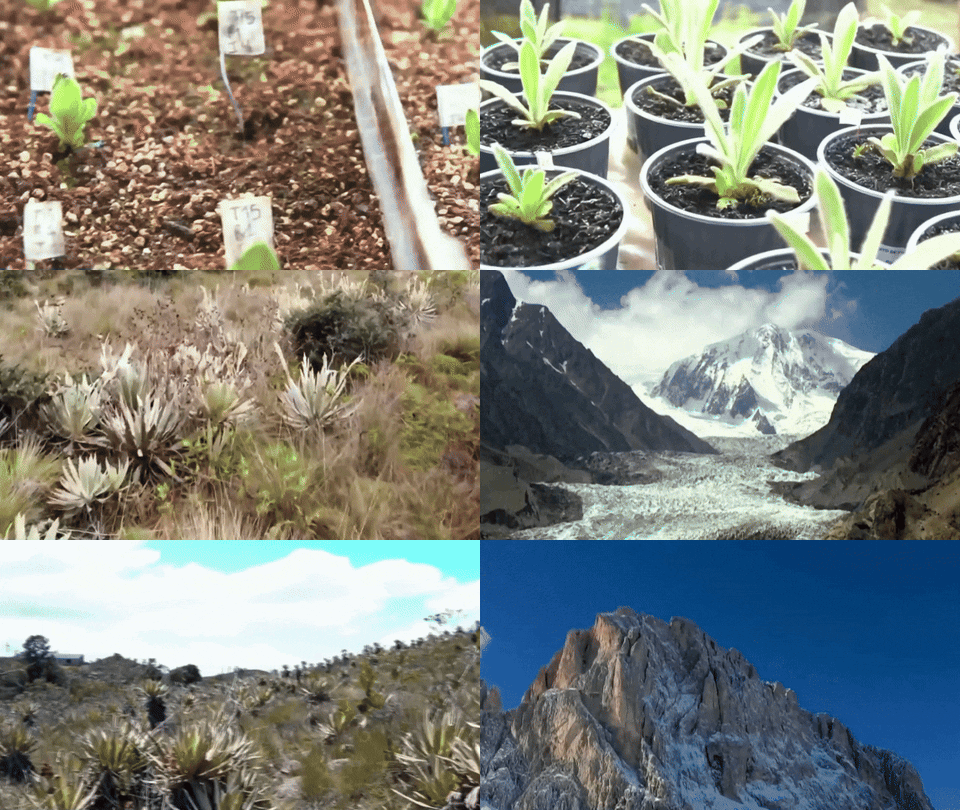
A project to preserve endangered glaciers and snowy mountains in Colombia involves planting specific plants and trees, Marina writes.
Why it matters: Colombia loses an estimated 7.8% of its glacial areas every year, that hurts ecosystems and many communities that depend on glacial runoff for running water.
State of play: The group Cumbres Blancas, or White Summit, was formed five years ago as a cross-regional collaboration to reduce the worst impacts of climate change on snowy areas.
- Led by Marcela Fernández, Cumbres Blancas plants frailejones, native shrubs that form páramos, which are high altitude moorlands.
- Páramos trap fog and drizzle, then release water into the lands, helping to to maintain humidity at high elevations, which favors snowfall.
- Cumbres Blancas also operates in Ecuador, Peru and Mexico.
🕵🏻♂️ Marina is finally catching up on the third season of "Slow Horses."
📖 Russell is reading books on Christian nationalism.
🏰 Astrid is at Disneyland!
Thanks to Carlos Cunha and Axios Visuals for their contributions!
Sign up for Axios Latino

Keep tabs on the stories that most affect the U.S. Latino community on both sides of the border, a collaboration with Noticias Telemundo.