Axios Latino

Hey hey hey!
âïžThanks for joining us today. We hope you like us as much as we like you!
đ Puede leer este boletĂn en español aquĂ.
This newsletter, edited by Astrid GalvĂĄn and Laurin-Whitney Gottbrath, is 1,523 words, a 5.5-minute read.
1 big thing: South America's scalding winter
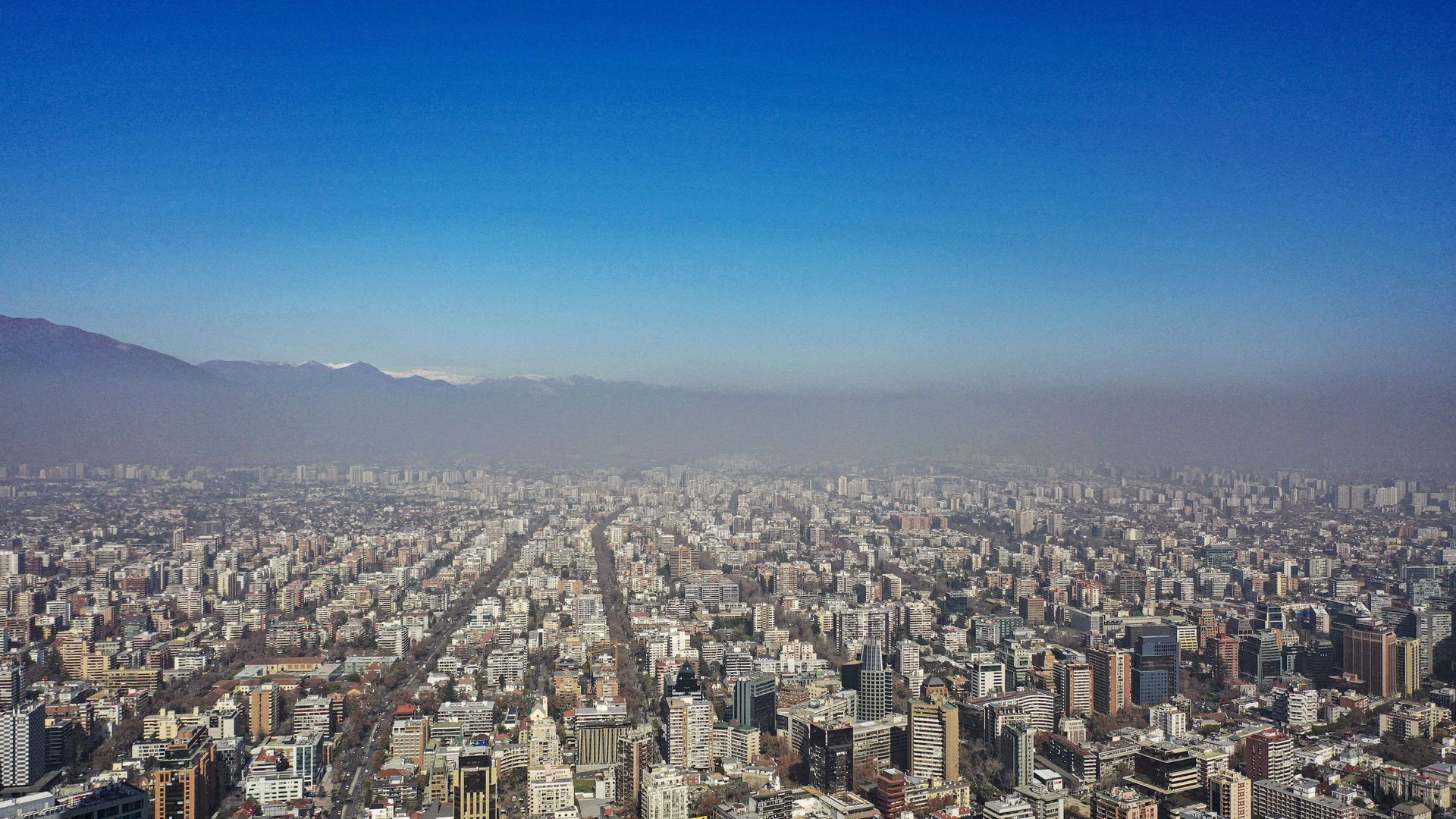
Smog in Santiago, Chile, during high temperatures in the middle of South America's winter. Photo: MartĂn Bernetti/AFP via Getty Images
This winter in South America has been one of the hottest on record, intensifying crises created over the last year by severe droughts, wildfires and floods in some regions, Marina writes.
Why it matters: Experts say the extreme weather is already threatening critical biodiversity and the lives of millions in a region where many reside in slums or informal housing with little infrastructure.
Threat level: Much of the northern hemisphere has experienced deadly heat waves and weather disasters this summer. July was the hottest month on record.
- In South America, the "hot" winter effect stems both from the El Niño phenomenon that warms ocean temperatures and from man-made global warming, says Alejandro Max Pastén, head of hydrological prediction at Paraguay's Weather Service.
- "What's being done so far to stem this is either not yet panning out or simply not enough, and the effects are increasingly plain to see," adds Pastén, who also leads the atmospheric sciences department at Paraguay's Universidad Nacional de Asunción.
Extreme weather has caused significant reductions in crops for local consumption and for exports, which contribute to many of South America's economies. For example, drought has slashed Argentina's soybean yields to the lowest in 24 years, threatening its status as world's largest exporter of soybean oil and meal.
- Increased and irregular glacier melting has put lives and livelihoods in danger since many people depend on regular meltoff for drinking water and agriculture. It is also used to supply hydroelectric power generation, which could be affected as glacier water becomes more scarce.
What's happening: Heat waves have hit several South American nations since July, the second month of winter. The average temperature in Buenos Aires in early August is 59°F â this year it's been 86°. Temperatures in Chile hit 100° this month.
- Extreme heat has worsened drought conditions and also made the region more prone to dangerous landslides when it rains.
- Parts of Uruguay have been under a "water emergency" since June because of drought, and that same month Bolivia had a mix of drought, heavy rains and frost.
What they're saying: "So many ecosystems and human systems in our region are endangered ⊠plus these climate threats are felt more acutely because of how socially vulnerable many in Latin America are," says Yasna Palmeiro Silva, a researcher on the public health effects of climate change at the Pontifical Catholic University of Chile and at The Lancet's Countdown project.
2. Heat's toll on farmworkers' mental health
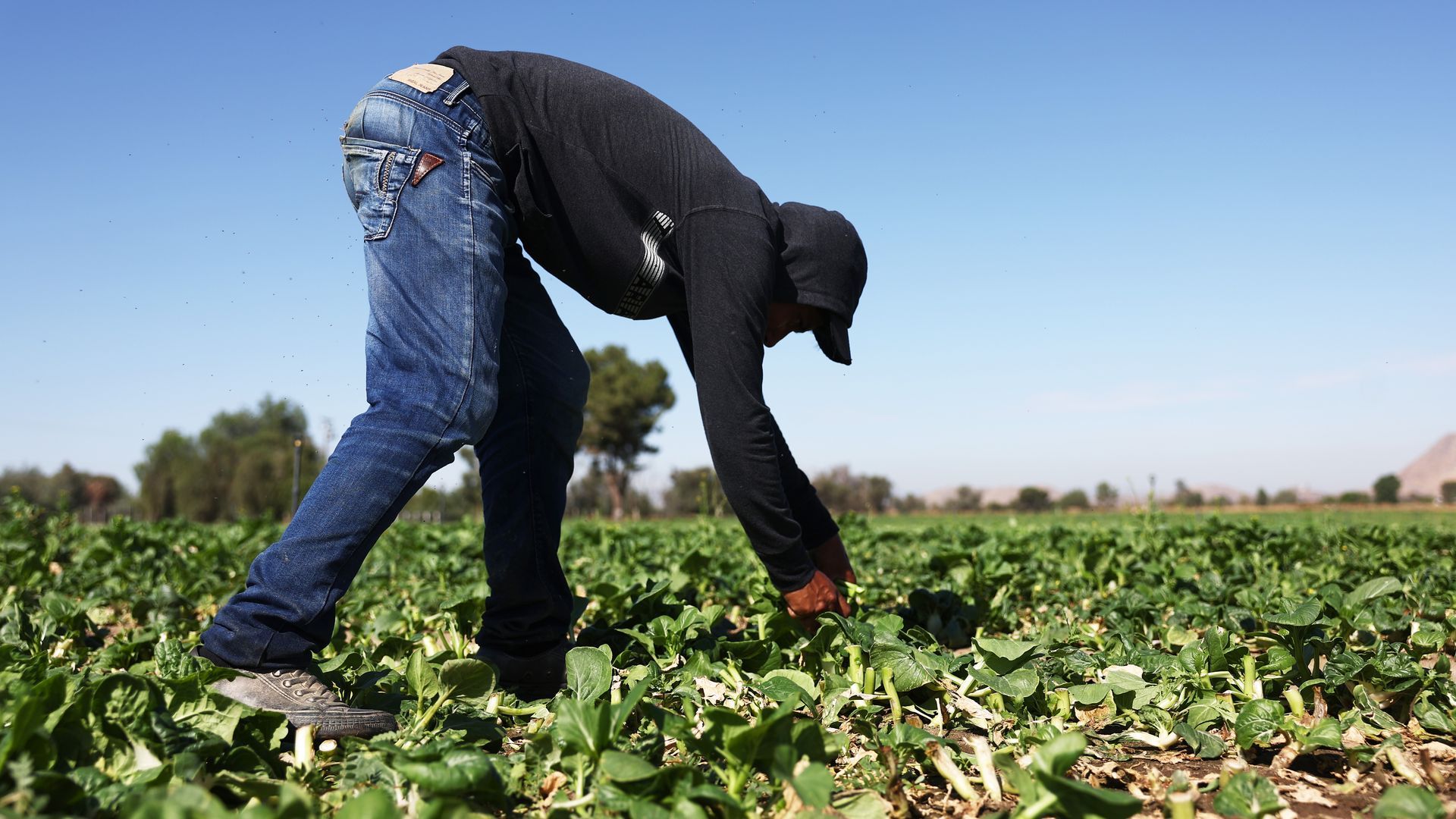
A farmworker wears protective layers in the summer heat near Hemet, Calif., on Aug. 3. Photo: Mario Tama/Getty Images
Workers' advocates are urging local, state and federal governments to implement safety standards to protect the physical and mental well-being of Latinos who work under unrelenting heat conditions, Marina writes.
Driving the news: Farmworkers â the majority of whom in the U.S. are Latino â and others who work outside are especially vulnerable to the heat waves gripping parts of the country. Farmworkers in particular are more likely to die from heat stress than other outdoor workers, studies have found.
- Since 2011, there have been 436 work-related deaths caused by environmental heat exposure, per the Bureau of Labor Statistics. Last month, EfraĂn LĂłpez GarcĂa, who was 29 and picked fruit in Florida, died after what his family described as severe heat illness symptoms.
State of play: There are no federal rules that require employers to give outdoor workers breaks or time in the shade and to hydrate. Of the few states that offer protections for outdoor workers, California, Oregon and Washington have the most, including required heat breaks.
- Without protections, people doing outdoor work say they fear being penalized â and sometimes are â when they try to get water or take a short break in the shade.
Advocates say that protections should go beyond water and shade breaks.
- "We need to draw the connection between not just heat and physical wellbeing, but other consequences ⊠because if someone is working in sweltering weather and they are in need of water and need a break that has a toll on the psyche," says Monica Ramirez, founder and president of Justice for Migrant Women.
- Ramirez's nonprofit ran a pilot mental health program for farmworkers in California and Florida over the last two years. Migrant workers received group therapy and regular check-ins about workplace stressors, including those posed by the environment.
- Ramirez says the farmworkers who benefitted said the program was life-changing. That feedback has made it especially clear to Ramirez that the much-needed public policies for heat safety should have a mental health component.
The big picture: Extended sun and heat exposure is associated with memory issues, problems sleeping and increased suicidal behavior.
- Hector Colon-Rivera, a psychiatrist, says symptoms flare up because the body tries to adapt to expend less energy â both physically and emotionally.
3. Woman tied to Guillén murder sentenced
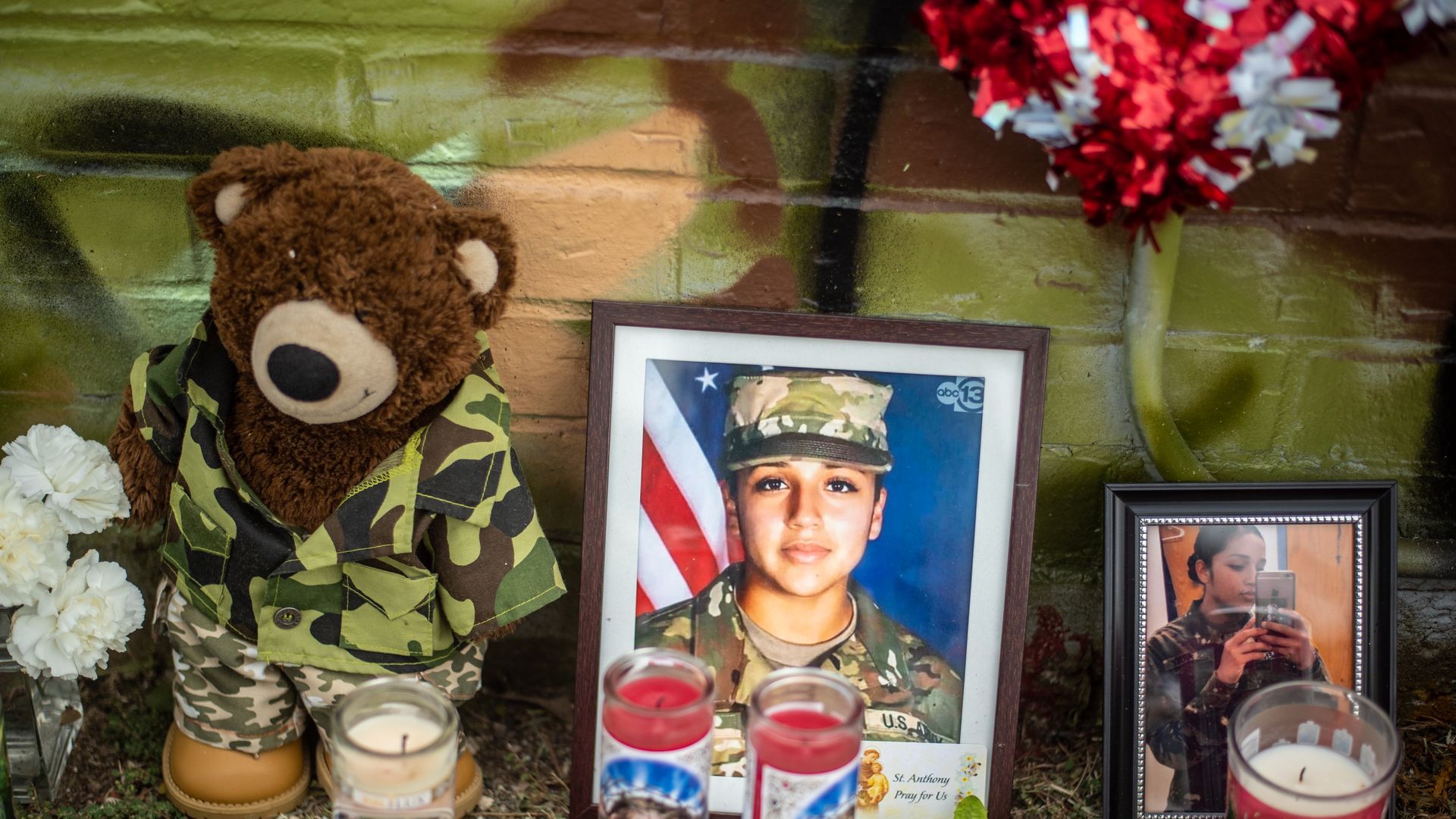
Tributes in Austin, Texas, in 2020 to U.S. Army Private First Class Vanessa Guillén, who was murdered that year. Photo: Sergio Flores/Getty Images
A Texas woman accused of helping dismember and dispose of the body of U.S. Army soldier Vanessa Guillén in 2020 was sentenced to 30 years in prison yesterday, Axios' Rebecca Falconer writes.
Driving the news: Cecily Aguilar, 25, pleaded guilty in November to one count of accessory to murder after the fact and three of false statement or representation in the death of Spc. GuillĂ©n â who was sexually harassed and killed on the Fort Hood Texas military base, now known as Fort Cavazos.
The big picture: Prosecutors said that, from April 22 to July 1, 2020, Aguilar helped Army specialist Aaron Robinson in "corruptly altering, destroying, mutilating and concealing evidence," in order to prevent her boyfriend "from being charged with and prosecuted for any crime."
- Investigators uncovered Guillén's remains on June 30, 2020, over a month after the killing. Robinson was placed under guard but fled and died by suicide.
What they're saying: "No justice will be enough to make up for what happened to my sister ... [Aguilar] had the choice of being complicit or not, and she elected to do this, so 30 years for me is not enough," Mayra Guillén told Noticias Telemundo.
4. Latina named president of CBS News
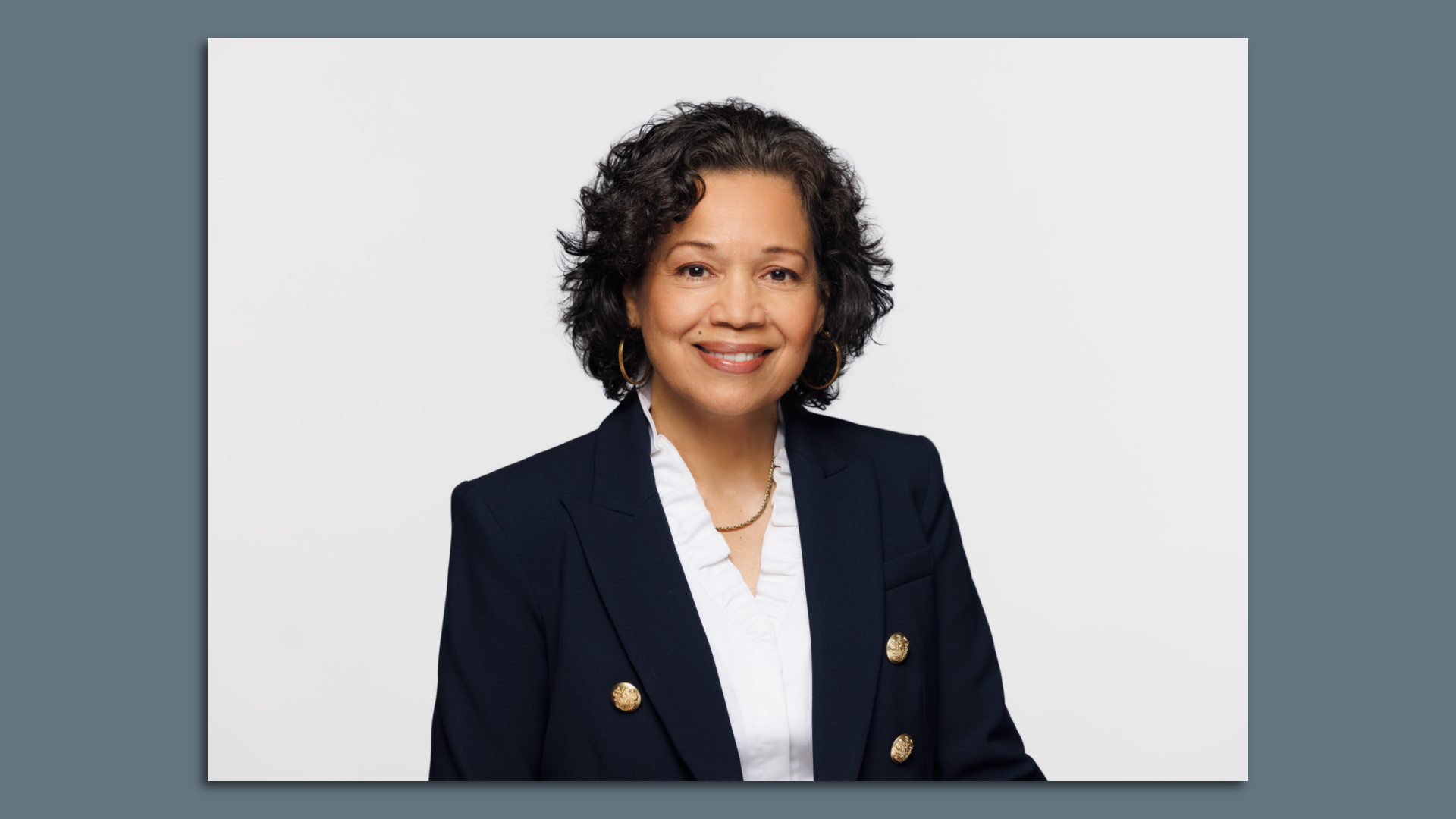
Ingrid Ciprian-Matthews. Photo: Courtesy of CBS News.
Longtime journalist and news executive Ingrid Ciprian-Matthews has been named president of CBS News, the first Latina selected for that position, Astrid writes.
Driving the news: Ciprian-Matthews, who was born in the Dominican Republic, has been with CBS News for 30 years and most recently served as executive vice president for newsgathering, according to a news release from the company. Her promotion was announced yesterday.
- Among her responsibilities, Ciprian-Matthews will oversee all CBS News programs, bureaus, newsgathering and streaming, as well as digital editorial.
Why it matters: Latinos are underrepresented in newsrooms and especially in executive positions, making Ciprian-Matthews' appointment notable.
What they're saying: "Ingrid's editorial expertise, her depth of knowledge and sensitivity to the nuance of the subjects we cover around the globe, and her impeccable news judgment make her an incredible leader," Wendy McMahon, president and CEO of CBS News and Stations and CBS Media Ventures, said in a statement.
- Ciprian-Matthews said that the "history and DNA of this organization will inform our vision for the future."
- "It is a true privilege to make sure we continue our mission long into the future â with integrity in our reporting and a firm commitment to the values, the culture and the wonderful people of CBS News," she added.
Yvette Cabrera, president of the National Association of Hispanic Journalists, called the promotion a "momentous step forward."
- "With more Latinas at the top, we know we're that much closer to achieving newsroom diversity at all levels," Cabrera tweeted.
5. Stories we're watching
Illustration: Natalie Peeples/Axios
1. Javier Milei, a libertarian candidate who's proposed eliminating the public health system and the Central Bank, got more than 30% of votes in Argentina's primary elections on Sunday, making him a frontrunner for the Oct. 22 general election. Milei is in the La Libertad Avanza party.
- Patricia Bullrich of the center-right opposition United for Change got 28%, and Sergio Massa from the ruling Peronist coalition was the third most backed candidate with 27% of the vote.
2. The party of slain Ecuadorian presidential candidate Fernando Villavicencio announced Sunday that Christian Zurita will replace the journalist-turned-candidate in this Sunday's first-round snap elections.
- Zurita is also an investigative journalist.
- Villavicencio's killing has been attributed to a gang.
6. âđŒ Smile to go: Record-setting artistry

Guatemalan artist José Molina Salazar earned a Guinness record this month by drawing continuously for 80 hours, Marina writes.
Details: The artist made 30 pieces during the endeavor, which he live-streamed from a gallery where passersby cheered him on.
- "Every day before, I would wake up thinking if I was wasting my time with this, if I was on the wrong path ⊠but getting this is among the things that make me feel like I'm doing what I should be," Salazar told local media in Quetzaltenango, Guatemala.
- The record was confirmed by local representatives of the Guinness World Records. The previous record holder was caricature artist Hariom Kumar Singh, who drew for 77 straight hours.
Thanks to Carlos Cunha for copy edits. Did someone forward you this newsletter, and do you agree that it's awesome? Sign up here.
Sign up for Axios Latino

Keep tabs on the stories that most affect the U.S. Latino community on both sides of the border, a collaboration with Noticias Telemundo.