Axios Future of Energy

August 04, 2026


🔍 Axios' Rebecca Falconer opens today's edition with a quick but informative tour of U.S. climate adaptation, then we move on to...
- The latest on BP's transformation
- Lots of policy and tech news, and some spicy comments from Capitol Hill, all in 1,262 words, 5 minutes.
🙏 Thanks to Mackenzie Weinger, David Nather and Chris Speckhard for editing and to our brilliant Axios visuals team.
🎹 Stevie Wonder released the stunning "Innervisions" this week in 1973, and it provides today's intro tune...
1 big thing: How America is adapting to climate extremes

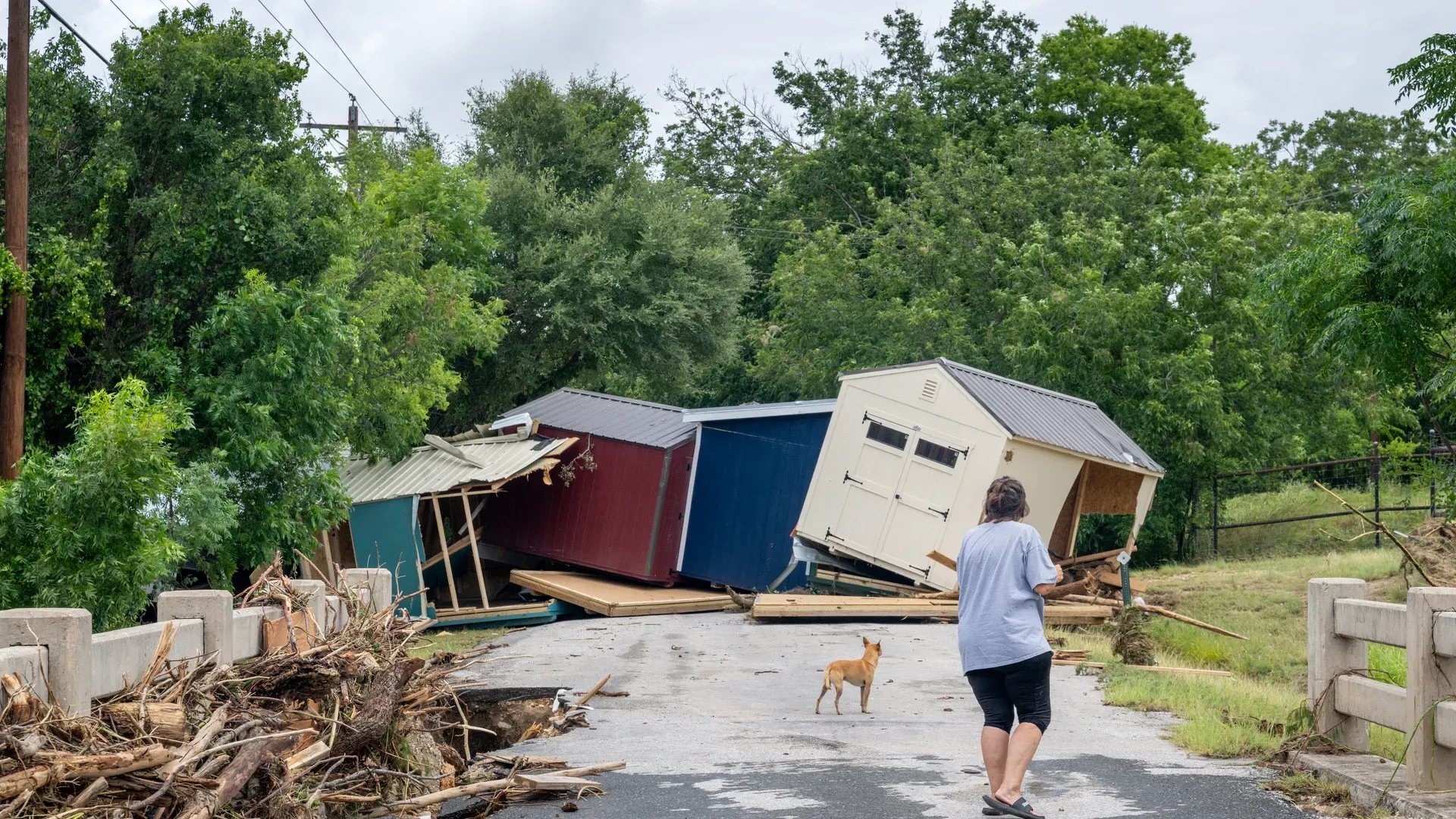
Climate adaptation is increasingly moving from planning to real-world action as heat waves, droughts, wildfires, floods and hurricanes test communities across the U.S.
Why it matters: Even if greenhouse gas emissions decline, many communities are already facing more frequent or intense climate extremes, prompting officials to invest in infrastructure designed to reduce future damage.
Driving the news: After catastrophic flooding killed more than 130 people in Texas Hill Country last year, newly installed sirens were credited with warning residents during July's floods, which killed three people but avoided a repeat of the 2025 disaster.
- It's an example of Republican-led states adapting after disaster, said Alice Hill, senior fellow for energy and the environment at the Council on Foreign Relations.
- Texas expanded flood-warning systems and floodplain buyouts after the Hill Country floods, while Houston strengthened building codes after Hurricane Harvey.
The big picture: Rather than rebuilding after every disaster, many states are redesigning infrastructure for the climate threats they face most — from hurricanes in the Southeast to droughts and wildfires in the West.
- Mikhail Chester, director of the Metis Center for Infrastructure and Sustainable Engineering at Arizona State University, says insurers are helping shape adaptation by pricing climate risk into infrastructure decisions.
- Hill says insurers have largely focused on limiting their exposure, with only a handful of programs rewarding resilience with lower premiums.
State of play: Since Hurricane Ian, Florida has invested in backup power, stronger building codes and microgrids — small-scale power grids that supply electricity to local areas and can operate independently when the main electric grid fails.
- Louisiana utilities have hardened substations and strengthened the electric grid after repeated hurricanes.
- California has expanded wildfire-resistant building standards, underground power lines and drought measures such as water recycling and groundwater recharge.
- Los Angeles has added cool roofs and urban forestry, while Phoenix has become a national leader in cooling centers and other heat- and drought-adaptation measures.
Zoom in: Some communities are moving ahead despite federal funding constraints and the Trump administration's push to scrub references to climate change from government websites.
- One example is Babcock Ranch, Florida, where a developer buried power lines, improved storm drainage, and built more wind-resistant homes. The community has since weathered four hurricanes with little damage, Hill says.
- "We're seeing lots of exciting developments," Hill says. But she warns that "most of our infrastructure is not built for what is coming."
Zoom out: Professional engineering organizations are publishing climate-adaptation standards that states and local governments can adopt.
The bottom line: Communities are showing climate adaptation can reduce damage and save lives. The bigger challenge is preparing for the next disaster — not simply rebuilding after the last one.
2. 👋 Sign of the times: BP to offload biogas unit

BP said this morning that it's planning to sell Archaea, which captures and sells gas from landfills and dairy farms, just four years after buying it for $4.1 billion.
Why it matters: It's a major move in BP's pivot back to its core oil and gas business, and a streamlining of operations, to boost financial performance that has lagged rivals.
- Archaea is the largest producer of renewable natural gas in the U.S., according to BP.
- But the company has written down Archaea's value a lot since the acquisition, Morningstar notes.
Zoom out: The announcement came in BP's second-quarter earnings rollout, where it became the latest oil major to report a profit surge amid the Iran crisis that has boosted commodity prices.
- BP reported $5.7 billion in Q2 profit, which is $2.5B above the prior three months.
Catch up quick: New CEO Meg O'Neill is accelerating BP's turn away from its climate transition plan launched in 2020, and more broadly looking to sharpen its focus.
- That extends well beyond its retreat from renewables. Just last week, for instance, BP said it's putting its North Sea oil and gas assets up for sale after operating there for over a half-century.
What's next: This morning, O'Neill laid out five priorities to deliver a "step change" in performance, including more simplification of BP's portfolio and investing with "greater discipline."
3. 🏃 Catch up quick on policy: SCOTUS, Arctic drilling and more

⚖️ The recent National Academies report on advancements in "extreme event attribution" is quickly finding its way into litigation.
- Why it matters: I have no idea whether it might sway any SCOTUS justices. But it shows that the report — which describes progress linking specific extreme weather events to climate change — won't just collect dust.
- The latest: In a new amicus brief, NRDC repeatedly cites the report in urging the Supreme Court not to thwart state-law cases against oil companies for climate damages.
🛢️ The Interior Department is revising Obama-era rules on oil spill prevention and containment for companies that may seek to drill off Alaska's Arctic coast.
- Why it matters: It's part of a wider Trump 2.0 effort to enable development in Arctic waters, but the level of industry interest remains highly uncertain.
- State of play: The proposal text wasn't immediately available. But Interior said it would ease "regulatory burdens" with "targeted" revisions around blowout prevention equipment and more.
⏸️ Texas Gov. Greg Abbott (R) yesterday halted approvals for new data centers until the state can audit the ones looking to connect to Texas' electric grid. Full story.
🗳️ Sen. Martin Heinrich (D-N.M.) is seeking new requirements for data center developers to fund grid upgrades needed for the power-hungry facilities.
- Why it matters: He's very likely to chair the energy committee if Democrats regain Senate control, so his bill lays down a marker.
- The big picture: It would put "teeth" into what are now looser commitments, he said in a statement.
⛏️ Via Reuters, President Trump is slated to attend a roundtable on Friday with top mining execs hosted by the U.S. State Department, and E&E News reports it's expected to include funding and workforce announcements.
4. 👟 Catch up quick on finance: Nuclear, mining, pipelines

⚛️ Valar Atomics closed a $1 billion Series B round led by VC heavyweight Sequoia Capital, and is bringing Sequoia partner Shaun Maguire onto its board.
- Why it matters: Small and micro-reactor startups are bringing in pretty big amounts of money lately as they inch closer to commercial deployment.
- State of play: Valar is among the startups in an Energy Department program to test advanced reactor designs. It recently passed a "criticality" demonstration to show capacity for stable operations — a benchmark on the path to commercial use.
⛏️ Mining startup Mariana Minerals announced a $310 million Series B round led by Khosla Ventures.
- Catch up quick: The company leans heavily into autonomy, billing itself a "software-first" miner and refiner. CEO and founder Turner Caldwell is a Tesla minerals vet.
🤝 Gas pipeline and infrastructure giant Williams is snagging privately held Momentum Midstream in a $5.5 billion deal.
- Why it matters: It expands Williams' access to the growing Gulf Coast LNG industry.
5. 💬 Quote of the day: "Bulls&%t" edition
"You need to recognize that we are in a transition, and this bulls&%t of 'it's got to be green' and 'drill baby drill' is the problem."— Outgoing GOP Sen. Thom Tillis (N.C.) on the latest Critical Capital podcast
Tillis rips "devastating" White House attacks on renewables, but says "both parties are responsible for where we are" in energy politics. The whole interview is candid stuff.
📫 Did a friend send you this newsletter? Welcome, please sign up.
Sign up for Axios Future of Energy