How the deadly Fourth of July floods unfolded in Central Texas


Add Axios as your preferred source to
see more of our stories on Google.
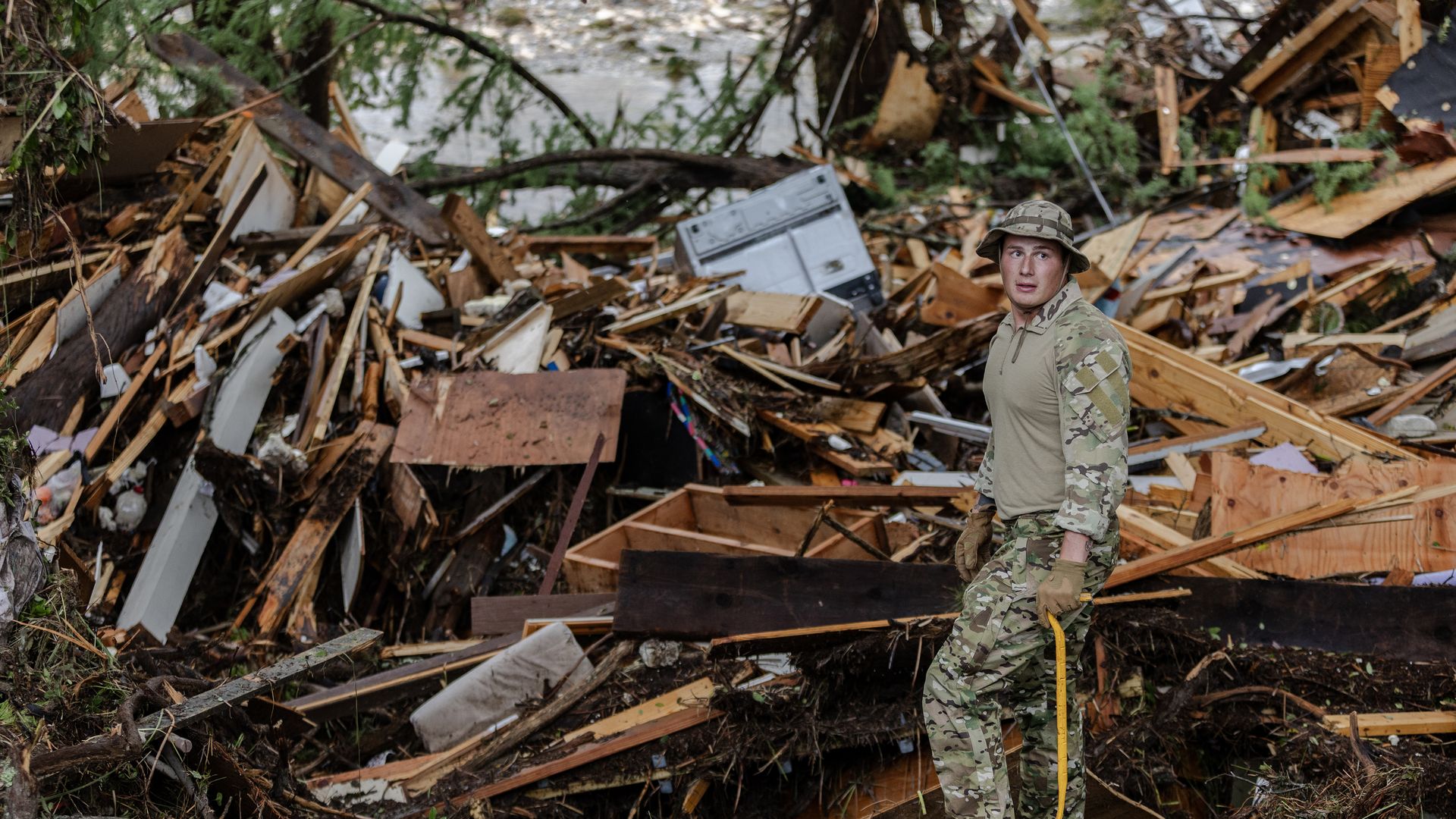
Search and rescue workers dig through debris on Sunday looking for any survivors or remains of people swept up in the flash flooding in Hunt, Texas. Photo: Jim Vondruska/Getty Images
Forecasting models that failed to predict the severity of rainfall, a lack of an adequate warning system and bad timing in part led to the disaster that left at least dozens dead and more missing in Kerr County, Texas.
The big picture: Meteorology and climate experts tell Axios that storms like the one that surged the Guadalupe River more than 30 feet in a short time are likely to happen again, partially due to climate change.
Catch up quick: As of Sunday afternoon, 11 girls and one counselor remained missing from Camp Mystic, a private Christian camp.
- An unknown number of people in Kerr County and surrounding areas are still unaccounted for. The regional death toll has climbed to 70.
Zoom in: Bob Fogarty, a meteorologist with the National Weather Service's Austin/San Antonio office, tells Axios that while forecasters anticipated the storm would stall, models struggled to pinpoint where and when the heaviest rain would fall.
- A flood watch was issued Thursday afternoon, and the first warning for the area came just after 1am Friday — by then, the storm was already dumping far more rain than models had projected.
Zoom out: The storm hit as the Trump administration has pushed some of the National Weather Service's most veteran staffers out, including a local warning coordination meteorologist with 32 years of experience who took a buyout in April.
In response to questions about whether staffing levels impacted forecasting the storm, NWS spokesperson Erica Grow Cei says the agency issued flash flood warnings in neighboring county Bandera the night before the storm and in Kerr the early morning of, "giving preliminary lead times of more than three hours before warning criteria were met."
- NWS "is heartbroken by the tragic loss of life in Kerr County," Grow Cei adds.
Between the lines: The region struck hardest on Friday is colloquially known as "flash flood alley" because of its topography, including hills that channel rather than absorb water.
- "This was made horribly worse by the timing being in the middle of the night when the fewest number of people would receive warnings," Houston-based meteorologist Matt Lanza tells Axios via email.
- "While the warnings may have been meteorologically sound and adequate, it's clear that they were not received by people with enough time to react," Lanza adds.
What they're saying: Climate scientists tell Axios it's too early to know whether climate change directly impacted the Fourth of July flooding. But in general, climate change "can and is shifting those probabilities — sometimes bringing us floods that are more severe and more frequent than in the past," says Nicholas Pinter, a professor and associate director of Watershed Sciences at the University of California Davis.
- "This is a challenge because it makes predicting and mitigating flood risk a moving target," Pinter tells Axios via email.
Andrew Dessler, director of the Texas Center for Extreme Weather at Texas A&M University and a professor of atmospheric sciences, says the floods are "exactly what the future is going to hold," adding that Kerr County was not prepared and local governments should be ready for "more, bigger, extreme events."
- In part that means having large scale alert systems, which Kerr County doesn't have.
- Dessler says that while local leaders may not have seen that type of flooding and disaster before "you're going to see it in the future. You're going to see it increasingly in the future. So be prepared."
