Feds "cannot delay action" on Colorado River

Add Axios as your preferred source to
see more of our stories on Google.
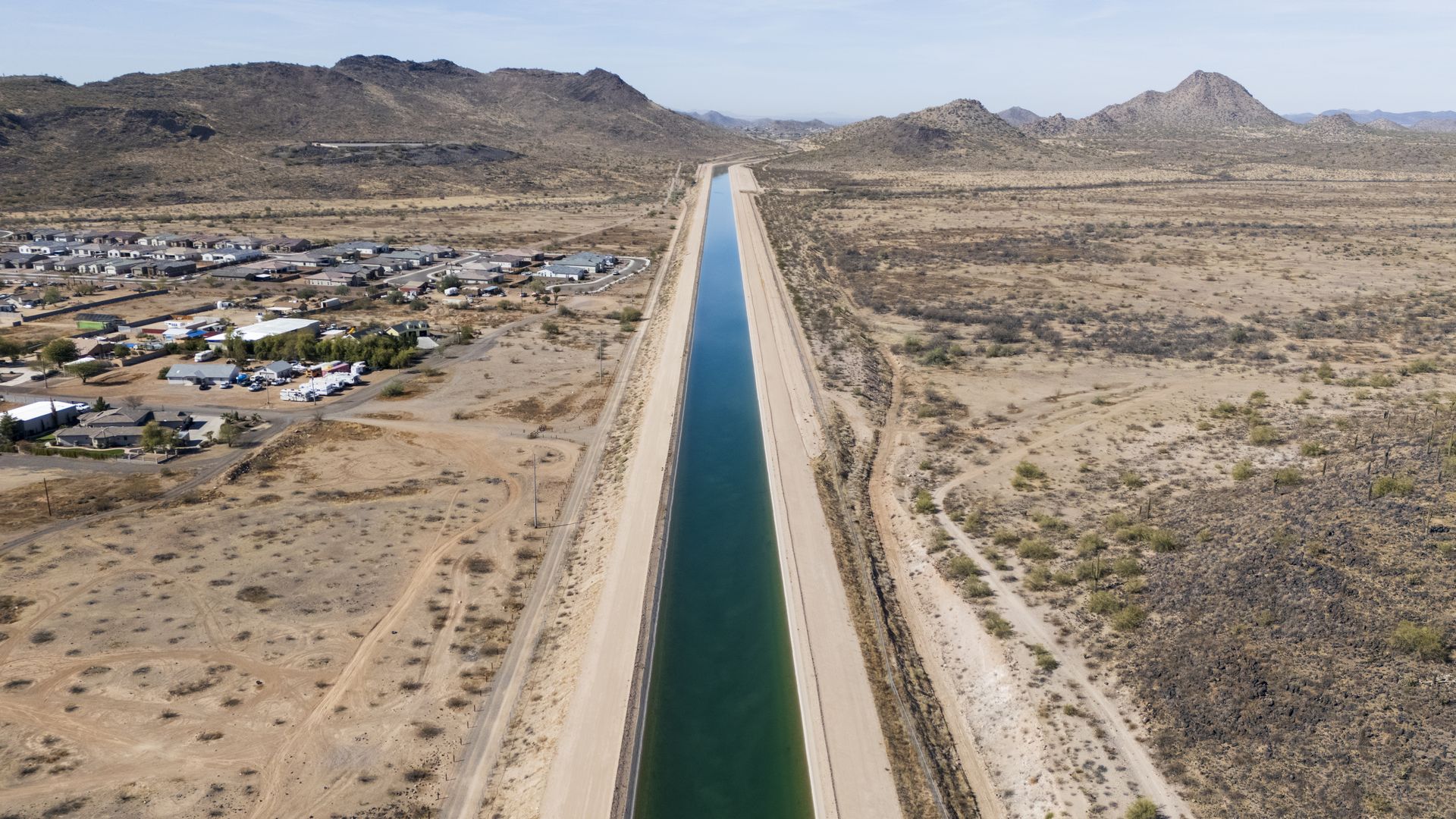
The Central Arizona Project, whose aqueduct is shown here in north Phoenix, could face big water cuts after Arizona and six other states failed to reach an agreement on the Colorado River. Photo: Kelvin Kuo/Los Angeles Times via Getty Images
The seven Colorado River basin states missed a key federal deadline to reach a new water usage agreement, and the U.S. Bureau of Reclamation is now likely to impose a solution of its own.
Why it matters: The Central Arizona Project (CAP), which transports water from the Colorado River to the interior of the state, is likely to see serious cuts as the feds seek to manage the basin through a "megadrought" that's persisted for more than 20 years.
- Meanwhile, the key reservoirs of Lake Mead and Lake Powell are at critically low levels and continue to drop.
The latest: As expected, Arizona, California, Colorado, Nevada, New Mexico, Utah and Wyoming failed to reach an agreement by Feb. 14.
- Arizona Gov. Katie Hobbs and her lower basin counterparts from California and Nevada, who have been united in calling for deeper cuts from the upper basin, issued a joint statement saying they've agreed to significant cuts, but that all seven states must share responsibility.
- U.S. Interior Secretary Doug Burgum issued a statement saying the department would continue to "identify shared solutions and reduce litigation risk."
- But final operating guidelines must be in place for the start of the new water year on Oct. 1, and "the Department cannot delay action," the statement from Interior said.
State of play: The department didn't set any new deadlines. The next significant date for the Colorado River guidelines is March 2, when the public comment period closes for five options the Bureau of Reclamation has put forward.
What they're saying: After two years of discussions and no agreement, former CAP general manager Ted Cooke told Axios he thinks there's no "meaningful probability" that the states avoid a federally imposed resolution.
- Sarah Porter, director of the Kyl Center for Water Policy at Arizona State University's Morrison Institute for Public Policy, agreed.
- Arizona Department of Water Resources (ADWR) director Tom Buschatzke told Axios he's holding out hope, but "Certainly the path we seem to be on … is towards the federal government having to make a decision."
- Cooke estimated that the states have three months to negotiate.
Threat level: Arizona water officials view all five federal options as problematic.
- Only two can be enacted without states' approval, Cooke tells Axios — one that makes no changes to the current guidelines, which he said would be an "unmitigated disaster," and another that would allow for a maximum cut of 77% of CAP water supplies.
- Yes, but: Buschatzke and Porter say the feds could take pieces from the proposals to create a new option.
What we're watching: Whatever the feds decide, Cooke views litigation as inevitable.
- But that's lengthy and expensive, he added, asking, "What happens in the meantime?"