Arizona preparing for possible litigation over Colorado River water negotiations

Add Axios as your preferred source to
see more of our stories on Google.
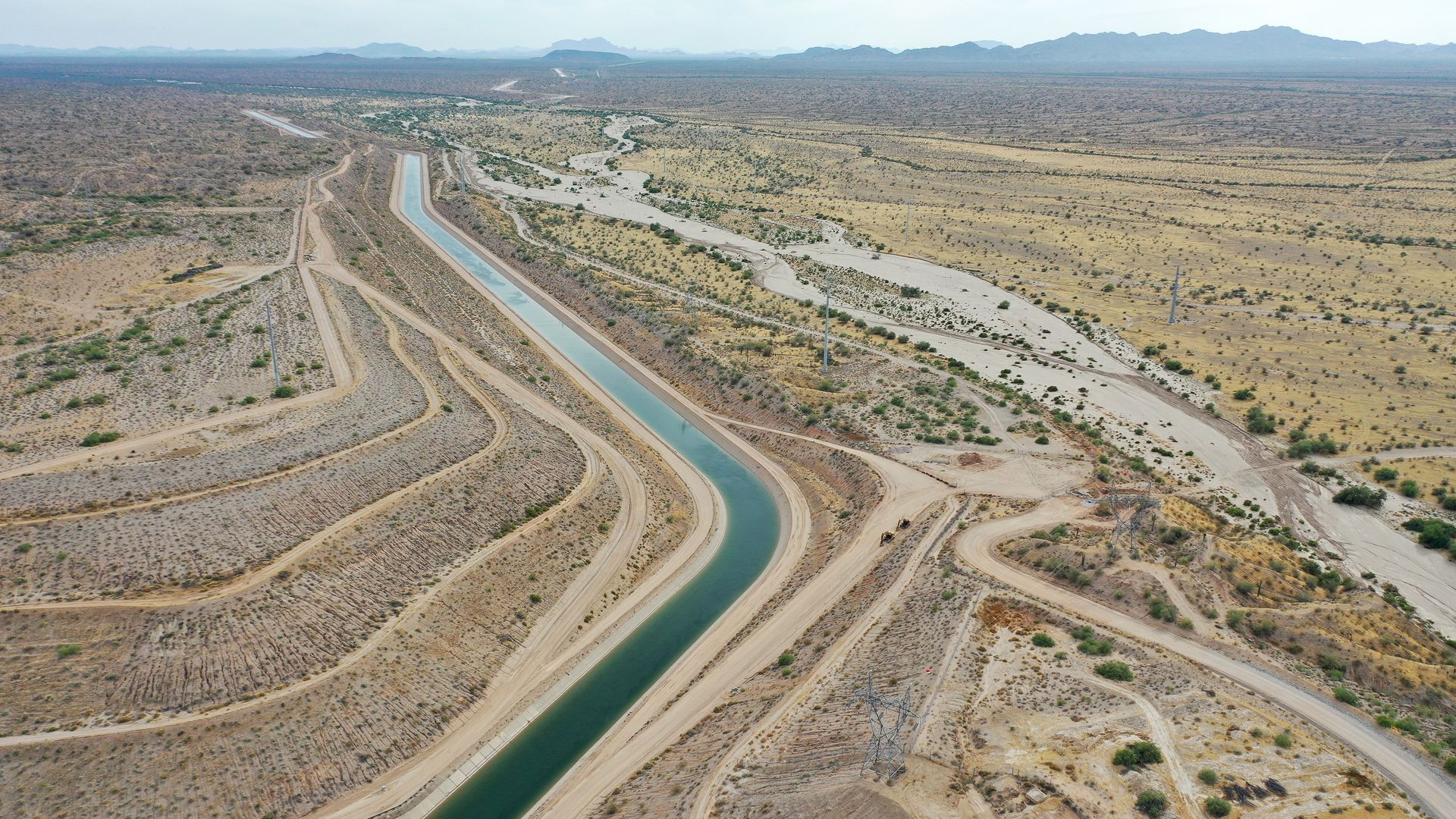
Gov. Katie Hobbs and the Arizona Department of Water Resources are preparing for possible litigation in response to ongoing negotiations for a new multistate agreement over the Colorado River. Photo: Mario Tama/Getty Images
Arizona is hoping for consensus but preparing for a possible legal battle as it negotiates a new multistate agreement over how Colorado River water is allocated in the event additional cuts are needed.
Why it matters: A new agreement could ease the burden on Arizona water users — particularly those in the central part of the state who are dependent on Central Arizona Project (CAP) water — when drought and depleted reservoirs force cuts.
- The CAP has what's known as junior priority water rights from the Colorado River, meaning it's at the top of the list for cuts amid shortages.
- Shortages and cuts have become regular occurrences due to a 24-year "megadrought" that ranks as the region's worst in 1,200 years.
The latest: In her budget plan for the upcoming fiscal year, Gov. Katie Hobbs proposed giving $3 million to the Arizona Department of Water Resources for future litigation over the agreement.
- Hobbs prefers a negotiated compromise, but the funds send a message that "we are prepared to fight for Arizona's fair share no matter what happens," the governor's spokesperson, Christian Slater, told reporters during a recent budget presentation.
- State Sen. T.J. Shope, R-Coolidge, who will play a leading role in negotiating the Arizona Senate's approval of any Colorado River agreement, told Axios it would be "foolish" to not have a litigation fund in place.
Catch up quick: The seven Colorado River basin states agreed to guidelines in 2007 that dictate how cuts are allocated during water shortages.
- Those directives were amended by a 2019 Drought Contingency Plan.
- The 2007 guidelines expire at the end of next year.
State of play: A 1922 compact dictates how much water each state is entitled to, but levels have consistently fallen short of the amount of water that agreement anticipated.
- If the basin states can't agree, they could end up with a resolution mandated by the federal government.
- The U.S. Bureau of Reclamation released a set of options in November that could impose as much as 4 million acre-feet in cuts on the lower basin states annually.
The intrigue: The primary schism in the ongoing negotiations is between the lower basin states of Arizona, California and Nevada and the upper basin states of Colorado, New Mexico, Utah and Wyoming, Sarah Porter, director of the Kyl Center for Water Policy at Arizona State University's Morrison Institute for Public Policy, tells Axios.
- Lower basin states want the upper basin to take a greater share of future cuts, and Arizona wants other states to help ensure that CAP water continues flowing, Porter said.
- Arizona also needs to ensure that adequate amounts of water remain in Lake Mead, a key reservoir that powers Hoover Dam.
- Upper basin states that don't use their full allocations want cuts to come from the lower basin.
What they're saying: "They're absolutely at an impasse," Porter said of the upper and lower basins. "They seem to be so far apart and there doesn't seem to be any path to coming to agreement at this point."
- Porter said the likelihood of an agreement seems "extremely low."
What we're watching: The negotiations overlap with the change from the Biden to the Trump administration, and it's unclear how that transition may affect a final agreement.