Axios Future of Defense
September 17, 2025

It's Wednesday. Welcome back.
- I'm talking drones, counter-drone and all things wartime artificial intelligence with Steve Simoni at our AI+ DC event tonight. Tune in.
🌎 Situational awareness: The U.S. military killed three people in a strike against an alleged drug-running boat in international waters. It's at least the second such attack ordered by President Trump.
- My thought bubble: There's been a dearth of information regarding these strikes. Why the silence?
In the wings: AUKUS optimism, a chat with Chaos Industries and a quick update on the M1E3 tank.
Today's newsletter is 2,056 words, an 8-minute read.
1 big thing: It's "go time" for Anduril
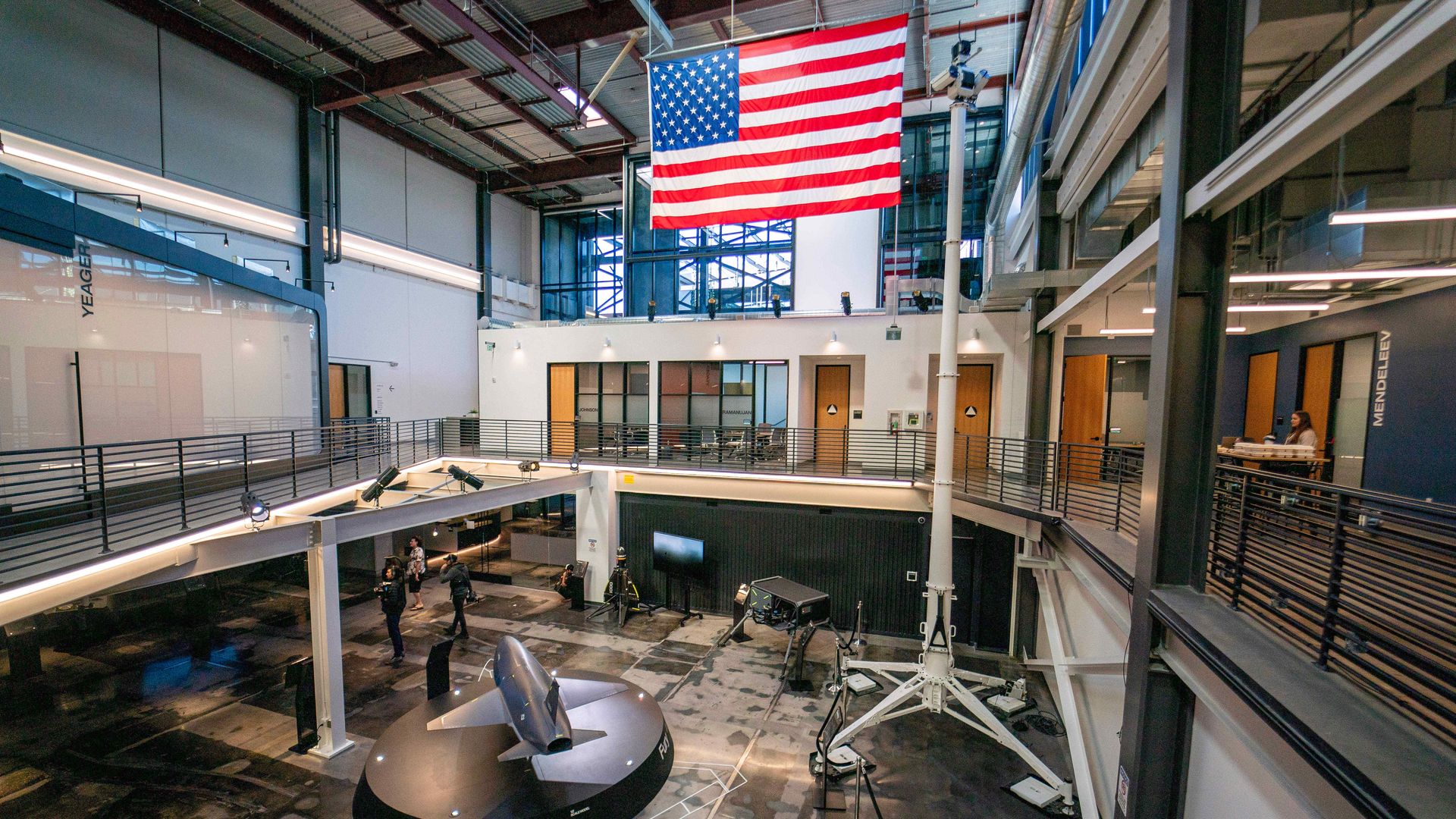
Anduril Industries is on a hot streak.
Why it matters: The neo-prime is biting off bigger and bigger chunks of the defense-contracting pie.
- In 2019, it deployed a handful of sentry towers alongside U.S. Customs and Border Protection. Now, it's scheming to build and fly robo-wingmen for the military.
What they're saying: "Over the last eight years, Anduril has been consistent in our view of modern warfare: The physics of the battlefield have changed, permanently. Projecting power increasingly demands the ability to amass tons of effects over long distances," chief business officer Matt Steckman told me.
- "Superior software and massive quantities of hardware are indispensable to this task," he said.
- "We are not celebrating views shifting towards our way of thinking. The proof is whether you can build, whether you can scale. It's go time."
The big picture: In the past few weeks, Anduril publicized:
🦈 A $1.1 billion deal for a fleet of Australian Ghost Shark extra-large autonomous submarines.
- Shane Arnott, a senior vice president at Anduril, told reporters that program success means Australia's navy will be among "the biggest operators of subsea robots in the world."
🕶️ A $159 million prototyping arrangement for the U.S. Army's Soldier Borne Mission Command effort. (Rivet Industries, a startup with Palantir Technologies ties, also secured a $195 million deal.)
- Palmer Luckey, the founder of Anduril, told reporters his company's "been building a lot of the underpinnings of SBMC for years." It was "one of the first things that we started working on, using our own money."
- If Anduril hadn't been selected, "I'd be having some really hard meetings with my investors, who had been insisting for quite a while that this seemed to be the continuation of me having a pissing contest with Meta over who can build better head-mounted displays."
🛩️ A contract for "conceptual designs" of U.S. Navy drone wingmen, similar to the Air Force's Collaborative Combat Aircraft initiative. (Boeing, General Atomics and Northrop Grumman are also in the running.)
- An Anduril spokesperson told reporters the company is dialed in to the "Navy's distinct needs" and plans to deliver "at a rapid speed and formidable scale."
Follow the money: Anduril is the 93rd-largest defense contractor in the world when ranked by defense revenue, according to the Defense News Top 100. But it's muscling its way into competition with the big boys higher up the list.
- The company's wins, above, span different countries and different domains — land, air and sea.
- It was valued at more than $30 billion as of June.
My thought bubble: As I wrote in November, the West Coast weapons bros are influencing how the Pentagon thinks, tries and buys.
Go deeper: In remote Texas, Anduril probes future of drone warfare
2. Exclusive: Dealing with Draper

Ursa Major will furnish Draper liquid rocket engines and related services under a $35 million contract with an undisclosed U.S. aerospace-and-defense company.
Why it matters: Ursa expects the arrangement to accelerate production and deployment, especially for exoatmospheric purposes.
- The Colorado-based company in February teased Golden Dome applications, telling Space News that Draper is suitable for space-based interceptors.
By the numbers: Ursa can right now make one Draper propulsion system per week. But chief executive Dan Jablonsky estimates that can be bumped up to one per day in the next 12-18 months.
- "We're constantly testing and refining the engine," he told me.
- Draper has been hot-fired more than 250 times since its inception years ago.
Zoom in: Draper is an offshoot of Ursa's Hadley, which has sustained hypersonic speeds in flights with Stratolaunch. It was jumpstarted by Air Force money.
- About 70% of its parts are 3D printed in-house. That "gives it lots of flexibility, in terms of how we sequence manufacturing, how we hit higher rates of production," Jablonsky said.
Friction point: Ursa would not disclose how many engines are due under the contract, and would not name the company it's working with.
The bottom line: "Our belief is that as we prove the technology in various environments, people will want lots of these things," Jablonsky said.
- "We want to be able to produce them in numbers relevant to the warfighters."
Go deeper: Ursa Major CEO: Today's tech "revolution" is ripe for breakout companies
3. AUKUS lives? "God, I hope so"
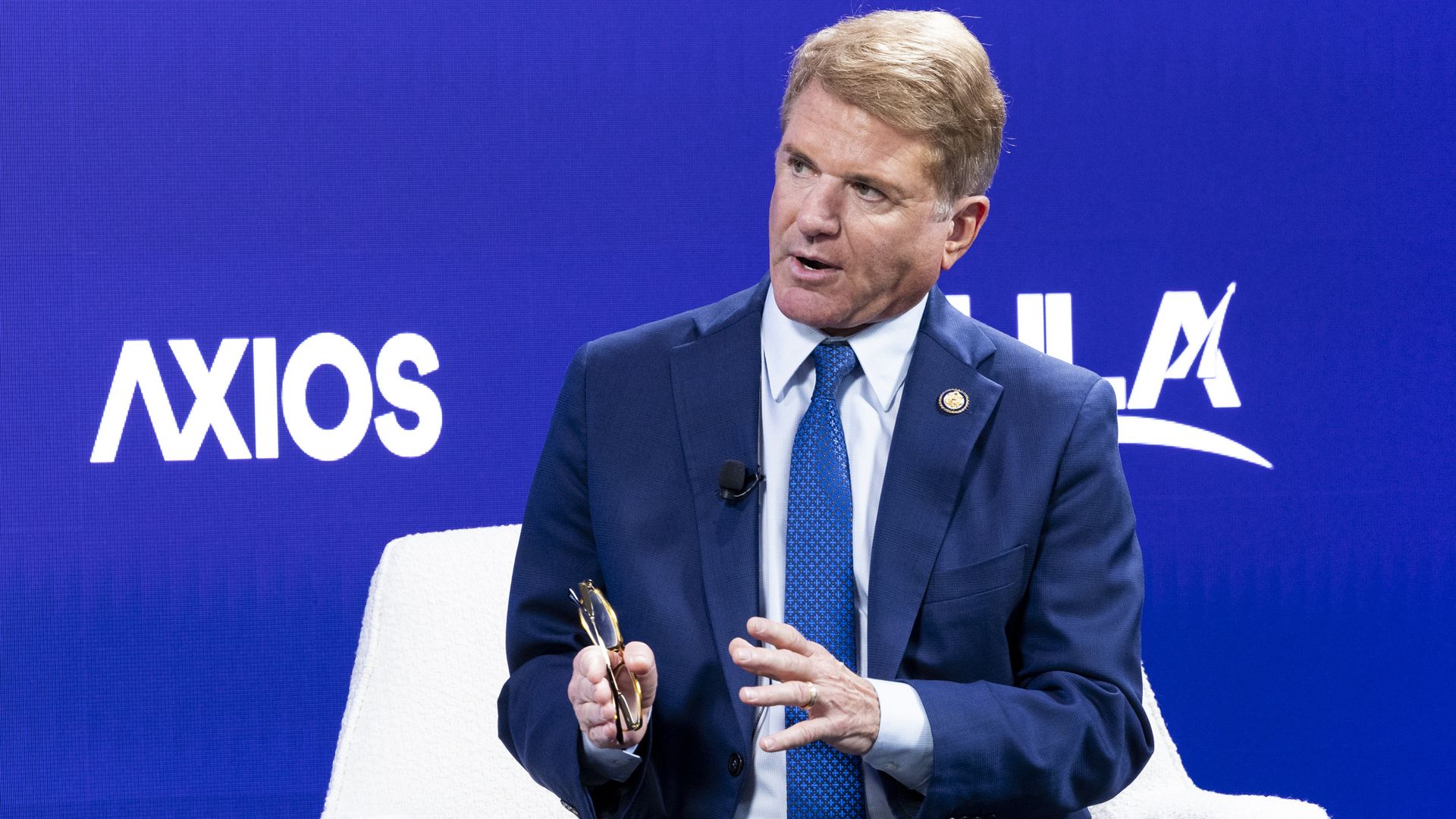
Scrapping the AUKUS security pact would embolden China and risk precious U.S. relationships in the Indo-Pacific at a time when war over Taiwan is a serious concern, Rep. Michael McCaul (R-Texas) told me.
Why it matters: The Pentagon's policy shop, led by Elbridge Colby, is conducting an "America first" review of the U.S.-U.K.-Australia agreement. It's expected to wrap this fall.
Driving the news: I asked McCaul, chairman emeritus of the House Homeland Security and Foreign Affairs committees, at an Axios event last week if he thought AUKUS would survive the assessment.
- "God, I hope so. It has strong, bipartisan support," he said. "If that's torn apart, it'll cause grave damage in the Indo-Pacific."
Context: AUKUS is meant to arm Australia with nuclear-powered submarines and to foster a trilateral defense-tech ecosystem, with projects ranging from hypersonic weapons to electronic jammers to intelligence-sharing systems.
- It rolled out under the Biden administration.
The intrigue: The Washington Post reported that Secretary of State Marco Rubio assured an Australian official the deal would survive.
Threat level: Washington has obsessed over the Taiwan invasion timeline known as the Davidson window.
The bottom line: "Go back to my dad's war: World War II, the Indo-Pacific. I don't know how they pulled that off logistically," McCaul said.
- "We're going to need partners in the Pacific like Japan, the Philippines, South Korea and other nations."
More from Axios:
Rep. Michael McCaul won't seek reelection in 2026
Consider these factors as the Pentagon dissects AUKUS
Thales North America CEO wants more international collabs like AUKUS
4. Exclusive: Chaos starts talkin'
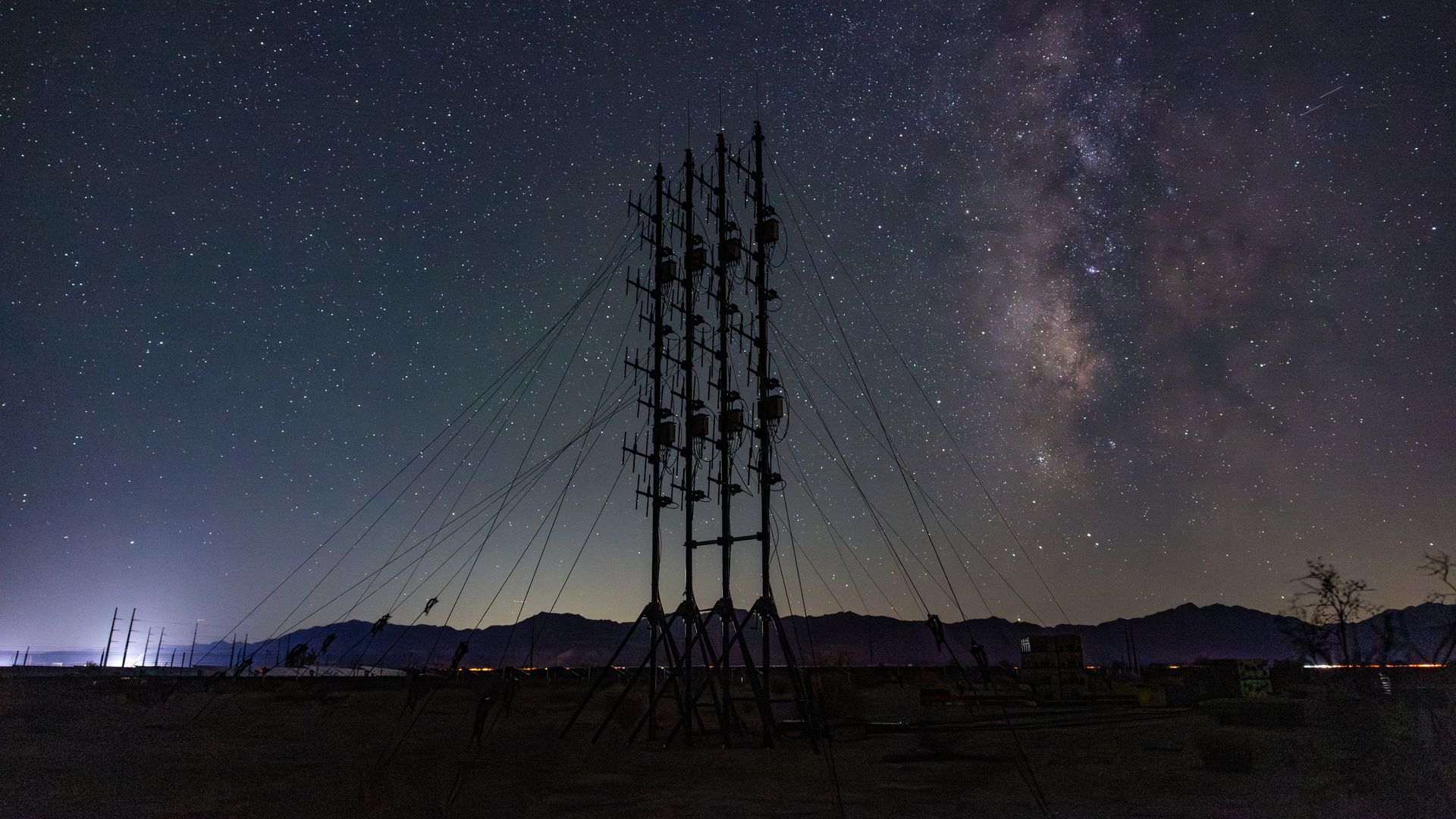
Chaos Industries has for three years worked quietly, talking little of its defense-tech push stateside and overseas, including in the Middle East and Ukraine.
- It's now slowly coming out of its shell.
Why it matters: The company concerns itself with what may be the hottest topic of today and tomorrow: overhead defense.
Driving the news: In conversations with me, executives touted two recent wins:
- A $2 million U.S. Air Force contract to adapt its Astria air-and-missile-defense radar for training at Eglin Air Force Base, Florida
- A $10 million House-approved appropriation that bolsters military testing and training via coherent distributed networking (CDN) multistatic radar tech, the company's bread and butter
What they're saying: "We are field-proven and not theoretical," chief strategy officer Will Hurd told me. (Hurd is a former lawmaker and presidential candidate.)
- "Unlike a lot of defense-tech concepts, CDN systems, whether it's Astria or Vanquish, are in the field and operating. These are not just lab tests or simulations."
Follow the money: Chaos has raised $490 million. It announced Series C results — $275 million — in May.
- Backers include 8VC, Accel and New Enterprise Associates.
- Its team includes Epirus, Palantir Technologies and RTX alumni.
The bottom line: "The most urgent problem that all militaries — to include the U.S. military — are dealing with is the fact that distributed autonomous systems have redefined warfare," Hurd said.
- "The time from detecting and acting has decreased. Our job and our tools create time."
Go deeper: U.S. Army air defenses are a sizzling hot commodity
5. The Army's VC mindset

The U.S. Army on Monday launched its "Fuze" program, motivated by Secretary Dan Driscoll's desire to instill venture-capitalist thinking into the service's trying-and-buying practices.
Why it matters: The Defense Department has long been chided for its poor behavior as a customer: product tunnel vision, slow uptake and failed launches.
- Driscoll, sworn in some six months ago, told me he has become "frustrated by the calcified bureaucracy that slows our acquisition system."
- Fuze, he said, "will finally unite the Army innovation ecosystem to speed acquisition."
How it works: The program concentrates hundreds of millions of dollars a year — through existing outlets like xTech competitions, small-business contracting and the Manufacturing Technology effort — to shepherd ideas from the garage to the front line.
- It's meant to work alongside the existing program executive office structure, not replace it. (PEO shakeups are expected unrelated to this, though.)
What they're saying: "We designed this program to really adopt a venture capital mindset in terms of how we are identifying tech, how we are doing initial stage prototyping and then bringing promising technologies to scale," Matt Willis, the Fuze director, said in an interview.
- "The traditional government cycles of taking 12-18 months to even get a company on contract is not very helpful. Tech will change many times over within that time frame," he said.
- "We're aiming, once we identify a company or a capability, to be able to bring them in and get it in the hands of soldiers within 30-45 days."
Zoom in: Army labs and the 75th Innovation Command will vet what's on offer.
- Historically, "We looked inside the Army. 'What problem do you have? OK, let's go find something to solve that problem,'" Chris Manning, deputy assistant secretary of the Army for research and technology, said in an interview.
- "We're now shifting that, to go look outside. 'What technology are we not aware of or is leading an industry that we should be pulling into the Army?'"
What's next: Fuze pitches will be heard live in mid-October, at the annual Association of the U.S. Army convention in Washington.
- This first contest will focus on electronic warfare, drones and their countermeasures, and energy.
- Those topics were raised by the 25th Infantry Division in Hawai'i. They also are in concert with the Army's Transforming in Contact initiative.
Go deeper: Army weapons shake-up backed by Hegseth and other Trump picks
6. Quick hits
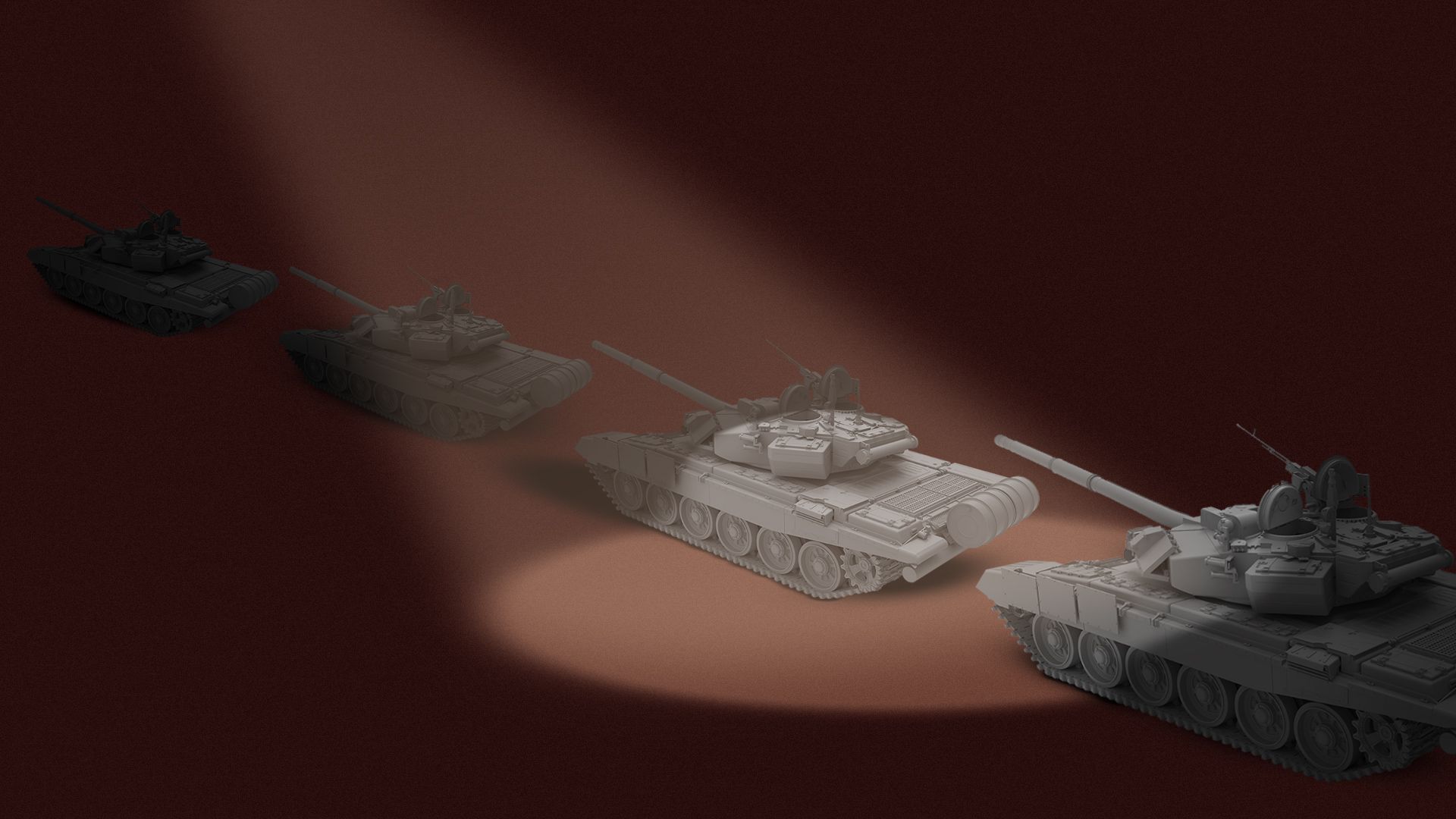
🪖 Prototypes of the U.S. Army's next tank, the M1E3, will first go to Transforming in Contact troops at Fort Hood, Texas, service officials told me.
- Why it matters: The M1E3 project is closely watched and will likely reflect the lessons learned from wars abroad — Ukraine, especially.
- 💭 My thought bubble: Tanks are cool, man.
🏧 Divergent Technologies closed a $290 million Series E. The company, which designs and builds hardware for aerospace, defense and automotive industries, is now valued at $2.3 billion.
- Why it matters: "We're not a prime that's competing against an Anduril or a Lockheed," Divergent CEO Lukas Czinger told me. "We're a manufacturing platform, an engineering platform, that sits below both of those and tens of other primes to help them manufacture and better engineer all of their programs of record."
- 💭 My thought bubble: Feel the vibes. U.S. reindustrialization is real.
💥 AV and General Atomics launched the former's Switchblade 600 from the latter's MQ-9A Reaper in airborne testing.
- Why it matters: The companies are hailing it as a "first-ever" achievement.
- 💭 My thought bubble: Launched effects are a no-brainer. More, please!
📊 Salesforce unveiled a national-security business, Missionforce. It's led by Kendall Collins.
- Why it matters: "With Missionforce, we'll now bring the best of AI, cloud and platform technology from the private sector to modernize critical areas including personnel, logistics and analytics," Collins told me.
- 💭 My thought bubble: My colleague Ina Fried spoke with Salesforce CEO Marc Benioff about the human-AI relationship. Read that, here.
7. Check this out
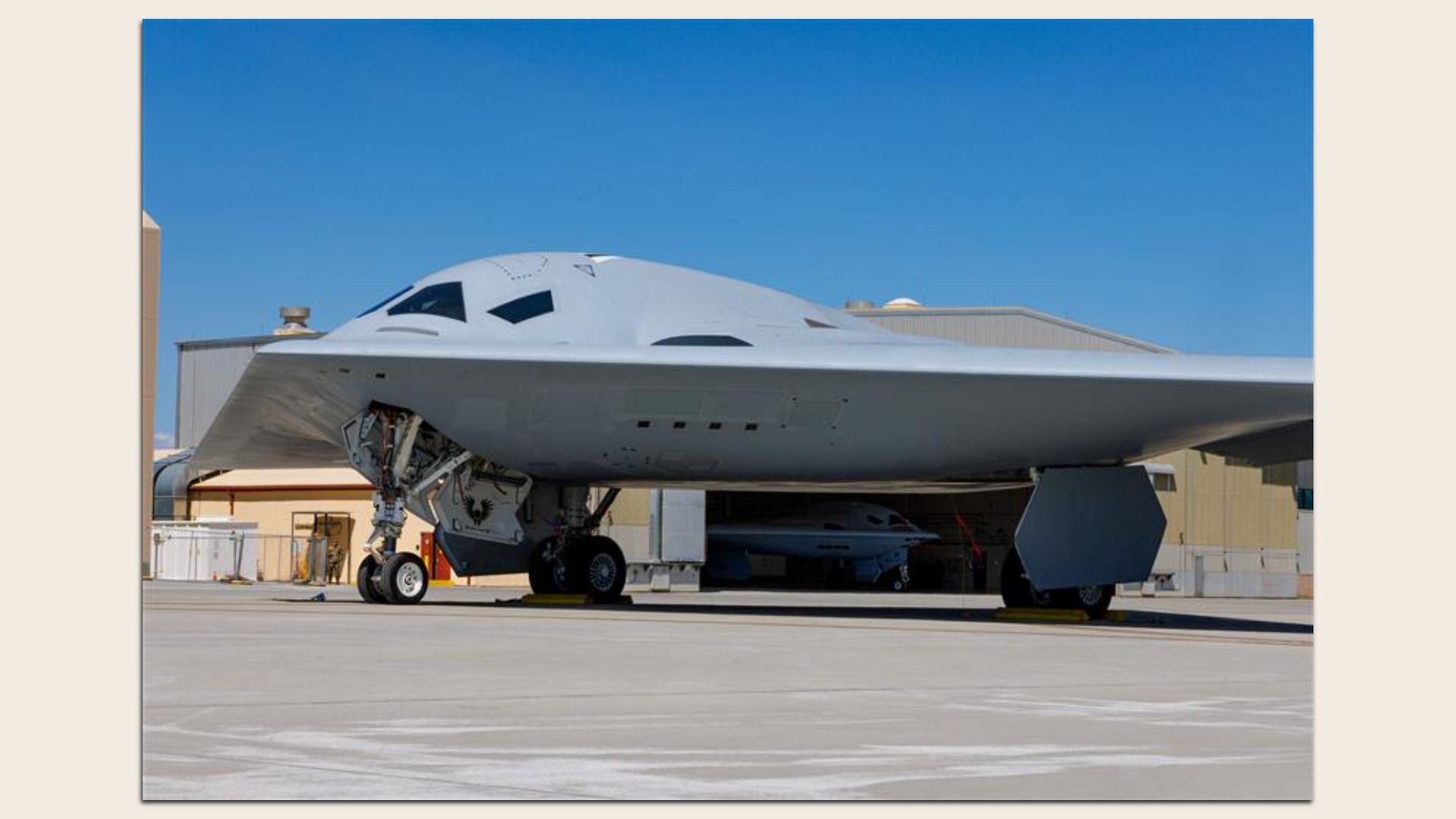
Two B-21 Raiders have now taken to the skies.
Why it matters: Northrop Grumman's work on the stealth bomber is highly secretive — and of the highest stakes.
Zoom in: The cockpit windows and landing gear continue to draw outsize interest.
What they're saying: The "arrival of the second B-21 Raider" means the U.S. Air Force "can now expedite critical evaluations of mission systems and weapons capabilities," according to service Secretary Troy Meink.
Go deeper: U.S. to spend $1 trillion on nuclear weapons over next decade
Shoutout to Dave Lawler for editing and Matt Piper for copy editing.
👋🏼 Thanks, as always, for reading and sharing. Tell your friends to subscribe here.
Sign up for Axios Future of Defense