Axios Future of Defense
July 16, 2025

Good morning from Detroit, where I'm attending the Reindustrialize conference through Thursday evening.
- Got news? Want to grab coffee or a drink? Either way, reply to this email.
📉 Situational awareness: The Cybersecurity and Infrastructure Security Agency is rapidly shrinking in both mission scope and workforce, placing additional strain on states and opening the door to automation, my colleague Sam Sabin reports.
- My thought bubble: CISA's "Shields Up" campaign got the word out about Russia-Ukraine cyber spillover. Quickly. Effectively.
Expected: Shadowy stashes, money for drone printers and Taiwan's tanks.
Today's newsletter is 2,148 words, an 8-minute read.
1 big thing: NATO numbers game
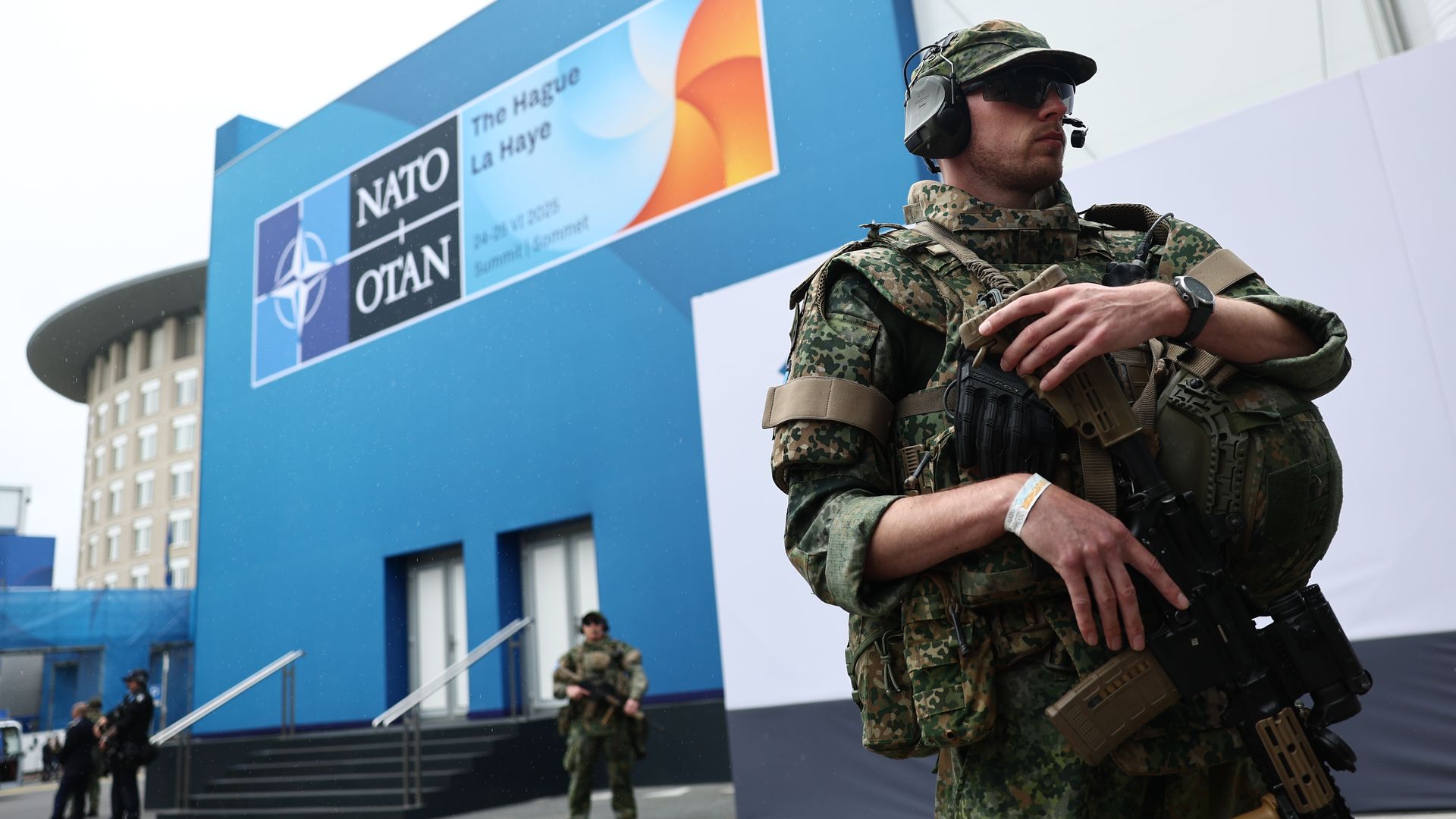
NATO's 5% spending commitment is a watershed moment for an alliance dogged by laggard investment outside the U.S. — if, that is, members actually fork over the trillions in long-term spending required to make it a reality.
Why it matters: At a time of weapons upheaval and global war, friends are precious.
- New blocs of influence are solidifying. China, Iran and North Korea fuel a Russian war machine in Eastern Europe while the U.S. reevaluates its role abroad, including arms deliveries.
- There's a newfound determination in many capitals to invest in European security and reduce reliance on Washington.
- The question is whether it's a fleeting feeling or the beginnings of a decade-long push to hit 5%.
The big picture: The spending outlook, according to defense analysts, industry executives and Europe watchers I consulted, is complicated by these four factors:
🗺️ Proximity and fears of invasion.
- Countries closest to Russia have traditionally spent the biggest chunk of gross domestic product — and will continue to do so.
- Poland, Estonia, Latvia and Greece have already broken the 3% mark. Meanwhile, far-flung Spain opted out, citing self-determination.
🗳️ Political volatility and an appetite for risk among ruling parties.
- Europe is not a monolith; public sentiment in Germany, Italy and the Netherlands is not uniform.
- "For some of these leaders, they have a very fraught domestic political situation," Connor Murray, a research analyst at the Center for Arms Control and Non-Proliferation, told me.
- "They've had to spend pretty significant political capital to get where they are," he added, "and to then turn around and potentially jack up military spending could be really detrimental."
🧮 Creative accounting paired with flexible definitions.
- The 5% goal flows from two accounts: 3.5% for traditional defense and 1.5% for broader security investments, like cybersecurity and shored-up critical infrastructure.
- "The 3.5% on defense is a hard climb, but the threat environment is making it harder to ignore. The additional 1.5% for innovation is even more critical — and more disruptive," Wendy Anderson, a former Palantir Technologies senior vice president and chief of staff to the late Defense Secretary Ash Carter, told me.
- "That's where Europe must stretch the most, because that's where the leverage lies: in accelerating dual-use capabilities that can power both security and economic competitiveness."
📆 The actual timeline, aka the long game.
- Allies have until 2035 to make good on their promise. (A status update is due years prior.) A lot can change between now and then, including who sits in the White House.
- "If history is any indication, and the example of the last decade is quite telling, we may not have all 32 allies achieving the goal by 2035," Federico Borsari, an expert at the Center for European Policy Analysis, told me.
- It's also worth noting that "the very nature of democratic states, with their short electoral cycles and pluralistic decision-making process, is a barrier in itself compared to authoritarian regimes, where a single leader makes the ultimate decision," Borsari said.
Catch up quick: President Trump met with NATO boss Mark Rutte in Washington on Monday.
- Speaking from the Oval Office, the president applauded the idea of "a strong Europe" and described the alliance's meeting last month in The Hague as "tremendous."
- "These are wealthy nations. They have a lot of money."
The bottom line: "Five percent of GDP total is ambitious, but it's not impossible," Anja Manuel, the executive director of the Aspen Strategy Group, told me. (This year's Aspen Security Forum will have a significant transatlantic bent.)
- The conversation, she said, shouldn't "be just about raw numbers, but really about capability and readiness."
- "We all have to spend those defense budgets better."
Go deeper: Business groups pledge improved NATO industrial output
2. Exclusive: Chariot Defense charges ahead

Chariot Defense emerged from stealth today with $8 million in seed funding and a stated goal of energizing militaries.
Why it matters: Defense technologies of today and tomorrow — drones, sensors, jammers, mobile command posts — are power hungry. They chew through fuel and batteries, forcing risky resupply runs.
- The Russia-Ukraine war exemplifies the challenges of keeping frontline units topped off. Wrecked logistics lines litter the battlefield.
- Meanwhile, worsening weather jeopardizes established bases and their power grids.
What they're saying: "Power is this underappreciated problem that's now becoming apparent," Chariot CEO Adam Warmoth told me. "We're solving it by actually getting on the ground, in the field with users, and not just burying ourselves in a lab for years."
Catch up quick: Chariot supported the U.S. Army's transforming in contact initiative as well as the Defense Innovation Unit's Artemis drone project.
- Its initial offering is known as Amphora, a "power lake, where, basically, you put any power in and you can pull any power out," Warmoth said.
- "This allows people to operate for longer periods in contested, denied environments," he added, "because they're able to reduce their signature, they're able to much more flexibly pull power from the sources they have."
Zoom in: The company, founded late last year, is based in south San Francisco. Its leadership team has ties to Anduril Industries, Apple, Archer Aviation, Tesla and Uber.
Follow the money: The seed round was led by General Catalyst and XYZ Venture Capital.
- Other backers include Cubit Capital, Forward Deployed VC and Pax.
The bottom line: "While everyone focuses on building smarter weapons, Chariot is building the intelligent power systems that makes them all work," Ross Fubini, managing partner at XYZ, told me.
- "This isn't just better batteries or quieter generators — it's positioning to become the power prime contractor for modern warfare."
Go deeper: Nuclear-battery maker with defense contracts raises $50 million
3. Storm Shadow stocks
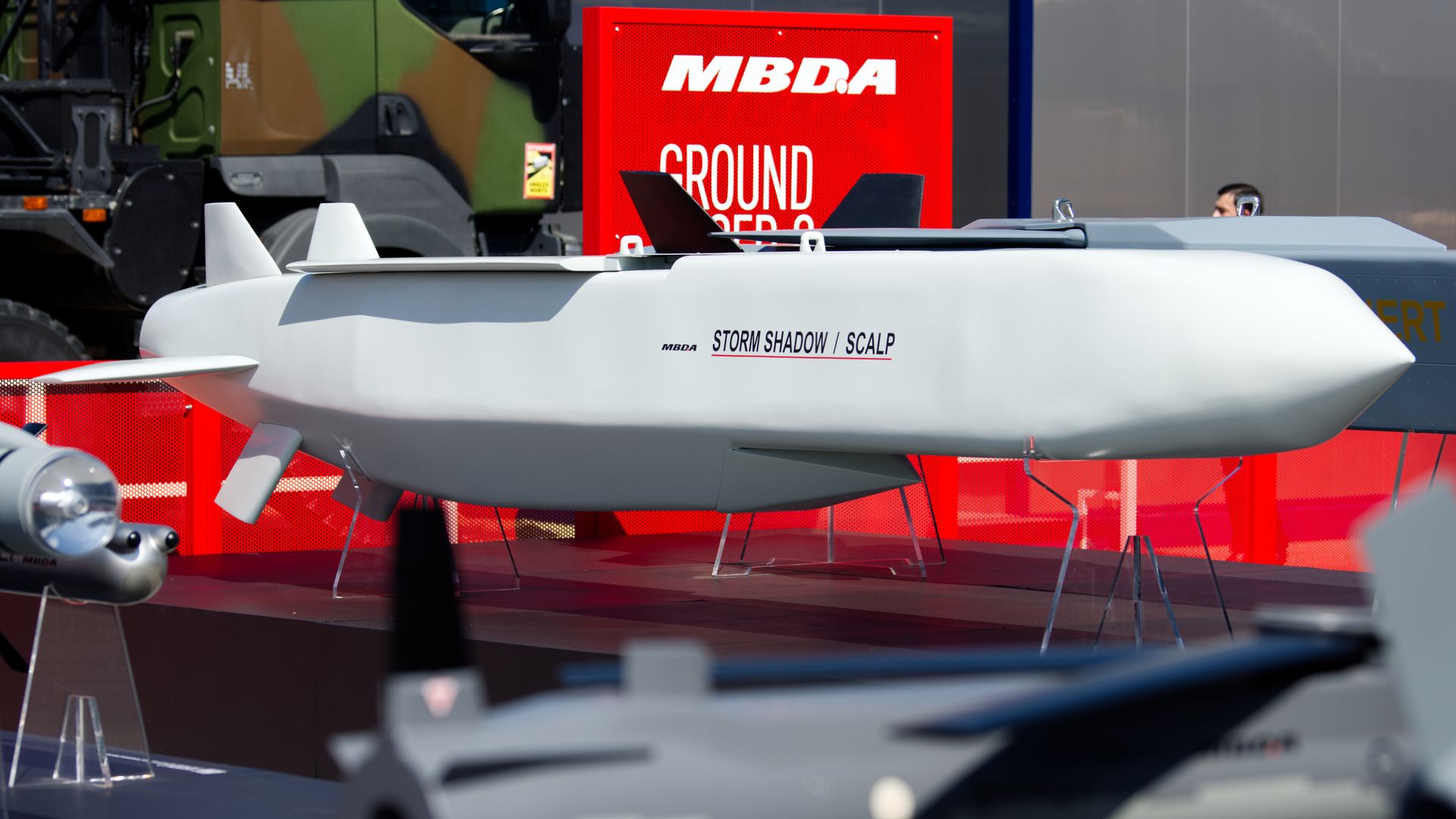
The U.K. and France committed to buying additional Storm Shadow cruise missiles, wielded in the Russia-Ukraine war, while also pursuing a more sophisticated replacement.
Why it matters: It's a sign of deepening relations between London and Paris, where the missile is known as SCALP.
- The deal falls under an updated Lancaster House Agreement, which details military and defense-tech cooperation between the two governments.
The latest: Storm Shadow production lines will be upgraded, supporting 300-plus jobs at multinational contractor MBDA, while the next phase of a "project for both deep strike and anti-ship missiles" moves forward, according to a joint announcement.
- British and French defense chiefs John Healey and Sébastien Lecornu recently visited an MBDA facility. The latter posted on X: "Production of SCALP missiles to equip our forces will resume in 2025, 15 years after our last order."
Zoom out: The Ukrainian military has lobbed Storm Shadows at Russian forces despite Moscow's warning of retaliation.
- Kyiv has employed them aboard Su-24 Fencer aircraft.
- Forbes in November reported on a 10-missile barrage targeting Russian commanders.
Go deeper: A defense-tech perfect storm brews in Europe
4. Exclusive: Firestorm funding

Firestorm Labs plans to move into a larger production facility, grow its fleet of airliftable xCell factories and cook up additional drone designs on the heels of a $47 million Series A.
Why it matters: The California-based company is 3D printing the types of weapons and tools that define the Russia-Ukraine war.
- It's also inked contracts with the U.S. Defense Department, including one with the Air Force worth as much as $100 million.
Follow the money: The round was led by New Enterprise Associates. Washington Harbour Partners and the investing arms of Lockheed Martin and Booz Allen Hamilton are among the other backers.
- The total includes $12 million in venture debt from JPMorgan.
What they're saying: "We're building out the decentralized factory of the future," Firestorm CEO Dan Magy told me. "We want to be that manufacturing layer."
- The company has multiple drones in the works, ranging from Group 1 to Group 3. Tempest is its original offering.
Zoom in: Firestorm this month said it secured exclusive distribution rights from HP for its Multi Jet Fusion 3D printing technologies.
- The arrangement is a "game-changer," according to Firestorm's chief technology officer, Ian Muceus.
- "We're excited to keep pushing boundaries, fine-tuning print settings, developing new materials, and maximizing throughput, material properties, and lightweighting."
What's next: Firestorm is shipping an xCell to Detroit for the Reindustrialize conference. Magy calls it the "road show."
Go deeper: Inside Firestorm Labs, where deadly drones are printed
5. Quick hits
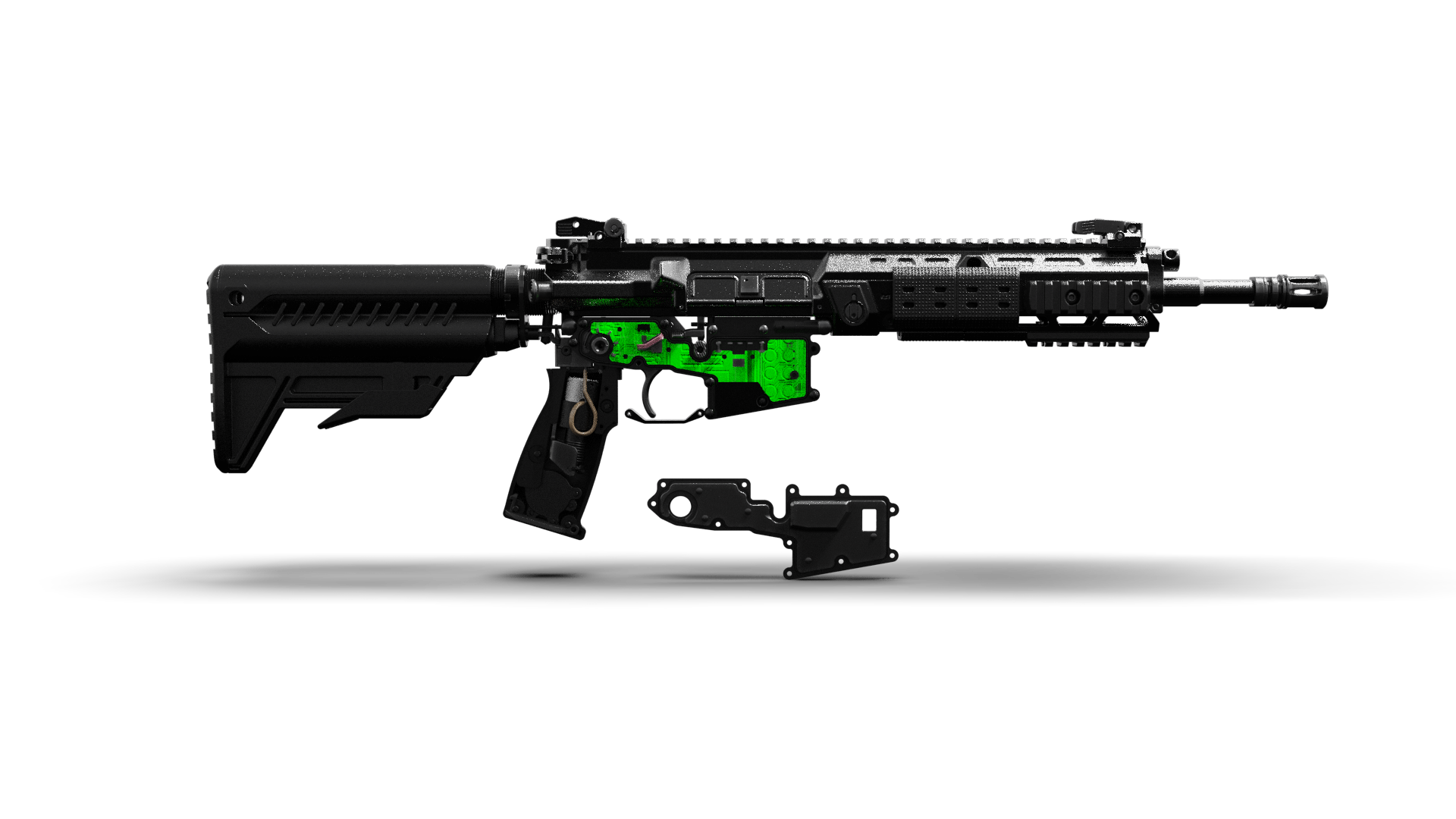
🇮🇱 Israel Weapon Industries said it's seeing increased interest in its Arbel counter-drone gun kit from European countries nearest the Russia-Ukraine war.
- Why it matters: Drones are killing troops and civilians the world over. Countermeasures — such as this one, which accounts for shooter error and stress — can be worth their weight in gold.
- 💭 My thought bubble: I covered something similar, from New York-based ZeroMark, in December. Give that a read, here.
🛜 The Chief Digital and AI Office contracted Anthropic, Google, OpenAI and xAI to work on agentic workflows for national security applications. Each arrangement is worth as much as $200 million.
- Why it matters: It's the biggest move made since Doug Matty assumed the role of CDAO. It may also be the office's biggest move since Donald Trump returned to the White House.
- 💭 My thought bubble: I wonder if Grok's antisemitic "MechaHitler" meltdown gave anyone pause in the run-up to this announcement.
⚒️ The Pentagon will become the largest shareholder in MP Materials. The company's California mine is the only up-and-running rare-earths operation in the U.S.
- Why it matters: "This transformative deal is likely just the beginning of a series of necessary actions to counter Chinese market manipulation," Jeff Green, founder of J.A. Green & Company, told me.
- 💭 My thought bubble: My colleague Ben Geman has a solid rundown on the rare-earth market and defense investment, here.
6. Axios interview: Bran Ferren

This week's conversation is with Bran Ferren, the cofounder and CEO of Applied Minds.
- We've chatted a few times — about national security, about defense-tech design, about wonky architecture.
Why he matters: Ferren is the former president of research and development at Walt Disney Imagineering. He has also worked with Lockheed Martin, Herman Miller, the Library of Congress and more.
Q: When you hear "future of defense," what comes to mind?
A: These days? Five minutes into the future. I think the idea of "long-term and strategic" is excellent thinking, but we have a chaotic and complex and rapidly evolving world.
Q: When will wars be waged solely by robots?
A: They will never be solely waged by robots. As long as there are human beings, there's a tendency of one to punch the other in the nose, and that escalates, and we call it war.
- I think that's never going to go away.
Q: Where are you investing internally, and how could it shake up the status quo?
A: We have significant advances in the next generation of human interface.
- If you look at the typical interfaces of defense systems, you're lucky if they're 1980s command-line interfaces, as compared to what our kids are using on their iPhones and iPads and other devices. So a lot of our effort is: How do you make better interfaces for people that are not just more intuitive, but are more effective, especially for younger generations of war-fighters who did not grow up using 1980s technology.
Q: What region of the world should we be watching? Why?
A: We should be watching all regions of the world.
- But I think the one that requires significant focus — that perhaps we've ignored — is looking at ourselves and seeing what do we actually need in the way of the workforce of the future and the defense capability of the future.
Q: How many emails do you get a day, and how do you deal with them?
A: I probably get 400-600 emails in the course of the day. Half are junk and spam. I'm so glad, as was announced by friends like Bill Gates, that this was a solved problem 10 years ago. But it's not quite on my system.
- The way I deal with it is selective attention. When I miss something important, hopefully that person will remind me that I'm not being responsive.
Q: What's a piece of gear or tech you can't go without?
A: It's a very mature, refined and sensible technology: It's called a pad and paper. It gives me the ability to draw and interact with the subtlety that the electronic systems are not capable of doing — even though the electronic ones certainly have a whole set of their own advantages.
- To go more to first principles, the technology would be my brain that, hopefully, is functioning.
Q: What advice would you give your younger self?
A: Interesting question. It would be "Listen to my older self."
7. Check this out
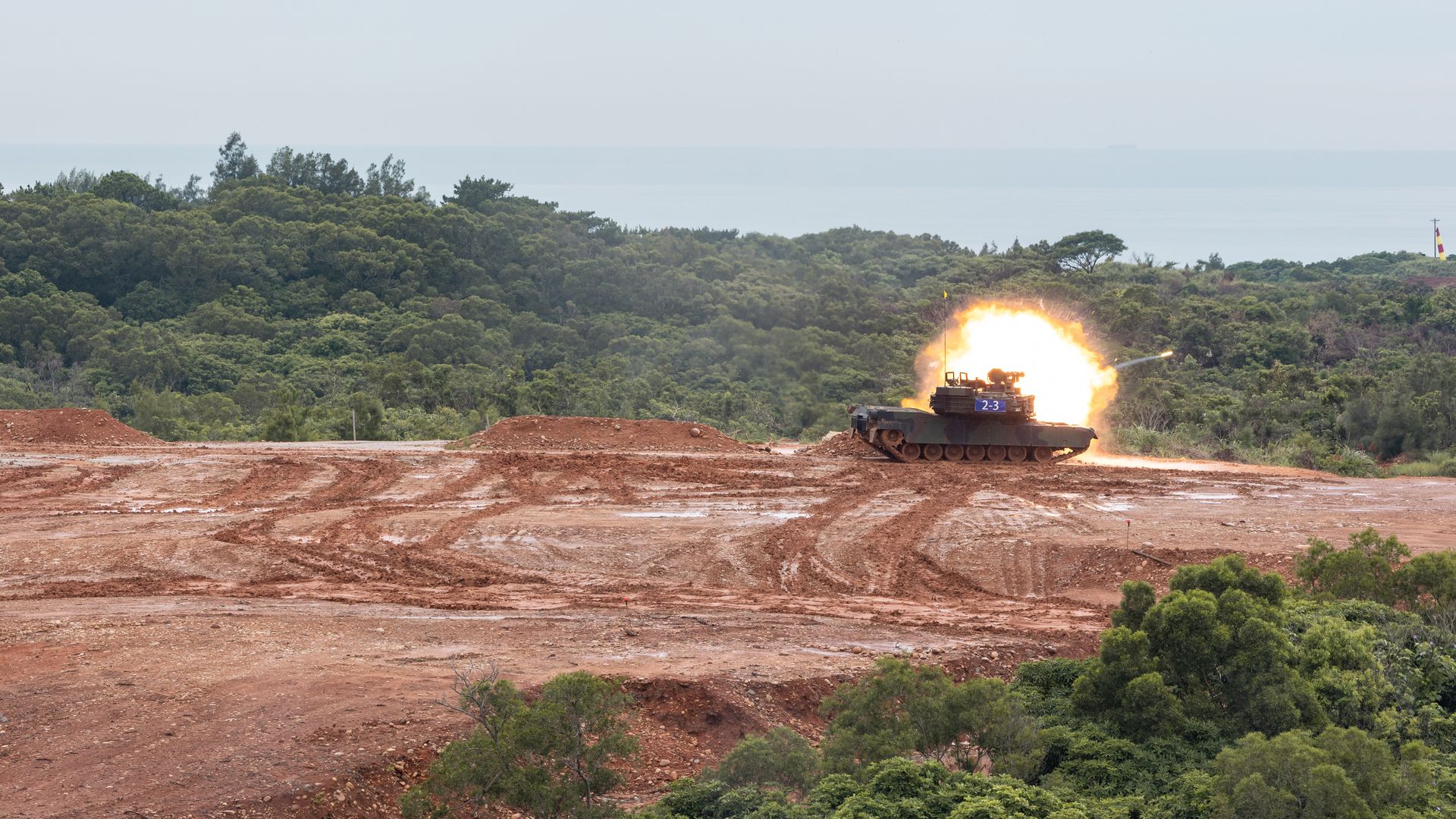
Taiwan showed off its batch of U.S.-made M1A2T tanks this month alongside the large-scale Han Kuang military exercise.
Why it matters: The drills focus on a Chinese invasion of the island. (Beijing considers it a renegade province.)
Catch up quick: An initial delivery of tanks arrived in late 2024, Defense News reported. The order was made in 2019.
Go deeper: Taiwan's president offers peace with China — but says defenses must be strengthened
Shoutout to Dave Lawler for editing and Matt Piper for copy editing.
👋🏼 Thanks, as always, for reading and sharing. Tell your friends to subscribe here.
Sign up for Axios Future of Defense